
Chicken Thighs Don’t Look Cooked: Essential Tips And Expert Fixes
You’ve pulled the thighs off the heat and they still look pink or glossy. Don’t panic.
Color and surface appearance don’t always match doneness. Use a meat thermometer or check for clear juices and meat that pulls away from the bone to confirm they’re safe and cooked.
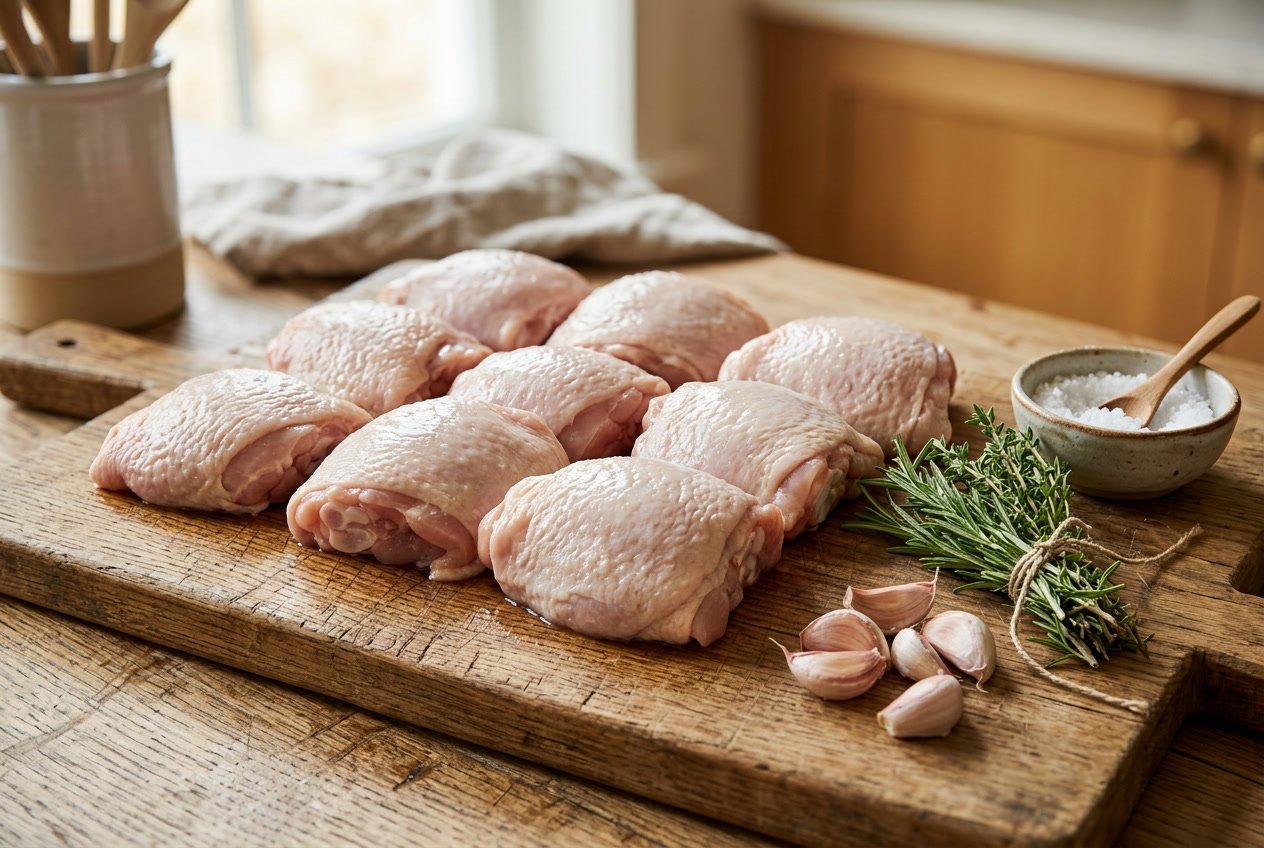
Dark meat can look undercooked even when it’s safe. You can assess doneness reliably with a few simple checks.
Common causes for misleading appearance include anatomy, natural color, and cooking method. Quick fixes can help if a thigh needs more time.
Follow these tips to stop guessing and start serving consistently tender, properly cooked chicken.
Why Chicken Thighs Sometimes Don’t Look Cooked
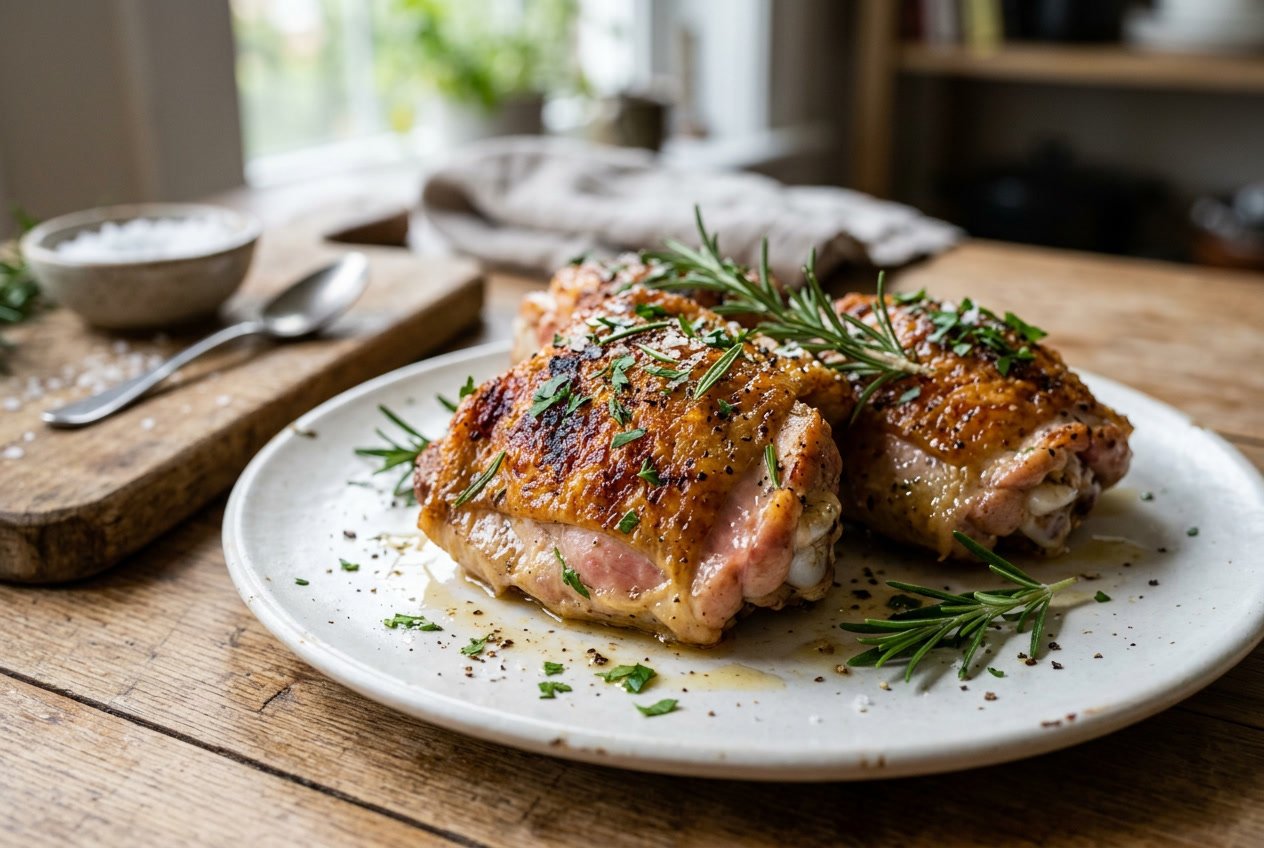
You might see pink, glossy flesh or near-bone redness and worry the thighs are undercooked. Anatomy, the natural color of dark meat, and the cooking method often explain these visuals.
Understanding Chicken Thigh Anatomy
Thighs are part of the bird’s leg and contain more myoglobin and fat than breast meat. Myoglobin gives dark meat a darker, sometimes pink or reddish hue even after cooking.
Bones and connective tissue release pigments and marrow during cooking. That can darken the area around the bone or leave a faint pink ring.
Bone-in thighs retain heat differently. The surface can look done while the interior takes longer to reach a safe temperature.
Collagen in the thigh breaks down into gelatin as you cook, keeping the meat moist and giving it a glossy appearance. Shiny juices often indicate properly rendered fat and gelatin, not undercooking.
Typical Visual Cues of Undercooked Thighs
Look for three main visual signs that truly indicate undercooking: raw-looking translucent flesh, pink or red juices, and meat that does not pull away from the bone.
If the meat is opaque and fibers separate easily when pulled with a fork, it’s likely cooked even if faint pink remains. Clear juices running from the thickest part also point to doneness.
Sticky or gummy texture and red-tinted liquid suggest you need more time. When in doubt, use a thermometer at the thickest part away from bone.
Aim for at least 165°F (74°C). Thighs often benefit from a slightly higher finish (170–175°F) to dissolve connective tissue without drying.
Key Differences: Dark Meat vs White Meat
Dark meat contains more fat and connective tissue than white breast meat. This changes how it looks and behaves when cooked.
Expect darker color, more visible juices, and greater resistance to dryness in thighs. White meat turns uniformly pale and firm when done, but dark meat can remain slightly pink and still be safe because of the myoglobin content.
Cooking methods that use longer, slower heat (like braising or roasting) convert collagen to gelatin and reduce the appearance of rawness. Dark meat tolerates higher internal temperatures without becoming dry, so you can cook thighs to 170–175°F to ensure tenderness.
Rely on texture and temperature rather than color alone to assess doneness for chicken thighs.
How To Check If Chicken Thighs Are Cooked Properly
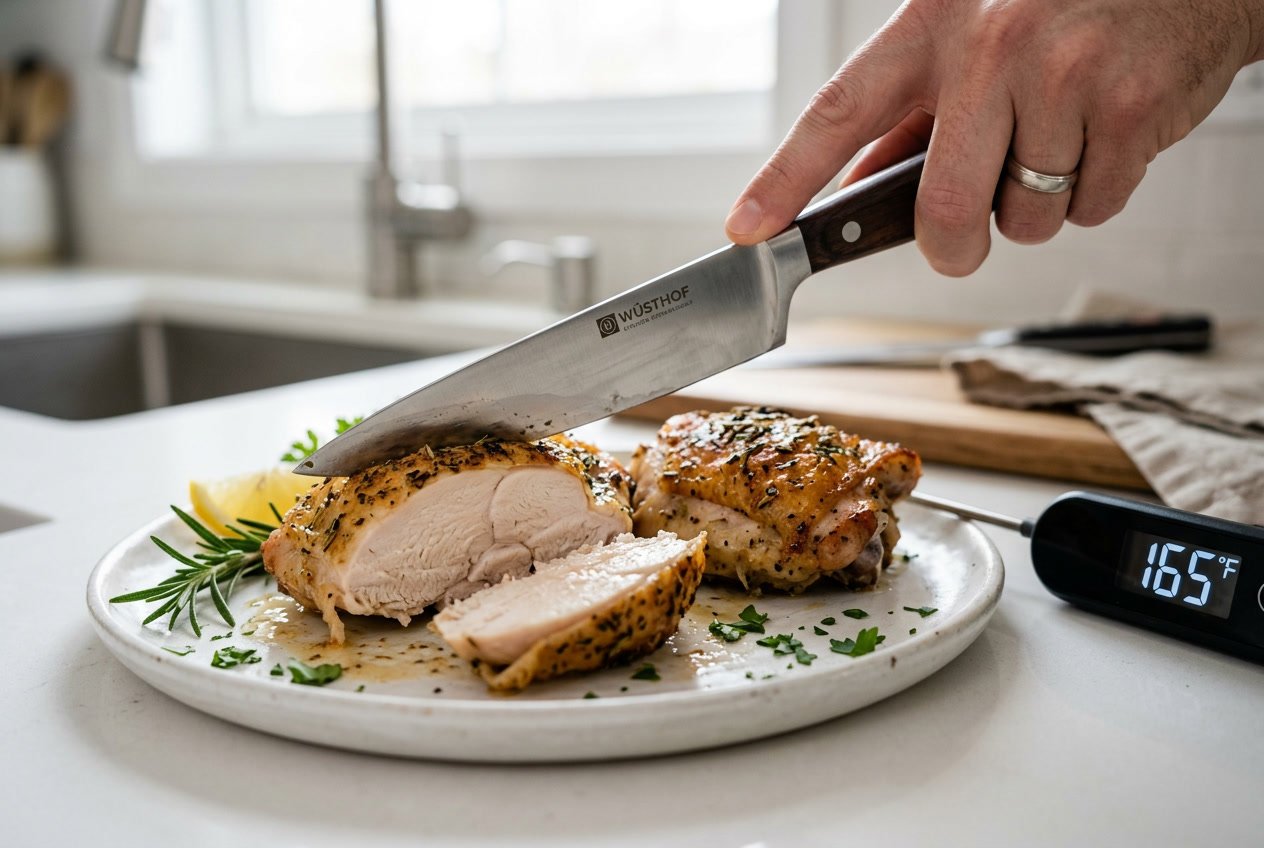
Focus on internal temperature first. Confirm with clear juices and firm texture.
Use a reliable meat thermometer and check the thickest part without touching bone.
Essential Internal Temperature Guidelines
Set your target at 165°F (74°C) in the thickest part of the thigh for safety. Dark meat can tolerate slightly higher carryover heat, but 165°F is the minimum to reliably kill pathogens.
For bone-in thighs, aim for the meat next to the bone, not the bone itself. If you roast several thighs, check the largest piece because it will be the slowest to reach temperature.
Allow for a 3–5 minute resting period after cooking. Internal temperature can rise a few degrees and juices will redistribute.
Using a Meat Thermometer Accurately
Choose a digital instant-read or an oven probe for best results. Insert the probe into the thickest part of the thigh, avoiding contact with bone, fat pockets, or pan surfaces.
Push the probe horizontally toward the bone for bone-in thighs so the tip sits in the center of muscle. Wait until the digital readout stabilizes.
Clean the probe before and after use to prevent cross-contamination. If you use an oven probe, monitor the largest thigh and remove when it hits 165°F, then rest the meat for several minutes before slicing.
Visual Signs of Doneness
Look for opaque, evenly colored meat—not bright pink—in the thickest area. Dark meat chicken naturally retains a bit more color than white meat, so use color as a secondary check alongside temperature.
Skin should be golden-brown and juices on the surface should not look bloody. For bone-in thighs, check around the joint; clear juices near the bone indicate the surrounding meat has cooked through.
Avoid relying on color alone because marinades, smoke, or myoglobin can keep meat looking pink even when safe. Always cross-check with a thermometer when visual cues conflict.
Testing Juices and Texture
Press or cut the thickest part and observe the juices. They should run clear, not pink or red.
Use a fork or knife tip and give a gentle press; if juices look cloudy or tinted, cook longer and recheck temperature. Properly cooked thighs feel firm and pull apart easily toward the bone.
Undercooked dark meat will be rubbery and resist separation. Overcooked meat will be dry and stringy.
Combine juice color, texture, and temperature for a reliable verdict. If you lack a thermometer, prioritize the firmness and clear-juice checks.
Common Reasons Chicken Thighs Appear Undercooked
Several predictable factors make thighs look raw even when they’re safe to eat. Uneven heat distribution, improper preparation or resting, and differences between bone-in and boneless cuts can all play a role.
Each problem affects color, texture, or temperature in specific ways you can control.
Uneven Cooking Times or Temperatures
Thighs cook unevenly when heat isn’t consistent across the pan, grill, or oven. If your pan has hot spots or the grill zone is hotter at the edges, thinner parts will brown while thicker areas stay cooler.
Use a heavy skillet, preheat your grill or oven fully, and rotate pieces every few minutes to even exposure. Thigh thickness varies a lot.
Thicker muscle near the bone takes longer to reach 165°F (74°C). Always check the thickest point with an instant-read thermometer.
If the skin browns too fast, lower the heat and finish in the oven to avoid a burnt exterior and an underdone interior.
Incorrect Prep or Handling
How you prep thighs changes cooking behavior. Crowding a baking sheet or skillet traps steam and prevents proper browning, which can leave meat looking soggy and pink.
Arrange pieces with space between them and pat skin dry so heat crisps the surface. Salt and marinades affect color and moisture.
Too much acid in a marinade can tighten proteins, making meat seem denser and sometimes darker. Salt draws moisture out, which promotes browning but can also cause uneven texture if not distributed.
Trim excess fat that shields heat and always let thighs rest at room temperature 15–30 minutes before cooking to reduce internal temperature differences.
Cooking Bone-In vs Boneless Cuts
Bone-in chicken thighs take longer to cook than boneless because bone conducts heat differently and insulates nearby meat. Near the bone, you may see a pinkish hue even after safe cooking.
This is often just myoglobin and bone marrow pigments, not undercooking. Rely on temperature, not color, when testing bone-in pieces.
Boneless, skinless thighs cook faster and more uniformly but dry out more easily. Skin-on thighs need extra time for the fat under the skin to render.
Crisp skin can mask an undercooked interior. For bone-in or skin-on thighs, use the oven method after searing to bring the internal temperature to 165°F (74°C) without overbrowning the exterior.
Best Cooking Methods to Ensure Evenly Cooked Thighs
Choose a method that controls heat and lets you check internal temperature. Aim for 165°F (74°C) at the thickest part.
Use techniques that promote even heat distribution and crisp skin.
Baking for Consistency
Baking gives you steady, even heat that brings chicken thighs to safe doneness without overcooking the exterior. Preheat to 400°F (200°C) for bone-in, skin-on pieces; bake 35–45 minutes.
Boneless, skinless thighs typically need 20–25 minutes. Use a rimmed sheet or a shallow roasting pan so air circulates around each piece.
Pat thighs dry and season well before they hit the oven. Arrange them skin-side up with space between pieces.
Crowding traps steam and prevents crisping. Check doneness with an instant-read thermometer placed into the thickest part, avoiding bone.
If you want extra-crispy skin, start on a hot baking sheet or use the broiler for 1–2 minutes at the end while watching closely. Rest for 5 minutes after baking so juices redistribute.
Pan-Searing and Finishing in the Oven
Pan-searing creates a crisp, golden skin and a flavorful crust before you finish cooking through in the oven. Heat a heavy, oven-safe skillet over medium-high heat with a tablespoon or two of neutral oil.
Sear skin-side down without moving for 4–7 minutes until deeply browned. Flip and transfer the whole skillet to a 375°F (190°C) oven to finish—about 12–20 minutes for bone-in, shorter for boneless.
The stovetop gives you Maillard flavor. The oven cooks the interior gently and evenly.
Use tongs to handle thighs and avoid crowding the pan. If the skin renders too slowly, lower heat slightly to prevent burning while still rendering fat.
Verify 165°F (74°C) at the thickest point and let rest briefly before serving.
Grilling With Direct and Indirect Heat
Grilling combines direct sear and indirect gentle cooking to avoid raw centers and burned skin. Preheat one zone of the grill to medium-high and leave another zone at medium or off.
Sear skin-side down over direct heat for 3–5 minutes to get color and grill marks. Move thighs to the cooler zone to finish cooking indirectly.
Bone-in pieces will need 12–18 minutes total, depending on thickness. Close the lid to maintain even temperature and reduce flare-ups.
For boneless thighs, shorten both sear and indirect times. Oil the grates and pat thighs dry before grilling to prevent sticking.
Monitor with a thermometer and watch for hot spots that can char the exterior before the center reaches 165°F (74°C).
Achieving Perfect Texture and Appearance
Focus on rendering fat, preserving moisture, and confirming safe doneness. Small technique changes like drying skin, correct heat, and resting produce crisp skin and juicy meat.
Getting Crispy Chicken Skin
Pat the skin thoroughly dry with paper towels. Moisture prevents browning.
Sprinkle a light dusting of salt and, if desired, 1/4–1/2 teaspoon baking powder per pound to raise pH and encourage crisping. Rub it into the skin and let thighs sit uncovered in the fridge for 30–60 minutes when possible.
Start on medium-high heat in an oven-safe skillet or hot roasting pan skin-side down to render fat and create even browning. Sear undisturbed for 6–8 minutes until skin is deep golden and blistered.
Transfer to a 400°F (200°C) oven to finish. This combination prevents rubbery skin and gives consistent color.
Use skin-on chicken thighs for the best results. The skin protects the meat and supplies rendered fat that bastes the flesh.
Resting Time and Carryover Cooking
Remove thighs when the thickest part reads 160–162°F (71–72°C) if you want to avoid overcooking. Carryover heat will raise them to about 165°F (74°C) while resting.
Tent loosely with foil and rest for 5–10 minutes for individual thighs, or 10–15 minutes for larger pieces or a full tray. Resting redistributes juices and firms the meat slightly, making it easier to judge doneness by texture.
Slice or probe after resting, not immediately, to avoid misleading juices and to preserve presentation. Use an instant-read thermometer to confirm final temp rather than relying only on feel.
Dealing With Pink Near the Bone
A faint pink ring close to the bone can result from myoglobin and bone marrow pigments, not necessarily undercooking. Confirm safety by inserting an instant-read thermometer into the thickest part, avoiding bone.
165°F (74°C) is the target for immediate safety. If the thermometer shows under 165°F, return the thighs to the oven or covered pan and cook until they reach the target.
For bone-in thighs that reach 165°F but still show pink near the bone, you can finish with 2–3 minutes under a high broiler to tighten surface pigments. You can also slice away the immediate bone-adjacent meat if visual concern persists.
What To Do If Your Chicken Thighs Are Undercooked
If the meat near the bone looks pink or the internal temperature is below 165°F (74°C), act quickly to finish cooking safely and preserve juiciness.
Choose between finishing the thighs in the oven, turning them into a new dish, or reheating gently to avoid dryness.
Safely Reheating or Returning to the Oven
If the thighs are only partially undercooked, preheat your oven to 350°F (175°C). Place the thighs on a rimmed baking sheet or shallow pan, cover loosely with foil to trap steam, and roast until a thermometer reads 165°F (74°C) in the thickest part without touching bone.
Check the temperature at multiple points. Bone-in thighs often need more time near the bone.
Let the thighs rest 5–10 minutes after removing them from the oven so juices redistribute and carryover cooking finishes any slight undercooking.
If you want to finish on the stovetop, brown the skin-side down in an ovenproof skillet for 3–5 minutes. Then move the skillet to the oven at 350°F covered until done.
Avoid high direct heat that chars the exterior before the center reaches a safe temperature.
Repurposing Undercooked Thighs
If thorough reheating risks overcooking the exterior, cut the meat away from the bone and simmer pieces in a flavorful liquid like broth, tomato sauce, or curry at a gentle simmer until they reach 165°F (74°C).
Shredded chicken works well in tacos, pasta sauces, casseroles, or soup. Simmering adds moisture and can help with uneven browning.
Ensure the simmer reaches at least 165°F and keep that temperature for a few minutes to kill pathogens.
If you find bones or visibly raw portions, remove them and use only the safely cooked meat.
Always use a thermometer and visual checks instead of tasting raw meat to check doneness.
Avoiding Dryness When Reheating
To reheat cooked chicken thighs without drying them out, use low, moist methods. Set the oven to 300–325°F (150–160°C) and cover the pan, or use a 325°F covered skillet with a splash of broth.
Add 2–4 tablespoons of liquid per 4 thighs to maintain steam and keep the meat tender.
If using a microwave, arrange thighs in a single layer, cover with a microwave-safe lid or damp paper towel, and heat at medium power in 30–45 second bursts.
Rotate pieces and check the temperature frequently to avoid hotspots and overcooking.
Let the thighs rest 3–5 minutes covered after reheating to preserve juiciness and even the temperature.
If you want to reheat cooked chicken thighs again later, slice them before storing for quicker and gentler reheating.
Preparation Tips and Recipe Inspirations
Pick thighs with even color, minimal liquid in the package, and intact skin if you want crisp results.
Drying, seasoning, and correct cooking temperatures affect how the meat looks and how safe it is to eat.
Selecting and Preparing High-Quality Thighs
Choose thighs that feel firm and spring back when pressed.
Look for a pale pink-to-deep-red color with white fat. Avoid grayish tones or excessive liquid in the tray, which show age or poor storage.
Bone-in, skin-on pieces tend to stay juicier and show less translucent meat near the bone after cooking.
Pat the thighs completely dry with paper towels before seasoning.
Trim large fat flaps and loosen excess skin if you want crisp skin.
If using frozen thighs, thaw in the refrigerator 24 hours ahead and pat dry again. Partial thaw can cause uneven cooking and a raw appearance near bones.
Optimal Seasoning and Marinating for Color
Salt is essential. Dry-brine with ½–1 teaspoon kosher salt per pound and rest uncovered in the fridge for 1–24 hours to draw moisture out of the skin and improve browning.
For color and flavor, use spice blends with paprika, chili powder, or turmeric. These add reddish or golden tones that mask slight pinkness and add aroma.
Acidic marinades like vinegar or lemon tenderize but do not fix undercooking. Limit marinating time to 1–4 hours for boneless thighs and up to 8 hours for bone-in.
If you want glossy, caramelized skin, brush a thin coat of oil or a honey-soy glaze in the last 5–10 minutes of cooking.
Always use a probe thermometer to confirm 165°F (74°C) at the thickest part, testing away from the bone.
Recommended Chicken Thigh Recipes
Use these go-to recipes depending on time and equipment.
-
For oven-roasted bone-in thighs, roast at 400°F for 35–45 minutes, skin-side up on a rack. Finish under the broiler for 1–2 minutes for extra crispness.
-
For skillet-then-oven boneless thighs, sear skin-side down for 5–7 minutes. Flip and transfer to a 375°F oven for 8–12 minutes.
-
To braise thighs, brown them first. Then simmer in 1–2 cups of broth or tomato sauce for 25–35 minutes to keep the meat tender.
-
For grilling, start over medium indirect heat. Finish over direct high heat for 2–3 minutes per side to add char and color.
For meal prep, shred slightly dry thighs into salads, tacos, or soups. Toss with a flavorful sauce to restore juiciness.


