
Chicken Thighs and Rice Recipes: Best Easy One-Pan Dinners
You want an easy, satisfying dinner that feels homemade without fuss. Chicken thighs stay juicy while the rice absorbs sauces and seasonings, so you get tender meat and flavorful grains from one pan with minimal cleanup.
Baked or one-pot chicken thighs with rice make a reliable, flexible weeknight meal. You get consistent, delicious results every time.
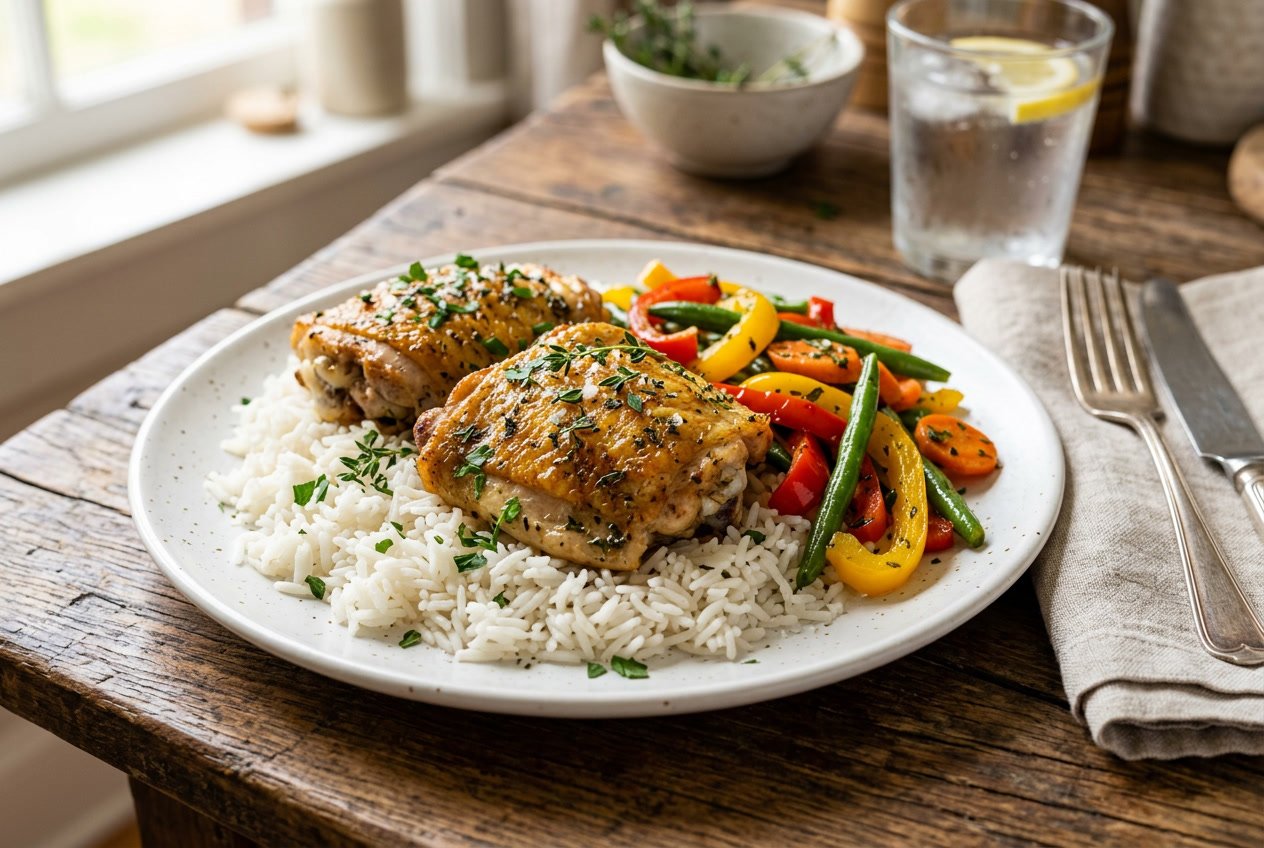
This post explains why thighs and rice work so well together. You’ll see which pantry staples and techniques make the dish failproof, and how to vary the flavors—from lemon-pepper and curry to baharat and mushroom brown rice—so you can tailor dinners to your mood and schedule.
Expect step-by-step tips, essential ingredients, and mix-and-match add-ons that turn a basic casserole into a family favorite.
What Makes Chicken Thighs and Rice a Perfect Pair?
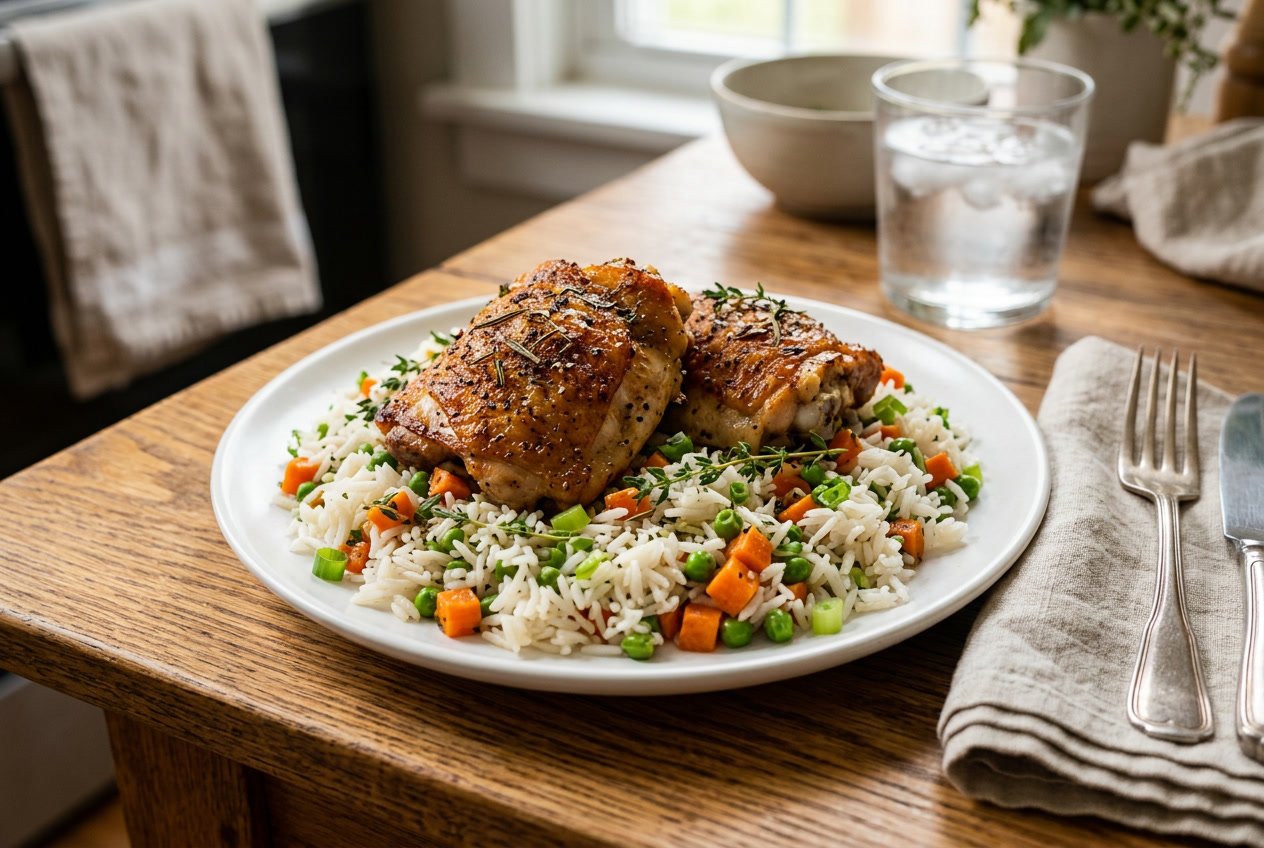
This combination delivers juicy chicken thighs that stay tender through cooking. The rice soaks up flavors while remaining fluffy.
It works for quick weeknight dinners and scales easily for meal prep. You can use many different seasoning profiles.
Benefits of Using Chicken Thighs
Chicken thighs give you more fat and connective tissue than breasts, which keeps the meat moist during longer cooking. You get juicy chicken thighs even when you bake, braise, or cook them in one pan with rice.
The darker meat accepts bold seasonings—smoky paprika, garlic, thyme, or soy-based marinades—and holds those flavors through a full cook. Bone-in, skin-on thighs add extra richness and help baste the rice below as they release juices.
If you prefer lower-fat options, skinless thighs still retain more succulence than breasts. This reduces the risk of drying out on a weeknight dinner when timing can be tight.
Why Rice Works Well With Chicken Thighs
Rice acts as both a side and a cooking medium, absorbing the chicken’s juices, stock, and aromatics to become flavorful and fluffy. Long-grain varieties like jasmine or basmati keep separate grains.
Toasting the rice first improves texture and adds a nutty note. Using hot stock and covering the pan ensures even steaming so the rice cooks through while the chicken finishes on top.
That hands-off method minimizes active time, which helps on busy weeknights. Rice adapts to variations—swap in brown rice for nuttier texture (add more liquid and time), or use basmati for a lighter, aromatic result.
Essential Ingredients for Chicken Thighs and Rice Recipes
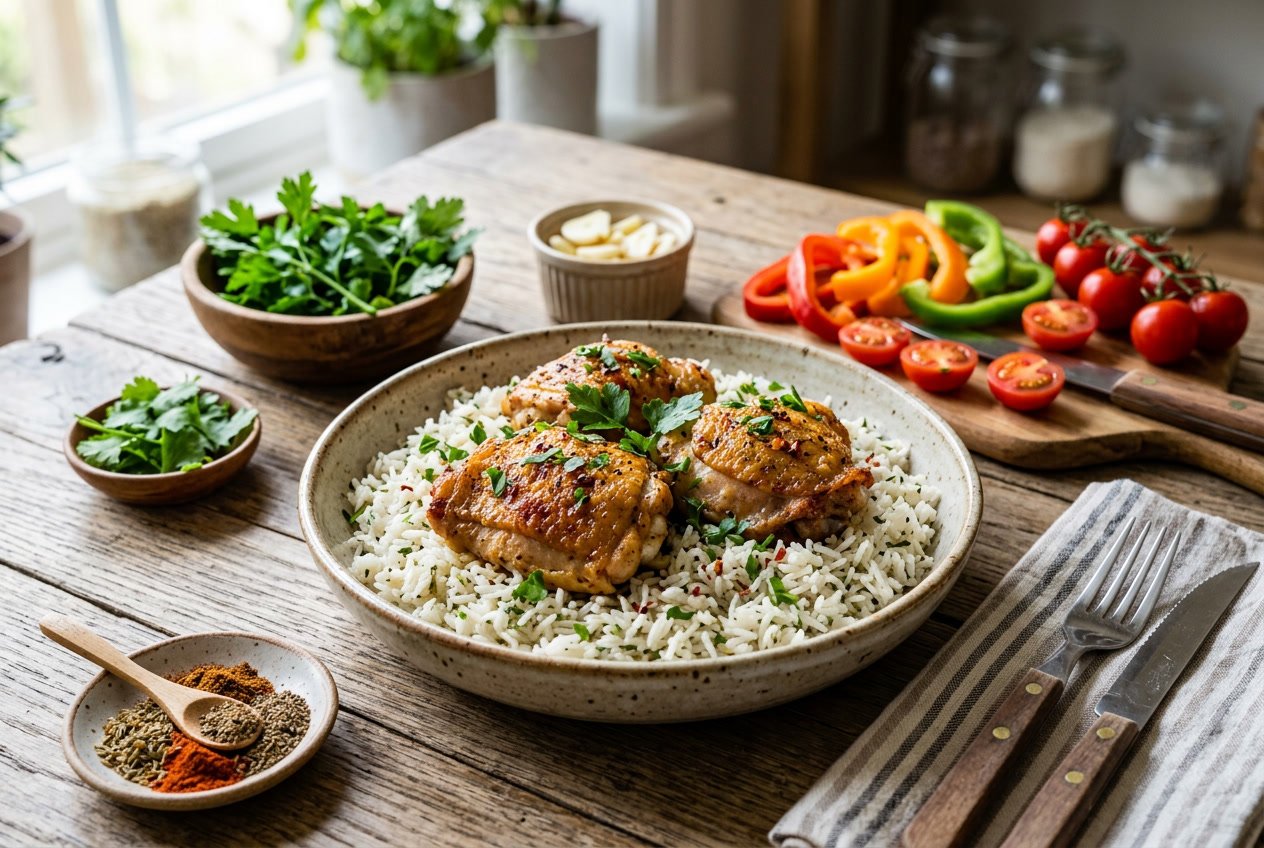
Focus on three main choices: which thigh cut gives the best flavor and texture, which rice holds up and absorbs broth well, and which seasonings and aromatics build a savory base. Make each choice to control crisp skin, tender meat, and well-separated, flavorful grains.
Choosing the Right Chicken Thighs
Pick bone-in, skin-on chicken thighs when you want the most flavor and juiciness. The bone adds depth to the cooking liquid and helps the meat stay moist.
The skin crisps under heat and protects the thigh during baking or braising. Sear skin-side down in a hot skillet with a little olive oil to render fat and create a golden crust before finishing in the oven.
Use skinless or boneless thighs when you need shorter cooking time or lower fat. Reduce final cook time by 10–15 minutes for boneless thighs and watch internal temperature; the target is 165°F (74°C).
For convenience, pat any thighs very dry with paper towels before seasoning to improve browning.
Best Rice Types for Flavor and Texture
Long-grain white rice—particularly jasmine or basmati—works best for one-pan chicken and rice. These rices stay relatively separate, absorb chicken broth evenly, and finish fluffy rather than gummy.
Rinse the rice under cold water until it runs clear to remove surface starch and improve grain separation. Measure liquid accurately: a typical starting ratio is about 2:1 broth to rice for stovetop-style baking, but recipes that steam under a lid may use 1.75–2 cups broth per cup rice depending on pan and oven.
Use hot chicken broth to speed even cooking and transfer more flavor into the rice. If you substitute brown rice, increase liquid and extend cook time.
Key Seasonings and Aromatics
Build a core flavor profile with onion, garlic, and layered spices. Sauté diced onion until translucent, then add minced garlic to cook briefly before stirring in rinsed rice.
Those aromatics infuse the rice and broth with a savory base. Season the chicken with smoked paprika, garlic powder, onion powder, salt, and black pepper for a balanced, slightly smoky finish.
Olive oil helps spices adhere and aids in searing. If you want a lighter seasoning, omit smoked paprika and increase garlic powder and onion powder slightly.
Finish with a splash of lemon juice or chopped parsley for a bright counterpoint to the rich chicken and broth.
Foundational Techniques: Cooking Chicken Thighs and Rice
Master three core actions: create a deep brown sear on the thighs, layer ingredients so flavors concentrate without overcooking, and control rice texture with the right rice-to-liquid ratio and timing. These steps determine whether your one-pan meal delivers crisp skin, juicy meat, and fluffy rice.
How to Sear the Chicken
Pat the chicken thighs dry with paper towels and season both sides with salt and pepper. Drying is essential because moisture prevents browning.
Use a heavy-bottomed pan or Dutch oven and heat 1–2 tablespoons of oil until shimmering but not smoking. Place thighs skin-side down, laying them away from you to reduce splatter.
Leave the pieces undisturbed for 5–8 minutes so the skin renders and forms a deep golden crust. Flip and brown the second side for 1–2 minutes.
Transfer the thighs to a plate and reserve the fat and browned bits (fond) in the pan. The fond will be deglazed later and provides a primary flavor source for the one-pan meal.
Layering and Combining Ingredients
After searing, reduce heat to medium and sweat aromatics—onion, bell pepper, and garlic—until softened, about 3–5 minutes. Use the rendered fat for flavor; add a splash of oil only if the pan looks dry.
Toast rinsed long-grain rice in the aromatics for 1–2 minutes to coat each grain and strengthen its structure. Stir in spices and any tomato sauce or paste to build color and acidity.
Deglaze with hot chicken stock, scraping the fond with a wooden spoon to dissolve concentrated flavors into the liquid. Nestle the seared thighs skin-side up on top of the rice; do not submerge them.
Cover and simmer gently so heat reaches rice evenly while protecting the skin from direct contact with liquid.
Achieving Fluffy, Flavorful Rice
Rinse the rice until water runs clear to remove excess surface starch and prevent gumminess. Use 1½ cups long-grain white rice to about 2½ cups hot stock for standard thighs.
Adjust to 3½ cups and longer cooking for brown rice. Bring the pot to a gentle simmer before covering, then reduce to low and cook undisturbed for 20–25 minutes.
After cooking, remove from heat and rest, covered, for 5–10 minutes. Fluff the grains with a fork and fold in fresh herbs.
Check chicken temperature—thighs should reach at least 165°F. Serve the rice topped with the seared chicken for a balanced one-pan meal.
Classic Chicken Thighs and Rice Recipes
These recipes focus on simple techniques that deliver tender chicken and fully cooked, flavorful rice. You’ll find methods that work in the oven, on the stovetop, and with a garlic-butter twist.
Oven-Baked Chicken and Rice
Oven-baked chicken and rice is a hands-off, one-pan method. You sear the thighs briefly or toss them raw on top of the rice mixture, then cover tightly with foil to trap steam so the rice cooks through without drying the chicken.
Use hot chicken stock (or boiling water plus bouillon) and long-grain rice like jasmine or basmati to keep grains separate after the long bake. Bake at about 350°F for 45–60 minutes depending on thigh size; uncover for the last 10–15 minutes to crisp the skin.
Check the thighs with an instant-read thermometer for 165°F.
Quick tips:
- Sauté onions and garlic in the baking dish first for deeper flavor.
- Add butter or olive oil to the rice for richness.
Stovetop Chicken Thighs and Rice
Stovetop versions give you faster results and more control over rice texture. Brown skin-on thighs in a wide skillet to render fat and build fond, then remove and cook the rice in the same pan with aromatics and stock.
Nestle the thighs back on top, cover, and simmer gently until rice is tender and chicken reaches 165°F. Use a tight-fitting lid to trap steam; reduce heat to low once simmering to avoid scorching.
For best results, measure liquid at about 1.5–1.75 parts hot liquid to 1 part long-grain rice when using thighs and a covered pan.
Serving notes:
- Finish with chopped parsley or a squeeze of lemon.
- If using boneless thighs, cut cook time by 5–10 minutes.
Garlic Butter Chicken Thighs and Rice
Garlic butter chicken thighs and rice emphasize browned, buttery thighs and garlic-infused rice. Start by searing thighs in butter and oil until golden, then remove and sauté minced garlic and onion in the same skillet.
Stir in rice to toast briefly, deglaze with stock, return the thighs, and bake or simmer covered until done. Use 2–3 tablespoons of butter and 3–4 cloves of garlic for a pronounced but balanced garlic-butter profile.
Finish with a pat of butter and chopped herbs for sheen and aroma. This method works well as a one-skillet meal and adapts to bone-in or boneless thighs.
Leftovers store 3–4 days refrigerated and reheat gently to avoid drying the rice.
Flavor Variations and Seasoning Ideas
These ideas show how to shift a basic chicken-thigh-and-rice dish by changing herbs, spice blends, liquids, and finishing accents. Focus on clear seasoning ratios, when to add aromatics, and how the rice absorbs flavors.
Italian-Inspired Chicken and Rice
Use a foundation of Italian herbs—dried oregano, rosemary, and basil—with garlic and onion for a classic profile. Sear seasoned chicken thighs (salt, pepper, and a teaspoon of dried Italian herbs per pound) to develop browning, then sauté chopped onion and minced garlic in the pan drippings before adding rice and broth.
Add a tablespoon of tomato paste or 1 cup crushed tomatoes to give the rice a savory base that complements the herbs. Finish with a splash of white wine or a tablespoon of lemon juice to brighten the dish.
Stir in a handful of chopped fresh parsley or basil off heat for freshness. For a creamier option, fold in 1/4 cup grated Parmesan just before serving.
Smoky and Spicy Chicken Thighs
Build bold flavor with smoked paprika, cumin, and a touch of cayenne. Rub the chicken thighs with 1–2 teaspoons smoked paprika, 1/2 teaspoon ground cumin, 1/4–1/2 teaspoon cayenne (adjust for heat), plus salt and pepper.
Sear to render fat and get a dark crust that transfers flavor to the rice. Sauté onion and bell pepper, then toast the rice briefly in the pan to coat grains with spice oil.
Use chicken broth and a 14.5 oz can of diced tomatoes (or roasted tomato salsa) for acidity and depth. Finish with chopped cilantro or scallions and a squeeze of lime for contrast.
For smoky complexity, add a teaspoon of chipotle powder or a small amount of liquid smoke.
Curry Chicken and Rice Twists
Start with a measured curry base. Use 1–2 tablespoons curry powder for four thighs and add 1 teaspoon turmeric if you want brighter color.
Brown seasoned chicken thighs, then remove them. Sauté onion, ginger, and garlic in the same pan.
Add curry powder and toast for 30–60 seconds. Stir in rice and coconut milk mixed with equal parts chicken broth for creaminess.
Nestle the chicken back on top. Simmer or bake until rice absorbs liquid and chicken reaches 165°F.
Fold in frozen peas or chopped spinach near the end to add texture and color. Finish with chopped cilantro and a squeeze of lime.
For more aromatic layers, add a cinnamon stick or 3–4 crushed cardamom pods while simmering. Discard them before serving.
Herb and Citrus Flavors
Pair fresh herbs like thyme, rosemary, and parsley with citrus zest and juice for a lighter dish. Season thighs with salt, pepper, and a teaspoon of finely chopped fresh herbs per thigh.
Sear to crisp skin, then remove the chicken. Cook garlic and rice briefly in the pan to capture fond.
Use chicken broth, the zest of one lemon, and 2 tablespoons of lemon juice per 2 cups of rice for brightness. Nestle chicken into the rice and roast or simmer until cooked through.
Toss in chopped parsley and a drizzle of olive oil just before serving. Add a tablespoon of capers or a handful of sliced olives to the rice for a bittersweet twist.
Add-Ons and Complete Meal Combinations
Choose nutrient-dense vegetables that roast or steam well alongside chicken thighs. Select sides and salads that balance texture and flavor.
Aim for simple prep methods. Let the rice absorb juices while keeping everything on one sheet pan or in one skillet.
Adding Vegetables for Nutrition
Pick vegetables that tolerate oven heat and release little water so rice stays fluffy. Good choices include carrots, Brussels sprouts, broccoli florets, bell peppers, and thinly sliced onions.
Roast vegetables on the same baking tray as the chicken thighs at 400°F for 20–35 minutes. Place firmer roots like carrots and parsnips further from the chicken or start them 10–15 minutes earlier.
Add quick-steam items like peas or spinach in the last 3–5 minutes so they stay bright and tender. Toss vegetables with olive oil, salt, and a high-heat herb such as rosemary, thyme, or smoked paprika to match the chicken’s seasonings.
For one-pot rice dishes, stir diced vegetables into the rice before baking. They will cook in the broth and absorb pan juices from the chicken.
Pairing With Sides and Salads
Match textures by pairing creamy or saucy sides with crispy baked chicken thighs and fluffy rice. Try a lemon-garlic yogurt sauce, a simple chimichurri, or pan gravy from the chicken drippings.
These options add moisture and bright acid to balance the richness. For salads, choose crisp greens and one bold add-in such as fennel slices, shredded cabbage, or roasted cherry tomatoes.
Dress the salad lightly with vinaigrette, using one part acid to three parts oil. This keeps the salad refreshing between bites of rich chicken and starchy rice.
If you want starch variety, serve a small portion of herbed couscous or roasted potatoes instead of extra rice. This widens the range of textures without adding unnecessary prep.


