
Chicken Thighs and Rice in Oven: Ultimate One-Pan Dinner Guide
You want an easy, satisfying one-pan meal that feeds a family with minimal fuss.
Oven-baked chicken thighs and rice deliver juicy, well-seasoned chicken perched over flavorful, buttery rice that soaks up the pan juices. You get a complete, hands-off dinner in about an hour with crisp-topped chicken and tender, savory rice.
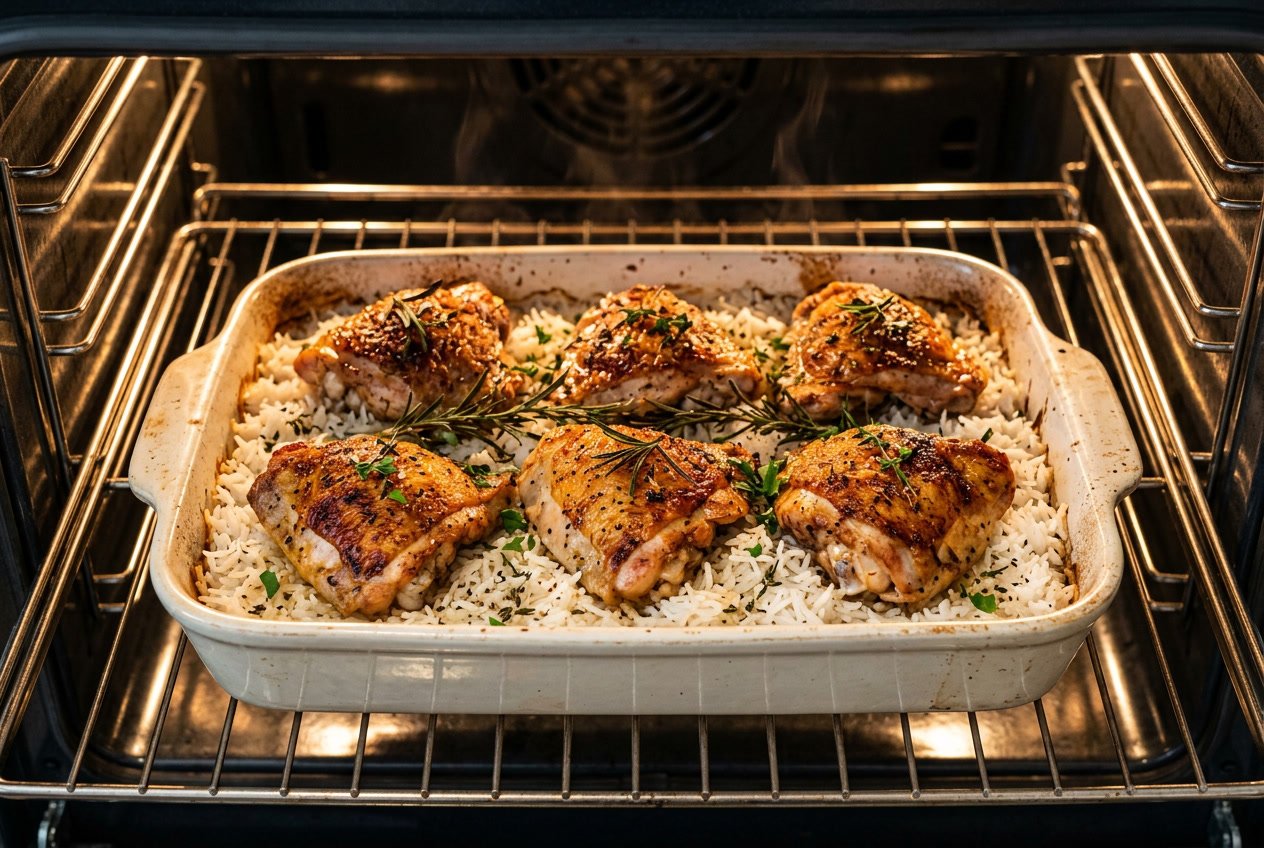
When you follow practical ingredient choices and a simple oven technique, you get consistent results every time.
This guide covers what makes this bake special, the essential ingredients, a step-by-step oven method, tips to avoid soggy rice or dry chicken, easy variations, and smart storing and reheating advice.
What Makes Oven-Baked Chicken Thighs and Rice Special
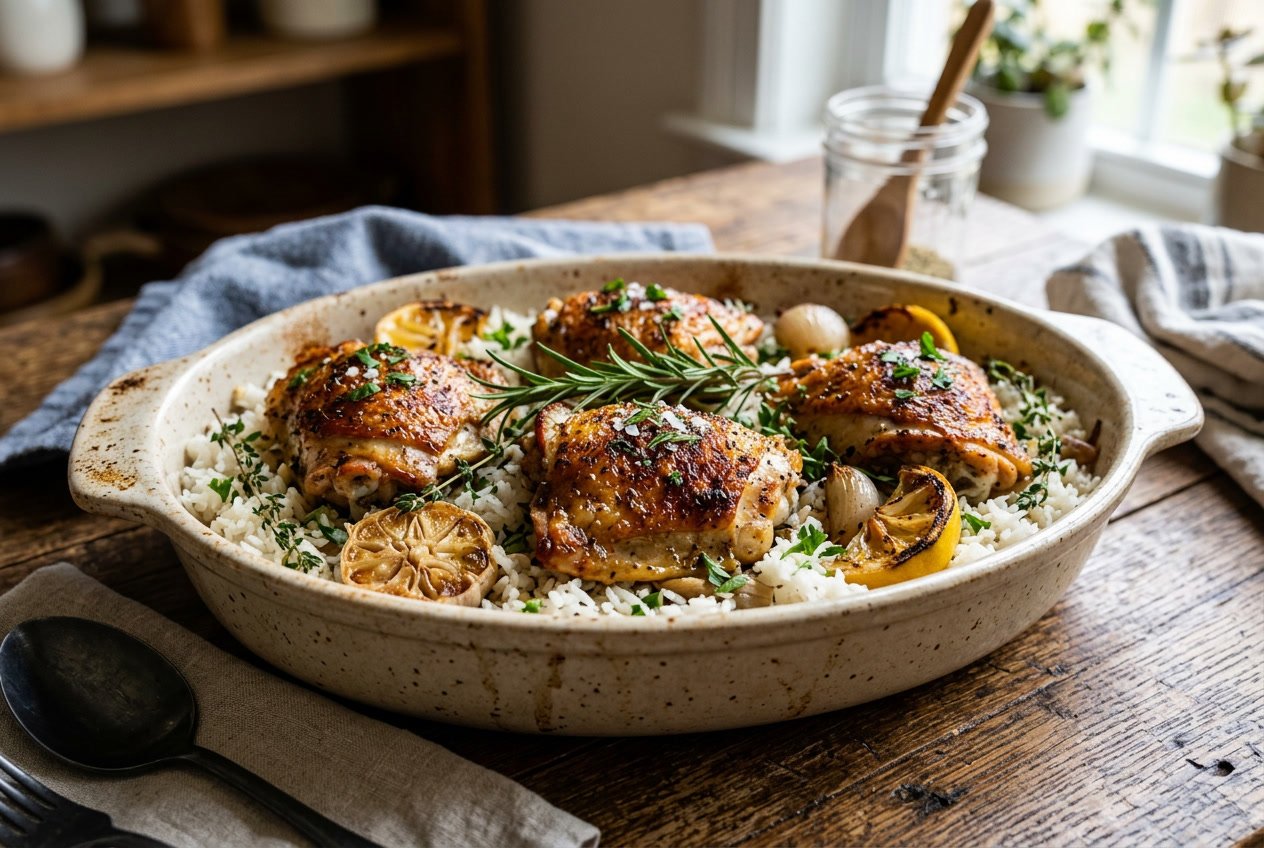
This dish gives you hands-off cooking, concentrated savory flavor, and easy portioning for family meals.
You can control textures: crisped chicken skin or removed skin for less grease, and rice that absorbs broth and aromatics.
Benefits of a One-Pan Dinner
You save time on prep and cleanup because you assemble and bake everything in a single baking dish.
That matters when you’re cooking weeknight dinners for multiple people; fewer pans mean less washing and faster service to the table.
A single pan also simplifies timing.
The rice cooks in the same oven environment as bone-in chicken thighs, letting you match cook times so both components finish together.
You avoid babysitting the stove and reduce the chance of undercooked chicken or gummy rice.
One pan helps with portion control and reheating.
Divide the cooked casserole into containers and refrigerate for up to four days.
Reheat covered in the oven or microwave for quick lunches that keep moisture better than separate dishes.
Flavor Fusion: Juicy Chicken Meets Aromatic Rice
When you bake chicken thighs directly on a bed of rice, the rice soaks up rendered juices and any added broth or butter.
That infusion gives each grain a savory depth you don’t get when cooking rice and meat separately.
Starting with aromatics like onion, garlic, butter or oil builds a flavor base that permeates both rice and chicken.
Using hot chicken broth when you add liquid helps jump-start the cooking and distributes heat evenly, improving rice texture and flavor absorption.
Finishing uncovered for the last stage concentrates flavor and allows the chicken exterior to brown while the rice loses excess steam.
You get tender, juicy chicken and rice with layered savory notes.
Why Chicken Thighs Are Best
Chicken thighs contain more connective tissue and fat than breast meat, which keeps them moist during an hour-long oven bake.
They stay juicy while the rice cooks through.
Bone-in thighs add flavor through marrow and bone contact, which enhances the broth the rice absorbs.
If you remove the skin to reduce grease, the thighs still retain enough fat to flavor the dish without leaving the rice oily.
Thighs also brown well under a brief uncovered finish, giving you a pleasing textural contrast: a lightly crisp exterior and succulent interior.
That contrast makes a simple one-pan oven-baked chicken and rice more satisfying for family meals.
Essential Ingredients for Chicken Thighs and Rice in Oven
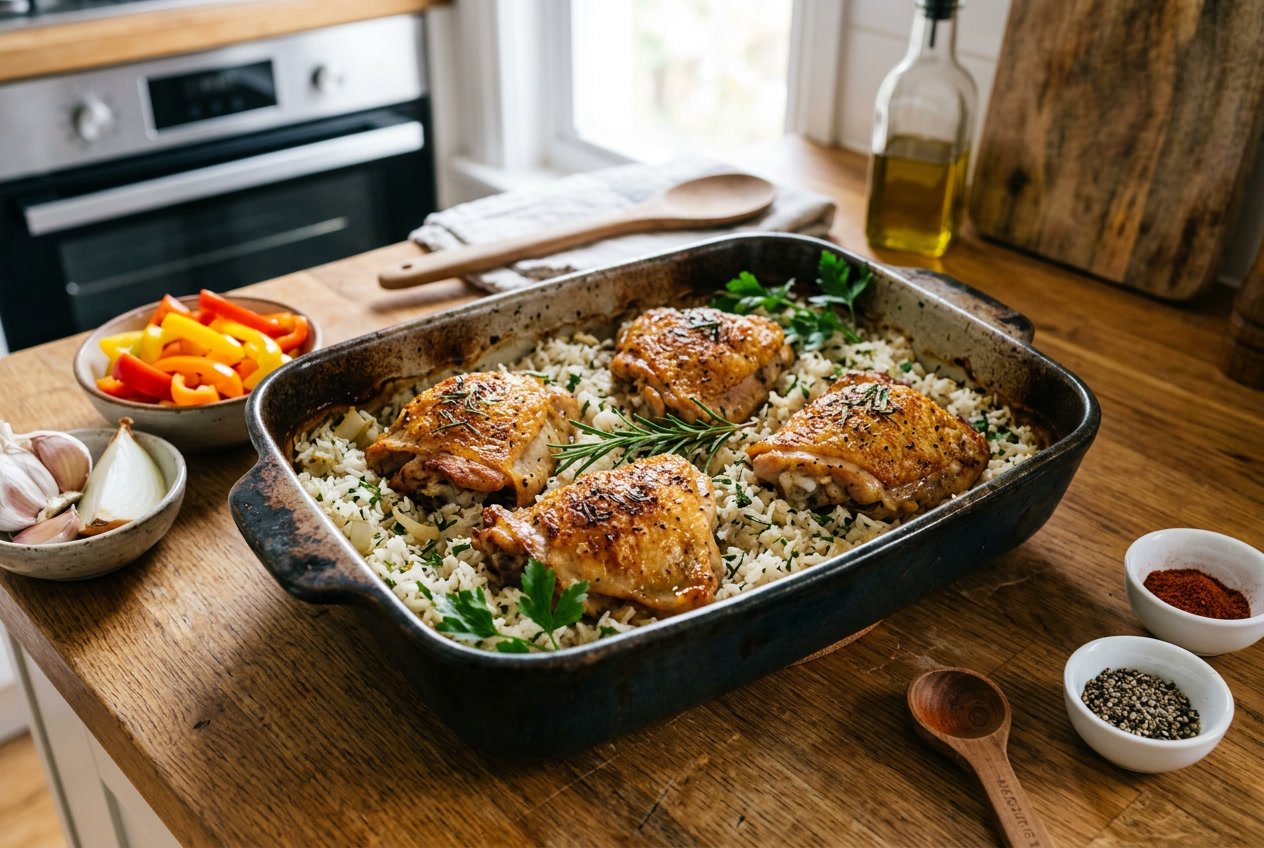
You need ingredients that balance moisture, texture, and concentrated flavor.
Choose thighs that match your preferred cooking time and fat level, pick a rice that holds up in the oven, and use broth, butter, and aromatics to build savory depth.
Choosing the Right Type of Chicken Thighs
Use bone-in chicken thighs when you want juicier meat and a slightly longer, forgiving bake time.
The bone adds flavor and helps keep the thigh tender; remove skin if you want less grease in the rice.
Choose skinless chicken thighs for easier prep and lower fat; they cook roughly the same time as rice if bone-in is used but may dry slightly faster.
For the quickest, leanest option, pick boneless skinless thigh fillets—they cook faster and may require you to partially cook the rice first or add the thighs later in the bake.
If you plan to rely on chicken juices to flavor the rice, prefer bone-in.
If you want control over fat, remove skin and trim excess.
Season both sides evenly and pat dry before browning or baking to promote better texture.
Best Rice Varieties for Baking
Pick uncooked white rice designed for even absorption.
Long-grain white rice gives the fluffiest, separate grains when baked.
Jasmine rice adds floral aroma and a slightly softer, stickier finish that many prefer with saucier or butter rice preparations.
Basmati yields fragrant, elongated grains with a dryer, distinct texture that pairs well with lighter seasonings.
Avoid risotto, paella, or minute rice for oven baking because they require different liquid ratios or cook times.
If you use brown rice, increase liquid by about 1/2 cup and extend bake time.
Otherwise, stick with long-grain, jasmine, or basmati for predictable results.
Rinse only if you want less surface starch; otherwise the starch helps a creamier butter rice.
Key Seasonings and Aromatics
Start with garlic powder and onion powder for reliable base flavor if you don’t want raw chopping.
Fresh garlic and chopped onion offer brighter, more complex aromatics when you oven sauté them briefly with butter.
Use paprika powder and smoked paprika to add warmth and a mild smokiness; paprika gives color while smoked paprika deepens the savory profile.
Add dried thyme for subtle herbal notes that stand up to slow oven heat.
Salt and black pepper remain essential; salt the rice and chicken so the grain absorbs seasoned liquid.
Finish with a small knob of butter stirred into the rice after baking for a glossy, buttery texture.
Broths and Liquids for Flavorful Rice
Use hot chicken broth as your primary liquid for the most concentrated savory flavor.
Vegetable broth works fine if you prefer a lighter or vegetarian-friendly base, but taste for salt since commercial broths vary widely.
Combine about equal parts hot broth and hot water (for example, 1 1/2 cups broth plus 1 1/4 cups water for 1 1/2 cups uncooked white rice) to control intensity and avoid overly salty rice.
Always pour hot liquids over the rice to jump-start cooking and prevent rice from becoming gummy.
If you remove skin from bone-in thighs, expect less rendered fat in the liquid; compensate with a tablespoon of butter for richer butter rice.
Adjust liquid slightly for jasmine or basmati if recipes call for it.
Tent the pan with foil for even steam cooking.
Step-by-Step Guide: How to Make Chicken Thighs and Rice in the Oven
You get juicy, well-seasoned chicken thighs set over fluffy, flavorful rice that cooks in the same pan.
You’ll build layers of flavor, season and (optionally) marinate the chicken, assemble everything in one baking dish, then bake covered and finish uncovered for a golden top.
Preparing the Flavor Base
Start by choosing your liquid.
Hot chicken stock yields the best savory depth, but hot water plus bouillon works if you prefer.
Measure liquid to rice ratio carefully—1 1/2 to 1 3/4 cups liquid per 1 cup long-grain white rice is a reliable target for oven cooking; adjust slightly for jasmine or basmati if needed.
Sauté aromatics briefly if you want extra flavor.
Melt 1–2 tablespoons butter or oil in a skillet, sweat a diced onion and 2 minced garlic cloves until translucent.
Deglaze with a splash of stock, then stir in rice so each grain gets coated with garlic butter.
Transfer this buttery garlic rice into your baking dish and spread it evenly.
Add seasoning to the rice: 1 teaspoon salt per cup of rice, 1/2 teaspoon black pepper, and a pinch of smoked paprika or dried oregano.
Scatter a few pats of butter or a drizzle of olive oil over the rice to keep it rich and prevent sticking during the bake.
Seasoning and Marinating the Chicken
Pat the chicken thighs dry; this helps the rub adhere and promotes browning.
Mix a simple chicken rub: 1 teaspoon salt, 1/2 teaspoon black pepper, 1 teaspoon smoked paprika, 1 teaspoon garlic powder, and 1/2 teaspoon dried oregano.
Rub this evenly under and over each thigh.
If time allows, marinate the thighs for 15–30 minutes at room temperature or up to 4 hours in the fridge to deepen flavor.
For a quicker option, sear the thighs skin-side down in a hot skillet for 3–4 minutes to develop a golden crust before you bake.
This step enhances oven baked chicken texture and reduces final oven time.
Brush or spray a light coating of oil over the rubbed thighs before placing them on the rice.
This encourages browning during the uncovered bake step and helps produce that crisp, slightly caramelized finish.
Layering and Assembling the Dish
Use a 9×13-inch or similarly sized oven-safe pan for even cooking.
Spread the prepared rice in an even layer across the dish, smoothing the surface so the rice cooks uniformly.
Make shallow indentations where each thigh will sit; this helps the thighs transfer juices into the rice.
Nestle the thighs into the rice with the seared or skin-side-up surface exposed.
Pour any remaining hot stock evenly around—not directly over—the thighs so the rice absorbs liquid without washing off the seasoning.
Add vegetables if desired (carrots, peas, or sliced bell peppers), scattering them between thighs for even roasting.
Cover the dish tightly with aluminum foil or a lid to trap steam.
A tight seal ensures the rice cooks through while the thighs remain moist.
Reserve a small brush of oil or butter to apply after the covered bake for a crisp finish.
Baking to Perfection
Preheat the oven to 350°F (175°C).
Bake covered for 30–35 minutes for bone-in thighs with long-grain white rice; check the rice after that time.
If using denser rice or brown rice, increase covered baking to 45–50 minutes and verify doneness with a fork.
Remove the foil and brush the thighs with a little oil or melted butter.
Return the dish to the oven and bake uncovered for an additional 10–15 minutes, or broil 2–4 minutes at the end to brown the tops.
Chicken is done when an instant-read thermometer reads 165°F (74°C) at the thickest part.
Let the pan rest 8–10 minutes before serving to allow the rice to finish steaming and to make portioning easier.
Fluff the buttery garlic rice with a fork, garnish with chopped parsley, and serve the oven baked chicken thighs over the rice.
Tips for Perfect Oven-Baked Chicken Thighs and Rice
Control liquid, timing, and seasoning to get tender, fluffy rice and juicy, well-browned chicken with one pan.
Use hot liquids, match chicken type to cook time, and finish uncovered for color.
Ensuring Moist, Fluffy Rice
Use 1 1/2 cups hot chicken stock plus 1 1/4 cups hot water for 1 1/2 cups uncooked white rice (long grain, jasmine, or basmati) in a 9×13″ pan.
Pour boiling or very hot liquid.
Delicious Variations and Substitutions
You can change the cut, marinade, vegetables, rice type, and cooking liquid to adapt the oven-baked chicken thighs and rice recipe for time, flavor, or dietary needs.
Small swaps—like bone-in to boneless thighs or chicken broth to vegetable stock—have big effects on texture and cooking time.
Using Different Cuts or Marinades
Swap bone-in, skin-on thighs for boneless skinless thighs to cut bake time by about 10–15 minutes; reduce liquid slightly and check internal temp of 165°F.
If you use chicken breasts, expect drier results unless you brine briefly (15–30 minutes) or cut breasts into larger pieces and lower oven temp to 350°F.
Marinades change flavor and how the meat browns.
A citrus-garlic marinade adds brightness and tenderizes.
Soy-honey blends give a sticky glaze that caramelizes on the skin.
For a simple dry rub, use smoked paprika, garlic powder, salt, and pepper to mimic a roasted, savory profile without extra liquid.
If you want a one-pan chicken and rice bake that stays juicy, prefer bone-in thighs for the best moisture and flavor transfer into the rice.
Use an oven-safe skillet or Dutch oven so you can sear first for crisp skin then finish in the oven with the rice.
Vegetable Additions and Flavorful Mix-Ins
Dice onion, bell pepper, or slice mushrooms and add them directly to the rice before baking. They release moisture and flavor into the grains.
Cut hard vegetables like carrots or parsnips small (¼–½ inch) so they finish cooking with the rice. Add peas, corn, or chopped spinach in the final 5 minutes of rest or stir them in after baking to keep their texture.
Minced garlic, thyme, or bay leaf infuse long-grain rice while it cooks in the oven. Stir in a tablespoon of tomato paste or a splash of white wine when you deglaze the pan before adding rice and broth.
Top the finished dish with chopped parsley or lemon zest to brighten the flavor.
Rice and Broth Alternatives
Long-grain white rice cooks tender in about 25–30 minutes in the oven with a 2:1 broth-to-rice ratio. If you use brown rice, add about ¼–½ cup more broth and bake for 40–50 minutes.
Check brown rice for doneness and add a few tablespoons of hot liquid if needed. Use chicken broth for a richer flavor or swap in low-sodium vegetable stock for a lighter taste or a pescatarian meal.
Pair the dish with tofu instead of chicken for a meatless option. For creamier rice, replace up to 1 cup of broth with coconut milk or light cream and reduce added salt.
Serving, Storing, and Reheating Tips
Serve the dish straight from the pan for easy cleanup. Portion intentionally for families and store leftovers promptly to keep rice and chicken safe and tasty.
How to Plate for Family Dinners
Plate warm oven-baked chicken thighs and rice directly from the pan to preserve juices and crisp skin. For family dinners, serve one thigh and about 3/4 to 1 cup of rice per adult.
Add steamed greens or a simple salad on the side for color and fiber. For buffet-style service, use shallow serving platters and arrange rice in a mound, then fan the thighs on top.
Spoon pan juices or a quick lemon-herb drizzle over everything. Slice thighs for kids and mix a little sauce into the rice so flavors reach every bite.
Keep separate serving utensils for chicken and rice to control portions and avoid sogginess.
Storage Best Practices
Cool leftovers within two hours and transfer them to airtight containers to limit bacterial growth. Store chicken and rice together only if both are fully cooled; otherwise, store separately.
Label containers with the date and eat refrigerated leftovers within 3–4 days. Reheat only the amount you plan to eat.
Place containers in the coldest part of the fridge and avoid overpacking so air can circulate. Discard rice if it smells off or shows texture changes, since starchy dishes are prone to bacterial risk.
Freezing and Reheating for Meal Prep
For meal prep, freeze individual portions in freezer-safe containers or vacuum bags. Remove excess air to reduce freezer burn.
Store for up to 2–3 months for best texture. Longer storage will degrade rice more than chicken.
Thaw overnight in the fridge before reheating. Alternatively, reheat from frozen at a low oven temperature (300–325°F / 150–165°C) and keep the dish covered until the internal temperature reaches 165°F (74°C).
To retain moisture and restore crisp skin, keep the dish covered for most of the reheating time. Then uncover and broil or raise the oven to 425°F for 3–5 minutes to crisp the thighs.
Use a probe thermometer to check that the food is reheated safely.


