
Chicken Thighs and Rice Casserole: The Complete One-Pan Comfort Guide
Craving a simple, satisfying meal that practically makes itself? Chicken thighs and rice casserole delivers comfort without fuss.
This one-pan dish pairs juicy, oven-browned thighs with creamy, perfectly cooked rice. You get a hearty, family-friendly dinner with minimal hands-on time.
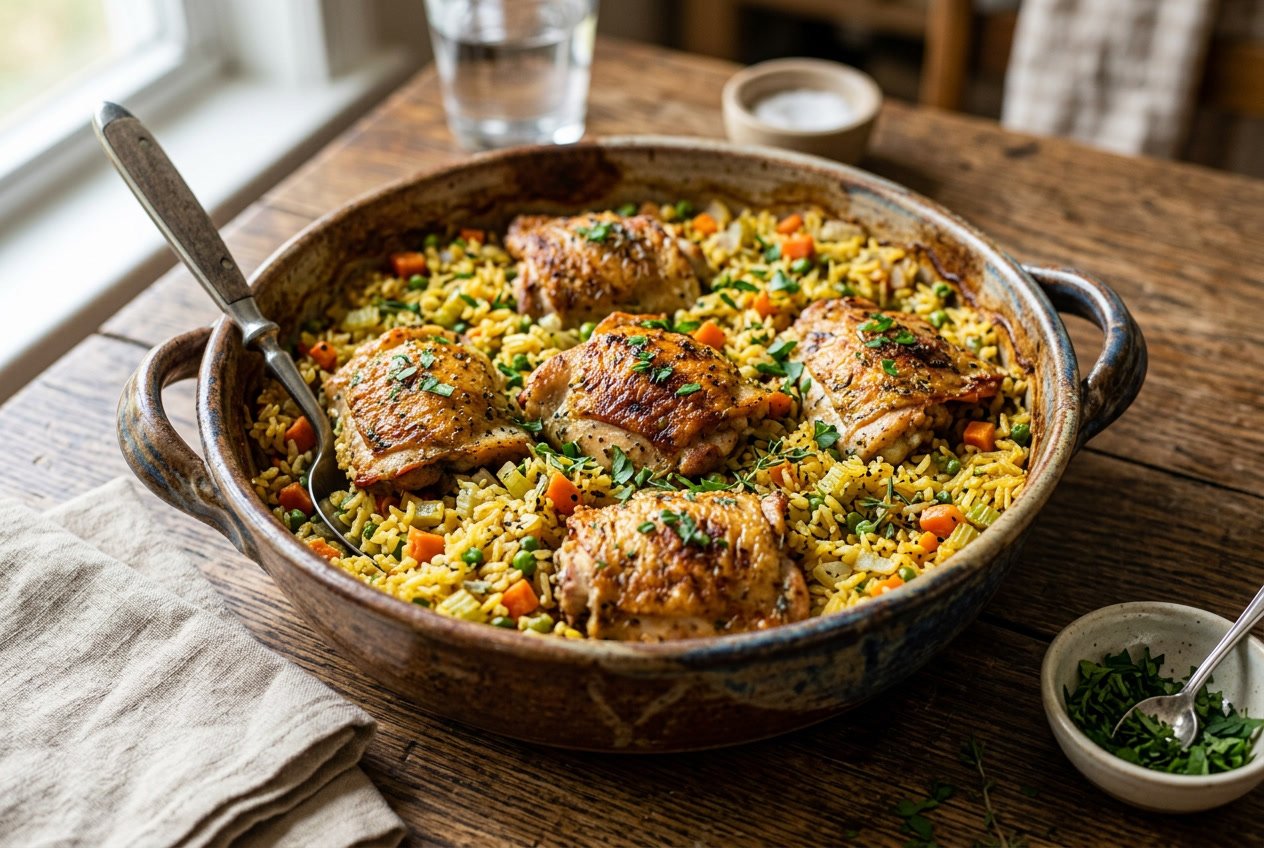
You’ll find the core ingredients you need, a clear step-by-step recipe, and practical tips to keep the chicken moist and the rice fluffy. Explore creative variations, serving ideas, and straightforward advice for meal prep, storage, and reheating.
Core Ingredients for Chicken Thighs and Rice Casserole
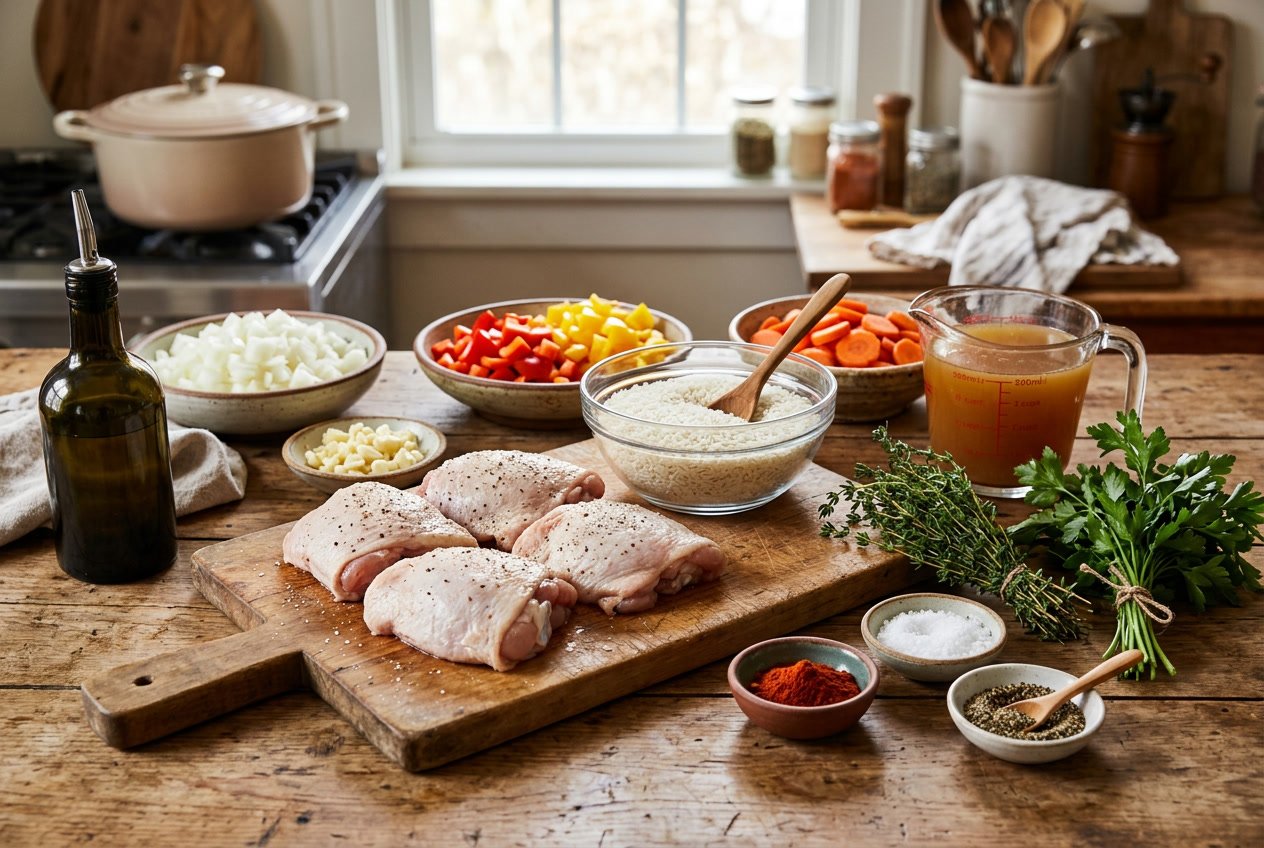
Rely on three main pillars: the right chicken cut, a rice that matches the cooking time and liquid ratio, and a broth or liquid that carries flavor.
Seasonings and aromatics finish the dish and control salt, fat, and overall balance.
Best Types of Chicken Thighs to Use
Choose bone-in thighs for the deepest flavor and juicier meat. The bone adds richness during oven baking and helps prevent drying.
Bone-in, skin-on thighs will deliver the most browning and fat for a richer casserole. They need a bit more time and space in the dish.
Use boneless skinless chicken thighs for faster, more compact casseroles and easier serving. They brown quickly and distribute more evenly over rice.
Watch cooking time so boneless thighs don’t overcook. Trim excess fat, pat dry, and season before browning or arranging on top of the rice.
Choosing the Perfect Rice
Long-grain white rice (including jasmine) gives separate, fluffy grains and works well with the typical 1:1.5–1:2 rice-to-liquid ratio in baked casseroles. It holds shape and won’t get gluey when assembled with other ingredients.
Basmati rice brings a nutty aroma and slightly firmer texture. Use it if you want a fragrant result.
Avoid short-grain or sticky rice unless you want a risotto-like texture. If you plan to use brown rice, increase both liquid (by about 1/2 cup per cup rice) and bake time, or par-cook it first.
Medium or long-grain white rice is the simplest, most predictable choice for one-dish oven-baked recipes.
Broth and Liquid Options
Use chicken stock or chicken broth for the most cohesive flavor. Stock tends to be richer if you want deeper mouthfeel.
Vegetable stock works well as a neutral, lighter alternative. It pairs nicely when you include mushrooms, carrots, or peas.
If you prefer a creamier finish, add heavy cream or sour cream sparingly—about 1/4 to 1/2 cup for a 9×13 dish—mixed into the stock. When a recipe calls for wine or sherry, replace it with an extra 1/4 cup of stock if you avoid alcohol.
Measure liquids precisely: a good starting point is about 1 1/2 cups liquid per cup long-grain white rice when baked in a covered casserole. Adjust for rice type and added dairy.
Essential Seasonings and Aromatics
Start with salt and freshly ground black pepper as baseline seasonings. Season the chicken before browning and adjust the dish’s liquid seasoning after baking.
Brown chicken and deglaze the pan with stock or wine to build savory depth. Use onions and garlic as core aromatics—cook them until translucent to avoid raw bites.
Add mushrooms for umami; they release moisture and concentrate flavor as they brown. Poultry seasoning or a mix of thyme and rosemary complements thighs.
Parsley brightens at the end. Paprika adds color and subtle smokiness; add 1/2 teaspoon per pound of chicken.
If you add vegetables like carrots or peas, account for their moisture and sweetness when seasoning. Taste the cooking liquid before you pour it over the rice to check salt and herb balance.
Step-by-Step Recipe
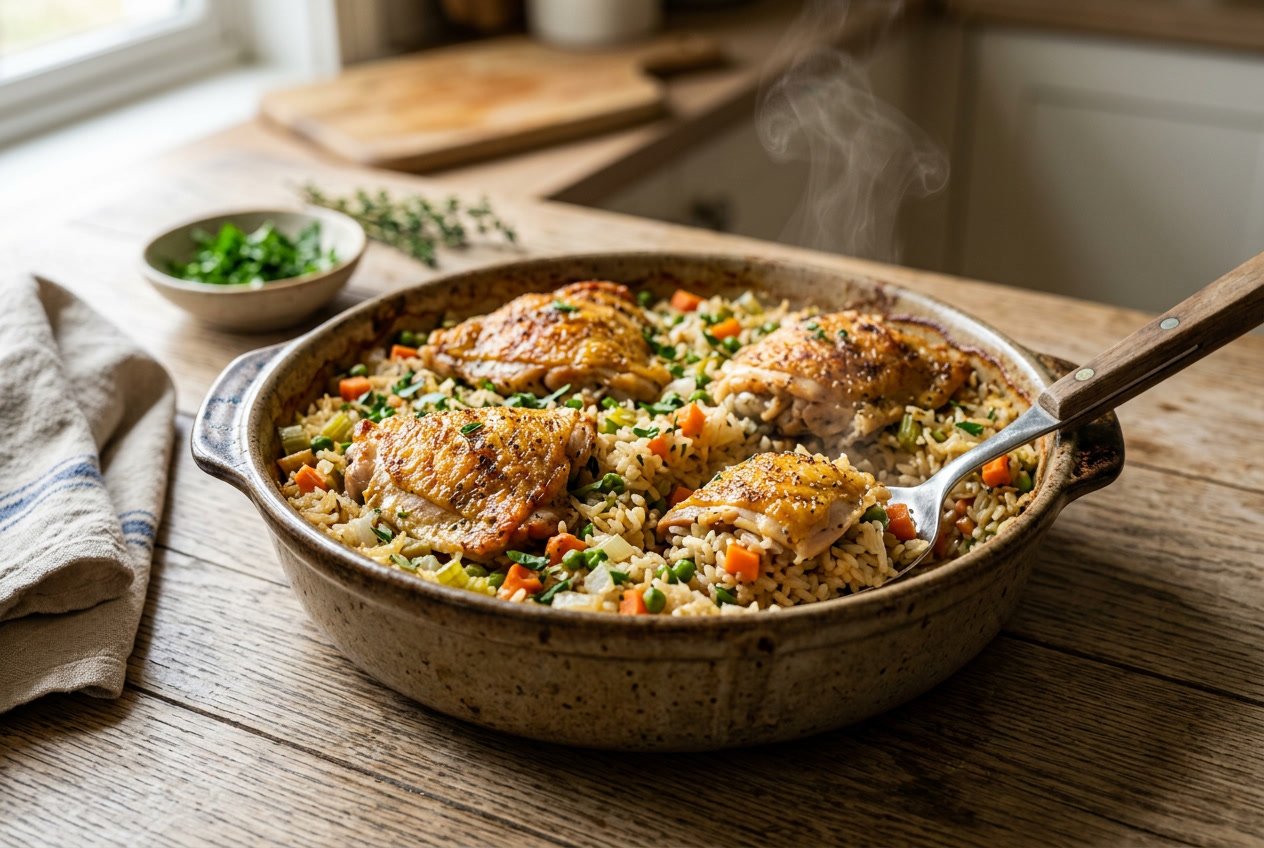
This recipe focuses on three tasks: flavoring the chicken, building a well-seasoned rice base, and cooking until the rice is tender and the thighs reach 165°F.
You’ll also find stovetop and slow-cooker options for one-pan convenience or hands-off cooking.
Marinating and Seasoning the Chicken
Pat 4–6 bone-in or boneless chicken thighs dry. Drying helps the seasoning stick and promotes a better crust if you bake uncovered at the end.
Make a simple rub: 1½ tsp salt, 1 tsp black pepper, 1 tsp smoked paprika, 1 tsp garlic powder, and ½ tsp dried thyme. Rub this evenly over the thighs and let them rest 15–30 minutes at room temperature, or refrigerate up to 4 hours for deeper flavor.
If you prefer a wet marinade, mix 2 tbsp olive oil, 1 tbsp lemon juice, and the same spices. Marinate 30 minutes to 2 hours.
Brush the thighs with a little oil before placing them on the rice to encourage browning during the final uncovered bake.
Assembling the Rice Base
Use 1½ cups long-grain rice (jasmine or basmati) rinsed until water runs clear. Rinsing removes surface starch and prevents gummy rice in the casserole.
Sauté one diced onion and two minced garlic cloves in 1–2 tbsp bacon fat, butter, or oil until soft. Transfer onion and rice to a greased 9×13″ dish.
Add 3½–4 cups low-sodium chicken broth and 1 tsp salt, stirring to distribute the rice and aromatics evenly. Nestle the seasoned thighs skin-side up on top of the rice without pressing them in.
Scatter optional vegetables (1 cup peas or diced carrots) around the thighs for a complete one-pan dinner.
Oven Baking for Optimal Results
Preheat your oven to 400°F (200°C). Cover the dish tightly with foil to trap steam so the rice cooks through without drying out.
Bake covered for 40–50 minutes with boneless thighs, or 50–60 minutes for bone-in thighs. After the covered bake, remove foil and bake 10–15 more minutes to crisp the chicken skin and evaporate excess liquid.
Verify doneness with an instant-read thermometer: thighs must reach 165°F (74°C). If rice is still firm but thighs are done, return to oven covered with 5–10 minutes of added liquid (¼ cup hot broth) and reseal.
Garnish with chopped parsley or green onions before serving.
Making It in the Slow Cooker or Stovetop
For the slow cooker, brown thighs briefly. Layer rinsed rice, sautéed onion, and 3 cups hot broth in the cooker.
Place thighs on top and cook on low for 3–4 hours or high for 1.5–2 hours. Check rice texture and add ¼ cup broth if needed.
On the stovetop, brown thighs in a deep skillet or Dutch oven, then remove them. Sauté onion and garlic, add rice and broth, and return thighs to the top.
Cover tightly and simmer on very low for 18–22 minutes until rice absorbs liquid. Let rest 5–10 minutes before serving to finish steaming.
Tips for Moist Chicken and Fluffy Rice
Keep the chicken juicy and the rice light by controlling surface moisture, cooking temperature, and liquid ratios.
Use savory liquid in place of water and monitor oven time to prevent overcooking or gummy grains.
Preventing Dry Chicken
Pat the thighs dry with paper towels before seasoning. Removing excess surface moisture helps spices adhere and promotes browning.
Bring bone-in thighs to room temperature for 20–30 minutes before baking. This reduces oven shock and shortens cook time.
Use an instant-read thermometer inserted into the thickest part to check doneness. Cover the pan for most of the bake to trap steam; remove foil for the last 10–15 minutes to brown the top.
If you use boneless breasts, partially bake the rice first and add the breasts later to avoid overcooking.
Avoiding Mushy Rice
Measure rice and liquid precisely. For long-grain white rice in a casserole, a 1:1 to 1.25:1 liquid-to-rice ratio by volume usually works because the pan and added chicken juices contribute moisture.
Use long-grain white rice rather than minute or short-grain varieties. Long-grain holds structure better in baked casseroles.
Keep the rice fully submerged before baking so kernels cook evenly. If it sits dry, add ¼–½ cup extra broth.
After baking, let the dish rest 5–10 minutes covered. This final steam step firms the grains and prevents a sticky texture when you fluff the rice with a fork.
Using Broth Instead of Water
Swap low-sodium chicken broth for water to add savory depth and help keep rice moist. Broth contributes flavor and a small amount of salt, so cut added salt in the seasoning by about half.
Use warm broth when mixing with rice and soup or cream base. Warm liquid gets absorbed faster and reduces overall oven time.
If you want extra richness, use half broth and half cream of chicken or mushroom soup. That combination boosts moisture and flavor for a comforting weeknight meal.
Keep an extra ½ cup of warm broth on hand while baking. If the rice looks dry at the halfway point, stir in the extra liquid gently and reseal the pan.
Creative Variations and Additions
These ideas change texture, boost flavor, and adapt the casserole to what you have on hand. Cheese types, vegetables, creamy swaps, and seasoning blends make the biggest impact.
Use them to tailor a chicken thighs and rice casserole to your pantry or dietary needs.
Cheesy Chicken and Rice Bake
Choose cheeses that melt well: cheddar for sharpness, mozzarella for stretch, and Monterey Jack for a milder melt.
For a golden top, combine 1 cup shredded cheese mixed with 1/4 cup panko and 1 tbsp melted butter. Sprinkle over the casserole in the final 10 minutes of baking.
Layer cheese into the dish rather than only on top to keep the interior creamy. If using pre-shredded cheese, add a tablespoon of cornstarch per cup to reduce oil separation.
For extra richness, fold 1/2 cup cream cheese or mascarpone into the rice before adding the thighs.
If you want a lighter option, use reduced-fat shredded cheese and swap plain Greek yogurt for half the cream component. Adjust salt downward when using salty cheeses like Parmesan.
Adding Fresh or Frozen Vegetables
Work with vegetables that release little water while baking: broccoli florets, diced carrots, bell peppers, and green beans perform well.
If using frozen veg, do not thaw; add directly to the casserole and increase bake time by 5–10 minutes so the rice absorbs moisture evenly.
Chop vegetables into uniform, bite-sized pieces so they cook at the same rate as rice. For quick nutrition, fold in 2 cups fresh spinach in the last 5 minutes of resting—residual heat wilts it without overcooking.
Roast denser vegetables (like butternut squash) first or par-cook them on the stovetop.
When you substitute vegetable stock for chicken stock, reduce added salt and taste before baking. Vegetable stock keeps the dish vegetarian-friendly if you later swap the chicken for a meatless protein.
Swapping Creamy Components
Common creamy bases include cream soup, heavy cream, and yogurt. For a pantry-friendly rice casserole, diluted cream soup (one can plus 1/2 cup milk) gives dependable thickness and flavor.
If you prefer less processed ingredients, mix 1 cup plain Greek yogurt with 1/2 cup milk and 2 tbsp flour to mimic soup consistency. Use whole milk or low-sodium chicken or vegetable stock to thin mixtures without losing body.
If you use vegetable stock, increase a thickening agent—1 tbsp cornstarch dissolved in 2 tbsp cold water—so the rice absorbs enough liquid and doesn’t turn soupy.
For dairy-free versions, swap cream with canned coconut milk (use the lighter variety if you want less coconut flavor) or a cashew cream made from blended soaked cashews and water.
Adjust seasonings; nut-based creams need more acid like 1 tbsp lemon juice to brighten the dish.
Flavorful Seasoning Twists
Start with 1 tsp each of salt and black pepper per 2 cups uncooked rice as a baseline.
For Mediterranean notes, add 1 tsp dried oregano, 1/2 tsp thyme, and 1/4 cup chopped sun-dried tomatoes.
For a smoky profile, stir 1 tsp smoked paprika and 2 strips of cooked, crumbled bacon into the rice mixture.
To create a bright, herb-forward casserole, mix 2 tbsp chopped fresh parsley, 1 tbsp chopped dill, and the zest of 1 lemon into the finished dish before serving.
For an umami boost without extra salt, fold in 2 tbsp soy sauce or 1/4 cup grated Parmesan.
When you follow a specific rice casserole recipe, scale spices with the rice and stock proportion.
Increase seasoning by about 50% when doubling the recipe.
Taste the liquid before baking to avoid overseasoning, since flavors concentrate during cooking.
Serving Suggestions and Complete Meals
Pair the casserole with sides that add texture, brightness, and a vegetable component for a balanced meal.
Choose simple, make-ahead elements that complement the creamy rice and savory chicken without overpowering their flavors.
Perfect Vegetable Sides
Roasted or sautéed vegetables cut through the casserole’s richness and add color to the plate.
Try roasted carrots and cauliflower tossed with olive oil, salt, and a pinch of smoked paprika; roast at 425°F (220°C) for 20–25 minutes until caramelized.
Steamed broccoli or sautéed spinach works when you want something quick.
Steam florets for 4–6 minutes until bright green, then toss with lemon zest and a drizzle of olive oil.
For more crunch, prepare a simple slaw with shredded cabbage, grated carrot, a tablespoon of apple cider vinegar, a teaspoon of honey, and a pinch of salt.
Chill 15 minutes before serving to let flavors meld.
Green Beans with Bacon Pairing
Green beans with bacon supply both texture and savory fat that echo the chicken thighs.
Trim 1 lb (450 g) green beans and blanch for 3 minutes, then shock them in ice water to preserve color.
Cook 4–6 strips of bacon until crisp, drain, then sauté a minced shallot in the bacon drippings for 1 minute.
Toss beans with the shallot and crumbled bacon.
Finish with a squeeze of lemon and cracked black pepper.
This side reheats well and complements the casserole’s creamy rice.
You can plate it quickly for a comforting weeknight meal.
Salads and Light Accompaniments
Choose salads that introduce acidity and a fresh mouthfeel to balance the casserole.
A mixed greens salad with halved cherry tomatoes, thinly sliced red onion, and a vinaigrette of 3:1 olive oil to red wine vinegar brightens each bite.
For heartier contrast, assemble an arugula and pear salad with shaved Parmesan, toasted walnuts, and a lemon-honey dressing.
The peppery arugula and crunchy nuts provide contrast to the soft casserole texture.
Serve crusty bread or garlic bread on the side if you want to soak up sauce.
Skip heavy sides if you’ve already added green beans with bacon to keep the meal balanced.
Meal Prep, Storage, and Reheating Instructions
This one-pan casserole works well for meal prep.
You can prep components ahead, store cooked portions safely, and reheat so the chicken stays juicy and the rice stays fluffy.
Making Ahead for Busy Days
Cook the casserole through to completion or stop after browning the chicken and toasting the rice for faster assembly later.
If you stop early, cool the skillet components to room temperature within 2 hours.
Refrigerate the browned chicken and rice mixture separately in airtight containers.
For fully cooked make-ahead meals, portion into individual airtight containers while still slightly warm.
This short resting helps juices redistribute.
Label containers with date and contents.
You can also prepare the bacon, sautéed onions, and garlic up to 48 hours ahead.
Store them in a small sealed container and add when reheating to restore flavor and texture.
For freezer meals, cool completely, then freeze in shallow, single-serving containers or a 9×13 pan wrapped tightly.
Use within 8 weeks for best quality.
Thaw overnight in the refrigerator before reheating.
How to Store Leftovers
Refrigerate leftovers within two hours of cooking to prevent bacterial growth.
Use shallow, airtight containers to speed cooling and keep the chicken tender and rice separate from any wet sauces when possible to avoid sogginess.
Store in the fridge for 3–4 days.
For longer storage, freeze individual portions in freezer-safe containers or heavy-duty freezer bags, removing as much air as possible.
Freeze flat for efficient stacking.
Clearly label with date and reheat-by date.
When thawing frozen casserole, move containers to the refrigerator for 24 hours.
If you must reheat from frozen, use longer, gentler heat to ensure even warming without drying out.
Best Ways to Reheat Without Drying Out
Oven: Preheat to 325°F (160°C). Place the casserole in an oven-safe dish and add 2–4 tablespoons of chicken broth or water per cup of rice to restore moisture.
Cover the dish tightly with foil and bake for 20–30 minutes for individual portions or 30–45 minutes for a full pan. Remove the foil for the last 5 minutes if you want a crisp top.
Stovetop: Reheat single portions in a skillet over low heat with a splash of broth. Cover the skillet and stir occasionally until heated through.
You can crisp the chicken skin using this method.
Microwave: Set the microwave to 50–70% power. Reheat in 60–90 second intervals, stirring rice or turning the chicken between intervals.
Add a tablespoon of broth per portion and cover with a microwave-safe lid or damp paper towel to trap steam and prevent drying.
To refresh texture, sprinkle chopped scallions or squeeze lemon before serving. For crisp edges, transfer reheated portions to a broiler for 1–2 minutes and watch closely.


