
Chicken Thighs and Potatoes in Oven: Ultimate One-Pan Dinner Guide
You can make a simple, satisfying oven-baked one-pan meal with crisp-skinned chicken thighs and tender, herb-roasted potatoes. Season bone-in, skin-on thighs, sear briefly for color if you like, then roast them over seasoned potatoes for juicy meat and caramelized potatoes.
This guide covers essential ingredients, a clear step-by-step prep guide, and oven techniques for consistent results.
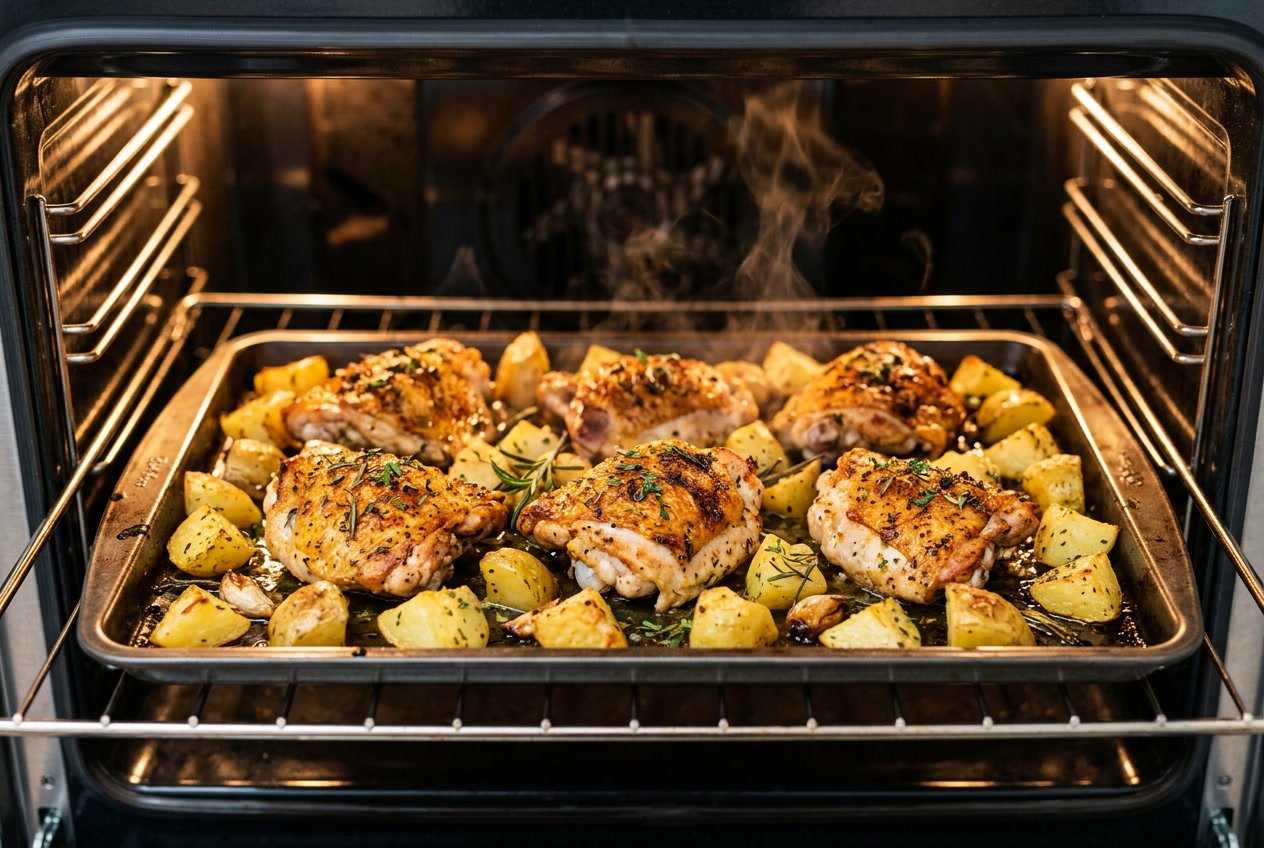
You’ll find practical variations to match your pantry and tastes, like citrus-herb brightness, smoky paprika, or a spicy kick. There are also tips for storing, freezing, and reheating so leftovers stay flavorful and skin stays crisp.
Essential Ingredients for Chicken Thighs and Potatoes in Oven
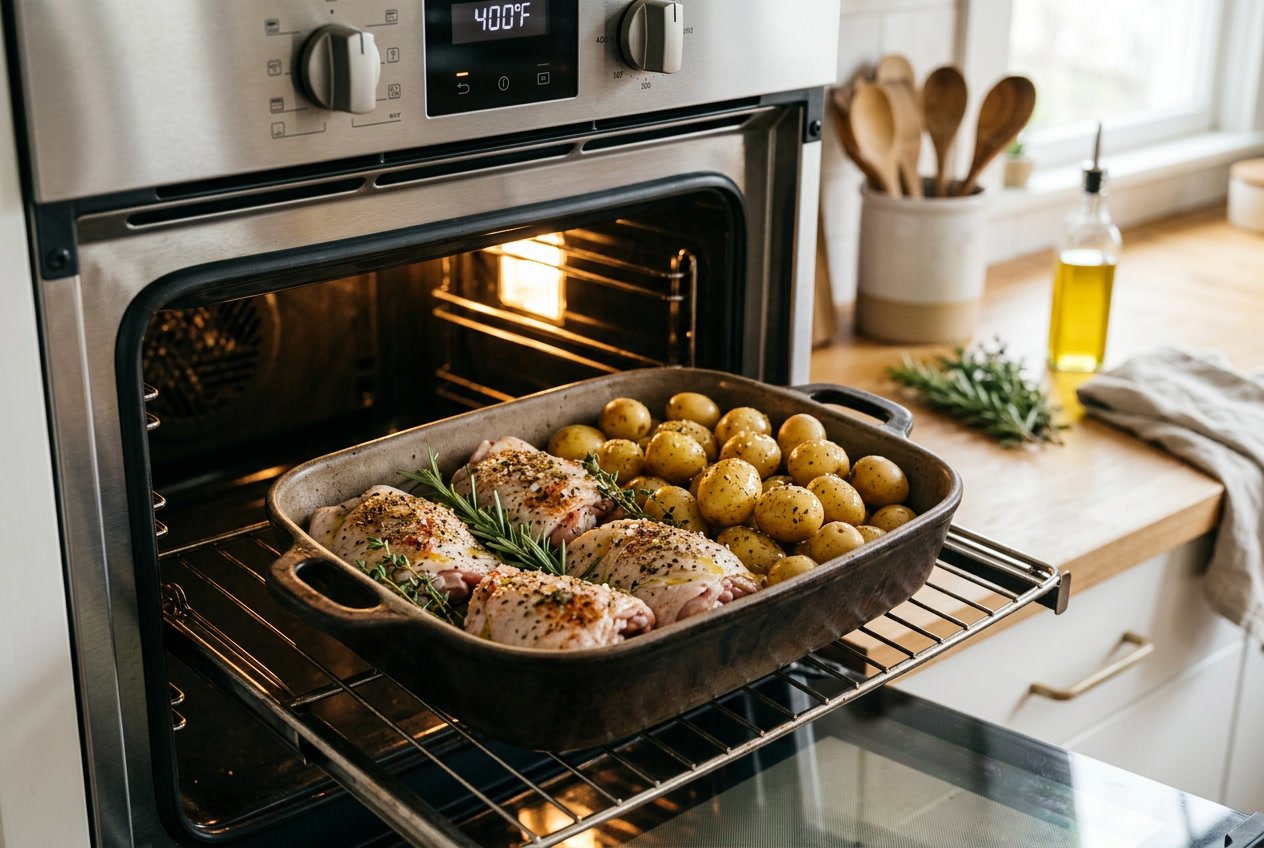
You need a few dependable staples: chicken thighs with skin-on for crispness, potatoes that hold shape, and pantry seasonings plus olive oil. Small adjustments to potato variety, herbs, or a splash of broth shape texture and flavor.
Choosing the Best Chicken Thighs
Pick bone-in, skin-on chicken thighs for juicier meat and crisp skin. Bone-in reduces overcooking and keeps meat moist.
Skin renders fat that flavors potatoes. If you prefer leaner meat, use boneless skinless thighs but shorten roasting time by 5–10 minutes and watch temperature.
Buy thighs that look plump with pale pink flesh and minimal excess liquid. Trim extra fat under the skin for less flare-up and rub the skin dry with paper towels.
Dry skin browns better. Roast until internal temperature reaches 165°F (75°C) measured at the thickest part, not touching bone.
Selecting Potatoes: Varieties and Tips
Choose potatoes that match the texture you want. Baby potatoes and red potatoes hold shape and roast to tender, slightly waxy pieces.
Yukon Golds brown well and have a buttery interior. Avoid high-starch Russets unless you want very fluffy, falling-apart chunks.
Cut potatoes into uniform pieces, about 1–1½ inches, so they finish with the chicken. Parboil firmer varieties 5–7 minutes to reduce oven time and ensure even doneness.
Toss potatoes in olive oil and a pinch of salt before adding to the pan so they crisp instead of steaming.
Key Seasonings and Flavor Boosters
Start with olive oil, salt, and black pepper as your base. Add paprika for color and a mild smoky note, plus garlic powder and onion powder for savory depth.
Dried thyme pairs well with poultry and potatoes; use about 1 teaspoon per pound total. For a sharper garlic hit, combine minced fresh garlic with garlic powder.
Optional: a squeeze of lemon or ½ cup chicken broth in the pan adds brightness and prevents dryness. Sprinkle finishing fresh herbs like chopped thyme after baking to preserve aroma.
Optional Add-Ins for Customization
Add sliced onions, halved garlic cloves, or carrot chunks for more flavors and textures. Onions caramelize and add sweetness, while whole garlic cloves roast mellow and nutty.
For a sweeter twist, swap half the potatoes for cubed sweet potatoes—reduce roast time slightly as sweet potatoes soften faster. For extra crisp, broil 2–3 minutes at the end with the skin facing up.
If you want a creamier finish, stir in a splash of cream or a few tablespoons of butter in the last 5 minutes. Keep additions simple so the core flavors of chicken thighs, potatoes, olive oil, paprika, garlic powder, onion powder, and dried thyme remain the focus.
Step-by-Step Preparation Guide
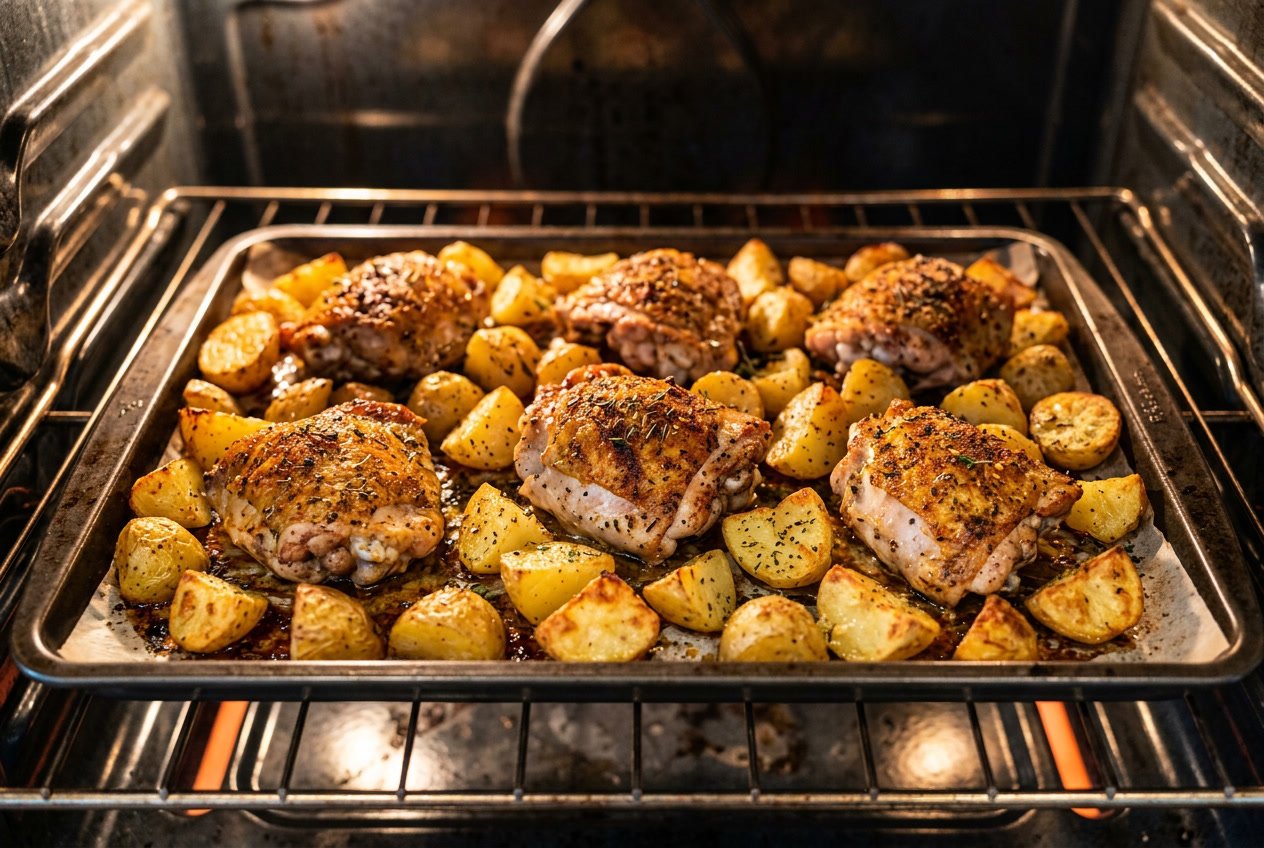
Prep the chicken so skin crisps and meat stays juicy. Cut and season potatoes for even roasting, then arrange everything in the baking dish so heat circulates and cooking is consistent.
Prepping Chicken Thighs for Baking
Pat each skin-on chicken thigh dry with paper towels to remove surface moisture. Trim excess fat and, if thighs vary widely in size, use kitchen shears to even them so cooking time matches across pieces.
Season both sides with kosher salt and freshly ground black pepper. Add a light oil rub (olive oil or melted butter) to promote browning.
For deeper flavor, rub under the skin with minced garlic and chopped herbs like rosemary or thyme. Let seasoned thighs sit at room temperature for 15–30 minutes before baking to reduce temperature shock and improve even cooking.
If you want extra-crispy skin, sear thighs skin-side down in a hot skillet for 3–4 minutes before transferring to the oven. Use a meat thermometer during and after baking; baked chicken thighs are safe at 165°F (75°C) measured in the thickest part without touching bone.
Preparing and Seasoning Potatoes
Choose uniform potato pieces—1- to 1.5-inch chunks of Yukon Gold or red potatoes roast predictably and hold their shape. Rinse and dry the pieces; wet potatoes steam instead of roast and won’t get crispy.
Toss potatoes with 1–2 tablespoons oil per pound, kosher salt, black pepper, and flavorings such as garlic powder, smoked paprika, or chopped fresh rosemary. Spread them in a single layer on a sheet pan or in the baking dish so each piece has contact with the hot surface.
If using a sheet pan for a one pan dinner, leave space between potatoes and chicken to allow air circulation and even browning. Par-cooking is optional: microwave or parboil 3–5 minutes for large chunks to shorten oven time and ensure tender centers without overcooking the chicken.
Mixing and Arranging in the Baking Dish
Preheat the oven to 400°F (200°C) for balanced roasting of skin-on chicken thighs and potatoes. Use a rimmed sheet pan or an ovenproof baking dish.
A cast-iron skillet works well for skillet-roasted sheet pan chicken that starts on the stove and finishes in the oven. Arrange thighs skin-side up with space between pieces so hot air can circulate.
Nestle potatoes around the thighs in a single layer, rather than piling them, to promote even roasting. Toss potatoes briefly with a tablespoon of pan juices halfway through cooking for extra flavor.
Place the dish on the middle oven rack. Check doneness with a meat thermometer after about 35–40 minutes; thighs should read 165°F (75°C).
Stir potatoes once at the halfway point to encourage even browning and test them with a fork for tenderness before removing from the oven.
Oven Baking Techniques for Perfect Results
Control temperature, timing, and airflow to produce juicy, crisp-skinned chicken and golden potatoes. Use a high roast temperature, space ingredients for circulation, and check internal temperature for best results.
Roasting Temperature and Cooking Time
Set the oven to 400°F (200°C) for the best balance of browned skin and tender meat. At this temperature, bone-in, skin-on chicken thighs take about 35–45 minutes.
Boneless, skinless thighs take about 25–35 minutes. Use a digital meat thermometer and pull thighs at 165°F (74°C) internal temperature, then rest 5 minutes.
Arrange thighs and potatoes in a single layer on a rimmed sheet or roasting pan. Leave at least 1 inch between pieces.
If potatoes are cut into 1–1.5 inch chunks, they should finish in the same window as bone-in thighs. Enlarge or par-cook them if they’re cooking too slowly.
How to Achieve Crispy Chicken Skin
Dry the skin thoroughly before seasoning. Pat each thigh with paper towels.
Toss skin with a thin coating of oil and a light sprinkle of salt to encourage browning. High heat (400°F/200°C) and an uncovered pan promote browning.
A brief 2–4 minute broil at the end crisps stubborn spots. Watch closely to avoid burning.
Position the thighs skin-side up on a rack or raised on potatoes so hot air circulates under the skin. Avoid excess sauce or liquid in the pan, which steams the skin.
If using boneless, skinless thighs, add a quick oil-based glaze in the last 5–10 minutes to improve surface crispness.
Ensuring Evenly Roasted Potatoes
Choose waxy or all-purpose potatoes (Yukon Gold, red) and cut uniform pieces, about 1–1.5 inches, for predictable roast times. Toss with oil, salt, and aromatics so each piece is coated.
Oil promotes crisp edges at 400°F (200°C). Spread potatoes in a single layer and flip once halfway through cooking for even browning.
If potatoes brown too fast or remain firm at the end, adjust size: larger chunks need more time, smaller pieces less. Parboil for 5–7 minutes to speed roasting without overbrowning the chicken.
For extra crispiness, give the potatoes 5–10 minutes head start on the pan before adding the chicken.
Popular Variations and Flavor Enhancements
These options change cook time, texture, and flavor balance. Choose boneless for faster cooking, swap in sweet potatoes or root vegetables for sweetness and color, or apply Mediterranean herbs and lemon for a bright, savory finish.
Using Boneless or Skinless Chicken Thighs
Boneless thighs cut oven time by about 10–15 minutes compared with bone-in pieces. Pat them dry, season well, and sear briefly in a hot skillet to develop color before roasting.
That step protects moisture and creates a better crust without skin. If you use skinless thighs, increase oven temperature to 425°F (220°C) and keep an eye on internal temperature.
Pull at 165°F (74°C) to avoid drying. Pound thicker pieces to even thickness for uniform cooking.
Reduce liquid in the pan slightly; boneless cooks faster and won’t braise as much. Use a thermometer and rest 5 minutes before serving to let juices redistribute.
Incorporating Sweet Potatoes and Other Root Vegetables
Sweet potatoes introduce natural sweetness and hold up well at 375–400°F. Cut them into 1-inch cubes so they roast at a similar rate to diced Yukon Golds or baby potatoes.
Add firmer roots like carrots or parsnips in similar sizes. Rosemary and thyme complement their earthiness.
Toss vegetables with oil, salt, and a pinch of smoked paprika or cumin for depth. Arrange veggies in a single layer under or around the chicken so they brown instead of steam.
If you mix sweet potatoes and baby potatoes, put sweet potatoes on the hotter outer edges of the tray. They caramelize faster and won’t overcook.
Mediterranean and Herb-Infused Twists
Use fresh herbs, lemon, and olive oil for a Mediterranean profile that pairs well with roasted chicken thighs. Make a simple rub with minced garlic, chopped rosemary and thyme, lemon zest, salt, pepper, and olive oil.
Rub under the skin if using skin-on thighs, or coat boneless pieces fully. Roast halved baby potatoes with lemon wedges and whole garlic cloves so juices mingle with the pan drippings.
Finish with a squeeze of lemon and a sprinkle of chopped parsley or oregano after baking. Deglaze the pan with dry white wine before adding potatoes, then bake; the reduced liquid adds a bright, savory base for the sauce.
Serving Suggestions and Side Dishes
This dish gives you a built-in starch and protein base. Focus on fresh, bright contrasts, flavorful sauces, and simple add-ons that keep cleanup minimal.
Pick one vegetable side or salad, one sauce option, and plan portions that stretch for leftovers.
Pairing with Salads and Vegetables
Roasted or steamed vegetables finish while the chicken rests. Toss quickly roasted Brussels sprouts or green beans with a squeeze of lemon and a pinch of flaky salt to cut the richness of the thighs and potatoes.
For a salad, choose a crisp option: arugula or romaine with shaved parmesan, toasted walnuts, and a mustard-lemon vinaigrette provides peppery bite and acidity. A simple tomato-cucumber salad dressed with olive oil, red wine vinegar, and chopped parsley brightens each plate.
If you want a heartier vegetable, roast carrots and parsnips alongside the potatoes for an easy one-pan dinner variation. That approach reduces dishes and delivers warm comfort-food textures for dinner.
Sauces and Gravy Options
Create a light pan sauce by scraping up the browned bits from the roasting pan. Deglaze with white wine or chicken stock, then stir in a knob of butter and chopped herbs.
Pour the sauce over the thighs for an immediate flavor boost. This method keeps your meal rooted in the oven juices and minimizes extra pots.
For a creamy option, whisk equal parts Dijon and sour cream with a splash of chicken stock. Simmer for two minutes to finish the sauce.
Try barbecue glaze or honey-garlic reductions if you want a sweeter contrast to savory potatoes. Kids often enjoy these flavors.
Warm gravy made from pan drippings and a roux pairs well with mashed or smashed potatoes. Store leftover sauce separately for easy reheating and to keep potatoes from getting soggy.
Meal Prep and Family Dinner Ideas
Cook double the recipe and portion into oven-safe meal prep containers for several days of ready dinners. Reheat at 350°F for 10–15 minutes to refresh the skin and keep potatoes from drying out.
Label containers with the date and reheating instructions to simplify weeknight meals. This helps keep everything organized.
Serve the pan straight from the oven onto a large platter for a low-effort family dinner. Add a bowl of quick salad and a jar of sauce for self-serve plating.
This one-pan presentation minimizes cleanup and suits both kids and adults. It makes dinner feel special without extra work.
Use leftovers in tacos, grain bowls, or a skillet hash with onions and bell peppers. These options turn one dinner into several meals and keep prep simple.
Storage, Freezing, and Reheating Tips
Promptly store cooled leftovers in airtight containers. Freeze extras in portion-sized packs and reheat to 165°F (74°C) for safety and quality.
How to Store Leftovers Safely
Cool chicken thighs and potatoes within two hours of baking to prevent bacterial growth. Divide into shallow airtight containers or resealable bags for quick, even chilling.
Label each container with the date and use refrigerated leftovers within 3–4 days. Keep the refrigerator at 40°F (4°C) or below and store containers on a middle shelf.
Store gravy or sauce separately when possible to keep potatoes from getting soggy. Reheat only the portion you need to maintain quality and safety.
Freezing Cooked Chicken and Potatoes
Let chicken and potatoes cool completely before freezing to avoid ice crystals and texture loss. Portion into meal-sized vacuum bags or freezer-safe containers and remove as much air as possible.
Wrap individual thighs in plastic wrap and place with potatoes in a single layer. This prevents crushing.
Label with contents and freeze date, then use within 2–3 months for best flavor and texture. For meal prep, freeze cooked components separately to preserve texture.
Defrost in the refrigerator overnight for even thawing, or reheat directly from frozen using oven instructions.
Best Reheating Methods
Oven: Preheat to 350°F (175–180°C). Place chicken and potatoes on a baking sheet, cover with foil to retain moisture, and heat for 20–30 minutes if refrigerated or 25–35 minutes if frozen.
Remove the foil and broil for 2–3 minutes to crisp the skin. Check that the internal temperature reaches 165°F (74°C).
Skillet: Slice the thighs and reheat them over medium-low heat with a tablespoon of oil or a splash of broth. Turn the pieces frequently and cover briefly to warm through without drying.
Finish uncovered to restore crispness.
Microwave: Use the microwave for a quick reheat, though the skin will be softer. Cover loosely and heat in 60–90 second bursts.
Check the temperature, and if you want crisper skin, transfer the chicken to a hot skillet or oven for 1–2 minutes.


