
Chicken Thighs and Orzo Recipes: The Ultimate One-Pan Guide
You can turn simple ingredients into a soulful, weeknight-worthy meal by pairing juicy chicken thighs with tender orzo.
This combination gives you reliable juiciness from the thighs and an adaptable, nearly foolproof texture from the orzo. You’ll get satisfying results whether you sear, bake, or make it one-pot.
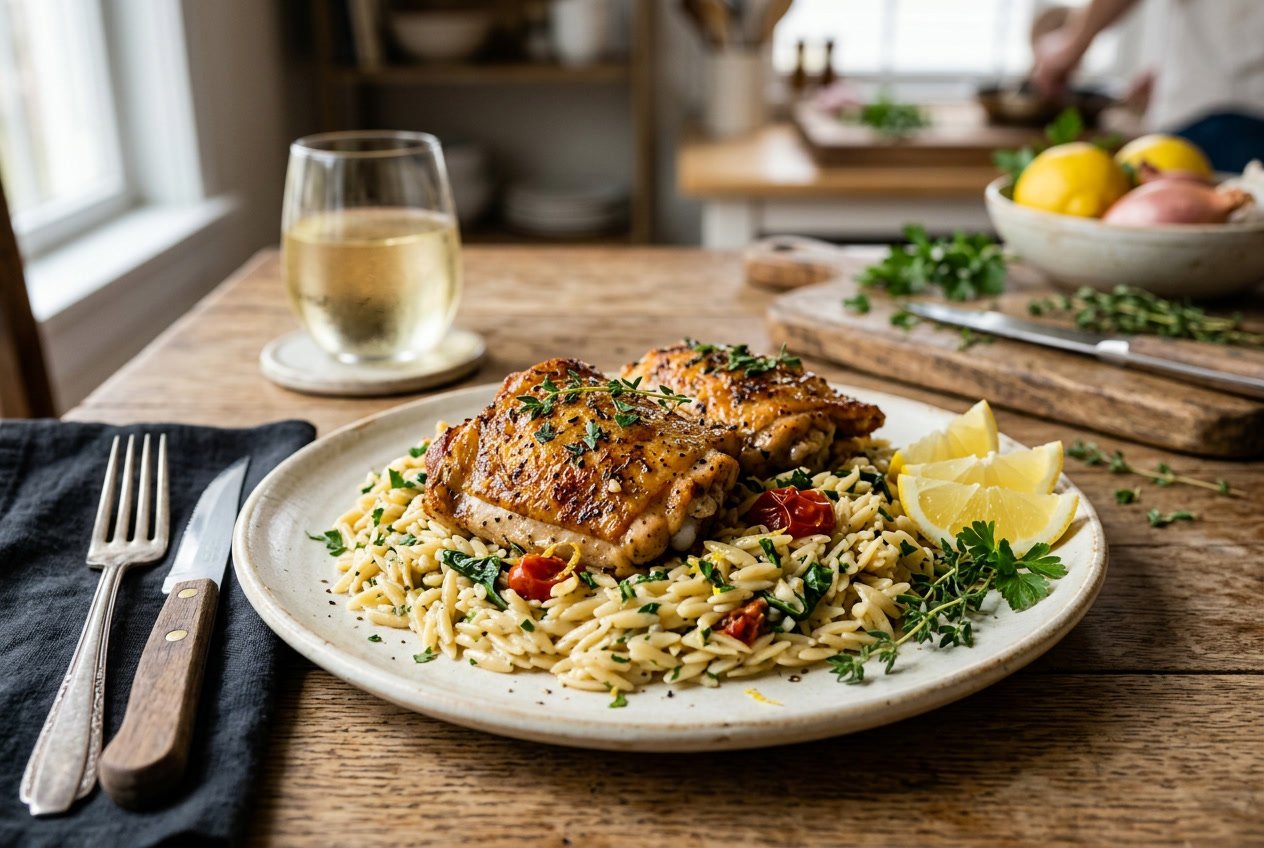
You’ll find guidance on essential ingredients, practical techniques for cooking both bone-in and boneless thighs, and easy variations that let you switch up flavors. Try lemon-herb, creamy garlic, spicy tomato, or Mediterranean-style with feta.
You’ll also find tips for customizing add-ins, handling different thigh types, and smart serving suggestions.
Essential Ingredients for Chicken Thighs and Orzo Recipes
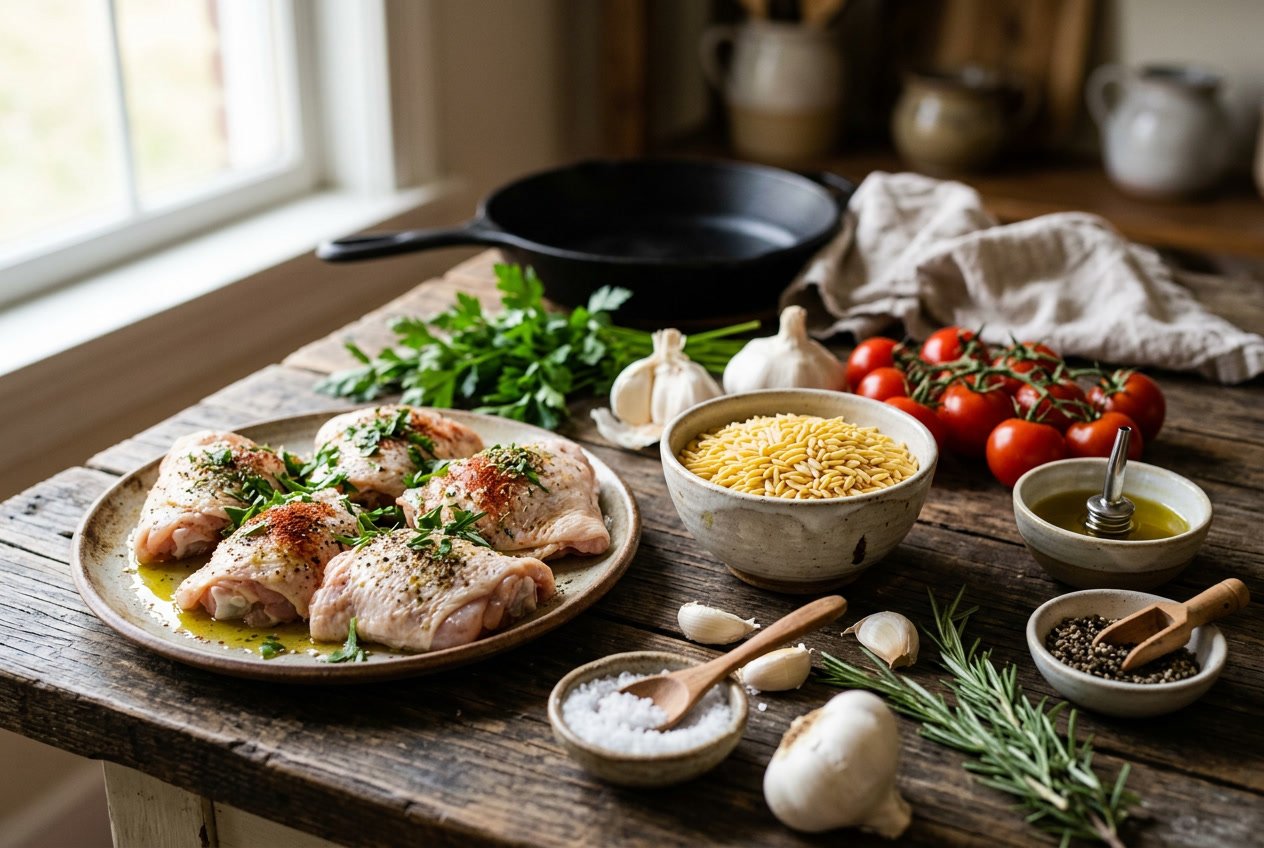
Choose ingredients that build flavor quickly. Use chicken thighs for richness, orzo for a tender pasta base, and broth plus aromatics to bind the dish.
Fresh herbs, lemon juice, and a finishing cheese lift the final plate.
Chicken Thighs: Types and Preparation
Pick bone-in, skin-on chicken thighs when you want maximum flavor and a crispy skin. The bone helps the meat stay juicy during the oven phase.
Season with salt and pepper and pat the skin dry so it browns evenly.
If you prefer faster cooking and easier slicing, use boneless, skinless thighs. Shorten oven time and watch doneness closely.
Sear skin-side down in extra virgin olive oil until golden, then remove to cook the orzo. Return thighs to finish in the oven or simmer until the internal temperature reaches 165°F (75°C).
Trim only excess fat; that fat renders into the pan and flavors the orzo. For a lighter result, remove the skin after crisping or use low-sodium chicken broth to offset richness.
Choosing and Cooking Orzo
Use standard wheat orzo for its quick cook time and ability to absorb flavors from broth and aromatics. Measure 1 cup orzo to about 2 cups low-sodium chicken broth for most one-pan recipes.
Adjust liquid if you add vegetables that release moisture.
Toast orzo briefly in the skillet after searing the chicken drippings and garlic to deepen flavor. Then add broth and simmer, stirring once, until tender—about 8–10 minutes depending on brand.
If you need a gluten-free option, substitute quinoa or small rice grains. Expect different textures and longer cook times.
Drain excess liquid only if the orzo becomes overly starchy.
Selecting Broth, Herbs, and Seasonings
Start with low-sodium chicken broth so you control final salt levels. Use full-sodium only if you plan to taste and adjust.
Add minced garlic cloves and a finely chopped yellow onion to the pan after searing chicken for a savory base.
Season with dried oregano and fresh parsley. Oregano adds warm, herbal backbone while chopped parsley brightens at the end.
Finish with lemon juice and lemon zest to cut through the fat and tie flavors together.
Use black pepper and a pinch of red pepper flakes for heat. Drizzle extra virgin olive oil before serving for sheen and flavor.
Taste mid-cook and adjust salt, acidity, and herb balance.
Key Vegetables and Cheese Additions
Add diced bell peppers and halved cherry tomatoes for sweetness and color. Sauté them briefly with onion and garlic so they retain some texture.
Stir in spinach or baby kale at the end to wilt quickly without overcooking.
Crumble feta cheese over the plated orzo and chicken for a briny, creamy finish. Feta pairs well with lemon juice and parsley and complements oregano’s profile.
Use one medium bell pepper and one small yellow onion for a 4-serving pan; 2–3 ounces of feta to finish.
This keeps the orzo’s texture balanced while enhancing the dish’s Mediterranean leanings.
Techniques for Cooking Chicken Thighs and Orzo
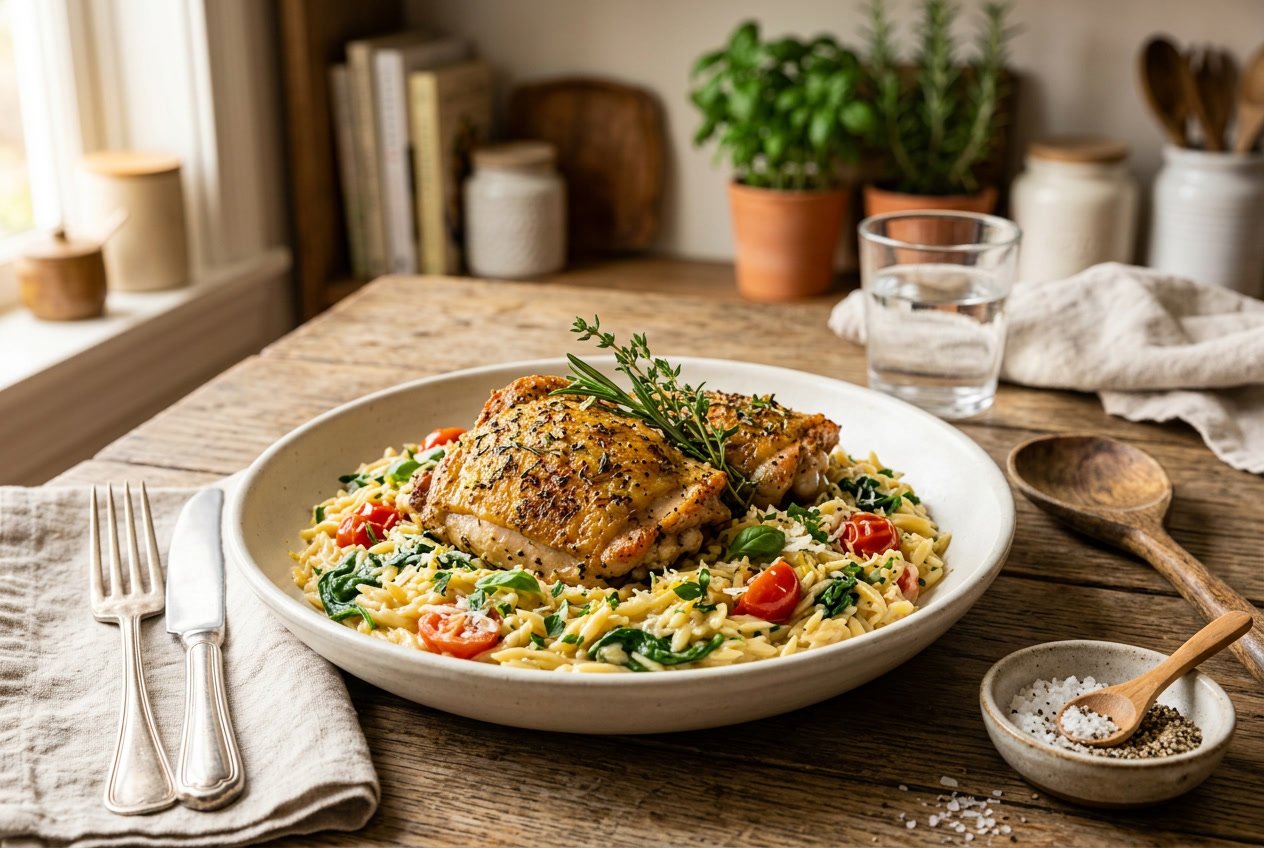
Focus on three practical techniques: building deep sear flavor on thighs, coaxing nutty flavor from orzo, and finishing the pasta so it becomes rich and silky without breaking down.
Each step uses temperature control and timing to protect texture and maximize flavor.
Searing Chicken Thighs for Maximum Flavor
Pat the skin very dry and season liberally with salt and pepper. Start skin-side down in a cold skillet, then heat to medium-high so the fat renders slowly and the skin crisps without burning.
Leave the thighs undisturbed for 7–12 minutes depending on size. You want a deep golden-brown crust.
Flip once to finish the interior. Move bone-in thighs to a 400°F oven for 10–15 minutes to reach 175°F without overbrowning the skin.
If you want extra flavor, baste with a knob of garlic butter in the last 1–2 minutes. That glosses the skin and adds an aromatic finish while keeping the meat juicy.
Use an instant-read thermometer in the thickest part to check doneness.
Toasting and Simmering Orzo
Heat a splash of oil or a tablespoon of butter in the skillet after you remove the thighs. Add the orzo and stir until the grains turn pale golden—about 2–4 minutes—to develop a nutty depth.
Deglaze with stock and any pan drippings from the chicken. Scrape browned bits with a wooden spoon; those solids carry concentrated flavor into the orzo.
Use a ratio of roughly 2 to 2.25 parts liquid per 1 part orzo for a simmered, slightly loose result.
Bring to a gentle simmer and reduce heat. Stir occasionally to prevent sticking.
If the orzo absorbs liquid too quickly, add hot stock in ¼-cup increments until the grain is al dente. Finish under low heat so you don’t overcook while preparing the chicken.
Achieving Creamy Orzo Texture
For creamy orzo, finish with a small amount of heavy cream, crème fraîche, or a pat of cold butter—about 2–4 tablespoons per cup of dry orzo. Stir vigorously off the heat so the starches emulsify into a silky sauce without becoming gluey.
Fold in grated Parmesan and minced garlic or a spoonful of garlic butter for flavor and sheen. If you’ve used stock that’s already salted, taste before adding cheese.
For a looser, saucier finish, reserve ¼ cup of hot cooking liquid and whisk it into dairy to temper and loosen the sauce.
Return the seared chicken to the pan for 1–2 minutes to meld flavors and warm through. This keeps the thighs juicy while letting the creamy orzo absorb those pan flavors.
Classic Chicken Thighs and Orzo Recipe Variations
These recipes center on bone-in or boneless chicken thighs cooked with orzo in a single pan or skillet. Each variation focuses on timing, liquid ratios, and finishing touches that keep the chicken juicy and the orzo properly textured.
One Pot Chicken and Orzo
Sear skin-on thighs first to render fat and crisp the skin. Remove the thighs, then sauté aromatics (onion, garlic) in that fat to capture browned bits for deeper flavor.
Add 1 cup orzo to every 2–2.5 cups of chicken stock for a creamy but not mushy result. Return the thighs skin-side up, cover, and simmer gently 12–18 minutes depending on thigh size until the chicken hits 165°F (74°C) and the orzo is al dente.
Stir in chopped spinach or peas in the last minute so they wilt without overcooking.
Finish with a squeeze of lemon or a handful of grated Parmesan to balance richness. Use low-sodium stock and taste before seasoning to avoid oversalting.
Lemon Garlic Chicken and Orzo
Zest and juice one lemon per 4 thighs. Add zest to the orzo when toasting and juice to the cooking liquid for an integrated citrus note.
Sear the thighs in olive oil until skin is golden, then remove. Sauté 3–4 minced garlic cloves briefly—don’t brown them—or they’ll turn bitter.
Toast the orzo for 1–2 minutes to develop nuttiness before adding 2 cups stock per cup of orzo and the lemon juice.
Nestle chicken back into the pan, bake or simmer covered until done. Finish with chopped thyme or parsley and an extra drizzle of olive oil.
The acid brightens the dish and cuts through the thigh’s richness.
Garlic Butter Chicken and Orzo
Use clarified butter or a mix of butter and oil to prevent burning while delivering a silky mouthfeel. Brown thighs in the fat to crisp skin, then remove and briefly sauté 4–6 minced garlic cloves until fragrant.
Deglaze with a splash of dry white wine if you like, then add orzo and 2 cups stock per cup of orzo.
Stir in ¼–½ cup heavy cream or 2–3 tablespoons unsalted butter near the end to deepen the sauce. Return chicken and finish in the oven for an even cook and crispy skin.
Top with grated Parmesan and chopped parsley. Keep garlic soft and untarnished by avoiding high heat after adding it.
Mediterranean Chicken Orzo Skillet
Use thyme, rosemary, or oregano and include fire-roasted diced tomatoes or a cup of chopped fresh tomatoes for body. Sear thighs; remove and sauté onion, garlic, and a tablespoon each of chopped herbs.
Add orzo and 2 cups stock per cup of orzo, plus a drained can of diced tomatoes if using. Nestle thighs back in and simmer or transfer to a 375°F oven until chicken reaches 165°F (74°C).
Fold in a handful of chopped spinach or a few tablespoons of sliced olives before serving. Finish with crumbled feta and a drizzle of olive oil for a Mediterranean finish.
Customizing Flavors and Add-Ins
Choose a handful of complementary ingredients and adjust seasoning, acid, and texture to match your goals. Focus on timing: when you add vegetables, cheese, herbs, or acids will change texture and flavor intensity.
Incorporating Greens and Vegetables
Add vegetables that hold up to cooking time and release clear flavors. Sauté diced yellow onion and bell peppers with the chicken fat early to build a savory base.
For quicker, tender greens, fold baby spinach or chopped parsley into the finished orzo off heat. They wilt in a minute and keep bright color.
Use sturdier veggies—zucchini, carrots, or halved cherry tomatoes—by adding them with the orzo so they cook through with the pasta.
If you want crisp-tender peppers or snap peas, add them in the last 5 minutes. Roast or char bell peppers separately for a smoky note before stirring them in.
Keep portions balanced: about 1–2 cups of vegetables per 1 cup dry orzo for a well-studded skillet.
Salt in stages so onion and peppers season properly without over-salting the final dish.
Adding Cheese and Finishing Touches
Grate Parmesan for a savory, melting finish; crumble feta for tang and creaminess that stands up to lemon juice. Stir grated Parmesan into hot orzo off the heat to create a silky coating.
Sprinkle crumbled feta over plated portions so it keeps shape and adds pops of flavor.
Finish with bright elements: drizzle 1–2 teaspoons lemon juice per serving to lift richness and scatter chopped parsley for freshness.
For richness, dot a little butter or a splash of heavy cream into the sauce before adding cheese.
If you use Parmesan, grate it fresh to maximize flavor and avoid grainy texture.
For presentation and texture contrast, add toasted pine nuts or breadcrumbs and a final crack of black pepper.
Keep simple ingredients—olive oil, garlic, salt—front and center. Cheese and herbs should enhance, not mask, the chicken and orzo.
Balancing Creamy, Zesty, and Spicy Elements
Choose the dish’s main flavor: creamy, zesty, or spicy. Adjust the supporting ingredients to match your choice.
For creamy dishes, add 1/4–1/2 cup heavy cream or a handful of Parmesan per cup of dry orzo. Finish cooking over low heat so the sauce comes together smoothly.
Add parsley at the end to balance the richness.
For zesty flavors, use lemon zest and 1 tablespoon lemon juice per 2–3 servings. Combine lemon with garlic and parsley for a Mediterranean taste.
Add crumbled feta to boost tang without increasing acidity.
For spice, sprinkle in crushed red pepper flakes or a pinch of smoked paprika while you sauté onions. Start with 1/8–1/4 teaspoon per batch and taste before adding more.
Balance spicy notes by adding a bit of dairy, like Parmesan or cream, or a squeeze of lemon to keep the flavors rounded.
Mix these approaches carefully. If you use feta, reduce the lemon. If you add more cream, cut back on oil and add a little extra acid to keep the dish lively.
Tips for Using Different Types of Chicken Thighs
Pick the cut that suits your timing and texture needs. Bone-in pieces give more richness and moisture, while boneless thighs cook faster and are easier to portion.
Boneless vs. Bone-In Cuts
Boneless chicken thighs cook quickly and make timing predictable. Cook them for 16–20 minutes in an air fryer or 20–25 minutes at 400°F in the oven.
These thighs shred easily, so use them for pulled chicken or uniform pieces in skillet dishes. Watch the temperature and remove them at 165°F to avoid dryness.
Bone-in thighs take longer, about 35–45 minutes at 400°F, but release collagen as they reach 175°F–185°F. This keeps the meat juicy and adds body to the orzo.
Use bone-in thighs when you want a richer broth or need the meat to handle braising or slow-simmering. Insert a thermometer near the bone for an accurate reading.
Skin-On vs. Skinless Methods
Skin-on chicken thighs give crisp texture and concentrated fat that flavors the orzo. Dry the skin, salt it, and sear skin-side down in a skillet until browned, or roast on a wire rack so fat drips away.
If you plan to shred the meat, crisp the skin separately and remove it after rendering to prevent greasiness.
Skinless thighs cook faster and offer lighter results, which work well in lemon-orzo or herb dishes. Monitor the internal temperature and remove at 165°F to avoid overcooking.
Brine skinless boneless thighs for 30–60 minutes or use a yogurt marinade to keep them juicy during roasting or pan-searing.
Serving Suggestions and Meal Pairings
Balance flavors by adding a bright, acidic element, a crisp vegetable, and a simple starch or salad. Choose ingredients that are quick to buy or prepare.
Best Sides to Serve with Chicken and Orzo
Pick sides that contrast with creamy orzo and rich chicken. Serve a crisp green salad with lemon vinaigrette for brightness and acidity, using baby greens, cucumber, and thinly sliced red onion.
Roast or steam vegetables like broccoli, asparagus, or Brussels sprouts for a bitter or nutty note. Toss them in olive oil, salt, and a squeeze of lemon after roasting.
Add crusty bread or garlic focaccia to soak up pan juices. For a lighter starch, serve herbed couscous or plain steamed rice with tomato- or lemon-based orzo.
Finish with garnishes like chopped parsley, grated Parmesan, or lemon zest to sharpen flavors and make the plate look appealing.
Making It a Complete One-Pan Meal
Turn the skillet into a full meal by adding vegetables and leafy greens during the final cook.
Add diced carrots, bell peppers, or cherry tomatoes with the orzo so they soften and release flavor into the broth.
Fold in spinach or arugula in the last minute so the greens wilt without losing color or nutrients.
Use simple ingredients you likely have, such as chicken stock, olive oil, garlic, and a handful of herbs.
Start by searing the thighs. Toast orzo in the rendered fat before you add stock and vegetables. This builds depth without extra pans.
If you want a creamy finish, stir in a splash of cream or grated Parmesan after you remove the pan from heat. This keeps the orzo rich and prevents overcooking.


