
Chicken Thighs and Mushrooms Recipe: Easy, Juicy, & Flavorful One-Pan Dinner
You want a simple dinner that feels intentional without demanding hours in the kitchen. This dish features juicy chicken thighs seared to golden perfection with tender mushrooms and a silky garlic-cream pan sauce.
You can have a restaurant-quality, one-pan meal ready in about 30–40 minutes using basic pantry staples and a few technique tips.
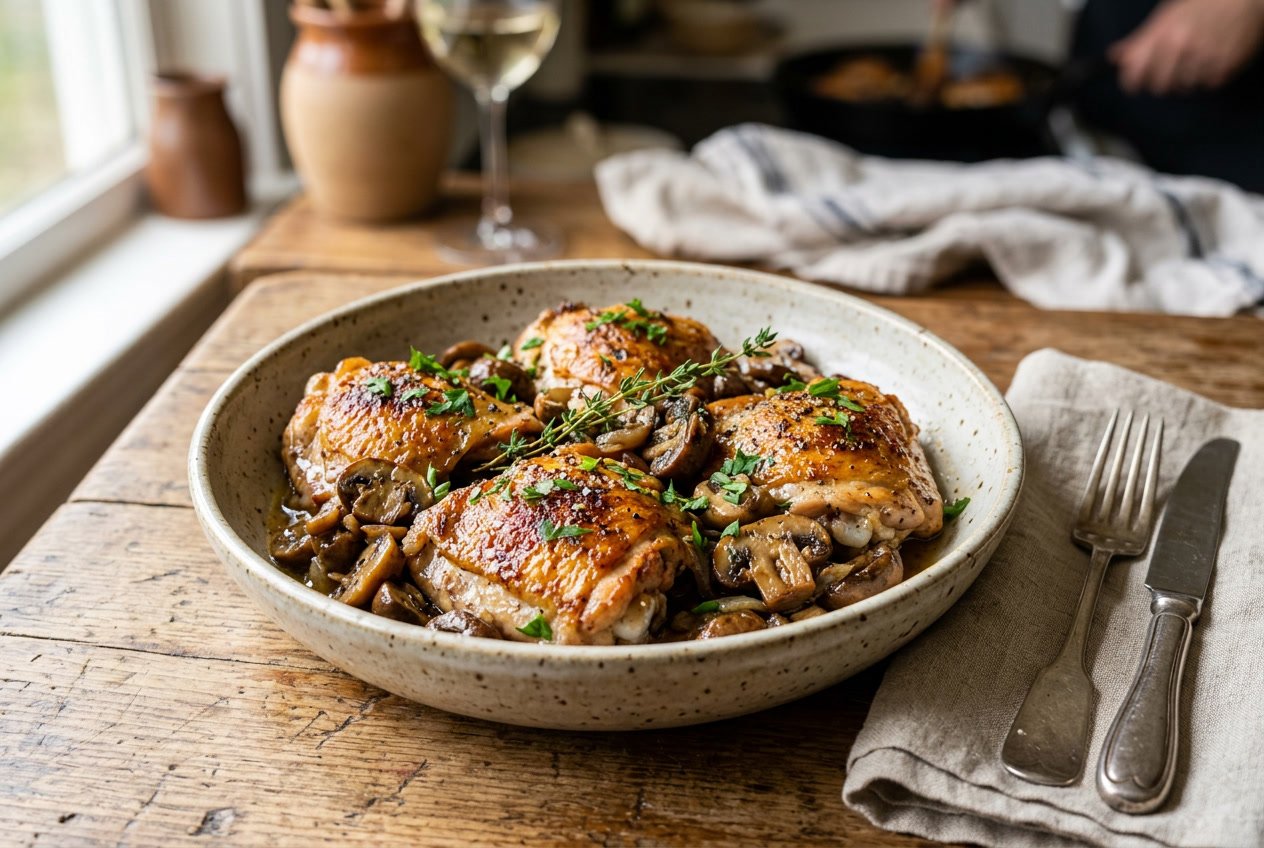
This post explains why thighs and mushrooms pair so well, which cuts and mushroom varieties work best, the essential flavor builders to keep on hand, and a clear step-by-step recipe for consistent results.
You’ll find practical serving ideas and troubleshooting tips to help make this a reliable weeknight favorite.
Why Chicken Thighs and Mushrooms Are the Perfect Pair
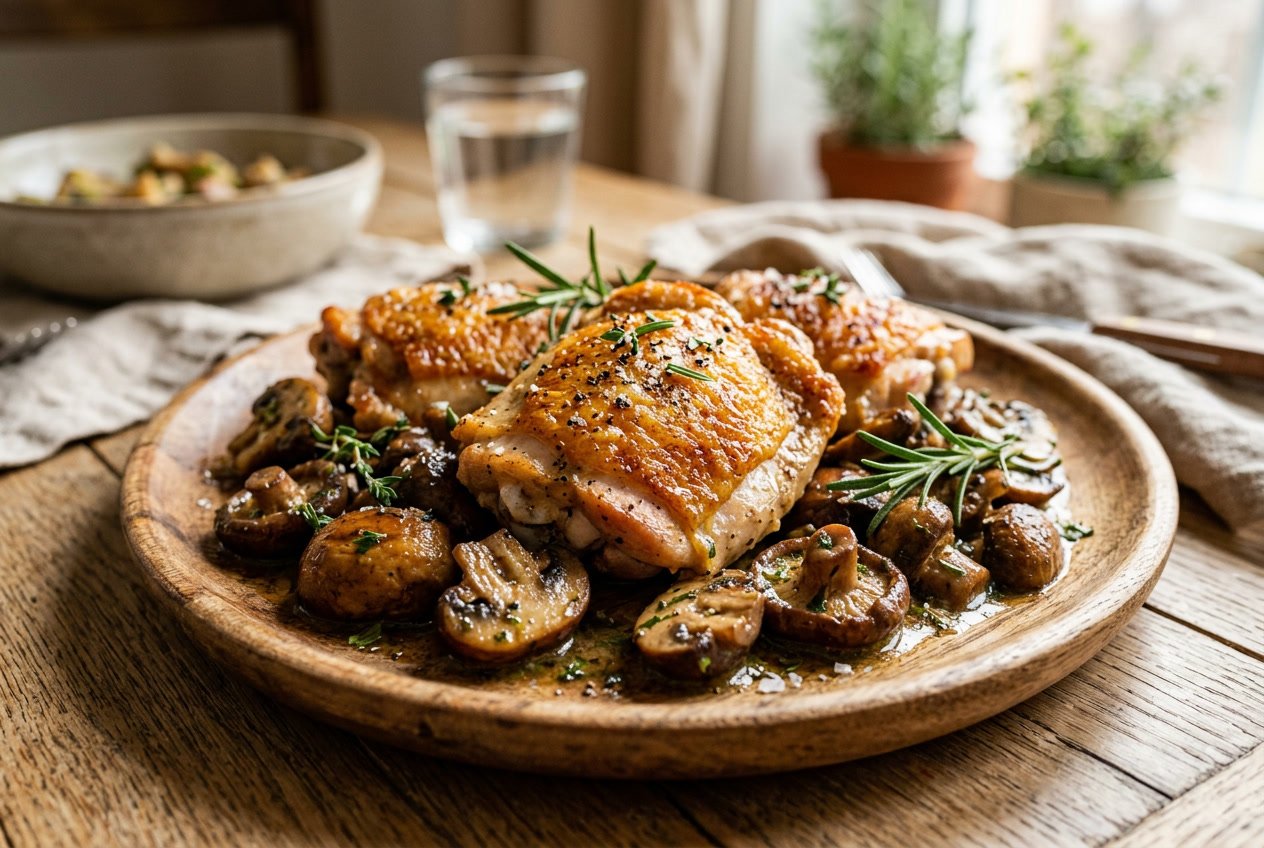
Juicy, forgiving chicken thighs and earthy, umami-rich mushrooms build a deep, sauce-ready flavor. The combination browns well, deglazes beautifully, and stands up to robust herbs, wine, or cream.
Benefits of Using Chicken Thighs
Chicken thighs stay moist when cooked, so you won’t end up with dry meat if the pan runs hot or the timing slips. The higher fat content compared with breasts yields more flavor and a better crust when you sear skin-on or brown the exterior of boneless thighs.
Thighs tolerate longer simmering, letting you develop a rich mushroom sauce without overcooking the protein. They also hold up well to bold seasonings—thyme, rosemary, paprika, garlic—and to finishing enrichments like butter or cream.
For meal prep, thighs reheat without drying out, making them practical for leftovers.
Flavor Profile of Mushrooms
Mushrooms contribute concentrated umami and an earthy backbone that counterbalances the chicken’s savory richness. Varieties like cremini, brown mushrooms, or shiitake offer deeper notes; button mushrooms give milder flavor but still add texture and absorb sauces.
When you sauté mushrooms until golden, they release liquids that caramelize and form a natural base for pan sauces. Browned bits dissolve during deglazing with wine or broth, turning into a sauce with layered savory complexity.
Mushrooms also take on added aromatics—garlic, shallots, herbs—so they amplify the overall dish rather than compete with the chicken.
How the Ingredients Complement Each Other
The fat and collagen in chicken thighs create a slick mouthfeel that carries mushroom flavors across each bite. When you sear the thighs first, the fond left in the pan anchors the flavor for the mushrooms.
Mushrooms soak up cooking liquids and aromatics, and when you simmer them with chicken broth or white wine, they release concentrated flavor back into the sauce. This exchange keeps the chicken moist and gives the sauce body.
Texturally, tender mushroom slices and pull-apart thigh meat provide contrast—each forkful includes succulent protein and silky, sauce-coated mushroom pieces.
Types of Chicken Thighs to Use
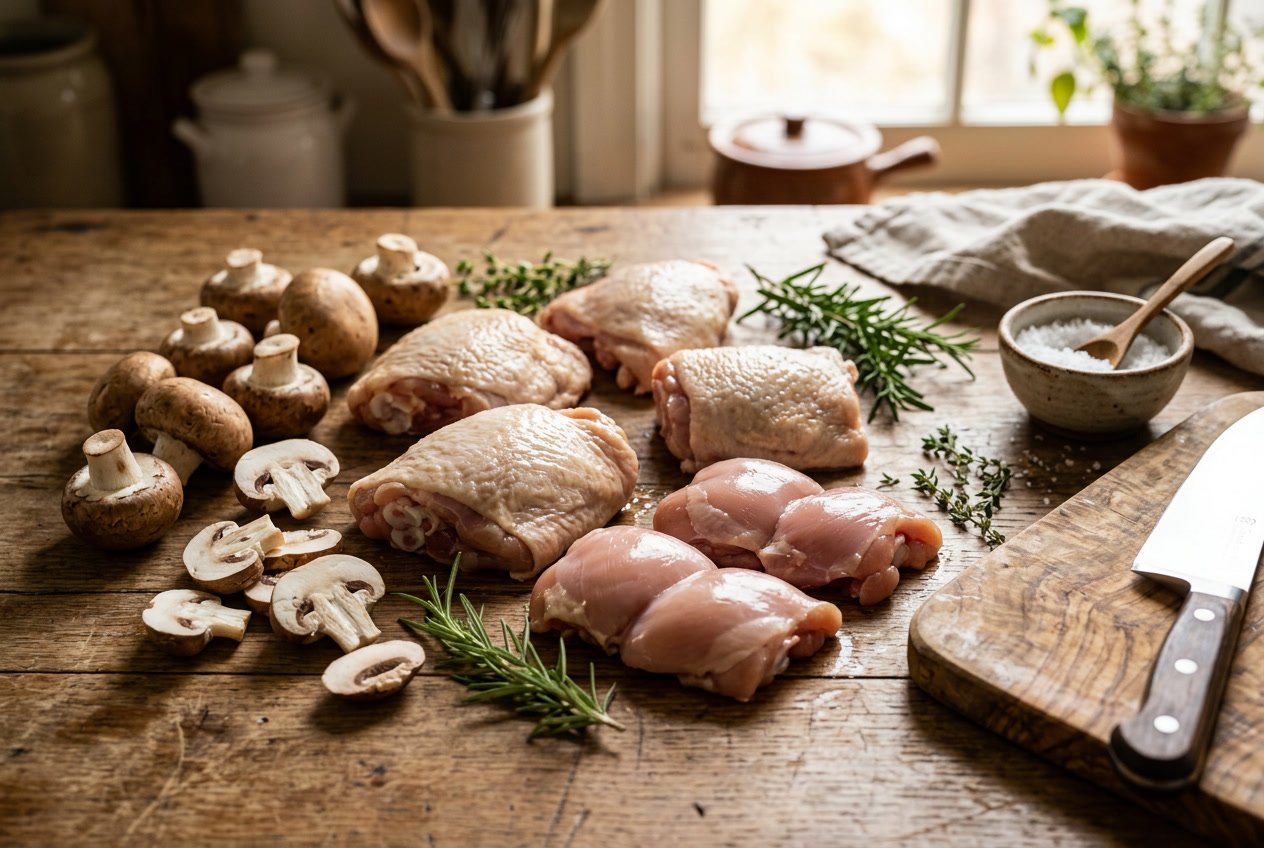
Choose the cut based on texture, cooking time, and how much crisp skin you want. Each option changes how you sear, braise, or bake and affects sauce richness and final presentation.
Bone-In, Skin-On Chicken Thighs
Bone-in, skin-on thighs give the deepest flavor and best texture for recipes that call for seared chicken thighs or oven finishing. The bone helps the meat stay moist during longer cooking, and the skin crisps when seared first in a hot pan.
Sear skin-side down in a dry, hot skillet for 4–6 minutes until well-browned before finishing in the oven at 375°F. This yields a golden crust and succulent meat.
Use these thighs when you want sauce that tastes richer from pan drippings. Expect longer cook time than boneless cuts and factor in a 5–10 minute resting period so juices redistribute.
Trim excess fat if needed, but keep skin intact for the best mouthfeel.
Boneless Skinless Chicken Thighs
Boneless skinless thighs cook faster and work well for quick skillet or slow-cooker recipes. They absorb marinades and sauces more readily, which is handy for white wine or soy-based mushroom sauces.
Sear briefly—2–3 minutes per side—to develop color, then simmer a short time in sauce to avoid overcooking. Choose boneless skinless when you need uniform slices or plan to shred the meat.
They won’t yield crispy skin or the same depth from pan fond, so boost flavor with extra aromatics, a splash of broth or wine, and finish with butter or cream for a velvety sauce.
Adjusting Cooking Techniques for Each Cut
Match technique to cut for predictable results. For bone-in, skin-on: sear over high heat first, then roast or braise at lower heat to reach 165°F while keeping skin crisp.
For boneless skinless: quickly sear and finish in sauce, or use medium heat for pan-frying to avoid drying out.
Bone-in needs more oven time and benefits from basting or spooning mushroom pan sauce over the thighs. Boneless benefits from shorter simmer times and tighter temperature control; use an instant-read thermometer and remove at 160–162°F to rest to 165°F.
Adjust herb, fat, and acid levels to compensate for the cut’s lack or presence of skin and bone.
Choosing the Right Mushrooms
Pick mushrooms that add earthiness and hold up to high heat so your sauce stays rich and textured. Think about flavor depth, moisture content, and how the mushroom will brown alongside seared chicken thighs and garlic.
Cremini Mushrooms
Cremini (baby bella) deliver a deeper, meatier flavor than white buttons without overpowering the dish. They brown well and release less water than delicate varieties, so your pan sauce concentrates quickly and stays glossy.
Buy firm cremini with dry, unblemished caps and tight gills. Slice them about 1/4–1/2 inch thick so they cook through and retain bite; thicker slices give chew and more caramelized surface.
Use them when you want pronounced umami that complements garlic and chicken fat. If you’re short on time, cremini won’t collapse into mush.
They pair especially well with white wine or a splash of soy for extra savoriness. For a more rustic texture, quarter the larger caps instead of slicing.
Other Mushroom Varieties
Mixing mushrooms changes texture and aroma. Shiitake adds smoky notes, oyster brings a delicate chew, and porcini or dried mushrooms contribute intense umami.
Use shiitake stems removed and sliced thin for quick cooking. Avoid overly watery types like enoki if you need browning; save them for finishing or salads.
If you add wild mushrooms, clean them gently and cook them separately first to control moisture. Porcini (reconstituted) work well when you want a concentrated mushroom flavor—reserve soaking liquid to boost the pan sauce.
Blend one dominant mushroom (cremini or shiitake) with a smaller amount of a contrasting type for complexity. Keep cooking times staggered: firm mushrooms first, delicate ones last.
Choosing Fresh vs. Pre-Sliced Mushrooms
Fresh whole mushrooms give you the most control over texture and moisture. You can trim, size, and sauté them to develop a brown crust that enhances both garlic and pan sauce.
Whole mushrooms also last longer in the fridge. Pre-sliced mushrooms save prep time but often contain more surface moisture and brown less evenly.
If you use pre-sliced, pat them dry with paper towels and give the pan extra heat so they sear instead of steam. For best results, buy fresh cremini or a mix, slice to uniform thickness, and avoid rinsing under running water.
A quick wipe with a damp cloth preserves flavor and prevents waterlogged mushrooms that thin your sauce.
Core Ingredients and Essential Flavors
Focus on ingredients that deliver savory depth, crisp skin, and a saucy finish. Choose bone-in, skin-on thighs for juiciness; use mushrooms that hold shape like cremini or baby bella; and prioritize fresh garlic and a clear herb profile.
Garlic and Herbs in Mushroom Chicken
Garlic drives the primary savory note in garlic mushroom chicken thighs. Use 2–4 crushed cloves for 4 thighs; add them whole in the pan for a subtler, roasted garlic sweetness or minced near the end for a sharper hit.
Fresh herbs anchor the flavor. Thyme and rosemary pair exceptionally well with mushrooms and chicken.
Chop thyme leaves; tuck a rosemary sprig under the thighs or remove it before serving. Salt the chicken generously and season mushrooms lightly so the pan juices create a cohesive sauce.
If you prefer a brighter finish, add a small squeeze of lemon or a sprinkle of chopped parsley.
Building a Creamy or Savory Sauce
Decide whether you want creamy mushroom chicken or a more savory, broth-based sauce. For creamy mushroom chicken, deglaze the pan with 1/2 cup white wine or chicken broth, then stir in 1/2 cup heavy cream or crème fraîche and simmer until slightly thickened.
Reduce heat and taste for salt and pepper. For a savory, mushroom-forward jus, use 1/2–3/4 cup chicken broth, concentrate flavor by sautéing mushrooms first, then roast thighs on top so juices mingle.
Finish with a knob of butter or a splash of soy sauce for extra umami. Brown chicken skin first for texture, let mushrooms sweat to release moisture, and scrape browned bits to enrich the sauce.
Adjust thickness with a cornstarch slurry or a short simmer. Avoid overcooking cream, which can separate.
Optional Flavor Boosters
Use umami enhancers sparingly. A teaspoon of soy sauce or Worcestershire mixed into the broth deepens savory notes.
A tablespoon of Dijon mustard whisked into the sauce adds tang and emulsifies fats. Aromatics like shallots or a small diced onion add sweetness; add them early and soften before mushrooms.
For heat, add a pinch of red pepper flakes or a dash of smoked paprika to the seasoning mix. Finish with chopped parsley or chives for color, or sprinkle toasted breadcrumbs for crunch.
If you want a wine-forward profile, use dry white wine for deglazing and reduce it by half before adding cream or broth.
Step-by-Step Chicken Thighs and Mushrooms Recipe
This section gives precise instructions for assembling ingredients, preparing chicken thighs and mushrooms, choosing a cooking technique, and finishing a flavorful sauce.
Follow the timing, temperatures, and method choices to get crispy skin, tender meat, and a concentrated mushroom sauce.
Ingredient List and Prepping
Gather: bone-in, skin-on chicken thighs (about 1.5 lb for 4 servings), 12–16 oz mushrooms (cremini or white), 2 tbsp olive oil, 2 tbsp melted butter (optional), 1–2 cloves garlic, ½ cup low-sodium chicken broth, salt, pepper, garlic powder, and 1–1½ tsp dried herbs (Italian seasoning, thyme, or oregano).
Pat the thighs dry and trim excess fat to help the skin crisp. Slice mushrooms evenly (about ¼-inch) so they cook uniformly.
Mix oil, melted butter, salt, pepper, garlic powder, and herbs in a bowl; reserve half for mushrooms and half for the chicken. If using fresh garlic, mince it and set aside.
Preheat the oven to 425°F for baking or set a heavy skillet over medium-high heat if searing first.
Searing and Cooking Techniques
Heat a skillet until hot, add a thin film of oil, and sear skin-side down for 4–6 minutes without moving the thighs. You want deep golden color and rendered fat; this step improves texture and flavor.
Flip and sear the other side briefly, 1–2 minutes. Remove thighs and use the fond to start the sauce or to deglaze with a splash of broth.
If you prefer not to sear, roast skin-side up from the start but expect slightly less rendered fat and crispness. Use medium-high for searing, then reduce heat to finish in a skillet or transfer to a 425°F oven to reach an internal temperature of 175°F for juicy, fully cooked thighs.
Making the Mushroom Sauce
After searing, add a tablespoon of butter and the sliced mushrooms to the same pan. Cook mushrooms undisturbed for 2–3 minutes to brown, then stir and continue 3–4 minutes until they release and reduce their moisture.
Add minced garlic and cook 30–60 seconds until fragrant. Deglaze with ¼–½ cup chicken broth, scraping the pan to lift flavor.
Simmer until slightly reduced, then finish with a pat of butter or a splash of cream for a richer sauce. Season to taste with salt, pepper, and a small pinch of dried herbs.
Spoon the sauce under and around the thighs before finishing in the oven or simmering gently on the stovetop.
Baking, Simmering, or One-Pan Approaches
For baking, arrange mushrooms on the bottom of a 9×13 pan. Place seasoned thighs skin-side up, pour ½ cup broth into the dish, and roast at 425°F for about 30–35 minutes.
Stir mushrooms during the last 10 minutes. Broil for 1–2 minutes for extra crispness.
On the stovetop, sear the thighs, then nestle them back into the skillet over the mushroom sauce. Cover and simmer on low for 12–18 minutes until thighs reach 175°F internal.
This method keeps everything in one pan and concentrates flavor.
For a combination approach, sear the chicken on the stovetop and build the sauce. Transfer the skillet to a preheated oven to finish cooking.
This gives deep fond flavor and even oven cooking.
Serving Suggestions and Sides
Choose starches and vegetables that soak up the pan sauce and pair with the dish’s savory, umami-rich profile. Aim for one tender starch, one bright vegetable, and a simple garnish.
Best Sides for Chicken and Mushrooms
- Mashed potatoes: Creamy, buttered mashed potatoes absorb the mushroom-pan sauce. Use Yukon Golds for a silky texture and finish with a knob of butter and a splash of reserved pan juices.
- Egg noodles or buttered pasta: Toss wide egg noodles with a little butter or olive oil to create a neutral base that highlights the mushrooms and garlic.
- Rice: Serve with steamed jasmine or long-grain rice, which keeps the plate light and soaks up sauces without competing with herbs.
- Roasted vegetables: Add color and a slightly sweet contrast with roasted asparagus, green beans, or carrots. Roast at 425°F with olive oil, salt, and pepper for 12–15 minutes.
- Simple salad: A mixed greens salad with lemon vinaigrette cuts through the richness and refreshes the palate.
How to Serve for Weeknight Dinners or Special Occasions
For weeknights, plate the chicken over mashed potatoes or rice to keep prep fast. Cook the mushrooms in the same skillet, spoon the pan sauce over the chicken, and garnish with chopped parsley or thyme for color.
Use roasted green beans for a quick vegetable. Toss them in while the chicken rests.
For special occasions, arrange the seared chicken and mushrooms over buttered egg noodles or a bed of creamy polenta. Finish with a splash of white wine reduction or a drizzle of pan jus.
Sprinkle with finely chopped fresh herbs and shaved Parmesan. Serve family-style on a warm platter so guests can help themselves.
Tips for Perfect Results Every Time
Pat the thighs dry, avoid crowding the pan, and check doneness with a thermometer.
Common Mistakes to Avoid
Pat the chicken dry before cooking. Moisture prevents proper browning, so use paper towels and let the thighs sit at room temperature for 10–15 minutes before searing.
Avoid overcrowding the skillet. If the pan is crowded the skin will steam instead of crisp, so cook in batches or use a larger pan so each piece has ½–1 inch of space.
Stay attentive while searing. Sear skin-side down for 5–7 minutes until deep golden, flipping only once.
Add garlic after mushrooms have browned to prevent burning.
Use an instant-read thermometer and cook thighs to 165°F (74°C) internal temperature, checking near the bone. Rest the meat for 5 minutes after cooking so juices redistribute.
How to Store and Reheat
Store chicken and sauce together in an airtight container in the fridge for up to 3 days. Cool to room temperature before sealing to avoid condensation.
Freeze for up to 3 months in freezer-safe containers with ½ inch headspace. Label with the date and thaw overnight in the refrigerator before reheating.
Reheat gently on the stovetop over low heat with a splash of chicken broth or cream. Stir occasionally until warmed through to prevent sauce separation.
Alternatively, reheat in a 325°F (160°C) oven covered for 15–20 minutes, checking that the temperature reaches 165°F.
Adapting the Recipe for Meal Prep
Scale portions to fit your storage containers.
Cook a double batch of thighs and mushrooms. Portion them into single-meal containers with rice, mashed potatoes, or roasted vegetables.
Use bone-in thighs for flavor when you plan to serve the meal within 2–3 days.
For longer freezer storage or quicker reheating, choose boneless thighs to save space and reduce reheating time.
Keep thick components separate when you freeze meals.
Freeze sauce and starches like rice or pasta in separate containers to maintain texture.
When ready to eat, thaw everything overnight. Reheat the sauce gently, then combine it with the warmed chicken and sides.


