
Chicken Thighs and Broccoli Recipe: Easy, Flavorful Sheet Pan Dinner
You want a simple, satisfying weeknight meal that balances juicy, flavorful chicken thighs with bright, tender broccoli. This post gives practical, tested options for ingredients, cooking methods, and small tweaks that make the dish consistently great.
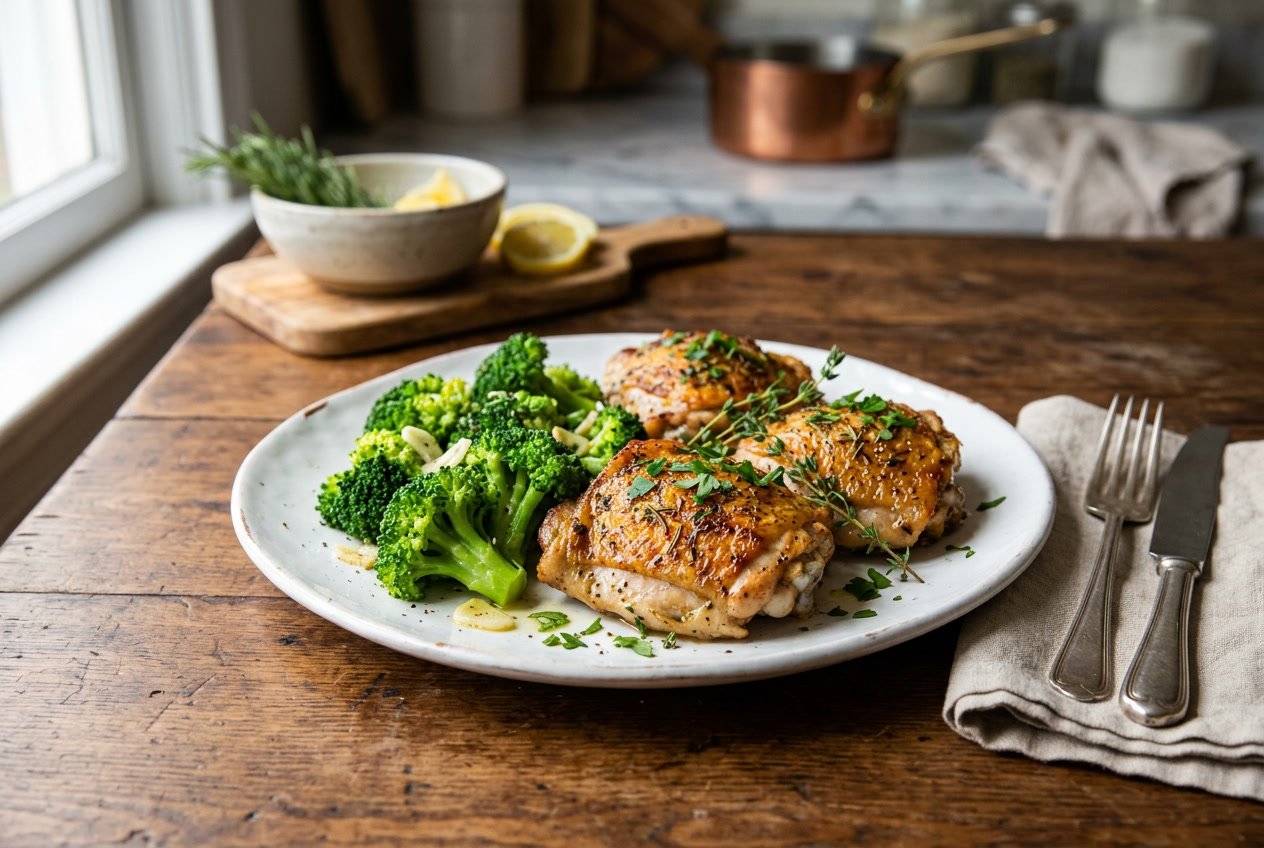
Follow the techniques here and you’ll get crispy-skinned chicken and perfectly cooked broccoli every time, whether you roast, pan-sear, or use a single sheet pan. You’ll find step-by-step instructions, flavor variations, texture tips, and meal-prep ideas so you can pick the approach that fits your schedule and taste.
Essential Ingredients for Chicken Thighs and Broccoli
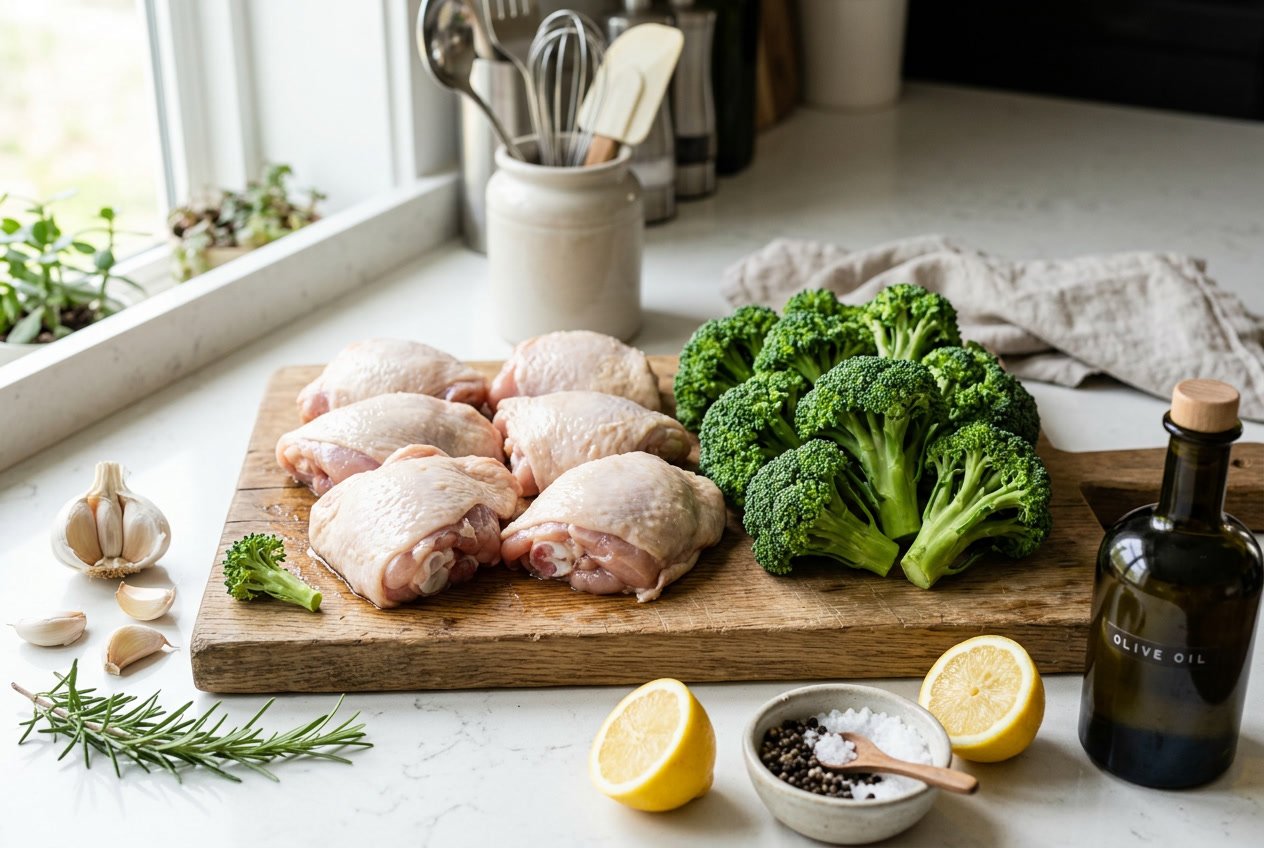
Use juicy chicken thighs, bright broccoli, a simple oil, and a short list of bold seasonings to build flavor quickly. Focus on texture: skin that crisps, meat that stays moist, and broccoli that roasts to tender-crisp without turning mushy.
Choosing the Right Chicken Thighs
Pick bone-in, skin-on chicken thighs for maximum flavor and moisture. The bone adds richness and the skin crisps in the oven; plan for 22–30 minutes roasting depending on size.
If you prefer faster cooking or easier portioning, choose boneless thighs. They cook more quickly and slice cleanly for meal prep, but watch timing closely to avoid drying.
Trim excess fat and pat thighs very dry before seasoning. Brush or toss with 1–2 tablespoons olive oil per pound to help seasonings adhere and promote browning.
For marinades, include 2 tablespoons Dijon mustard and a splash of apple cider vinegar or lemon juice to tenderize and add tang without masking the chicken’s flavor.
Selecting Fresh or Frozen Broccoli
Choose broccoli with tight, dark-green florets and crisp stalks; avoid yellowing or limp stems. Cut into even-size florets (about 1–1.5 inches) so they roast uniformly with the thighs.
If using frozen broccoli, thaw and pat dry thoroughly to reduce steaming. Toss with a little olive oil before adding to the pan to help it brown.
Add broccoli to the sheet pan partway through cooking if you roast bone-in thighs so florets don’t overcook. For boneless thighs, you can roast together from the start.
Finish broccoli with a squeeze of lemon juice or a light drizzle of reserved marinade to brighten the flavor right before serving.
Key Seasonings and Sauces
Build a base with olive oil, garlic powder, paprika, salt, and black pepper for straightforward savory notes. Use about 1 teaspoon garlic powder and 1 teaspoon paprika per pound of chicken.
For a sweet-savory glaze, combine low-sodium soy sauce with 1–2 tablespoons pure maple syrup or honey, plus 1 tablespoon apple cider vinegar. Reserve some of this mixture to drizzle over the chicken and broccoli after roasting.
Add heat with 1/4–1/2 teaspoon red pepper flakes if you like a mild kick. You can also stir 1 tablespoon Dijon mustard into your marinade for depth and emulsifying power.
Taste the reserved sauce before finishing; adjust acidity with a little lemon juice if it needs brightness, or more soy sauce for saltiness.
Step-By-Step Guide to the Best Chicken Thighs and Broccoli
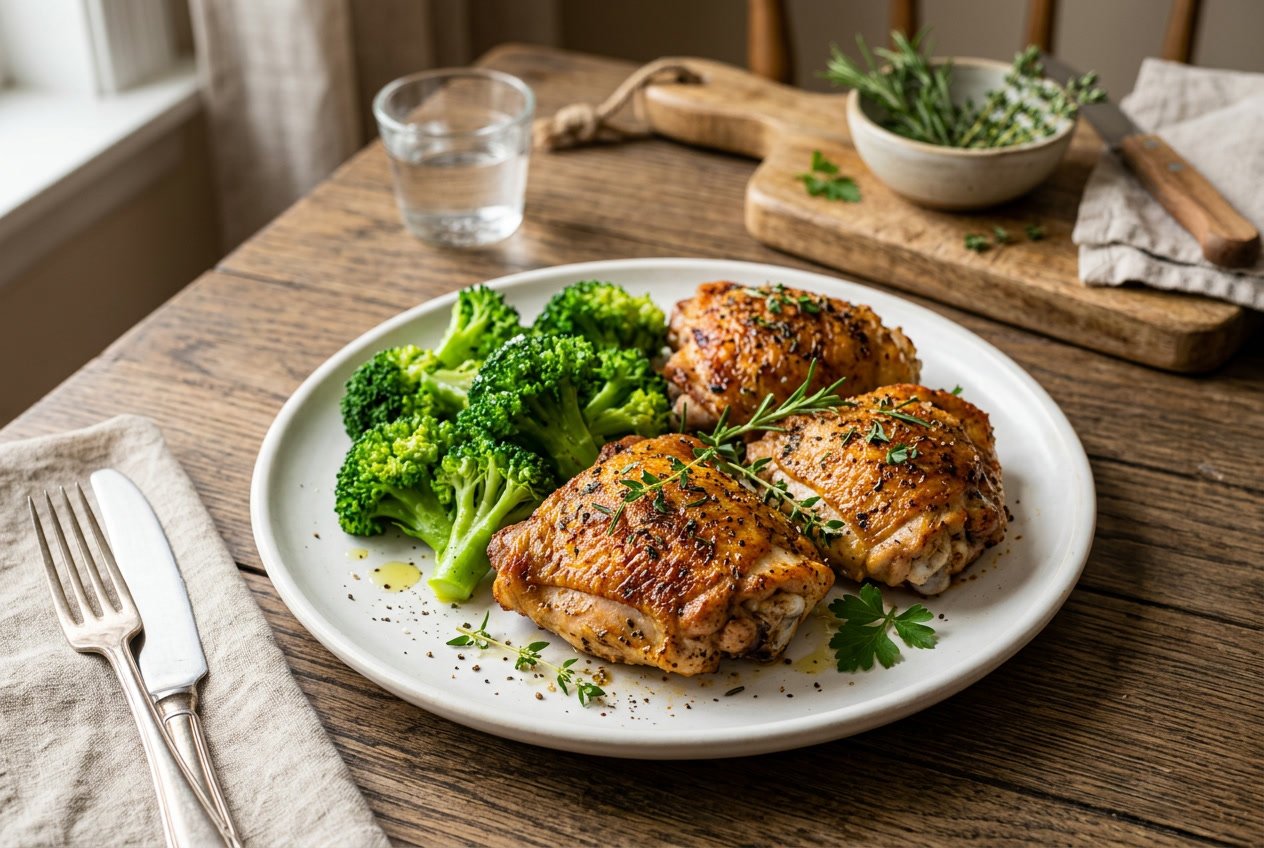
Focus on hot pans, accurate temps, and timing so the chicken finishes at 165°F while broccoli crisps without burning. Use a well-seasoned rub and a quick honey-mustard or garlic-based sauce to balance savory and sweet.
Prepping Chicken Thighs for Maximum Juiciness
Pat the thighs dry with paper towels so oil and seasonings stick and skin can crisp if using skin-on. For boneless, skinless thighs, trim excess fat and even out thickness by pressing gently so pieces cook uniformly.
Rub with 1 teaspoon oil per pound, then apply a spice mix (brown sugar, paprika, garlic powder, cumin, salt, pepper, and a pinch of chipotle if you want smoke). Let the seasoned thighs rest 15–30 minutes at room temperature or refrigerate up to 24 hours for deeper flavor.
Use an instant-read thermometer to check doneness. Insert into the thickest part; pull at 160–162°F and tent for 5 minutes. Carryover heat brings the internal temp to 165°F without drying.
For sheet pan or baked chicken thighs, keep thighs spaced so air circulates and juices stay put.
How to Prepare Broccoli for Roasting
Cut broccoli into even florets about 1–1.5 inches across so they roast in the same time as the chicken. Slice thicker stems thinly; they need slightly more time but add sweetness when roasted.
Toss broccoli with 1 tablespoon oil per 4 cups florets, ½ teaspoon salt, and ¼ teaspoon pepper. Add a light dusting of garlic powder or toss with minced garlic in the last 5 minutes to prevent burning.
Spread in a single layer on the hot sheet pan, leaving space around each floret to crisp the edges. If you roast broccoli with chicken thighs, arrange broccoli around the chicken, not under it.
Stir or flip the florets halfway through cooking to brown evenly. For extra crispness, finish with a quick broil of 1–2 minutes while watching closely.
Creating Flavorful Marinades
Build a marinade with acid, oil, and aromatics to penetrate thighs without over-tenderizing. Use 2 tablespoons oil, 1 tablespoon acid (lemon juice, vinegar, or coconut aminos/soy sauce), 1 tablespoon honey or brown sugar, 1–2 teaspoons Dijon mustard, and 2–3 cloves minced garlic for a balanced base.
Add herbs and spices: ½ teaspoon paprika, ¼–½ teaspoon cumin, ¼ teaspoon dried thyme, and ⅛ teaspoon chipotle or chili powder for heat. Whisk and coat the thighs; marinate 15–30 minutes for quick flavor or up to 6 hours in the fridge for deeper infusion.
Reserve some marinade before adding raw chicken to use as a finishing sauce, or simmer the leftover marinade for a minute to use safely. For garlic chicken flavor, increase minced garlic or add roasted garlic paste to the marinade for a mellow, caramelized note.
Cooking Methods: Oven, Skillet, and One Pan Approaches
Choose the method that matches your time, equipment, and texture goals. Roast for hands-off crisp skin and caramelized broccoli, pan-sear for deeply browned crust and a quick pan sauce, or cook everything together on one sheet for fast cleanup and concentrated flavor.
Sheet Pan Chicken Thighs and Broccoli
A sheet pan dinner gives you crispy baked chicken thighs and roasted broccoli with minimal fuss. Preheat the oven to 400°F (205°C).
Pat bone-in, skin-on thighs dry, season or marinate, and arrange with broccoli spaced so air can circulate; this prevents steaming and encourages browning. Roast thighs for about 15 minutes, add broccoli, then roast another 12–18 minutes until the skin is golden and the thigh reaches 175°F at the thickest point.
Reserve some marinade to brush over the vegetables mid-roast for extra glaze and flavor. Use parchment or foil for easy cleanup.
If you want extra crisp, broil 2–3 minutes at the end after removing broccoli.
Stovetop and Skillet Variations
Skillet cooking delivers a fast route to crispy chicken thighs and a concentrated pan sauce. Heat a heavy skillet until hot, add oil, and sear skin-side down without moving until deep golden (8–12 minutes).
Flip, lower heat, and finish in a covered pan or transfer to a 375°F oven for 8–12 minutes depending on thickness. After removing chicken, deglaze the pan with stock, wine, or reserved marinade to make a quick sauce.
Add blanched or quick-sauteed broccoli to the pan briefly to coat in the sauce and warm through. This method gives you crispy chicken thighs with a glossy pan sauce and tender broccoli in under 30 minutes.
Stir-Fry and Glazed Options
Use bite-sized boneless thighs for stir-fry and glazed chicken thighs that cling to broccoli. Cut thighs into strips, toss in cornstarch and seasoning, and sear in a hot wok or large skillet in small batches for even browning.
Return chicken, add broccoli florets, and pour a sticky glaze (soy, vinegar, maple or honey, garlic, and a splash of oil) to coat. Cook until the glaze reduces and coats both chicken and broccoli, about 2–4 minutes.
Finish with sesame seeds or scallions. This approach yields glazed chicken thighs with glossy coating, quick-cooked broccoli that stays bright, and a one-pan finish ideal for serving over rice.
Flavor Variations and Customizations
You can shift the dish toward bright and tangy, deeply savory, or warmly spiced by swapping spices, sauces, and a few techniques. Small changes like adding Dijon mustard to a pan sauce or using low-sodium soy sauce alter the profile without extra effort.
Spices, Herbs, and Add-Ins
Use red pepper flakes for controlled heat; sprinkle 1/4–1/2 tsp while searing bone-in chicken thighs to let the spice bloom in the fat. Fresh herbs change character quickly: thyme or rosemary pairs well with roasted thighs, while cilantro or Thai basil complements coconut-curry versions.
Stir minced garlic and 1 tsp Dijon mustard into pan juices to make a quick, tangy glaze for boneless chicken thighs or chicken breast. Add toasted sesame seeds and sliced green onions for texture and aroma in soy-based stir-fries.
For umami depth, stir 1 tbsp low-sodium soy sauce into a butter or stock finish. If you like acidity, finish with 1 tsp apple cider vinegar to brighten stews or braises.
Healthy Swaps and Dietary Adaptations
Swap bone-in chicken thighs for boneless thighs or chicken breast to cut cooking time and trim fat. Adjust sear time so lean breast stays juicy.
Use low-sodium soy sauce to control salt and pair it with citrus or apple cider vinegar for brightness instead of sugar-heavy glazes. Replace clarified butter with 1 tbsp olive oil when you want fewer saturated fats.
For a lower-carb plate, roast broccoli instead of steaming and serve over cauliflower rice. If you need gluten-free, choose tamari instead of soy sauce and thicken sauces with a cornstarch slurry rather than flour.
Tips for Perfect Texture: Crispy Skin and Tender Broccoli
Focus on removing surface moisture, using direct high heat for the chicken skin, and keeping broccoli dry and spaced so it roasts rather than steams. Small timing and temperature adjustments and a final toss in the pan lock in crispness and color.
Achieving Crispy Chicken Skin
Pat chicken thighs very dry with paper towels; moisture is the main barrier to crisp skin. Season the skin side with kosher salt at least 20–30 minutes before cooking (or overnight) to draw out extra moisture and improve browning.
Use a hot oven (425°F/220°C) or start in a hot skillet to render fat quickly. If using a sheet pan, place thighs skin-side up on a rimmed sheet pan lined with foil or parchment and leave space between pieces; air circulation prevents steaming.
Brush or drizzle a thin layer of olive oil on the skin to promote even browning and avoid heavy batters that trap steam. If pan-searing first, press skin flat and sear skin-side down in a cold-to-hot cast-iron skillet to render fat, then finish in the oven on the sheet pan until internal temperature reaches 165°F (74°C).
Rest the thighs 5 minutes before serving so juices redistribute and skin stays crisper.
Roasting Broccoli to Perfection
Trim broccoli into uniform florets about 1–1½ inches so they cook evenly. Rinse and then dry thoroughly; wet florets steam in the oven and lose that roasted edge you want.
Toss florets with a light coating of olive oil, kosher salt, and freshly ground pepper; the oil helps achieve deep color and crisp tips. Spread broccoli in a single layer on the same sheet pan if space allows, but keep at least an inch between broccoli and chicken pieces to avoid overcrowding.
Roast at 425°F (220°C) for 12–18 minutes depending on floret size; flip once halfway to expose edges to heat. For brighter color and a bit of tenderness, add 1–2 tablespoons water to the pan and cover briefly toward the end, or finish under the broiler 1–2 minutes for extra char.
Serving Suggestions and Meal Prep Ideas
This dish works well as a quick sheet pan dinner and scales easily for leftovers. You’ll find simple pairings that finish the plate and practical meal-prep steps to keep portions fresh during the week.
Easy Weeknight Dinner Pairings
Pair chicken thighs and broccoli with a grain to soak up pan juices. Serve 1 cup cooked rice per person or choose lemon-herb quinoa for a brighter flavor.
Add roasted baby potatoes or garlic mashed cauliflower if you prefer lower carbs.
Include a fresh element to balance richness. Try a crisp green salad with a light vinaigrette or sliced cucumber and tomato dressed with lemon and olive oil.
Offer a sauce on the side, such as garlic-yogurt sauce, chimichurri, or a quick honey-soy glaze. Let diners customize flavors to their liking.
Prepare the grain and toss the salad while the sheet pan roasts. Plate immediately so the chicken stays crisp and the broccoli keeps a little bite.
Meal Prep and Storage Tips
Portion cooked chicken and broccoli into airtight containers for easy lunches. Use about 4–6 oz chicken and 1–1½ cups broccoli per meal to control servings.
Let the food cool completely before sealing to prevent sogginess. Store in the refrigerator for up to four days.
Freeze individual portions in microwave-safe containers for up to two months. Thaw them overnight in the fridge before reheating.
Reheat in a 375°F oven for 10–15 minutes to crisp the skin, or microwave for 2–3 minutes for a quicker option. Finish under the broiler for 1–2 minutes if you want extra crispness.
When preparing a sheet pan dinner for meal prep, season and roast extra broccoli separately from the chicken thighs. This keeps the veggies vibrant and prevents overcooking.


