
Can You Shred Chicken Thighs? Best Methods, Tips, and Uses
You can absolutely shred chicken thighs, and they often give better flavor and juiciness than breasts. If you want tender, pull-apart chicken for tacos, salads, soups, or meal prep, thighs are a reliable choice because their higher fat content keeps the meat moist and forgiving during cooking.
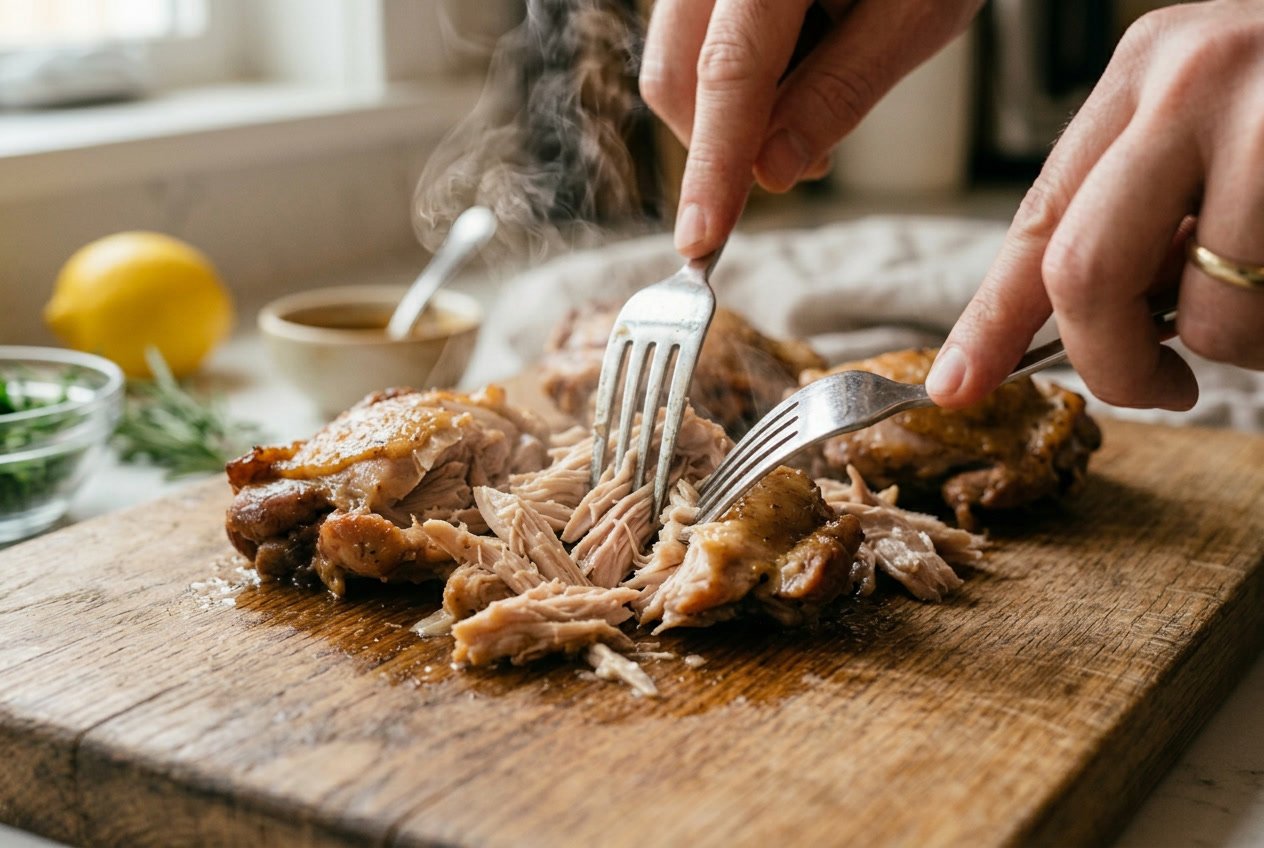
This post will show which thighs to pick and how to cook them so they shred easily. You will also learn the fastest tools and techniques, along with storage tips to keep your chicken juicy.
Follow along to turn a simple package of thighs into ready-to-use shredded chicken for easy meals.
Can You Shred Chicken Thighs?
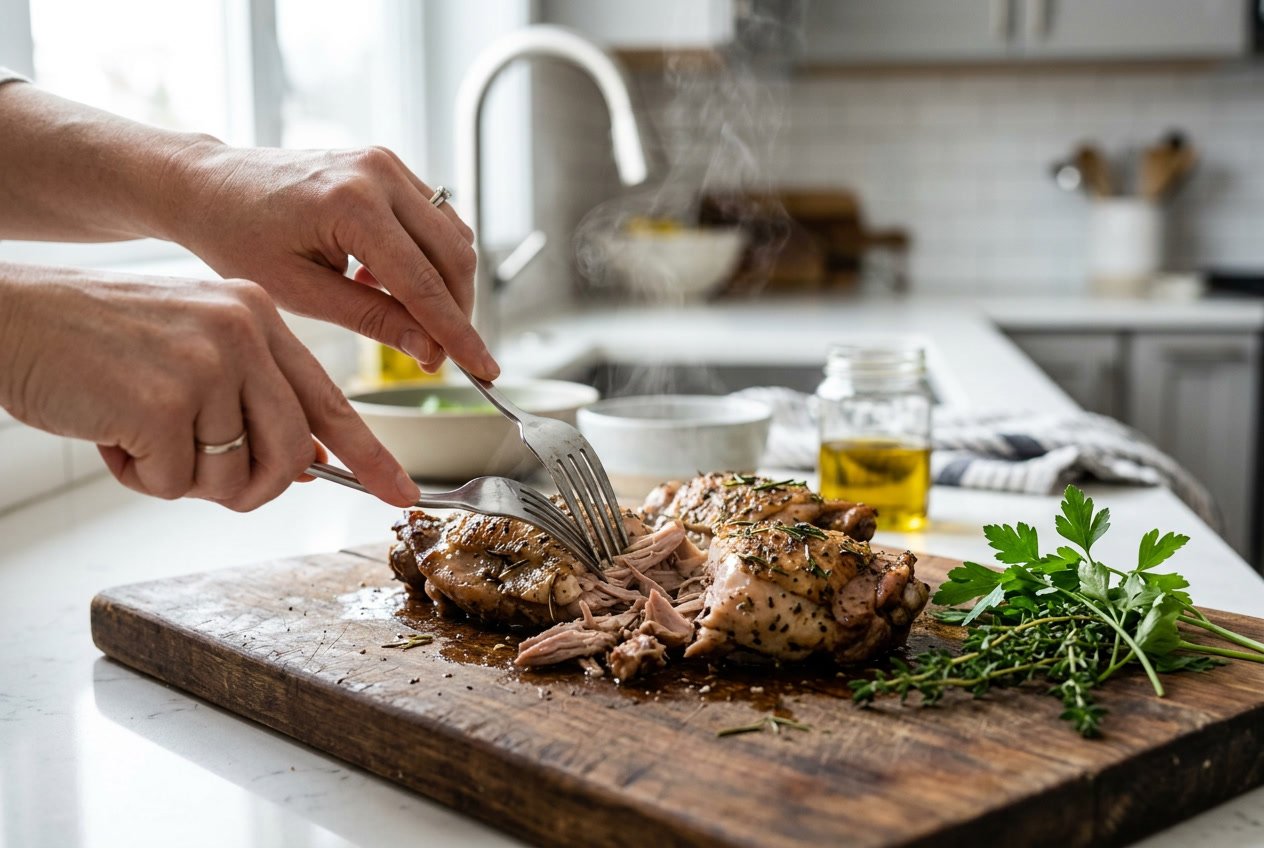
You can shred chicken thighs reliably, and they produce tender, flavorful pulled chicken for tacos, salads, soups, and casseroles. Choose the right cooking method and a simple shredding tool to get consistent, moist shredded chicken thighs.
Differences Between Chicken Thighs and Breasts
Thighs contain more fat and connective tissue than breasts, which keeps the meat moist during cooking. That extra fat helps shredded chicken thighs resist drying out, so you can simmer or braise a bit longer without losing juiciness.
Texture differs as well. Thighs shred into shorter, more tender strands compared with the stringier, firmer fibers of breast meat. You’ll notice a richer mouthfeel and deeper flavor in shredded chicken thighs, especially when using bone-in cuts during cooking.
If you prefer leaner meat or fewer calories, breasts work, but for most shredded-chicken recipes where moisture and mouthfeel matter, thighs give you better results with less risk of dryness.
Benefits of Using Thighs for Shredding
Using chicken thighs for shredding makes it easier to keep the meat moist and flavorful. The fat and collagen convert to gelatin as you cook, which binds juices into the meat.
Thighs also tolerate higher-heat searing before braising, adding savory browned flavor that remains after shredding. Boneless, skinless thighs make shredding faster, while bone-in thighs add depth of flavor if you don’t mind removing bones after cooking.
You can shred thighs by hand with two forks for small batches or use a stand mixer for larger quantities. Both yield tender pulled chicken, but the mixer gives faster, more even strands.
Choosing the Best Chicken Thighs
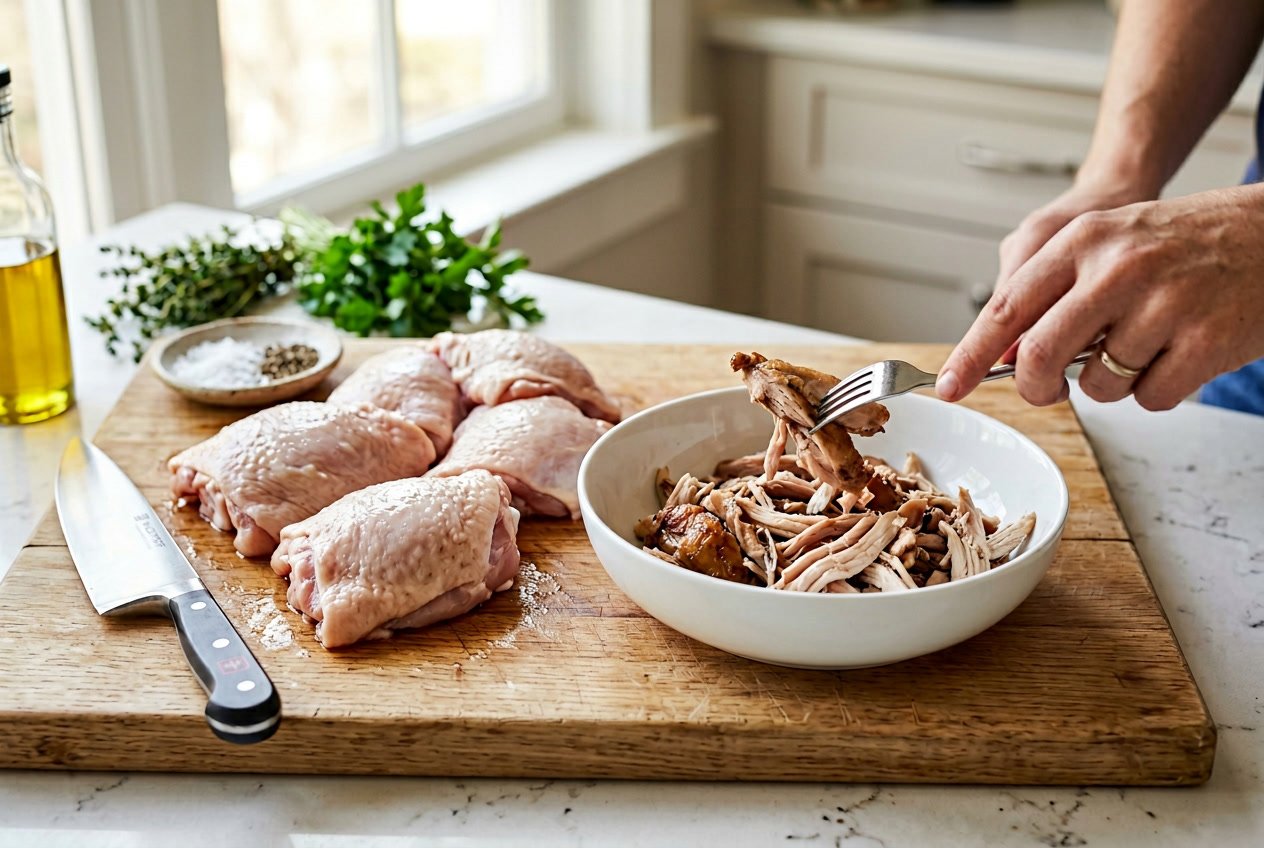
Pick thighs with enough fat and connective tissue to stay moist after cooking. Decide whether you want bones or skin based on flavor and ease of shredding.
Boneless vs. Bone-In Chicken Thighs
Boneless thighs shred faster and are easiest to handle. You can cook them in a skillet, poach, or bake and then pull apart with two forks or a stand mixer.
Bone-in thighs give more flavor and richer cooking liquid because the bone releases collagen. Plan for slightly longer cook times and remove the bone before or after shredding.
If you want deeper taste for soups or stews, choose bone-in. If speed and convenience matter, choose boneless skinless chicken thighs.
Skinless vs. Skin-On Chicken Thighs
Skin-on thighs add fat and crispness when roasted or seared, boosting flavor in the final shredded meat if you remove excess skin before shredding. The skin renders during cooking and enriches the pan juices; reserve some of that liquid to toss into the shredded meat for moisture.
Skinless thighs reduce fat and simplify shredding because you don’t need to pull off skin. If you prefer leaner results or plan to mix the shredded chicken into light salads, pick skinless.
For the juiciest, most flavorful shredded chicken, many cooks brown skin-on thighs, then remove skin and bones before shredding.
Selecting High-Quality Chicken
Look for thighs labeled “fresh” or “never frozen” if you want a firmer texture and easier separation when shredding. Choose free-range chicken thighs or those with a shorter ingredient list and no added saline solutions for better flavor.
Check color and smell. Thighs should be pink with minimal odor and spring back when pressed.
Buy from a trusted butcher or brand that lists source and processing details. For batch cooking to freeze, portion cooked shredded chicken into airtight containers within two hours to preserve texture and safety.
How to Cook Chicken Thighs for Shredding
Choose a method that gives you tender, fully cooked thighs and preserves moisture. Pay attention to internal temperature (165°F / 75°C), resting time, and whether you want bone-in flavor or boneless ease.
Poaching Method for Tender Results
Poaching yields very juicy shredded chicken because the meat cooks gently in liquid. Place boneless, skinless thighs in a single layer in a saucepan and cover with chicken broth or seasoned water by about 2 inches.
Add 1 bay leaf, 4 crushed peppercorns, and a teaspoon of salt for basic seasoning. Bring the liquid just to a simmer, then immediately turn off the heat and cover the pan.
Let the thighs sit in the hot liquid for 8–12 minutes until they reach 165°F. Remove, rest 5 minutes, then shred while warm for the best texture.
If you use bone-in thighs, poach longer (about 15–20 minutes) and remove bones before shredding. Reserve some poaching liquid and add a few tablespoons back to the shredded chicken to keep it moist.
Baking and Roasting Techniques
Baking gives you hands-off cooking and works well for batch shredding. Preheat the oven to 375°F (190°C) and arrange thighs skin-side up on a rimmed baking sheet or in a roasting pan.
Season with salt, pepper, and a spice rub such as paprika, garlic powder, and cumin. Bake boneless thighs 20–25 minutes and bone-in thighs 25–35 minutes, until the thickest part reaches 165°F.
Let rest 5–10 minutes to let juices redistribute. For added moisture, tent foil loosely while resting and reserve pan juices; spoon a tablespoon or two over shredded chicken.
If you want more flavor, sear thighs skin-side down in a hot skillet for 3–4 minutes before roasting. That adds a brown crust without drying the meat and still yields easy shredding after resting.
Sautéing and Pan-Searing
Sautéing or pan-searing adds caramelized flavor while keeping thighs tender enough to shred. Use a heavy skillet and heat 1–2 tablespoons of oil over medium-high heat.
Season boneless thighs and sear 3–5 minutes per side until golden brown. After searing, add 1/2 to 3/4 cup chicken broth, reduce heat to low, cover, and simmer for 7–12 minutes until internal temperature reaches 165°F.
Remove and let rest briefly before shredding. Shred while warm so fibers separate cleanly.
For bone-in thighs, increase simmer time to 12–15 minutes and remove bone before shredding. Add a splash of vinegar or lemon juice to the pan liquid for brightness and to help loosen meat fibers during shredding.
Slow Cooking and Pressure Cooking
Slow cookers and pressure cookers give you minimal hands-on time and consistent shreddable meat. For a slow cooker, place thighs in the pot with 1 cup of broth and seasonings.
Cook on low for 4–5 hours or high for 2–3 hours until meat pulls apart easily. With an electric pressure cooker, add 3/4–1 cup broth, seal, and cook boneless thighs on high pressure for 8–10 minutes with a 5–10 minute natural release.
Bone-in thighs need 10–12 minutes. Use natural release when possible for the best texture.
Both methods produce very tender, pull-apart thighs. Drain excess liquid but reserve a few tablespoons to mix into the shredded chicken to maintain juiciness.
Shredding Chicken Thighs: Tools and Techniques
Use one of three reliable approaches depending on batch size, desired texture, and available tools. Each method works best when thighs are cooked to 165°F (74°C), slightly warm, and free of skin and bones for easier shredding.
Two Forks Method Explained
This classic method gives you control over shred size and texture. Place a warm, boneless chicken thigh on a cutting board.
Hold the meat steady with one fork and pull it apart with the other, working along the grain to create long, tender strands. Work in small sections so you can stop when you reach the consistency you want.
This method avoids over-processing and keeps juices intact. Add a splash of reserved cooking liquid if pieces start to dry.
Two forks work best for one to four thighs or when you want chunkier, rustic shreds for tacos, salads, or sandwiches.
Using a Stand Mixer or Hand Mixer
A mixer speeds up shredding for larger batches and produces even, consistent pieces. Put cooled-but-still-warm boneless thighs in a deep bowl, attach paddle or beaters, and start on low.
Run for 15–30 seconds, pausing to check texture. Increase speed slightly only if needed.
Stop as soon as meat separates into shreds. Use a stand mixer for 6–12 thighs; a handheld mixer works well for smaller amounts.
Cover the bowl with a towel to prevent splatter and add a few tablespoons of broth if the chicken looks dry after mixing.
Blender and Food Processor Methods
Use a blender or food processor when you need very fine, uniform shreds or a pulled-chicken texture for spreads and sauces. Cut cooked thighs into 1–2 inch pieces and process in small batches.
Pulse gently in short bursts to control particle size. Avoid continuous high-speed runs, which create mush.
For chunkier results, use the pulse function and check frequently. Clean, bone-free thighs and minimal liquid produce the best results; add liquid sparingly if the blades struggle.
Use this method when you plan to incorporate the chicken into smooth sauces or fillings.
How to Store and Freeze Shredded Chicken Thighs
Store cooled, portioned shredded chicken in airtight containers or freezer bags and label them with the date. Keep portions sized for single meals to avoid refreezing large batches.
Storing in the Refrigerator for Freshness
Place cooked shredded chicken in a shallow airtight container to cool quickly and evenly. Refrigerate within two hours of cooking to limit bacterial growth.
Keep shredded chicken in the fridge at 40°F (4°C) or below and use within 3–4 days. If you plan to use it for sandwiches or salads, store with a separate small container of sauce or dressing to prevent sogginess.
For best texture, avoid stacking warm portions. Loosen the chicken with a fork before sealing to reduce trapped steam.
Label containers with the cook date so you can rotate older portions first.
Freezing Shredded Chicken for Later Use
Portion shredded chicken into meal-sized amounts before freezing to make thawing faster and reduce waste. Use heavy-duty freezer bags or vacuum-seal bags, press out excess air, and flatten bags for quicker, even freezing.
Add 1–2 tablespoons of chicken broth or a light drizzle of oil to each portion if you want juicier results after thawing. Seal, label with the date, and freeze at 0°F (-18°C) or colder.
Frozen shredded chicken keeps best for up to 3 months for quality. Beyond that, it’s safe longer but may lose flavor and texture.
Thaw in the refrigerator overnight or reheat directly from frozen in a covered pan, adding a splash of liquid and stirring until heated through.
Delicious Ways to Use Shredded Chicken Thighs
Shredded chicken thighs deliver rich flavor and hold moisture in dishes where juiciness matters most. You can turn a batch into tacos, salads, soups, casseroles, or meal-prep packs that keep well in the fridge or freezer.
Most Popular Recipes for Shredded Chicken
Tacos and burritos make quick, crowd-pleasing meals. Toss warm shredded chicken with taco seasoning or adobo, then serve on tortillas with diced onion, cilantro, and lime.
For sandwiches and sliders, mix shredded chicken with barbecue sauce or a creamy aioli and pile it on sturdy rolls.
Soups and stews benefit from the extra fat and collagen in thighs. Add shredded chicken to chicken tortilla soup, coconut curry, or chicken noodle in the last 15–20 minutes so it stays tender.
Casseroles and bakes take well to shredded chicken too. Stir it into pasta bakes, enchilada casseroles, or rice gratins before topping with cheese.
Creative Ideas for Meal Prep
Simmer chicken thighs in broth until cooked through. Shred the chicken with forks or a mixer while still warm for best texture.
Portion 4–6 oz servings into airtight containers. Store them in the fridge for 3–4 days or freeze for up to 3 months.
Label containers with the date and intended use, such as tacos, salad, or soup. This step speeds up weekday cooking.
Prepare different flavor blocks to keep meals interesting. Store plain shredded chicken, a smoky BBQ portion, and a citrus-cilantro portion.
Mix the chicken cold into salads. Reheat it for wraps or drop frozen portions directly into soups.
This method saves time and keeps your meals varied.


