
Can You Get Skinless Chicken Thighs Crispy? Proven Methods & Tips
You can get skinless chicken thighs crispy if you use the right prep and cooking choices. Dry the meat, use a light coating like flour, cornstarch, or baking powder, and apply high, even heat to form a golden crust while keeping the inside juicy.
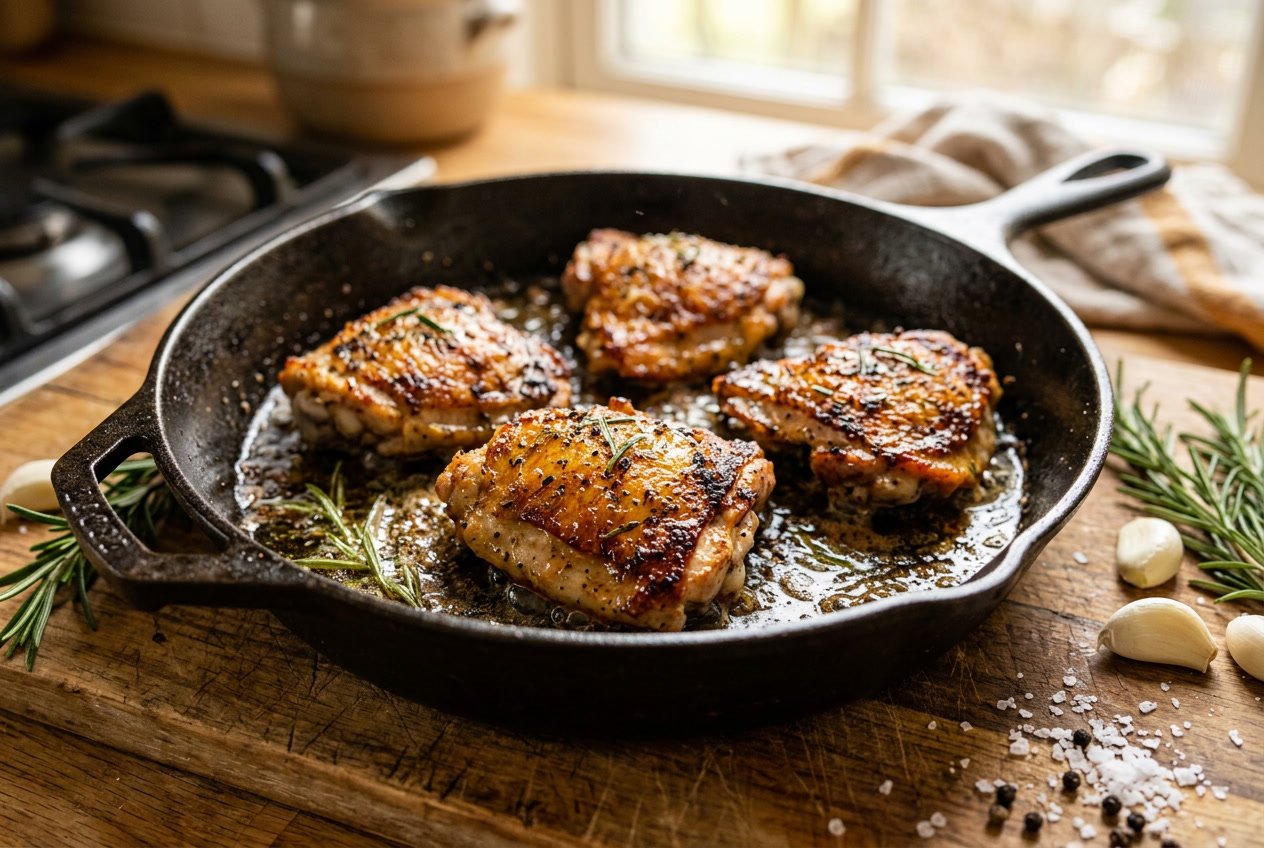
This guide explains why skinless thighs resist crisping and shows you simple steps and practical techniques to achieve a crunchy exterior and juicy meat. You’ll also get seasoning tips and learn common mistakes to avoid.
Why Skinless Chicken Thighs Are Challenging to Crisp
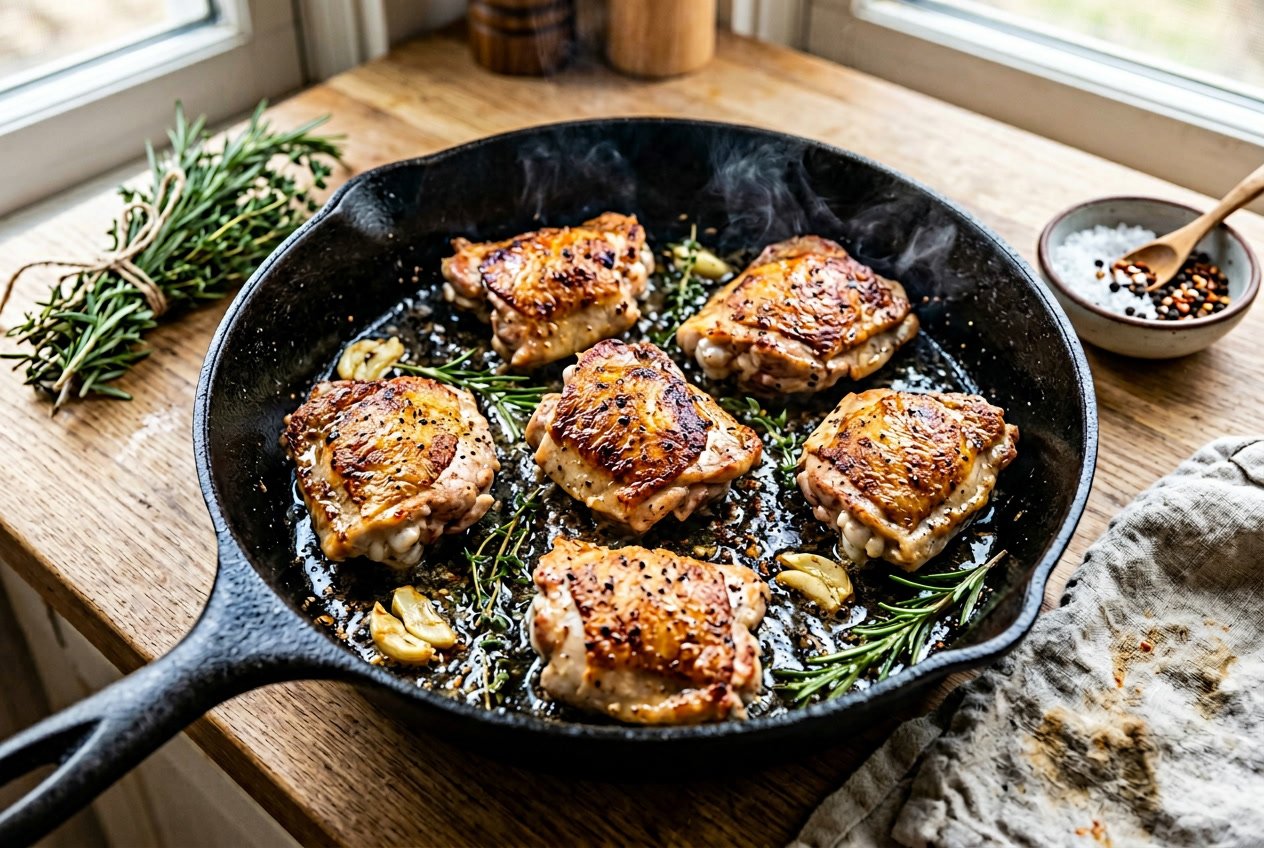
You need to address three issues: the absence of a fat layer that browns, surface moisture that causes steaming, and the need for substitutes or technique to form a crust. Each factor affects how quickly and evenly the exterior browns while keeping the interior juicy.
Differences Between Skin-On and Skinless Thighs
Skin-on chicken thighs crisp because the skin contains fat that renders and browns under high heat. That rendered fat insulates the meat and creates Maillard reactions on the surface, producing a golden, crunchy exterior.
Without skin, you lose that fat barrier and the natural substrate for browning. The meat’s surface is leaner and absorbs moisture more readily, which reduces direct contact heat and slows crust formation. You must replace the skin’s functions—fat, texture, and barrier—through cooking method or coating.
Role of Moisture in Crispiness
Surface moisture prevents crisping by turning frying or roasting into steaming. Even a small amount of water on skinless chicken thighs creates steam under heat and softens any developing crust.
To control moisture, pat thighs very dry with paper towels and consider a short dry brine in the fridge. Dry brining pulls some water out and seasons the meat.
Light coatings such as a dusting of flour, cornstarch, or baking powder absorb residual moisture and help form a dry shell that browns quickly.
Achieving Crisp Texture Without Skin
You can mimic skin-like crispiness by providing an alternative dry surface and high direct heat. Pan-searing in a heavy skillet or air-frying exposes the coated thigh to intense heat and encourages browning on the coating.
Use a thin, even coating and a high-smoke-point oil like avocado or canola. Cook in a single layer without crowding.
Finish with a brief high-heat blast to deepen color. Use a meat thermometer to ensure the inside stays juicy while the exterior crisps.
Essential Preparation Steps for Crispiness
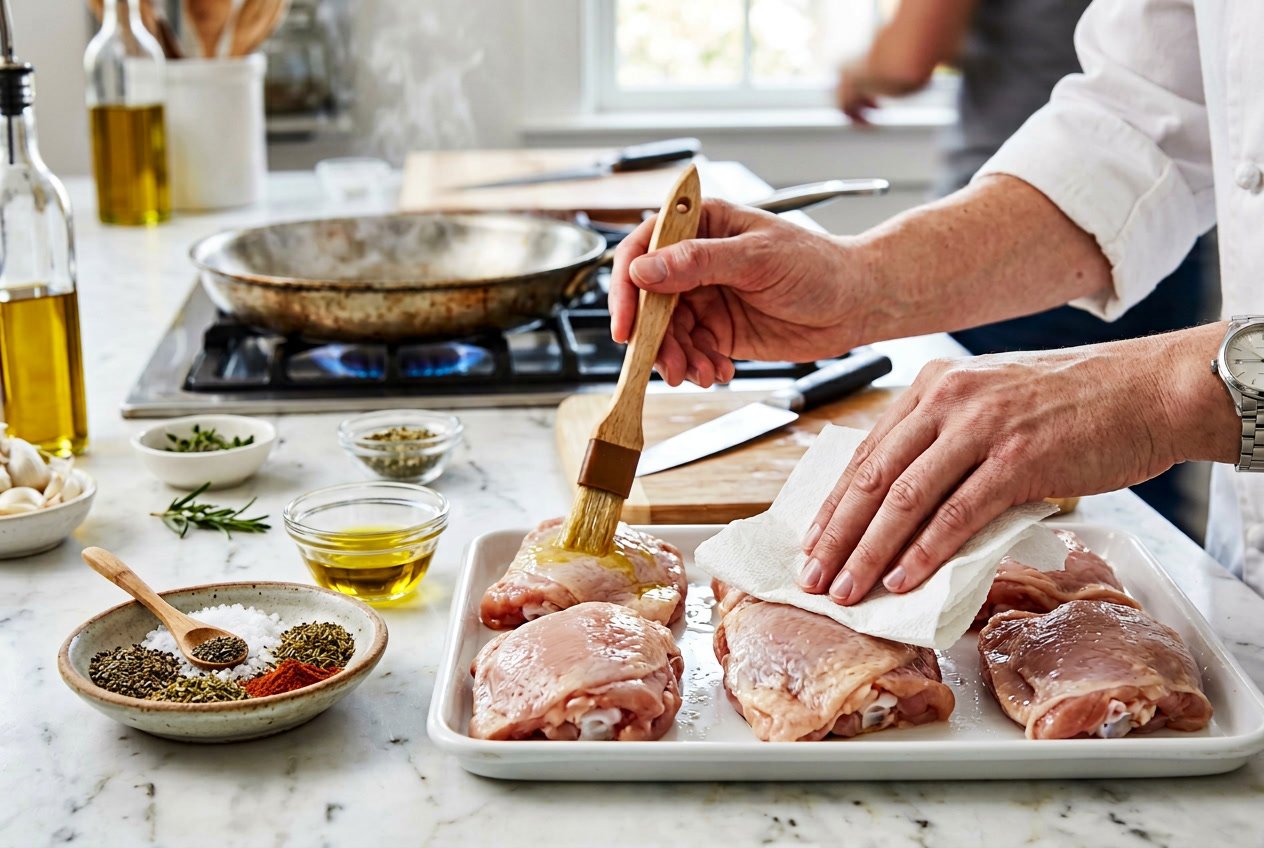
Focus on removing surface moisture, concentrating seasoning, and creating a dry surface that browns quickly. Each step directly affects how well boneless skinless chicken thighs develop a crust during cooking.
Patting Chicken Thighs Dry
Press firmly on each thigh with paper towels or a clean kitchen towel until the surface feels dry. Moisture on skinless chicken thighs turns to steam during cooking and prevents browning, so this step is key.
Pat both sides and the edges, then place the thighs on a wire rack for a few minutes to air-dry while you season or preheat your pan.
If you’re short on time, double-wrap in paper towels and press gently again just before cooking to remove any residual dampness.
Pat thighs right after trimming excess fat and before any marinades or rubs. This reduces steaming and helps coatings like flour or cornstarch adhere evenly.
Using Dry Brine Techniques
Sprinkle kosher salt evenly over both sides of each thigh and let them rest uncovered in the refrigerator for 30 minutes to 2 hours. The salt draws surface moisture out, then the meat reabsorbs some salt, seasonings penetrate, and the exterior firms up for better browning.
Use a wire rack set over a sheet pan so air circulates around each piece while they rest.
For extra flavor without adding surface wetness, mix salt with a small amount of baking powder to raise pH and promote faster browning. Use sparingly to avoid metallic taste.
Avoid wet marinades during the dry-brine window. If you plan an acidic or wet marinade, apply it after the dry-brine step and then pat the thighs dry again before cooking.
Light Coating for Enhanced Crust
Dust each thigh with a thin, even layer of flour, cornstarch, or a 50/50 mix to create a dry shell that crisps quickly. Use roughly 1 tablespoon of coating per thigh and shake off excess.
Season the coating with salt, pepper, and a pinch of smoked paprika or garlic powder for added flavor.
For a crunchier finish, combine a small amount of baking powder into the dry mix. When pan-frying or air-frying, place thighs in a preheated skillet or basket so the coating hits high heat immediately.
Pan-Frying Methods for Crispy Skinless Chicken Thighs
Focus on the right pan and oil, precise heat control, and keeping thighs spaced so steam can’t form. These steps determine whether you get a golden crust and a juicy interior.
Choosing the Right Pan and Oil
Use a heavy skillet, ideally a 12-inch cast iron pan, for even heat and sustained contact with the meat. Cast iron holds high temperatures and helps build an even crust.
Choose an oil with a high smoke point like avocado, grapeseed, or refined canola oil. Add just enough oil to coat the pan thinly.
Preheat the pan over medium-high until the oil shimmers but doesn’t smoke. Pat the thighs dry before they hit the pan so the oil can do its job efficiently.
If you don’t have cast iron, use a heavy stainless-steel skillet.
Avoid nonstick for high-heat searing because it limits browning.
Cooking Temperature and Timing
Start on medium-high heat to get an immediate sear and a brown crust. For boneless, skinless chicken thighs about 1/2–3/4 inch thick, cook 4–5 minutes per side until the exterior is deeply browned.
After searing both sides, reduce heat to medium-low and continue cooking until the internal temperature reaches 165°F (74°C). Use a probe thermometer in the thickest part to avoid overcooking.
Lower the burner slightly after the initial sear so the crust doesn’t burn while the center finishes. Let the crust set undisturbed for the best texture.
Avoiding Crowding for Even Cooking
Place thighs in the pan with at least 1/2 inch of space between pieces. Overcrowding traps moisture and causes steaming, which prevents the crust from forming.
Work in batches if your pan can’t fit all pieces without overlap. After searing a batch, transfer thighs to a wire rack set over a baking sheet to rest.
If you must keep cooked thighs warm, set them in a single layer in a low oven on the wire rack. Avoid stacking or covering them tightly, as this will soften the exterior.
Oven-Baking Techniques for a Crispy Finish
Use high oven temperatures, a raised surface to let air circulate, and a short finishing broil to develop a golden crust while keeping thighs juicy. Dry the meat, add a thin starch or baking-powder coating if desired, and avoid overcrowding so each piece browns evenly.
Wire Rack and High Heat Strategies
Place boneless skinless chicken thighs on a wire rack set over a rimmed baking sheet to promote air flow and prevent the underside from steaming. The rack lifts the meat so heat surrounds each piece.
Preheat the oven to 425°F (220°C). Arrange thighs with at least 1 inch between pieces.
Bake uncovered for 15–20 minutes depending on thickness, then check internal temperature; aim for 165°F (74°C).
For extra crisping, pat thighs very dry and dust lightly with a mix of cornstarch and a pinch of baking powder. Brush or spritz with a thin layer of high-smoke-point oil to encourage even browning.
Broiling for Extra Crunchiness
After the thighs approach 160–162°F (71–72°C), move the sheet to the top rack and switch the oven to broil for 2–4 minutes. Broiling adds direct radiant heat that finishes the crust rapidly.
Watch closely while broiling; sugar-based marinades or herbs can burn in seconds. Keep the oven door closed if your broiler recommends it, but stand nearby and rotate the pan if one side browns faster.
If you prefer a gentler finish, increase oven temp to 450°F (232°C) for the last 5–7 minutes instead of broiling.
Tips for Baking Boneless, Skinless Thighs
Start with a dry brine: sprinkle kosher salt per pound and rest uncovered in the fridge for 30–60 minutes. This pulls surface moisture out and seasons the meat.
Use coatings selectively: plain flour, panko, or a light cornstarch coat will create different textures. Cornstarch gives a thin, crackly crust; panko yields a crunchier, thicker crust.
Apply a thin, even layer and shake off excess. Avoid overcrowding the pan; work in batches if necessary.
Let thighs rest 5 minutes after baking to let juices redistribute. Serve immediately for best crispness.
Flavor Enhancements and Seasoning Strategies
Salt, acid, and texture modifiers help with flavor and crispiness. Use a short dry-brine to draw moisture out, pick a rub or marinade that won’t add excess surface water, and add a thin coating if you want a crisp crust.
Dry Rubs and Marinades for Skinless Thighs
Apply a light dry rub after a brief dry-brine. Black pepper, smoked paprika, and garlic powder work well.
Rubs add immediate seasoning without wetting the surface, so they help you get crispy skinless chicken thighs when pan-frying or oven-roasting.
If you prefer a marinade, limit acidic or wet marinades to 15–30 minutes for boneless thighs to avoid adding excess surface moisture. Pat the thighs completely dry after marinating, then dust with a thin coating of cornstarch or flour to restore a dry surface before cooking.
For an extra brown crust, mix a small amount of baking powder into your dry rub. Monitor color closely to avoid over-browning.
Incorporating Herbs, Aromatics, and Coatings
Use sturdy dried herbs in the rub for high-heat methods. Add fresh herbs at the end of cooking or in a finishing butter to preserve brightness.
Mince garlic or shallot and add during the last minute of pan-frying to avoid burning. Choose coatings deliberately: cornstarch yields a lighter, glassy crust; all-purpose flour gives a thicker, more rustic crust; a 1:1 mix balances crispness and color.
For air-fryer or oven recipes, a light spray of oil on the coated thighs helps even browning without excess fat.
Arrange pieces on a wire rack in the oven or leave space in the pan to avoid steaming. Finish under high heat or broil for a minute or two to tighten the crust.
Common Mistakes and How to Avoid Them
These are the practical problems that most often keep skinless chicken thighs from getting crispy and the exact fixes you can apply at the stove or in the oven.
Overcrowding the Pan or Baking Sheet
Crowding traps steam and prevents the surface from drying and browning. Leave at least 1 to 1.5 inches of space between thighs in a skillet or on a sheet pan.
If you need to cook more than fits, work in batches so each piece gets direct contact with the hot surface and airflow. Use a heavy skillet, preferably cast iron, and heat oil until it shimmers before adding thighs.
For oven methods, place thighs on a wire rack over a baking sheet so air circulates under and around the meat. Make sure each thigh sits flat to get an even crust.
Improper Preparation and Moisture Issues
Surface moisture prevents crisping. Pat thighs thoroughly with paper towels and let them air-dry in the refrigerator uncovered for 30 to 60 minutes when possible.
A brief dry brine, which means rubbing lightly with salt and refrigerating, draws out excess surface water and seasons the meat without adding liquid. Dust a light coating of flour, cornstarch, or a 1:1 mix just before cooking to absorb residual moisture and form a dry shell.
If you use a wet marinade, blot the thighs dry and remove excess marinade. Baking powder in small amounts can help browning by raising pH, but don’t overapply or it will taste metallic.
Incorrect Cooking Temperatures
Too-low heat steams thighs. Too-high heat burns the exterior before the interior reaches 165°F (74°C).
For pan-frying, use medium-high heat to sear, then lower the heat to finish cooking. Sear undisturbed for 4 to 6 minutes per side for typical boneless thighs.
After searing, reduce the heat to medium until the internal temperature reaches 165°F. For oven cooking, set the temperature to 400–450°F (200–230°C) and place the thighs on a rack.
Finish with a brief high-heat blast or a 1 to 3 minute broil to crisp the surface. Use a probe thermometer to check doneness.
Let the thighs rest briefly to keep juices inside and preserve the crispy exterior.


