
Can You Get Chicken Thighs Boneless: Sourcing, Preparation, and Uses
You can get boneless chicken thighs, though availability varies by store and region.
If you want quick-cooking, easy-to-portion thighs without losing flavor, you can buy boneless options from supermarkets, butchers, and online meat suppliers. You can also debone thighs yourself at home.
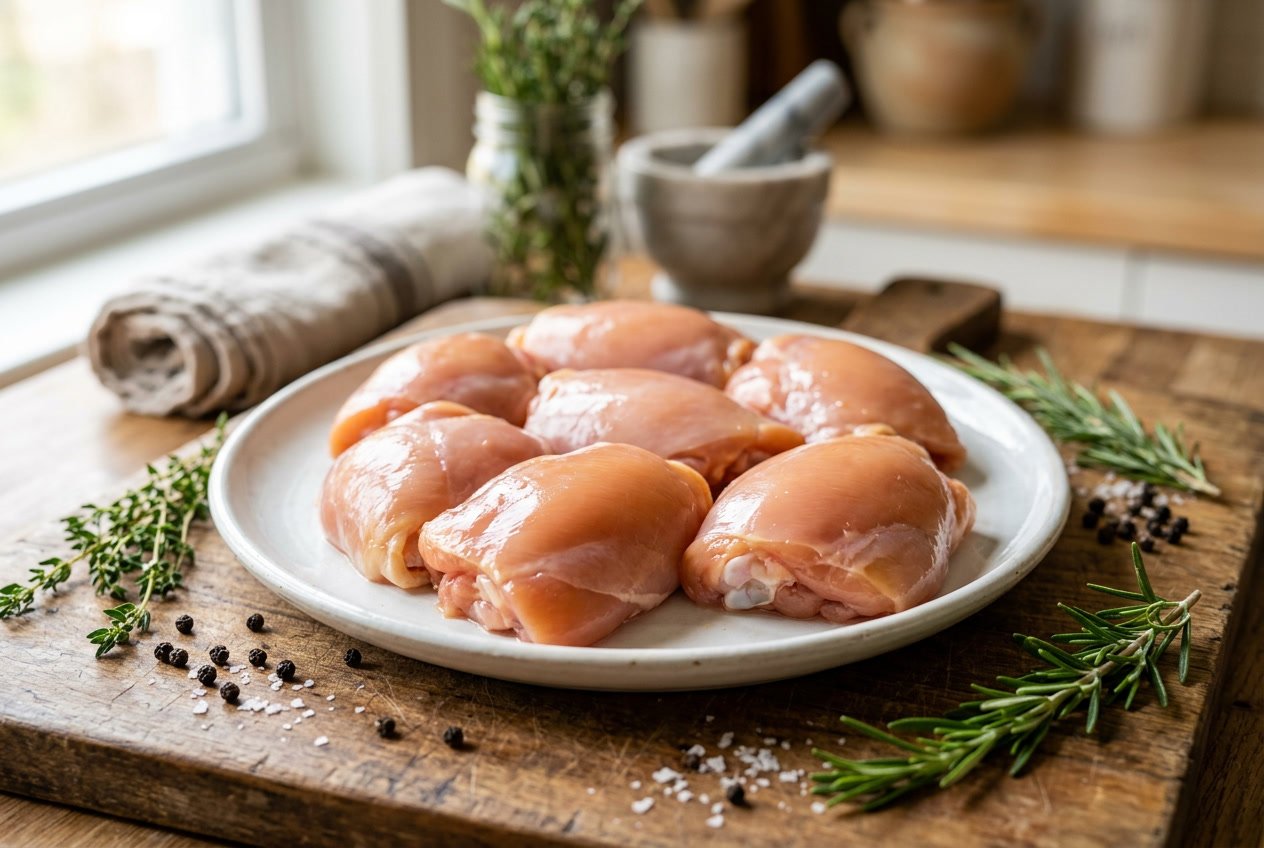
Keep reading to learn where to buy different types, why stores stock certain cuts, how to debone thighs at home, and which cooking and storage methods preserve the best texture and flavor.
Understanding Boneless Chicken Thighs
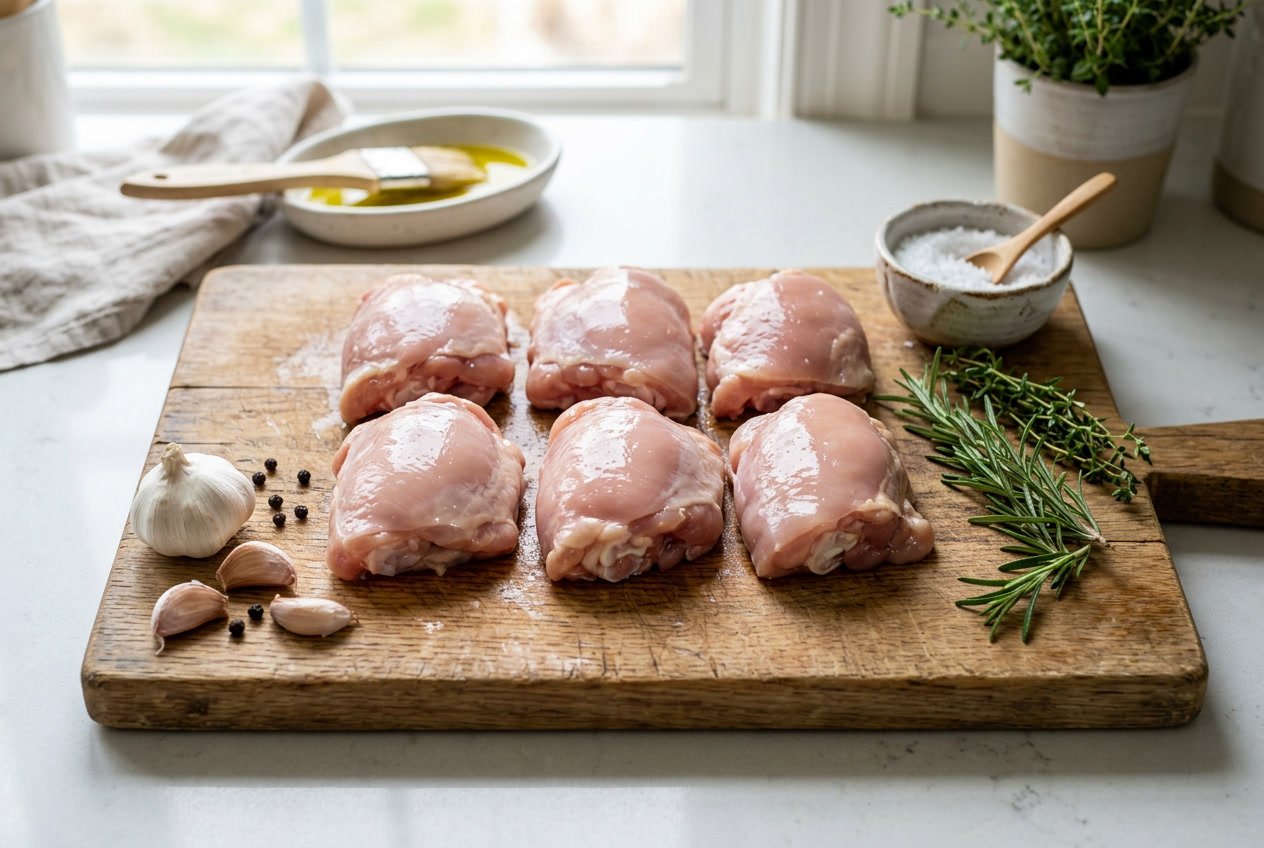
Boneless chicken thighs give you tender, flavorful dark meat without the bone to remove.
You’ll find options with or without skin, and they change cooking time, portioning, and cost compared with bone-in cuts.
Chicken Thighs Versus Boneless Thighs
Chicken thighs refer to the whole leg portion that may include bone and skin.
When sold as boneless thighs, butchers remove the bone, so you can handle and cut the meat more easily for quick recipes and uniform portions.
Boneless thighs cook faster than bone-in because there’s no bone to slow heat transfer.
Use an instant-read thermometer and watch for overcooking, aiming for 165°F (74°C).
Boneless pieces make shredding for tacos, salads, or sandwiches easier.
Differences Between Boneless, Skinless and Bone-In
Boneless, skinless thighs lack both bone and skin.
They trim fat and reduce crisping options, but remain juicier than breasts due to higher intramuscular fat.
Bone-in thighs keep the bone and often the skin; they cost less per pound and deliver more flavor during slow cooking.
Consider these trade-offs:
- Boneless, skinless: fastest to cook, easiest to portion, less chance of crispy skin.
- Boneless, skin-on: you can crisp the skin but still have quick carving.
- Bone-in, skin-on: best for long roasts, braises, and cost savings.
Choose based on cooking method.
Grill or sear for char; braise or roast for deep flavor from bone contact.
Nutritional Value and Benefits
Boneless chicken thighs provide similar macronutrients to bone-in thighs because the bone doesn’t change the meat’s protein or fat content.
Thighs are higher in fat than breasts, which gives them more calories but also more flavor and satiety.
Key nutrients per typical serving:
- Protein: high, supports muscle repair and meals that keep you full.
- Fat: moderate, contributes to juiciness and carries fat-soluble flavors.
- Iron and B12: higher than white meat.
If you trim excess fat or choose skinless boneless thighs, you lower calories while keeping much of the taste.
Use portion control and cooking method to adjust fat retention and final calorie count.
Availability and Where to Buy
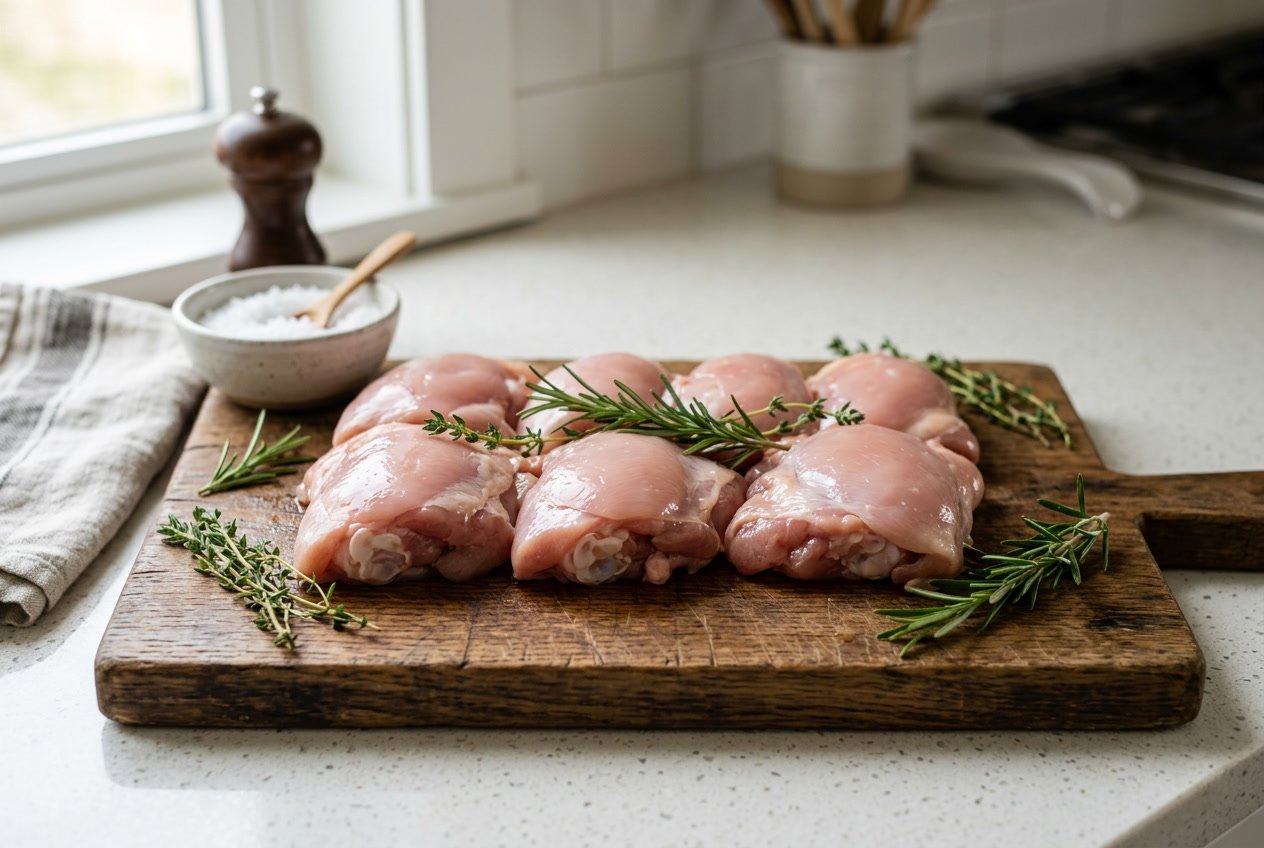
You can find boneless chicken thighs in grocery stores, specialty shops, and from delivery services.
Prices, pack sizes, and options like organic or bulk vary by store, so consider storage and cooking plans before you buy.
Grocery Stores and Supermarkets
Most national chains carry boneless chicken thighs in fresh and frozen sections.
Look for brands such as Tyson, Perdue, or store brands in 1–3 pound trays.
Some stores also sell vacuum-sealed packs that extend freezer life.
Check labels for added solutions, organic, or antibiotic-free claims.
Weekly ads and store apps often list sales or BOGO deals that cut cost per pound.
Warehouse-style supermarkets like Costco and Sam’s Club sell multi-pound packs at lower per-pound prices.
Shop early in the day for freshness and inspect sell-by dates.
Transfer overwrapped trays to airtight containers for best refrigeration life.
Online Retailers and Delivery Services
You can order boneless thighs for delivery or pickup from platforms like Amazon Fresh, Instacart, and Walmart Grocery.
These services offer scheduled windows and sometimes same-day or 1-hour delivery.
Online listings let you filter by attributes—organic, air-chilled, frozen, or value packs—and compare unit prices across brands.
Pay attention to delivery fees, substitution policies, and whether the item is sold by the retailer or a marketplace seller.
Some meat delivery subscriptions offer vacuum-sealed, frozen boneless chicken thighs with recurring shipments.
For one-off orders, choose curbside pickup if you want to inspect the product in person.
Local Butcher Shops and Specialty Markets
Butchers and specialty markets often offer fresher, higher-quality boneless thighs and can trim or portion to your specs.
You can ask about the bird’s origin, feed, and processing if you prioritize pasture-raised, organic, or local sourcing.
Supply may be limited compared with supermarkets, so call ahead to reserve larger quantities.
Butchers may charge a premium, but you gain customization and direct answers about handling.
Farmers markets and local farms sometimes sell thighs either pre-boned or bone-in; requesting boneless cuts in advance often works.
If you plan to buy in bulk, discuss freezing and portioning tips with the butcher to maximize shelf life and minimize waste.
How to Debone Chicken Thighs
You can use the right tools, make precise cuts, and avoid common pitfalls to remove the bone cleanly and keep the skin intact if desired.
Follow the steps closely and work on a stable surface to save time and avoid waste.
Tools and Preparation Steps
Gather a small, sharp boning knife or a flexible fillet knife.
Use a non-slip cutting board and keep a pair of kitchen shears and a clean towel within reach.
Pat thighs dry with paper towels to improve grip and visibility of the bone.
Work with skin-side down so the bone and joint face up; this exposes the bone line and makes your initial incision more accurate.
Trim excess fat only after the bone is out unless you need to remove skin first for a skinless result.
Keep a shallow dish for trimmed pieces and a separate tray for bones to maintain kitchen hygiene.
Step-by-Step Deboning Technique
Lay the thigh skin-side down and locate the long bone running through the center.
Make a 1/2-inch cut along one side of the bone, using the blade tip to follow the bone’s contour without cutting through the meat.
Use short, controlled strokes to separate meat from bone on both sides, working the knife close to the bone so you leave minimal meat attached.
Once freed on both sides, fold the meat back and cut the connective tissue at the joint to release the bone.
Run your knife along the underside of the bone to free any remaining attachments.
Trim stray cartilage, bloodlines, or excess fat with kitchen shears or the knife tip for a neat, boneless thigh ready to cook.
Common Mistakes to Avoid
If you apply too much pressure with the knife, you may slice into meat instead of following the bone.
Instead, use light, deliberate strokes.
A dull knife increases slippage and leads to ragged cuts and wasted meat.
Hold the meat steady with a towel or your fingers placed safely away from the blade.
Don’t rush past the joint; cut the connective tissue before removing the bone.
Removing skin prematurely can make gripping and cutting harder, so keep skin on if you want skin-on boneless thighs.
Always sanitize your board and knife after deboning to prevent cross-contamination.
Price and Packaging Options
Boneless chicken thighs usually cost more per pound than bone-in because you pay for the added processing and convenience.
You’ll also find multiple package sizes and formats that change unit price and shelf life.
Price Range: Boneless vs. Bone-In
Boneless thighs usually run about $3–$5 per pound at mainstream grocers, with organic or specialty labels reaching $6–$8 per pound.
Bone-in thighs commonly sell for $2–$3.50 per pound, since the bone makes up roughly 20% of weight and lowers the per-pound price.
Check unit pricing on the shelf (price per pound or kilogram) to compare costs.
Individually frozen boneless thighs often cost more per pound than fresh multi-piece trays, but they reduce waste if you only need one or two pieces at a time.
Packaging Types and Sizes
Retailers sell boneless thighs in several formats: clear plastic trays (fresh), vacuum-sealed packs, and individually frozen pieces.
Fresh trays typically range from 1.4–4.0 pounds; family packs (3–6 lb) give a lower per-pound cost but require you to use or freeze them quickly.
Vacuum-sealed and individually frozen options extend shelf life to months in the freezer and let you thaw single portions.
Look for labels like “boneless, skinless” or “boneless, skin-on” and check weight and piece count.
If the package lacks piece count, divide gross weight by about 2.9 oz (83 g) to estimate how many boneless thighs you’re buying.
Best Ways to Cook Boneless Chicken Thighs
Choose methods that build brown crust, lock in juices, and pair well with simple sides like roasted vegetables or rice.
Use a high-heat sear for texture, an oven method for hands-off cooking, or a quick stir-fry for saucy dishes.
Grilled Chicken Thighs Methods
Grill boneless thighs over medium-high heat (450–475°F) to get good char without burning.
Brush thighs lightly with oil and season with salt and pepper or a marinade; grill 4–6 minutes per side depending on thickness.
Use two-zone heat if you have a gas or charcoal grill.
Sear directly over high heat, then move to indirect heat to finish to 165–170°F.
Let thighs rest under foil for 5 minutes before slicing.
Serve with charred lemon wedges and a side of roasted vegetables.
If using a sugary glaze, apply it only in the last 1–2 minutes to avoid burning.
Stir-Frying and Pan-Seared Options
Pat thighs dry and cut into uniform pieces for stir-fries or leave whole for pan-searing.
Heat a heavy skillet or wok until very hot, add a tablespoon of oil, and sear without moving for 4–5 minutes per side for whole thighs.
Cut pieces cook in 3–5 minutes while stirring frequently.
Season with salt and pepper for searing, or add aromatics (garlic, ginger, scallions) and a quick sauce (soy, rice vinegar, honey) for stir-fries.
Deglaze the pan with a splash of stock or wine to build sauce.
Finish with fresh herbs or toasted sesame for brightness.
Oven-Baked and Roasted Varieties
Preheat the oven to 400–425°F.
Pat thighs dry, rub with oil and seasonings, and arrange on a rimmed sheet pan so pieces don’t touch.
Roast 18–25 minutes until internal temperature reaches 165–170°F; flip once at about halfway for even browning.
Roast vegetables (potatoes, carrots, Brussels sprouts) on the same pan for a full meal.
Toss vegetables in oil and seasonings; place thicker vegetables farther from the thighs or start them 10–15 minutes earlier.
Crisp edges develop better at higher heat.
Check thighs with an instant-read thermometer to avoid overcooking.
Storage, Shelf Life, and Safety Tips
Store boneless chicken thighs so they stay safe and maintain quality.
Keep them cold, sealed, and separated from ready-to-eat foods.
Freeze promptly if you won’t cook them within a day or two.
Proper Refrigeration and Freezing
Keep raw boneless chicken thighs in their original packaging if you plan to use them within 1–2 days.
Place the package on the lowest refrigerator shelf or in a leak-proof container to prevent juices from contaminating other foods.
Maintain your fridge at 40°F (4°C) or below.
For longer storage, freeze thighs in airtight packaging or heavy-duty freezer bags.
Remove excess air, label with the date, and store at 0°F (-18°C) or colder.
For best quality, use frozen boneless thighs within 6–9 months.
Thawing in the fridge better preserves texture than thawing at room temperature.
Safe Thawing and Handling Practices
Thaw boneless chicken thighs in the refrigerator on a plate or tray to catch any drips. Allow 24 hours for a typical package to thaw fully.
If you need faster thawing, submerge the sealed package in cold water. Change the water every 30 minutes until thawed, then cook the chicken immediately.
Do not wash raw chicken, as rinsing spreads bacteria. Use separate cutting boards, utensils, and plates for raw thighs and cooked food.
Cook boneless thighs to an internal temperature of 165°F (74°C). Measure this with a probe thermometer inserted into the thickest part.
Refrigerate cooked leftovers within two hours. Eat them within 3–4 days or freeze for longer storage.


