
Can You Cook Chicken Thighs From Frozen: Complete Instructions and Tips
You can safely cook chicken thighs from frozen if you use methods that bring the meat to a safe internal temperature and allow extra cooking time.
Check that the thickest part reaches 165°F (75°C) to make frozen chicken thighs a convenient, reliable option for quick meals.
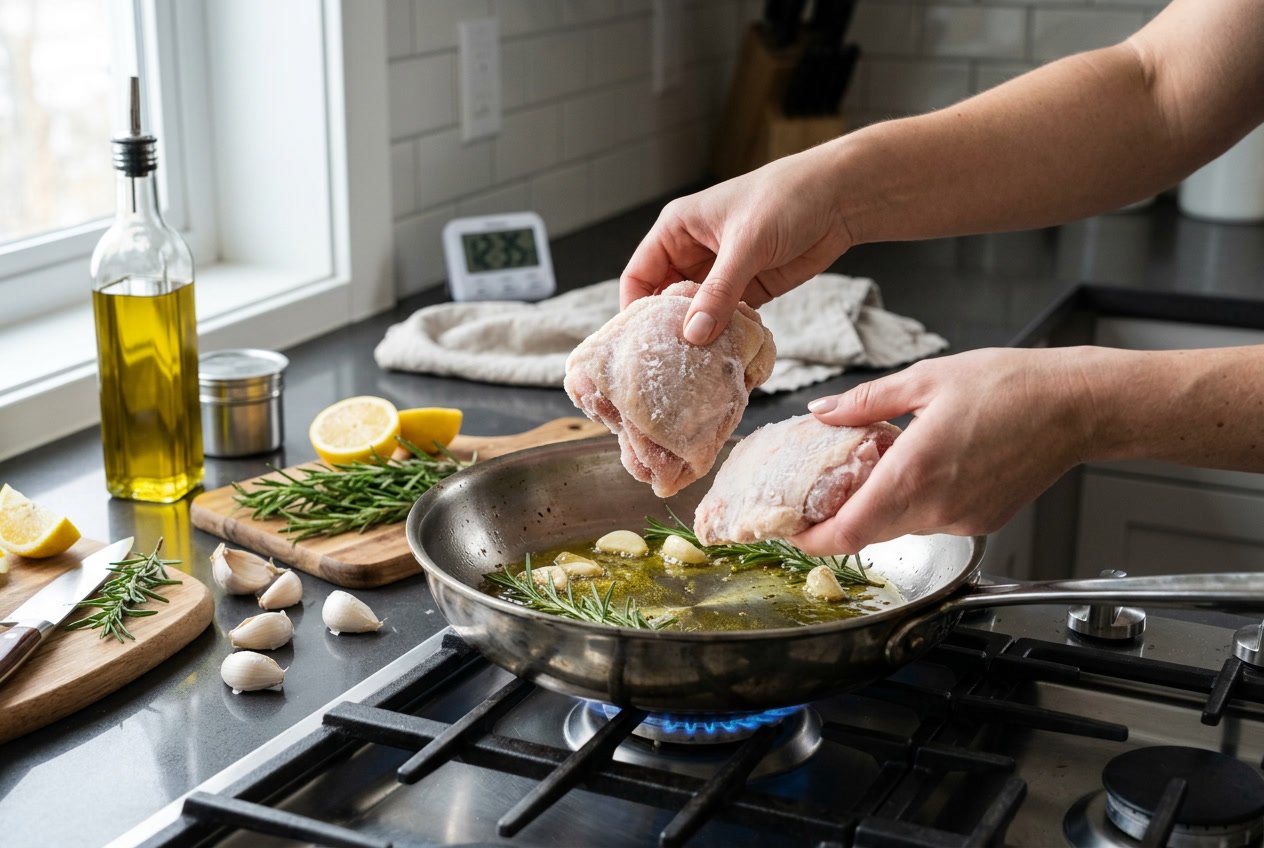
This post explains which tools and precautions matter and how to roast frozen thighs in the oven for the best texture.
You’ll also see which alternative methods—pressure cooker, stovetop, air fryer—work when you’re short on time.
You’ll get clear timing guidelines and practical tips to avoid dry edges, undercooked centers, or food-safety risks.
Can You Cook Chicken Thighs From Frozen
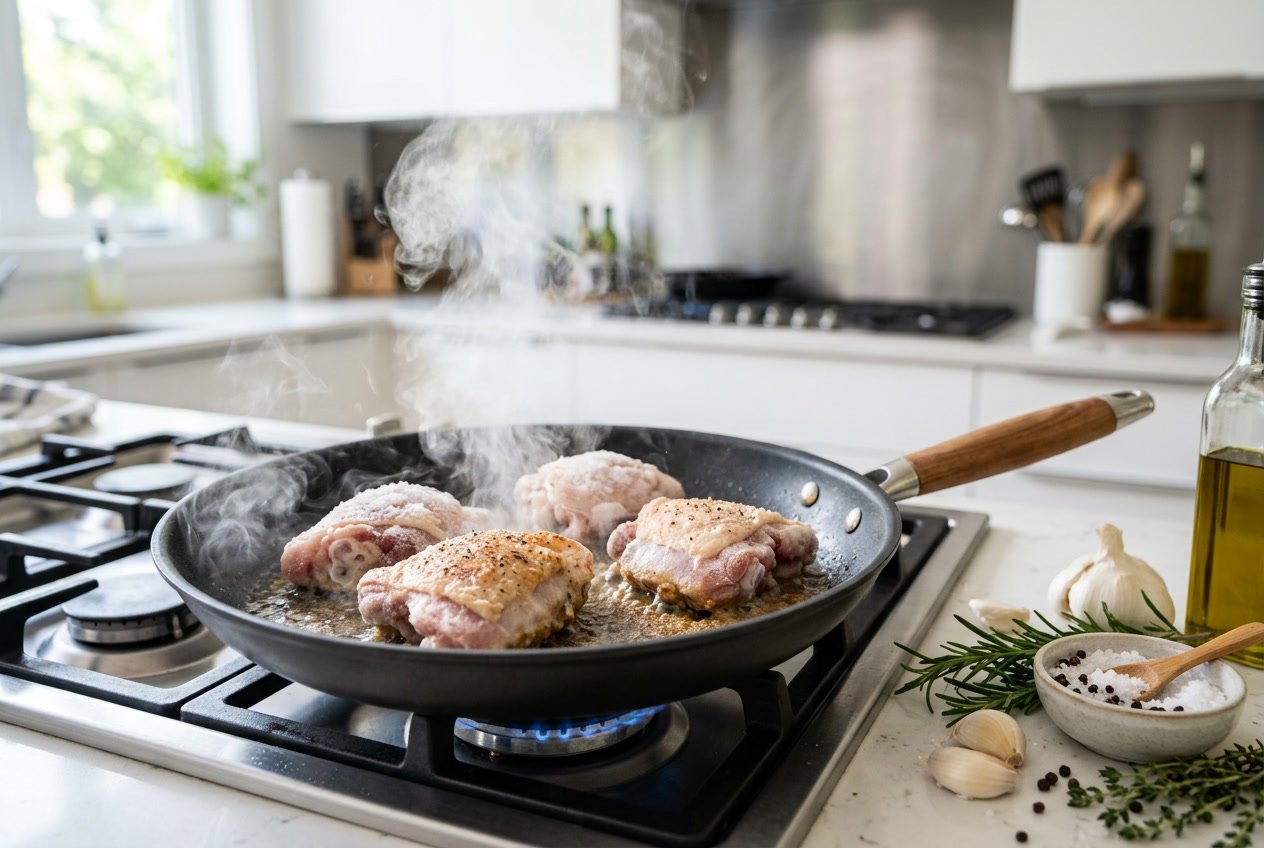
You can cook chicken thighs from frozen, but you must adjust cooking time and method so the meat reaches a safe internal temperature.
Follow measured steps to avoid uneven cooking and ensure safety.
USDA Safety Guidelines
The USDA allows you to cook poultry from frozen as long as the internal temperature reaches 165°F (74°C).
Use a calibrated instant-read thermometer and insert it into the thickest part of the thigh without touching bone.
Avoid slow cookers for frozen chicken because they keep meat in the 40–140°F “danger zone” too long.
Choose methods that bring the product to high heat steadily: oven roasting, pressure cooking, air fryer, or stovetop finishing after partial thaw.
Handle raw frozen chicken the same as thawed: wash hands, sanitize surfaces, and use separate cutting boards or utensils.
If you need to separate pieces, run them briefly under cold water while keeping the meat in a sealed bag.
Differences Between Frozen and Thawed Chicken
Frozen chicken thighs usually take about 50% longer to cook than thawed thighs.
For example, a bone-in thigh that takes 40 minutes thawed in the oven may need 60 minutes when cooked from frozen.
Texture can differ because frozen meat may release more water as it cooks, which can dilute marinades and prevent exterior browning.
Pat the surface dry during the brief thaw that occurs on the pan or use higher initial heat to promote browning.
Seasoning sticks poorly to a frozen surface.
Apply dry rubs or oil after a few minutes of cooking when the surface softens, or brush sauces on at the end of cooking to avoid burning.
Always verify doneness by temperature, not time or color.
Why Cook Chicken Thighs From Frozen
Cooking frozen chicken thighs saves time when you forget to thaw or need a quick meal.
You avoid overnight planning and still get a protein-ready dinner within an hour using an oven or air fryer.
Frozen thighs often cost less and last longer in the freezer, letting you buy in bulk and reduce waste.
They also provide consistent portioning because each piece is usually individually frozen.
Pressure cookers shorten time and keep moisture, while oven roasting and air frying produce better browning.
Pick a method based on how much time you have and whether you want crispy skin or a saucier result.
Essential Tools and Safety Precautions
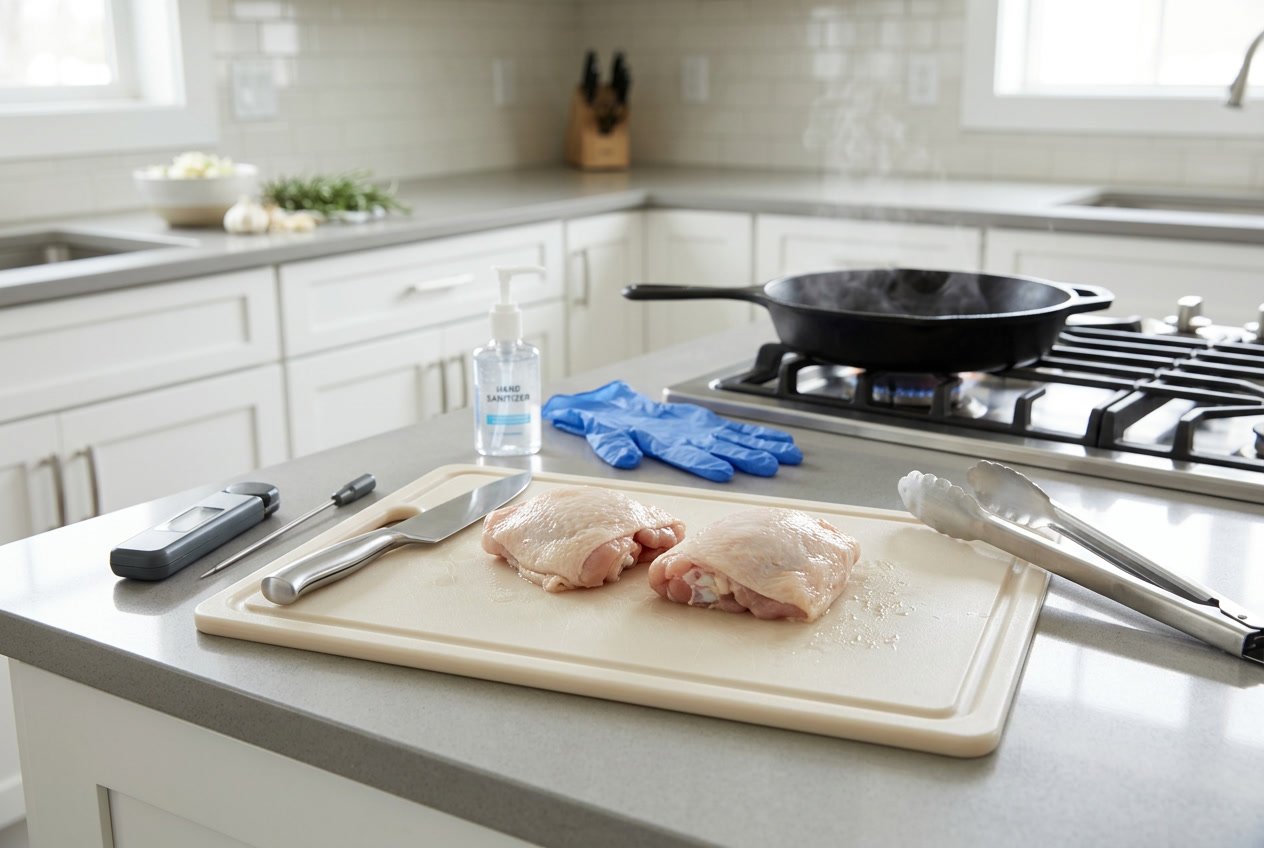
You need accurate temperature checks, even heat distribution, and strict handling to cook frozen chicken thighs safely and well.
The right tools and simple habits reduce food-safety risk and improve texture and flavor.
Using a Meat Thermometer
A digital instant-read meat thermometer helps you cook frozen chicken thighs safely.
Insert the probe into the thickest part of the thigh without touching bone and look for a steady reading of 165°F (75°C).
Check temperature in multiple spots on larger pieces or if thighs are crowded.
If one spot reads below 165°F, continue cooking and re-check after a few minutes.
Calibrate your thermometer periodically in boiling water or ice water.
Clean the probe with hot, soapy water between uses to avoid cross-contamination.
Avoid guessing doneness by color alone; frozen thighs can brown externally while remaining undercooked inside.
Preventing Uneven Cooking
Arrange frozen chicken thighs in a single layer with space between pieces so hot air or liquid can circulate.
Crowding a baking sheet or pan forces longer cook times and raises the chance of cold spots.
Set the oven to 375°F (190°C) for even heat and expect around 50% longer cook time than thawed thighs.
For stovetop, sear briefly then add liquid and cover to finish cooking through steam.
Check internal temperature before removing.
If you use an Instant Pot or pressure cooker, add at least 1 cup (240 mL) of liquid and allow natural pressure release for better tenderness and more uniform heat penetration.
Safe Handling and Cross-Contamination Prevention
Treat frozen raw chicken exactly like fresh raw chicken for safety.
Keep packaging contained on a tray while thawing or moving to prevent drips onto countertops or other foods.
Wash hands for 20 seconds after handling raw chicken and sanitize surfaces and utensils with hot, soapy water or a kitchen disinfectant.
Use separate cutting boards and knives for raw poultry versus ready-to-eat foods.
If you partially cook frozen thighs to add a sauce or finish later, fully cook to 165°F before cooling and storing.
Label cooked portions with date and refrigerate within two hours.
How to Cook Frozen Chicken Thighs in the Oven
You can bake bone-in or boneless frozen chicken thighs in the oven with minimal prep and reliable results.
Focus on proper oven temperature, spacing, and using a thermometer to ensure the meat reaches a safe internal temperature.
Preparation and Seasoning
Seasoning won’t penetrate deeply when the chicken is frozen.
Line a rimmed baking sheet with foil or parchment and set a wire rack on it if you want air circulation and crisper skin.
Arrange frozen thighs skin-side up, leaving at least 1/2 inch between pieces so heat circulates evenly.
Brush each piece with a thin coat of oil or melted butter to help spices stick and to promote browning.
Sprinkle salt, pepper, garlic powder, and paprika or your preferred dry rub.
If pieces are stuck together, run them briefly under cold water to separate before arranging on the sheet.
Use a probe or instant-read meat thermometer later; seasoning now mainly flavors the surface.
If you prefer sauce, apply it in the final 10–15 minutes of baking so sugars don’t burn.
Step-by-Step Baking Instructions
Preheat the oven to 425°F (220°C) for a balance of thorough cooking and skin crisping.
Place the prepared sheet in the center of the oven to ensure even heat exposure across bone-in chicken thighs.
Bake bone-in frozen thighs for roughly 40–55 minutes, depending on size.
Boneless thighs often finish sooner.
Start checking internal temperature at about 35–40 minutes.
The safe target is 165°F (74°C) at the thickest part near the bone for bone-in pieces.
If you used a wire rack, juices drip into the pan below.
Transfer the pan to avoid smoke if pan drippings begin to burn.
Let the thighs rest 5 minutes after removing from the oven to allow juices to redistribute.
Cover loosely with foil during rest.
Achieving Crispy Skin and Texture
Crisp skin requires high, dry heat and space for air to circulate.
Baking at 425°F (220°C) gives you good crisping while cooking the interior, especially for bone-in chicken thighs.
Pat the skin dry with a paper towel if any ice melt has left moisture before oiling and seasoning.
If the skin isn’t as crispy as you want when the internal temperature hits 165°F (74°C), move the pan under the broiler for 1–3 minutes.
Watch closely to avoid burning because sugary glazes will char quickly.
For extra texture, finish with a light sprinkle of flaky salt immediately after broiling to enhance mouthfeel.
Alternative Cooking Methods for Frozen Chicken Thighs
You can safely and quickly cook frozen chicken thighs using pressure, air-fry, or stovetop methods.
Each requires specific time, temperature, and handling to reach 165°F (74°C).
Avoid methods that hold chicken too long at low temperatures.
Instant Pot and Pressure Cooker
Pressure cooking quickly cooks frozen chicken thighs and keeps meat moist.
Place the frozen thighs on the trivet or directly in the pot, add 1 cup of water or broth for a 6-quart Instant Pot, and season lightly.
You can add more sauce after cooking.
Seal the lid and cook on high pressure for 15–18 minutes for average-size thighs.
Increase to 20–22 minutes for very large pieces.
Allow a natural release for 5–10 minutes, then quick-release the remainder.
Check internal temperature in the thickest part; if below 165°F (74°C), return to pressure for 3–5 more minutes.
Finish by searing in a hot pan for 1–2 minutes per side if you want browned skin or transfer to a broiler for crisping.
Air Fryer Technique
The air fryer gives a crisp exterior while cooking frozen chicken thighs faster than an oven.
Preheat to 360°F (182°C).
Arrange thighs in a single layer without overlap so hot air can circulate.
Spray or brush a thin layer of oil on the skin to promote browning and sprinkle salt and spices.
Heavy marinades are harder to apply to frozen surfaces.
Cook 22–30 minutes, flipping once at about the halfway point.
Thicker thighs take longer; check temperature after 20 minutes.
If skin isn’t crisp enough, raise heat to 400°F (204°C) for the last 3–5 minutes.
Use a probe thermometer to confirm 165°F (74°C) in the thickest spot.
Let rest 5 minutes to allow carryover heat to even color and juices.
Stovetop Simmering
Simmering or braising on the stovetop works well when you want shredded chicken or a saucy finish.
Place frozen thighs in a wide skillet or saucepan and add enough liquid (broth, water, or sauce) to come about halfway up the pieces.
Bring to a gentle simmer over medium heat, then reduce to low and cover.
Expect 30–40 minutes of simmering depending on size.
Turn the thighs once halfway through to promote even cooking.
Remove the lid during the last 5–10 minutes and increase heat slightly to reduce sauce and concentrate flavor.
Verify the internal temperature of the thickest piece reaches 165°F (74°C).
Finish with a quick sear in a hot pan for texture if desired.
Why to Avoid the Slow Cooker
Slow cookers are risky for frozen chicken thighs.
Starting from frozen can leave meat in the bacterial “danger zone” (40–140°F / 4–60°C) for several hours before reaching safe temperature.
That extended time increases food-safety risk.
If you must use a slow cooker, thaw first in the refrigerator.
Otherwise, choose oven, Instant Pot, air fryer, or stovetop simmering for frozen chicken.
Those methods bring the chicken through the danger zone faster and let you verify final internal temp reliably.
How Long to Cook Frozen Chicken Thighs: Timing and Temperature
Cooking frozen chicken thighs requires longer oven time and reliable temperature checks to guarantee safety and good texture.
Use a meat thermometer, keep thighs in a single layer, and plan 45–80 minutes depending on temperature and size.
General Guidelines
Bake bone-in thighs at 350°F (175°C) for about 60–80 minutes from frozen.
If you set the oven to 400°F (200°C), expect roughly 45–55 minutes.
Higher heat shortens time but can brown the skin before the center reaches a safe temperature.
For boneless thighs, plan 30–45 minutes at 400°F (200°C) or 40–60 minutes at 350°F (175°C).
Arrange pieces so they don’t overlap and use a rimmed baking sheet or shallow pan to allow hot air to circulate.
Use a probe or instant-read thermometer inserted into the thickest part, avoiding bone.
Start checking temperatures 10–15 minutes before the lower end of the time range listed for your chosen oven temperature.
Factors That Affect Cooking Time
Chicken size and bone-in vs. boneless change times significantly.
A large bone-in thigh can add 10–20 minutes versus a small boneless piece.
Oven type matters because convection ovens usually cook 10–25% faster.
Reduce temperature by 25°F (15°C) or check earlier.
Crowded pans and overlapping pieces trap cold pockets and extend cooking time.
Leave space between thighs.
Starting temperature matters because truly frozen, individually separated pieces follow the times above.
If thighs are partially thawed, reduce time proportionally and verify with a thermometer.
Marinades or thick sauces can insulate the surface and add a few minutes, while thin oil-and-spice rubs have minimal effect.
Importance of Internal Temperature
Internal temperature gives you the only reliable indicator of doneness.
Aim for 165°F (74°C) at the thickest part of the thigh, avoiding the bone.
Once the thermometer reads 165°F (74°C), take out the thighs and let them rest for 5–10 minutes.
Residual heat will even out the temperature and finish the cooking.
If the surface browns too quickly before reaching 165°F, loosely tent with foil and continue cooking until you hit the right internal temperature.
Don’t rely on color or clear juices alone.
Use a calibrated thermometer and check several pieces if they vary in size.
Expert Tips for Perfect Frozen Chicken Thighs
Control salt, heat, and timing to get juicy thighs with a safe 165°F (75°C) finish.
Use a thermometer and avoid the slow cooker for frozen pieces.
Plan seasoning and resting so flavors develop without compromising food safety.
Best Practices for Seasoning
Seasoning frozen thighs before cooking rarely penetrates the meat.
Apply a light dry rub (salt, pepper, garlic powder, smoked paprika) once the surface softens in the oven or Instant Pot.
For oven cooking, sprinkle salt after 10–15 minutes when the outer layer loosens.
This prevents excess surface salt and helps the skin crisp.
In the Instant Pot, add aromatics like onion and garlic, along with 1 cup of liquid.
Finish with a sauce or glaze after pressure release so flavors stick.
If you prefer marinades, thaw partially under hot running water or use a zipper bag in warm water for 10–20 minutes before marinating.
For chicken breasts cooked from frozen, season after the surface thaws slightly to avoid uneven flavor.
Avoiding Common Mistakes
Don’t use low, slow heat for fully frozen thighs.
Prolonged time in the 40–140°F (4–60°C) danger zone raises bacterial risk.
Skip the slow cooker for frozen pieces and choose oven (375°F/190°C), pressure cooker, or covered skillet methods.
These methods move the meat through temperature zones quickly.
Always check the thickest part with an instant-read thermometer and target 165°F (75°C).
Avoid overcrowding pans or trays.
Give each thigh space for even air circulation.
If you sear frozen thighs, don’t expect deep browning.
Sear briefly, then finish covered with liquid or in the oven to reach a safe internal temperature without burning the exterior.
Resting and Serving Recommendations
Let thighs rest 5–10 minutes after cooking so juices redistribute and carryover heating finishes. Loosely tent with foil during this time.
The internal temperature will rise a few degrees, which helps ensure safety and juiciness without overcooking. Add sauces after resting to keep seared skin crisp.
Shred chicken while it is still warm for shredded preparations. Carve slices or whole servings against the grain.
If you cook frozen chicken breasts, let them rest briefly to retain moisture before slicing.


