
Can You Boil Chicken Thighs? The Essential Guide to Timing & Technique
You can boil chicken thighs and get moist, safe-to-eat meat ready for soups, salads, or shredding. Boiling, or gentle simmering, cooks thighs quickly and reliably. Boneless pieces usually need about 10–12 minutes and bone-in about 15–18 minutes to reach 165°F.
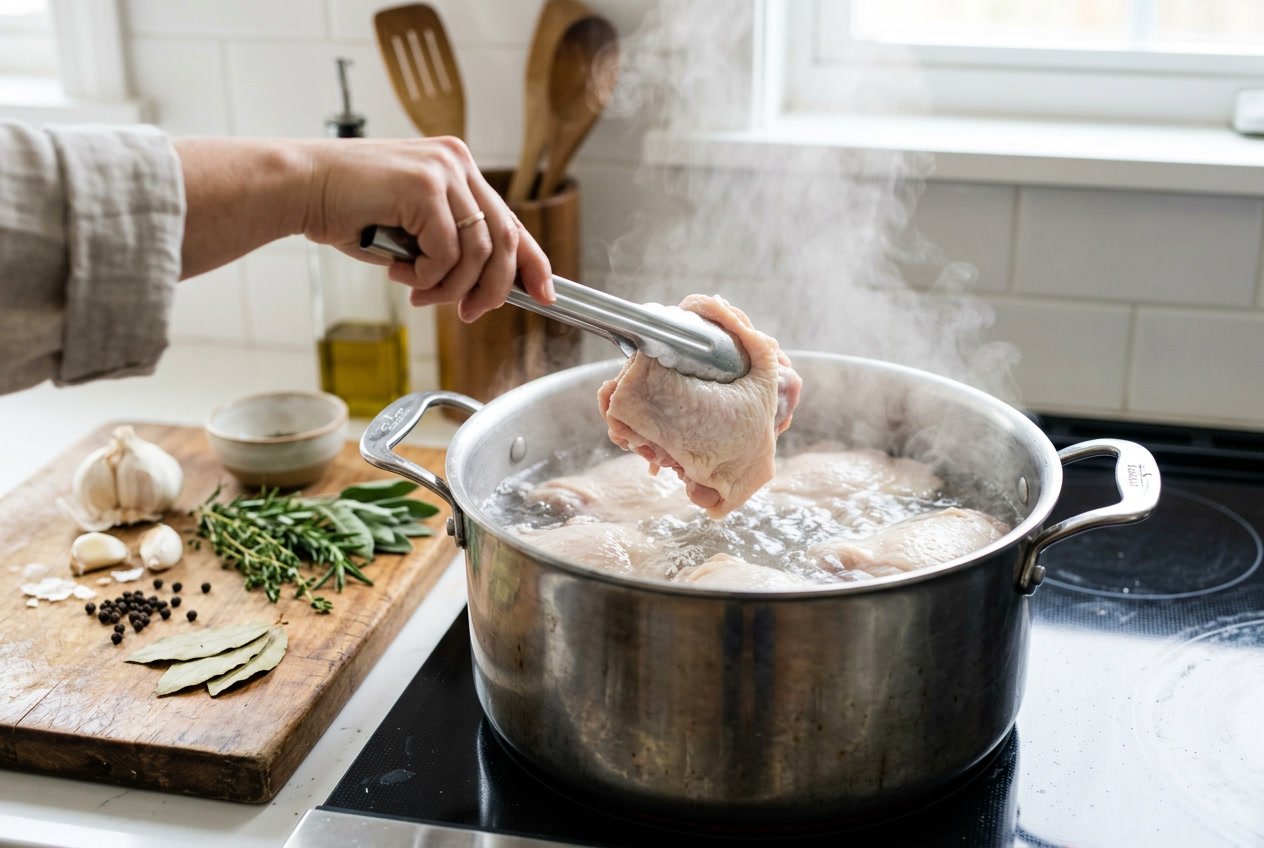
If you want simple, hands-off cooking that yields versatile chicken, you can pick the right liquid, control heat, and time fresh or frozen thighs so they stay tender. You’ll find clear step-by-step instructions, specific cooking times for different thigh types, tips for cooking frozen pieces safely, and ideas for turning boiled thighs into flavorful meals.
Can You Boil Chicken Thighs?
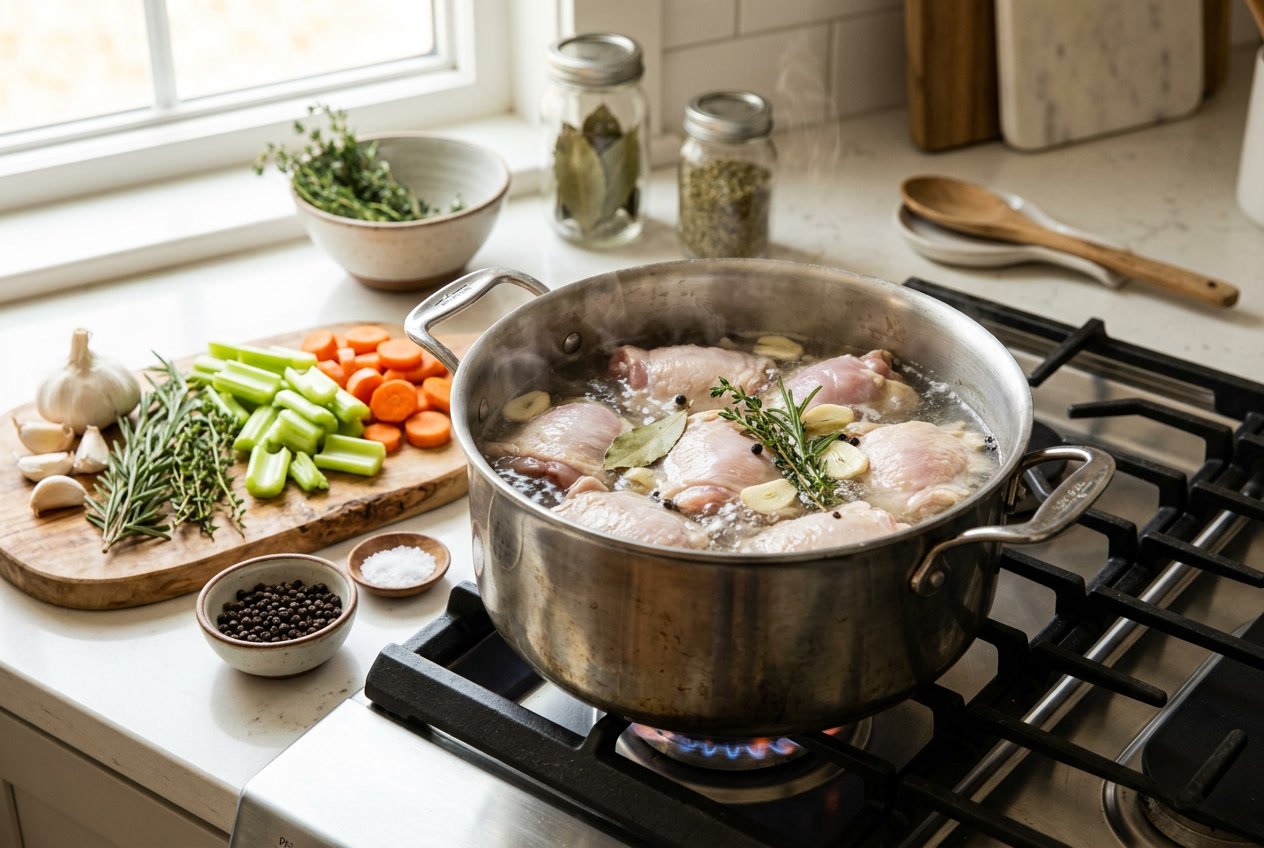
Boiling chicken thighs gives you moist meat, a usable broth, and plenty of options for finishing or shredding. You can cook fresh or frozen thighs. Timing and technique determine tenderness and food safety.
Benefits of Boiling Chicken Thighs
Boiling chicken thighs yields consistently moist meat because the bone and fat help retain juices during cooking. You get tender meat suitable for shredding into tacos, salads, or soups without drying out as easily as breast meat.
The cooking liquid becomes a simple broth you can strain and use for sauces, rice, or soup bases. That adds flavor and reduces waste since bones and aromatics contribute collagen and depth.
Boiling is low-effort and forgiving. Place thighs in cold water with salt and aromatics, bring to a simmer, and cook until the internal temperature reaches 165°F (74°C). If you want fall-apart texture for shredding, let the meat reach about 175–180°F (80–82°C).
If you prefer crispy skin, boil first, then pat dry and sear or broil for 3–5 minutes. This keeps meat juicy while giving you a good texture contrast.
Boiled vs. Simmered Chicken Thighs
Boiling means a vigorous rolling boil, while simmering is gentler with small bubbles. Simmering is usually better for chicken thighs because aggressive boiling can make the texture slightly tough.
Simmering at 180–205°F (82–96°C) extracts collagen from bones and connective tissue while keeping muscle fibers tender. You still reach a safe internal temperature with a more pleasant mouthfeel.
If you need to speed things up with frozen thighs, bring to a boil briefly, then reduce to a steady simmer and add extra cooking time—typically 15–20 minutes more than fresh thighs. Always use a thermometer near the bone to confirm doneness.
Why Choose Chicken Thighs for Boiling
Thighs have more fat and connective tissue than breast meat, which makes them forgiving during moist-heat cooking. You get richer flavor in both the meat and the cooking liquid.
Bone-in thighs give even more flavor because the marrow and bone collagen enrich the broth. Boiled chicken thighs work well for soups, stews, and any recipe where you want a flavorful shredded protein.
Boneless thighs cook faster and are easier to eat without deboning after cooking. Choose bone-in for stock, or boneless for a quick, shred-ready protein. Boiling or simmering yields versatile, tender chicken for many dishes.
How to Boil Chicken Thighs
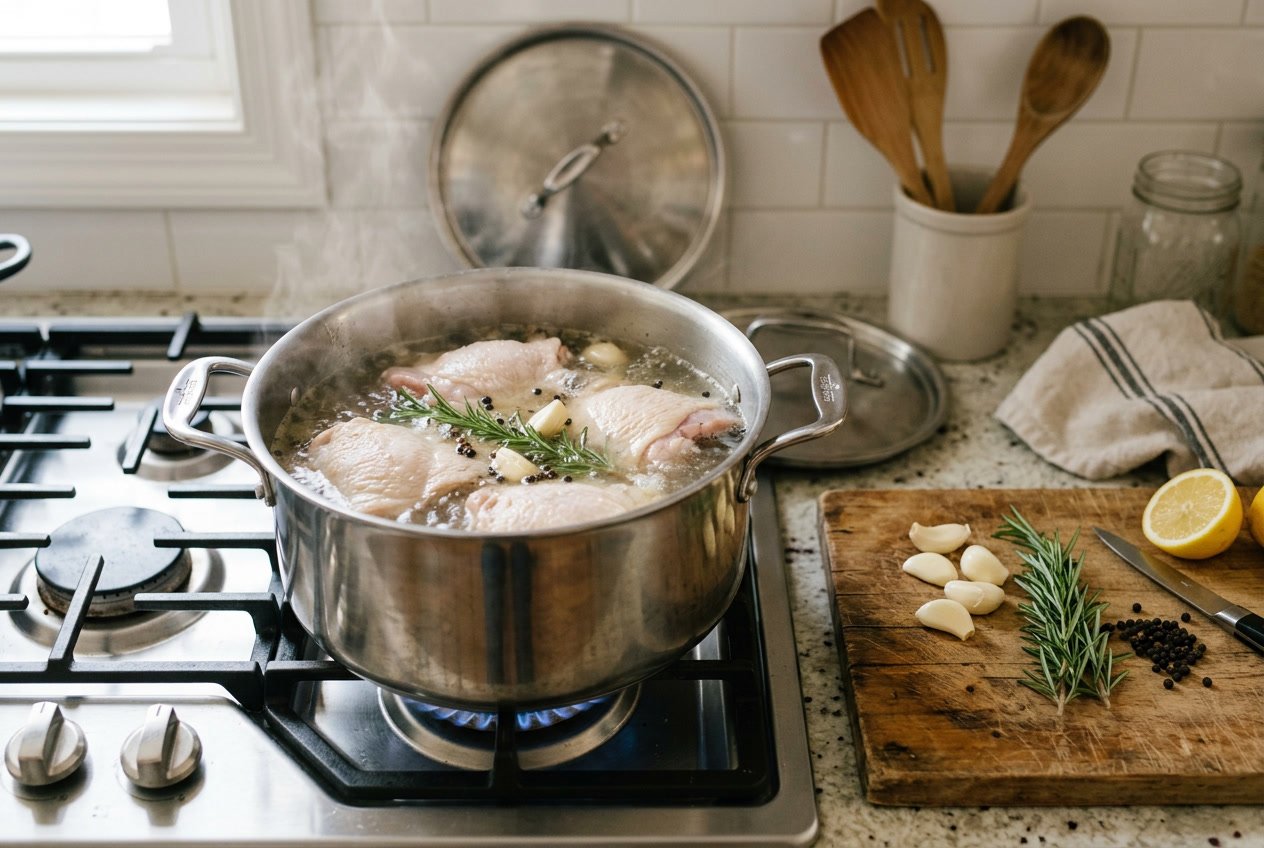
You get tender meat and a usable broth when you control temperature, time, and seasoning. Focus on prepping the pieces, choosing the right pot and liquid, maintaining a gentle simmer, and confirming doneness with a thermometer.
Preparing Chicken Thighs for Boiling
Trim excess fat and loose skin to reduce floating fat and greasy broth. Leave bones in for more flavor, or use boneless, skinless thighs for quicker cooking or easy shredding.
Pat thighs dry and season lightly with salt and pepper before they go in. You can brine for 20–30 minutes (1 tbsp salt per 2 cups water) to improve juiciness, but rinse and pat dry if you brine.
For frozen thighs, separate pieces under cold running water if stuck. Do not thaw at room temperature.
Add aromatics directly to the cooking liquid. Half an onion, a crushed garlic clove, a bay leaf, and a few peppercorns add depth without overpowering, so your boiled chicken stays versatile.
Best Pots and Water-to-Chicken Ratios
Choose a pot that holds thighs in a single snug layer without crowding. A Dutch oven or 5–6 quart pot works for 4–6 thighs.
Aim for 1 to 1.5 inches of liquid above the chicken once they rest in the pot. Use water or low-sodium chicken stock.
For clearer broth, start with hot water rather than cold to reduce coagulated proteins rising to the surface. Salt the liquid at roughly 1/2 tsp per quart as a starting point and adjust later.
For every 4 bone-in thighs, use about 6–8 cups (1.5–2 liters) of liquid so pieces stay submerged and broth develops flavor. For meal prep, cook in batches rather than stacking pieces.
Simmering vs. Boiling: Temperature Guidelines
Bring the liquid to a gentle simmer—small bubbles breaking the surface—then keep it there. Target about 170–185°F (77–85°C) for poaching-style simmering that keeps thighs tender.
Avoid a rolling boil. Vigorous boiling contracts muscle fibers and risks tough, stringy meat.
If the surface is churning, lower the heat until movement calms. Partially cover the pot to speed heat recovery but keep the lid ajar to prevent a hard boil.
Boneless, skinless thighs usually need 15–20 minutes at a steady simmer. Bone-in thighs need 25–35 minutes.
Frozen boneless thighs take roughly 25–30 minutes. Frozen bone-in can reach 40–50 minutes depending on size.
Checking for Doneness
Use an instant-read thermometer. Insert the probe into the thickest part of the thigh, avoiding bone; the safe internal temperature is 165°F (74°C).
Start checking a few minutes before the low end of the time window. If one piece reads 165°F, remove it and let the others continue.
Rest for 5 minutes to let juices redistribute and finish cooking gently.
If you don’t have a thermometer, cut into the thickest spot. Meat should be opaque with clear juices, not pink. Use this only as a backup; visual checks can be misleading, especially with bone-in thighs.
Boiling Times for Different Types of Chicken Thighs
Boiling time depends on whether the thigh is bone-in or boneless, whether it’s frozen or fresh, and whether the skin is left on. Use a thermometer to confirm 165°F (74°C) at the thickest part for safety.
How Long to Boil Bone-In Chicken Thighs
Bone-in thighs take longer because bones slow heat penetration. For fresh, fully thawed bone-in thighs, simmer gently for about 25–30 minutes.
Start in cold water, bring to a simmer, then keep a soft simmer rather than a rolling boil to keep meat tender.
If you cook from frozen, add roughly 15–20 minutes to the fresh time. Expect about 45–50 minutes total.
Check doneness with an instant-read thermometer at the bone end—165°F (74°C) is the minimum safe temperature. For shredding, simmering up to 45–60 minutes breaks down connective tissue and yields fall-apart thighs.
How Long to Boil Boneless Chicken Thighs
Boneless thighs heat through faster because there’s no bone barrier. Fresh boneless thighs typically need 20–25 minutes at a gentle simmer.
Arrange pieces in a single layer and keep the liquid just below a rolling boil to avoid drying out or toughening the meat.
For frozen boneless thighs, add about 10–15 minutes. Plan on roughly 30–35 minutes total.
Use a thermometer in the thickest part. 165°F (74°C) ensures safety. If you want shreddable meat, extend simmering modestly.
Boil Skinless and Skin-On Chicken Thighs
Skin-on thighs require slightly longer cooking to render fat and ensure heat reaches the meat under the skin. Treat skin-on bone-in as the baseline (25–30 minutes fresh) and skin-on boneless similar to boneless times but expect an extra few minutes for the skin to loosen and fat to render.
Skinless thighs cook faster and absorb broth flavors more readily. Fresh skinless boneless thighs often finish in 18–22 minutes. Skinless bone-in will mirror bone-in times.
After boiling, you can crisp skin-on thighs under a broiler or in a hot pan for 1–5 minutes for a crunchy exterior.
Boiling Frozen Chicken Thighs Safely
Boiling frozen chicken thighs is safe when you control temperature, time, and seasoning. Use a thermometer, submerge the thighs fully, and expect longer cooking than for thawed meat.
How to Boil Frozen Chicken Thighs
Place frozen thighs in a single layer in a large pot so they sit flat and can be covered by liquid. Add cold water or low-sodium chicken broth until meat is submerged by at least 1 inch.
Broth adds flavor that boiling from frozen tends to lose. Bring liquid to a gentle boil, then reduce to a simmer and cover.
Add aromatics—onion, garlic, bay leaf, carrots, celery—and 1–2 teaspoons salt per quart of liquid to season through the meat. Monitor and skim foam if needed.
Use an instant-read thermometer in the thickest part (avoid bone). Remove thighs once they reach 165°F (74°C).
Let rest 5–10 minutes before shredding or serving to allow juices to redistribute.
How Long to Boil Frozen Chicken Thighs
Cooking time depends on size, bone-in vs. boneless, and starting temperature. Expect roughly 40–60 minutes for average bone-in thighs.
Boneless pieces may finish closer to 30–45 minutes. Large or very thick pieces can take longer.
Begin checking temperature at the lower end of the range. If after 60 minutes the internal temperature is still below 165°F (74°C), continue simmering and recheck every 5–10 minutes.
Do not rely on color or texture—use the thermometer to confirm the chicken is safe to eat.
Flavor and Texture Tips for Boiled Chicken Thighs
Use aromatics, salt, and controlled simmering to build flavor and reach the texture you want. Technique changes—when you add salt, whether you use bone-in thighs, and how long you simmer—have the biggest impact.
Seasoning the Cooking Liquid
Season the poaching liquid generously because the meat only absorbs a limited amount during cooking. Use about 1 teaspoon of kosher salt per quart (liter) of liquid as a starting point.
Add whole aromatics that infuse without clouding the broth: halved onion, smashed garlic cloves, bay leaf, peppercorns, and a few thyme or parsley stems. For richer flavor, swap part of the water for low-sodium chicken stock or add a tablespoon of soy sauce or fish sauce for umami.
Avoid fine herbs or delicate spices early as they lose nuance in long simmering. Finish with fresh chopped parsley, chives, or lemon zest after you remove the thighs to brighten the meat.
Strain and reserve the cooking liquid for sauces or soup stock. Its seasoning level will mirror the meat.
How to Achieve Fall-Off-the-Bone Texture
Use bone-in, skin-on thighs when you want fall-off-the-bone results. Bones and skin add collagen and fat that convert to gelatin during gentle long cooking.
Bring the liquid to a gentle simmer, then cover and simmer for 30–40 minutes for bone-in thighs. Check for doneness by sliding a fork between meat and bone; it should separate with little resistance.
Maintain a low, steady simmer rather than a rolling boil to allow connective tissue to break down evenly. If you need extra tenderness, finish in a covered pot off heat for 10–15 minutes.
For shredding, remove thighs while still warm and use two forks to pull strands. Properly simmered thighs will shred into moist pieces rather than stringy fibers.
Avoiding Tough or Dry Chicken
Prevent toughness by keeping the heat low and steady. Vigorous boiling squeezes moisture and tightens proteins, which produces dry, rubbery meat.
Reduce heat once the liquid reaches a gentle boil. Keep the surface movement minimal.
Use a thermometer to check that the internal temperature reaches 165°F (74°C) for safety. Avoid cooking past that point for extended periods.
Boneless thighs cook faster, usually in 20–30 minutes, so monitor them closely. If the meat looks dry after cooking, briefly poach it in fresh warm broth or brush it with reserved cooking liquid to add moisture.
How to Use Boiled Chicken Thighs in Recipes
Boiled chicken thighs provide tender, ready-to-use protein and a flavorful cooking liquid. You can shred them, chop them, or keep them whole to speed meal prep and add texture to salads, soups, and tacos.
Shredded Chicken for Meal Prep
Shred the cooled thighs with two forks or use a paddle attachment in a mixer for fast, consistent results. Remove bones and excess skin first, then toss shredded chicken with a tablespoon of reserved cooking broth to keep it moist during storage.
Portion shredded chicken into 1- to 2-cup containers for meal prep. Use airtight containers or freezer bags, label with the date, and refrigerate up to 4 days or freeze up to 3 months.
Reheat gently in a pan with a splash of broth to avoid drying. Season shredded chicken for specific dishes, such as BBQ sauce for sandwiches, taco seasoning for tacos, or curry paste and coconut milk for rice bowls.
Shredded chicken also works well in casseroles, grain bowls, and pasta dishes for quick dinners.
Chicken Salad with Boiled Thighs
Chop or shred boiled thighs for a richer, juicier chicken salad than breast meat. Combine about 2 cups shredded chicken with 1/2 cup mayonnaise or Greek yogurt, 1/4 cup diced celery, 2 tablespoons chopped red onion, and 1 tablespoon lemon juice for balance.
Adjust texture and flavor with add-ins like grapes or apple for sweetness, toasted almonds for crunch, dill or tarragon for fresh herbs, and a pinch of smoked paprika for warmth. Season with salt and pepper to taste and chill at least 30 minutes to let flavors meld.
Serve on a bed of greens, in a sandwich, or stuffed into pita pockets. If the salad feels dry, use leftover cooking liquid to thin it, adding just enough to reach your preferred consistency.
Other Dishes That Use Boiled Chicken Thighs
Boiled thighs work in soups, stews, enchiladas, and fried rice. You don’t need extra steps.
For soup, shred the chicken and add it with diced vegetables to the reserved strained broth. Simmer for 10 to 15 minutes to blend the flavors.
For enchiladas, mix shredded chicken with cheese and sauce. Roll the mixture in tortillas and bake.
Turn boiled thighs into quick tacos by tossing the shredded meat with lime, cilantro, and chopped onion.
For pasta, chop the chicken and combine it with a cream-based or tomato sauce. Finish with grated Parmesan.
You can also crisp boiled thighs briefly under a broiler or in a hot skillet to add texture before serving.


