
Can I Cook Chicken Thighs from Frozen? Safe Methods & Essential Tips
You can safely cook chicken thighs from frozen if you use the right methods and confirm the internal temperature reaches 165°F (75°C).
Cooking from frozen requires longer cook times and careful technique, but you can achieve juicy, flavorful results.
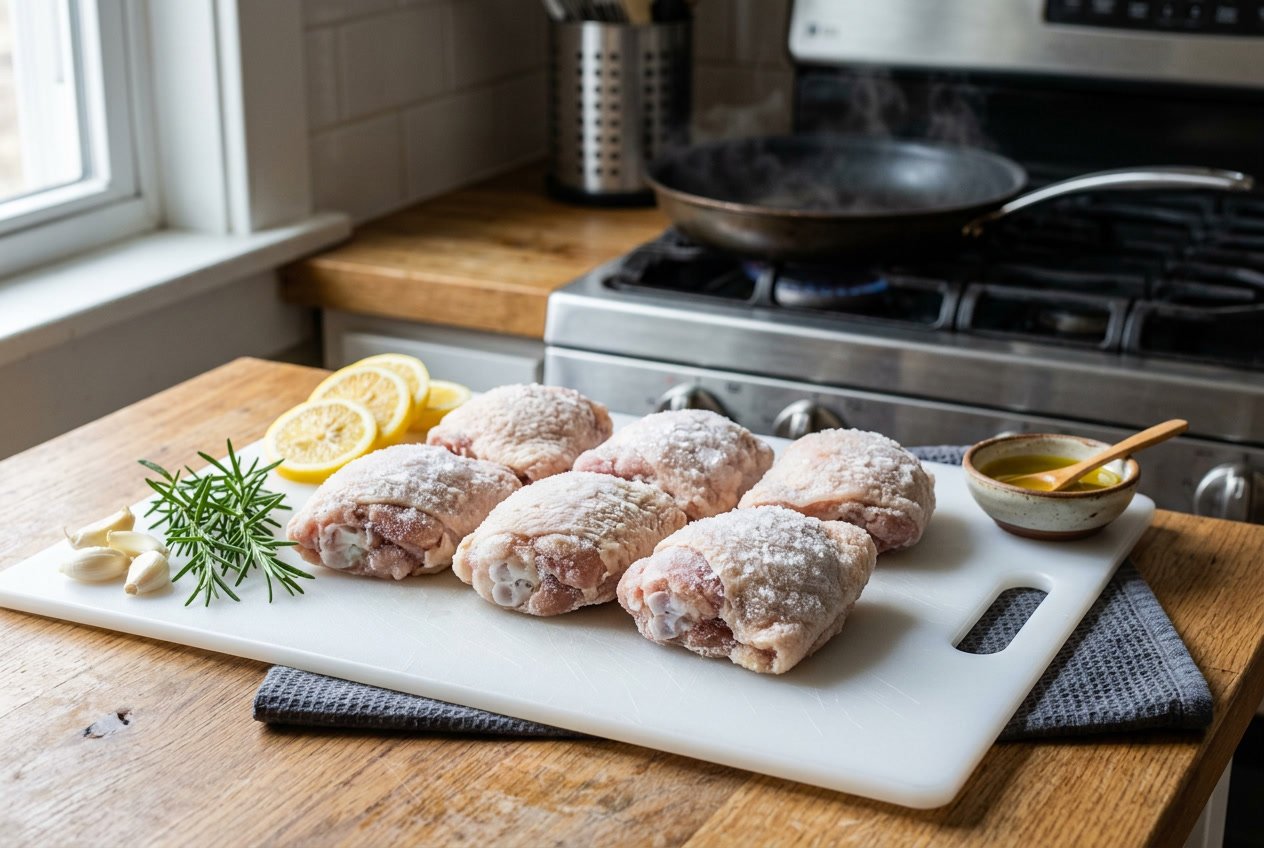
This post explains the best methods: oven, Instant Pot, air fryer, and stovetop.
You’ll learn how to season, check doneness, and avoid common safety mistakes.
Follow tips for timing, temperature checks, and storage so you can turn a frozen package into a reliable weeknight meal.
Is It Safe to Cook Chicken Thighs from Frozen?
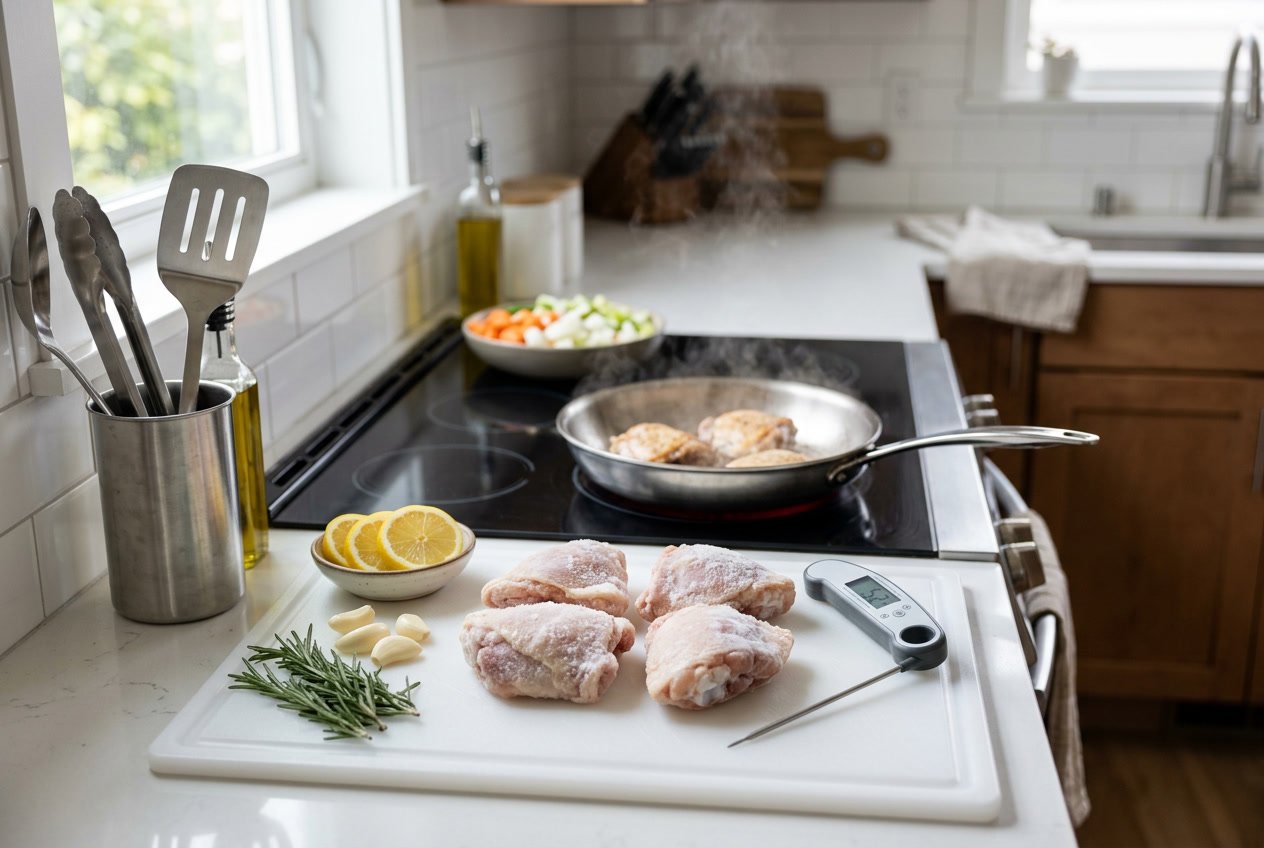
You can cook chicken thighs from frozen, but you must adjust time and method and confirm doneness with a thermometer.
Choose oven, air fryer, or pressure cooker methods for best safety and even cooking.
USDA Safety Guidelines
The USDA approves cooking poultry from frozen if you follow safe handling and cooking practices.
Cook only fully frozen or fully thawed pieces; never start with partially thawed chicken because uneven thawing can leave cold, bacteria-prone pockets.
Keep frozen chicken stored at 0°F (−18°C) or lower until you cook it.
Thaw in the refrigerator, in cold water (sealed bag, changed every 30 minutes), or cook from frozen.
Do not leave chicken at room temperature to thaw.
Use clean surfaces and wash your hands after handling raw chicken to prevent cross-contamination.
Place frozen thighs in a single layer with space for air or liquid to circulate when you move them into a cooking appliance.
Avoid dropping frozen thighs directly into very hot oil for frying, as that creates splatter and uneven cooking.
Required Internal Temperature
Cook chicken thighs to a safe internal temperature of 165°F (74°C) in the thickest part.
Insert an instant-read thermometer into the center of the thigh without touching bone.
Check several pieces if you cook multiple thighs to ensure consistent doneness.
When cooking from frozen, expect roughly 50% longer cooking time than for thawed thighs.
For example, oven baking at 375°F may take about 50–60 minutes.
An air fryer at 360°F typically needs 25–30 minutes.
Rely on temperature, not color or juices, to decide doneness.
Risks and How to Avoid Them
Uneven cooking and cross-contamination are the main risks.
Parts that remain undercooked can harbor Salmonella or Campylobacter unless the entire piece reaches 165°F.
Cook whole frozen thighs using methods that transfer heat evenly, like oven, air fryer, or pressure cooker.
Check temperature in the thickest spot.
Avoid pan-searing frozen thighs straight from the freezer, as the exterior may overcook while the center stays raw.
Do not deep-fry frozen thighs without proper thawing.
If you detect any off smell or unusual texture before cooking, discard the meat.
Clean cutting boards, utensils, and hands after contact with raw frozen chicken to reduce infection risk.
Best Methods for Cooking Frozen Chicken Thighs
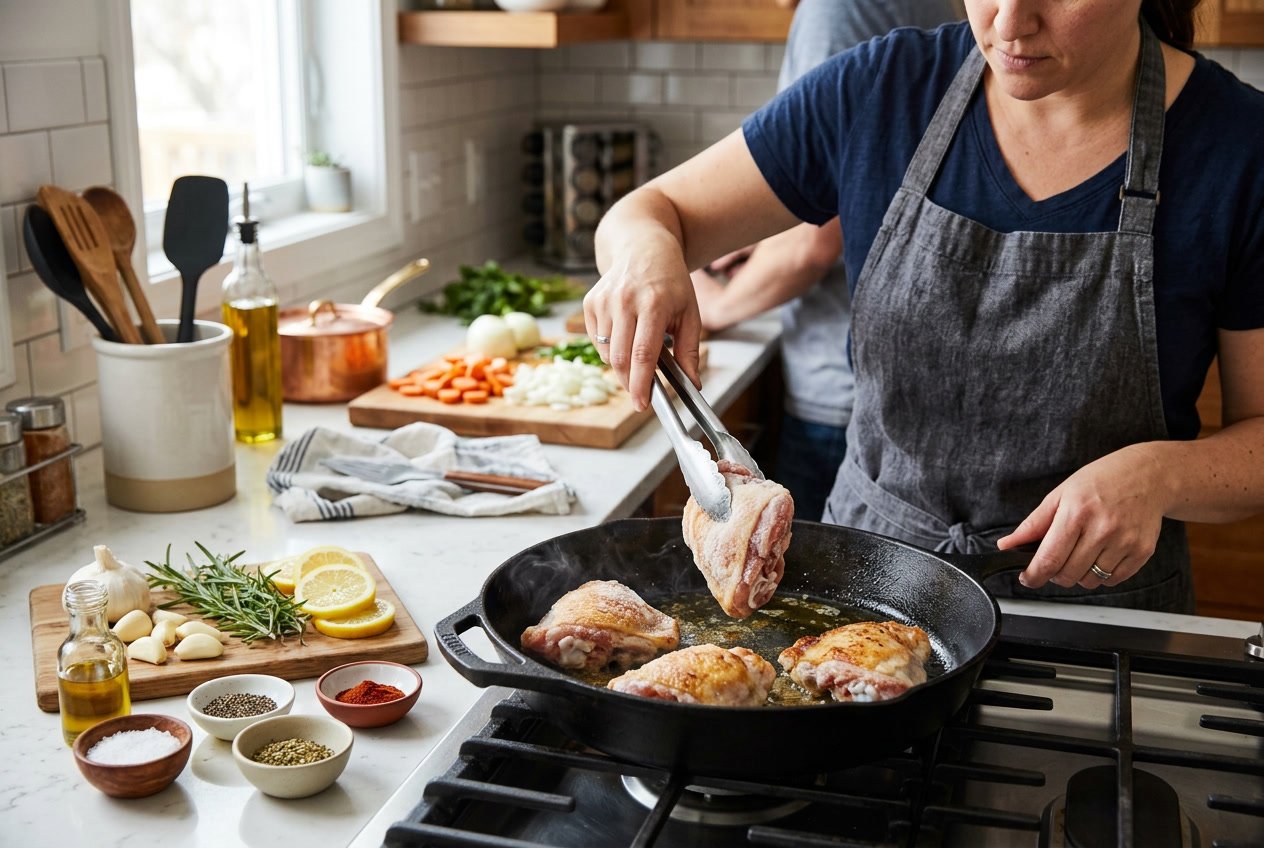
You can safely cook frozen chicken thighs using several reliable methods that control temperature and cooking time.
Choose a method based on how much time you have and the texture you want.
Oven Baking Frozen Chicken Thighs
Baking frozen chicken thighs provides even heat and is a simple way to get fully cooked, juicy meat with crisp skin.
Preheat the oven to 375°F (190°C).
Arrange thighs on a rimmed baking sheet or in a shallow roasting pan, spaced so air circulates.
Brush or spray a thin coat of oil to encourage browning, then season with salt, pepper, and any dried spices.
Bake for about 45–60 minutes depending on size.
Boneless thighs cook faster, bone-in take longer.
Probe the thickest part with a meat thermometer and target 165°F (75°C).
If you want crispier skin, finish under the broiler for 2–4 minutes, watching closely to avoid burning.
Add sauce during the last 10–15 minutes if you prefer sauced thighs.
Don’t overcrowd the pan; overcrowding lengthens cook time and hampers browning.
Instant Pot and Pressure Cooking
Pressure cooking frozen chicken thighs is fast and keeps meat moist.
Place frozen thighs in the Instant Pot and add at least 1 cup (240 ml) of liquid—broth, water, or a thin sauce.
Seal the lid and cook on high pressure: 12–15 minutes for boneless, 15–18 minutes for bone-in.
Let the pressure release naturally for 5–10 minutes.
Check internal temperature; it must read 165°F (75°C).
For thicker thighs, add an extra 2–4 minutes if needed.
If you want browned skin, remove thighs, pat dry, and quickly broil or pan-sear for 1–2 minutes per side.
Use the Instant Pot for shredded chicken by increasing time slightly and using a quick release once safe temperature is reached.
Grilling Frozen Chicken Thighs
Grilling frozen chicken thighs requires indirect heat to avoid burning the exterior before the interior cooks.
Preheat one zone of the grill to medium-high and leave an unheated zone for indirect cooking.
Start on indirect heat with the lid closed so thighs come up to temperature without flare-ups.
Cook 25–35 minutes, flipping every 6–8 minutes.
Move to direct heat or increase heat briefly to crisp skin and develop grill marks.
Aim for an internal temperature of 165°F (75°C).
Use a digital probe to monitor without opening the lid too often.
If you have frozen thighs with skin-on bone-in, thaw slightly in a cold-water bath for 15–20 minutes to reduce total grill time and improve browning.
Stovetop Pan Searing
Pan searing frozen chicken thighs gives you a flavorful crust.
Heat a heavy skillet over medium heat and add a thin layer of oil.
Sear the frozen thighs 3–5 minutes per side to brown.
After browning, add 1/4–1/2 cup liquid (broth, wine, or sauce) and reduce heat to low.
Cover and simmer 20–30 minutes, flipping halfway, until the internal temperature reaches 165°F (75°C).
This method works well for boneless thighs and thinner bone-in pieces.
If you want a pan sauce, remove the thighs when done, stir in aromatics and deglaze the pan with the cooking liquid, then reduce and pour over the meat.
Monitor liquid levels to prevent burning and maintain consistent heat.
Seasoning and Flavoring Frozen Chicken Thighs
Seasoning frozen chicken thighs works best when you focus on surface seasoning and bold combinations.
Prioritize coarse salt, bold dried spices, and finishing sauces to get the most flavor.
When and How to Apply Seasonings
You can season frozen thighs directly, but dry spices won’t penetrate deeply until the meat thaws and heats.
Pat the surface with a paper towel if there’s visible ice, then sprinkle coarse kosher salt and cracked black pepper evenly.
Apply salt at least 10–15 minutes before cooking if possible so it begins to draw moisture and help the skin crisp.
Reserve delicate herbs and acid-based components for after cooking or in the last 5–10 minutes.
This preserves brightness and prevents bitterness.
If using pre-coated breading, tap off excess ice to avoid sogginess.
Use of Marinades and Sauces
Marinades need time to penetrate, but frozen thighs block absorption.
If you want to marinate, thaw in the refrigerator first.
For direct-from-frozen cooking, apply marinades or sauces during the final 10–20 minutes of cooking so sugars can caramelize and flavors concentrate on the surface.
When using a glaze or barbecue sauce, brush in thin layers near the end of cooking and repeat once or twice.
For oven baking, apply sauce with 10 minutes remaining.
For air fryer or broiler finish, glaze in the last 2–4 minutes and watch closely.
If you want infusion earlier, use a wet brine after thawing to add juiciness and seasoning deep into the meat.
Recommended Spice Combinations
Choose spice mixes that deliver impact at the surface since frozen thighs won’t absorb flavor as deeply.
Try these blends:
- Savory roast: 1 tsp kosher salt, 1 tsp smoked paprika, 1/2 tsp garlic powder, 1/2 tsp onion powder, pinch cayenne.
- Asian-inspired: 1 tsp five-spice, 1 tsp brown sugar, 1/2 tsp salt, 1 tbsp soy or tamari added as a glaze late.
- Mediterranean: 1 tsp oregano, 1/2 tsp thyme, zest of 1 lemon, 3/4 tsp salt, cracked pepper.
Rub dry mixes onto the skin or surface before cooking.
For skinless thighs, press the mix into any exposed meat and finish with a squeeze of acid after resting.
Use bold salts and smoked spices to compensate for limited penetration.
Finish with fresh herbs or acid to brighten the final dish.
How to Check Doneness and Ensure Safety
You need accurate temperature readings and reliable visual cues to confirm frozen chicken thighs are safe and properly cooked.
Aim for a precise internal temperature and check appearance and texture before serving.
Using a Digital Meat Thermometer
Insert a digital meat thermometer into the thickest part of the thigh, avoiding bone and excess fat.
For bone-in thighs, probe alongside the bone but not touching it.
For boneless, probe center mass.
The USDA minimum safe temperature for poultry is 165°F (74°C).
Check several thighs if cooking a batch, as temperature can vary between pieces.
Hold the probe until the digital readout stabilizes and record the highest reading.
If a thigh reads below 165°F, return it to heat and recheck after a few minutes.
Clean the probe with hot, soapy water between uses to prevent cross-contamination.
Calibrate your thermometer periodically by checking ice-water (32°F / 0°C) and boiling-water (212°F / 100°C) points.
Visual and Texture Checks
Cut into the thickest part of a thigh only if you lack a thermometer.
Fully cooked meat appears opaque throughout, and juices should run clear.
Small remnants of pink near bone can occur in older birds or dark meat but should not be raw.
Press the thigh with tongs—cooked meat feels firm and springs back slightly.
Undercooked thighs feel soft and jiggly.
For skin-on thighs, browned, crisp skin shows surface heat penetration but does not guarantee internal doneness.
Always verify with temperature.
Use both checks together when a thermometer isn’t available.
If visual and texture cues conflict with temperature, trust the digital reading.
Tips for Successful Cooking from Frozen
Follow practical steps to ensure even cooking, safe handling, and good flavor when you start with frozen chicken thighs.
Use enough space, add time, and keep raw juices away from ready-to-eat foods.
Avoiding Overcrowding
Give each thigh room so hot air or liquid can circulate.
In the oven, place pieces at least 1 inch apart on a rimmed sheet.
In a pan, cook in batches so you can brown surfaces instead of steaming them.
If you crowd the pan or baking dish, outer portions will finish before inner portions reach 165°F (75°C).
Stagger pieces on wire racks above the pan when roasting to improve airflow and crisp skin.
For pressure cookers or Instant Pots, avoid stacking more than two layers of thighs.
Follow your appliance’s max fill line and sear in batches when possible.
Adjusting Cooking Times
Plan for roughly 50% longer cook times than for thawed thighs, but measure doneness with a thermometer, not time alone.
For example, a 25–30 minute oven roast for thawed thighs becomes 40–45 minutes from frozen at 375°F (190°C).
Use an instant-read thermometer in the thickest part without touching bone.
Confirm 165°F (75°C) and let the meat rest for 3–5 minutes so carryover heat evens the temperature.
In a pressure cooker, add recommended liquid and increase high-pressure time by several minutes for bone-in pieces.
When searing then simmering, start with a higher heat to brown, then cover and lower heat to allow heat to penetrate without burning the exterior.
Check multiple pieces if sizes vary.
Preventing Cross-Contamination
Treat frozen thighs as raw and keep them separated from produce, cooked foods, and surfaces that contact ready-to-eat items. Thaw them in a sealed container inside the fridge for safety.
If you cook from frozen, place the package on a tray during handling. Sanitize utensils, cutting boards, countertops, and hands after contact with frozen raw chicken or its juices.
Use separate plates for raw and cooked chicken. Boil marinades before reusing them to kill bacteria.
If you use a marinade after partial cooking, make sure the chicken reaches 165°F (75°C) in the final cook. Do not baste with raw juices.
Dispose of any packaging after use. Wash surfaces in hot, soapy water or with a food-safe sanitizer.
Storing, Reheating, and Freezing Cooked Chicken Thighs
Keep cooked thighs cold within two hours of cooking. Store them in airtight containers and reheat to 165°F (74°C).
Freeze only fully cooled chicken. Label packages with the date for best quality.
How to Store Leftovers
Place cooled chicken thighs into shallow, airtight containers or heavy-duty freezer bags within two hours. Store them in the refrigerator at 40°F (4°C) or below and use within 3–4 days.
Separate meat from sauces when possible to avoid soggy skin. For single meals, portion 1–2 thighs per container so you only thaw what you need.
Label each container with the date and contents to rotate stock easily. If you plan to reheat within 24 hours, wrap tightly in foil or plastic wrap.
Otherwise, use sealed containers for longer storage. Always reheat from refrigerated storage, not after holding at room temperature.
Freezing Cooked Chicken Thighs
Cool the thighs completely before freezing to prevent raising freezer temperature and condensation. Wrap each thigh tightly in plastic wrap, then place in a heavy-duty freezer bag or vacuum-seal.
Remove as much air as possible to reduce freezer burn. Store at 0°F (-18°C) or colder.
For best quality, use within 2–4 months. The thighs remain safe longer but may lose moisture and texture over time.
Label bags with the freezing date and contents. Freeze in meal-sized portions so you can thaw only what you need.
If you use a freezer bag, flatten the package for faster thawing and efficient stacking. Avoid refreezing thawed cooked chicken unless you cook it again immediately.
Proper Reheating Methods
Reheat chicken to an internal temperature of 165°F (74°C) and use a food thermometer to check. Thaw the chicken overnight in the fridge when possible to help it heat evenly.
For oven reheating, preheat to 350°F (175°C). Place thighs in a covered dish with a splash of broth and heat for 20–30 minutes if thawed or 35–45 minutes from frozen.
On the stovetop, simmer chicken in a covered skillet with 1–2 tablespoons of broth over medium-low heat. Turn the chicken occasionally until it is heated through.
To use a microwave, cover the chicken with a damp paper towel. Heat on medium power in 1–2 minute intervals, flipping between intervals and checking the temperature.
Let the chicken rest for 2–3 minutes after reheating so the juices can redistribute.


