
Can I Boil Chicken Thighs? Step-by-Step Guide for Tender Results
You can boil chicken thighs safely and reliably. They make a quick, juicy base for soups, salads, tacos, and meal prep.
Boiling works for boneless, bone-in, skin-on, and even frozen thighs as long as you reach a safe internal temperature of 165°F (74°C). Adjust cooking time for bone presence or frozen meat.
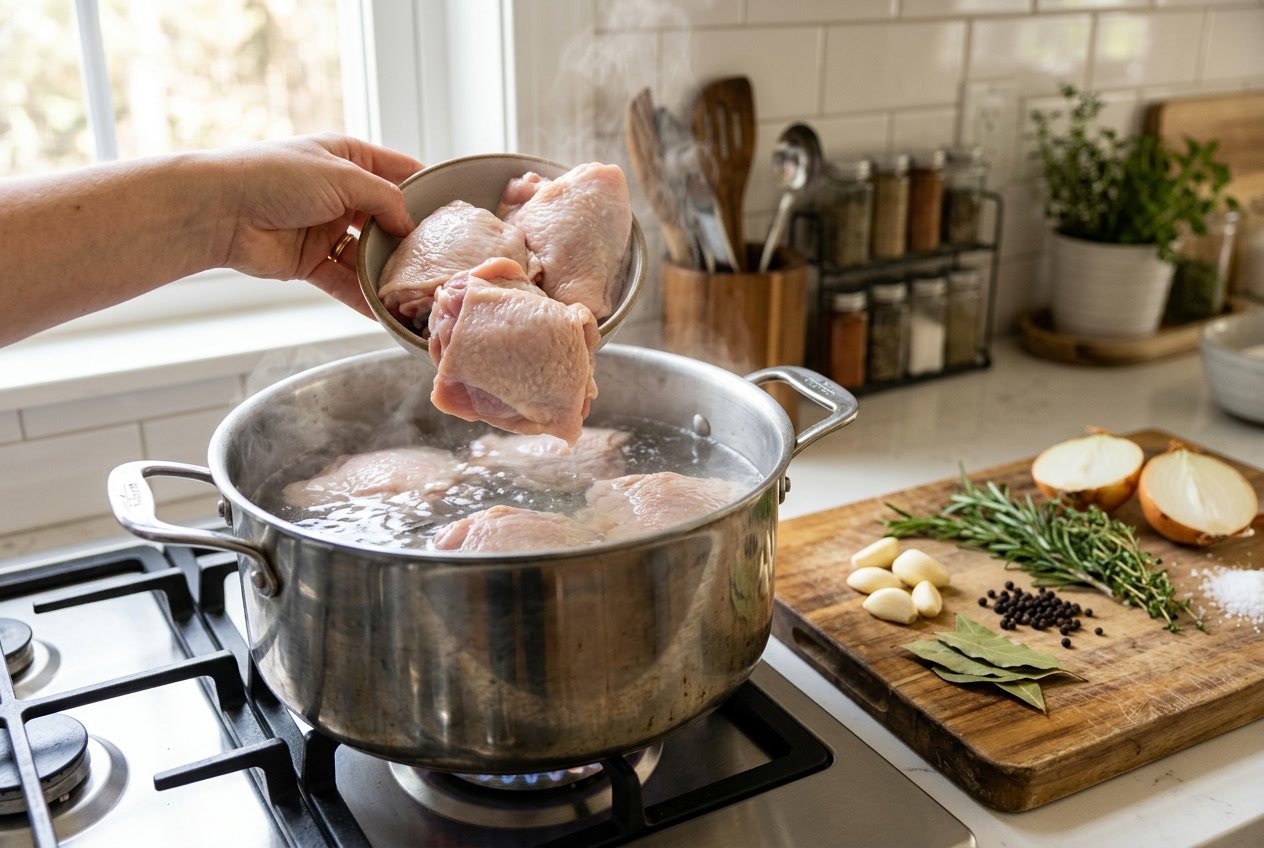
If you want tender meat for shredding, a clear broth for soup, or an easy protein to season later, this guide shows how long to cook each type. Learn how to keep the meat moist and when to finish with a sear for crispy skin.
Find straightforward timing guidelines and simple flavoring tips. Discover uses for every result so you can pick the method that fits your meal plan.
Is It Possible to Boil Chicken Thighs?
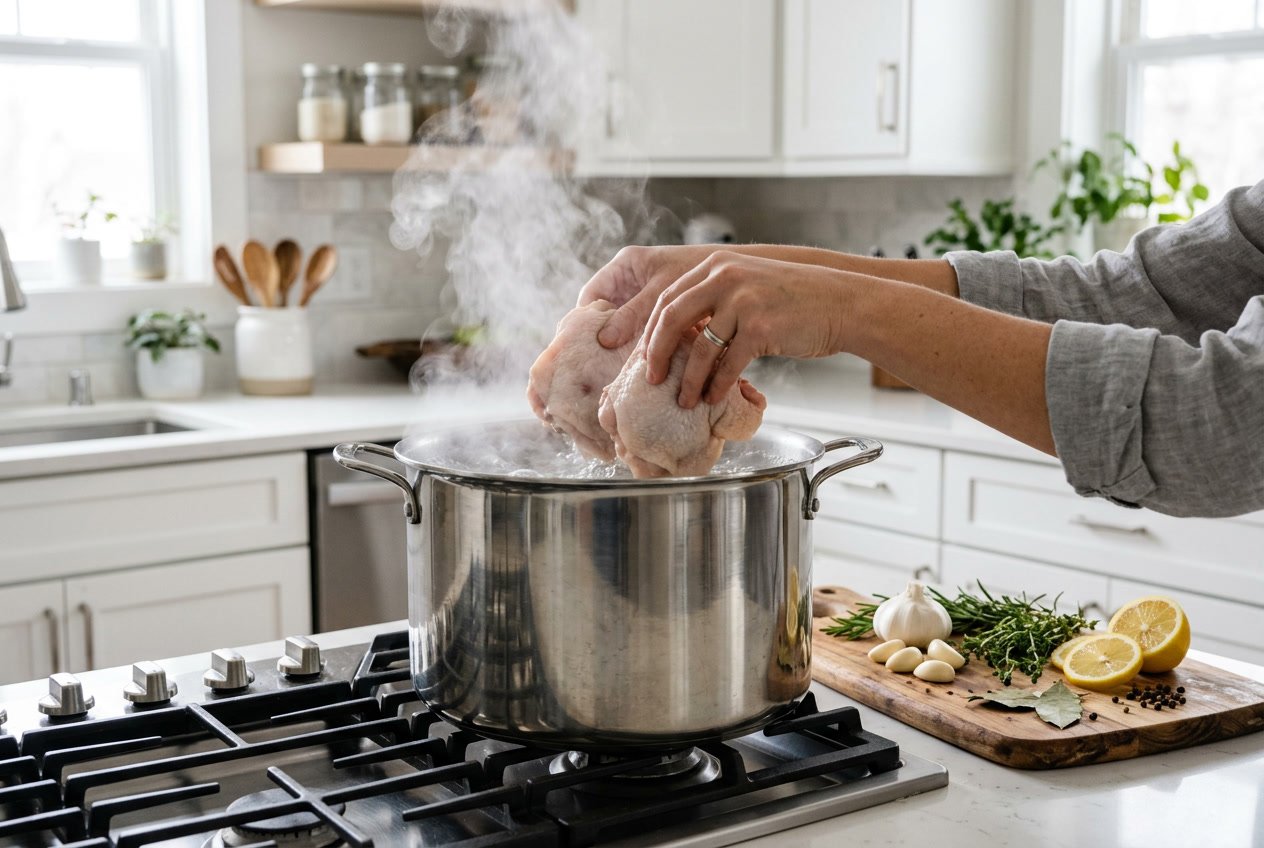
You can cook chicken thighs by boiling them to a safe, tender state while producing a usable broth. Proper timing, gentle simmering, and basic seasoning let you control texture and flavor for soups, salads, or shredded preparations.
Benefits of Boiling Chicken Thighs
Boiling chicken thighs yields moist, tender meat because gentle heat breaks down connective tissue without drying the flesh. Bone-in thighs take around 20–25 minutes, while boneless thighs cook in about 15–20 minutes.
Using a thermometer ensures you reach 165°F (74°C) for safety. The cooking liquid becomes a flavorful broth you can strain and use in soups or sauces.
Adding aromatics such as garlic, bay leaves, peppercorns, or onion infuses the chicken with subtle flavor and keeps preparation simple. Boiled chicken thighs reheat well and store in the fridge for 3–4 days, making them practical for meal prep.
Comparing Boiling Versus Other Methods
Boiling emphasizes tenderness and a mild flavor profile. It won’t give you browned skin or a crisp exterior.
If you want crispness, briefly sear or broil the boiled chicken thighs after cooking. This combines juiciness with color and texture.
Compared with roasting or frying, boiling reduces added fat and lowers the risk of burning. Boiling extracts some fat into the liquid, so the meat may taste less intense.
Choose boiling when you need shreddable, juicy chicken for soups, stews, salads, or recipes that call for cooked, versatile protein.
How to Boil Chicken Thighs
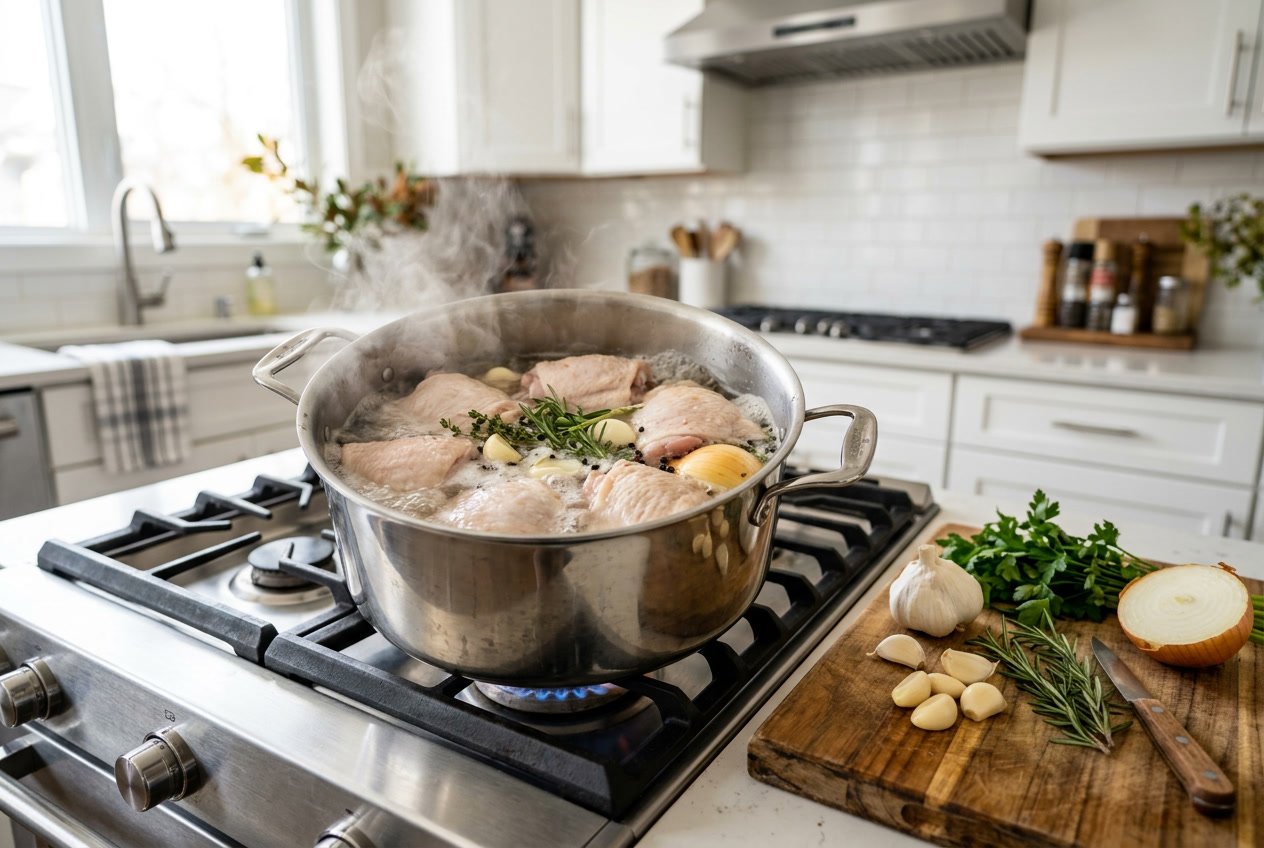
Prep the thighs, season the cooking liquid, and keep a gentle simmer until each piece reaches 165°F. Use a probe thermometer and short cook times to keep meat juicy and broth clear.
Preparing Chicken Thighs for Boiling
Pat each thigh dry with paper towels. Moisture on the surface can cool the pot and thin the broth.
Trim excess fat or loose skin for a cleaner broth, or leave skin on for more body and gelatin. If pieces vary in size, cut larger thighs in half so they cook evenly.
Rinse only if you must remove visible debris; otherwise, skip rinsing to avoid cross-contamination. Arrange thighs in a single layer in a pot that allows 1 inch of liquid above them.
If starting from frozen, separate pieces as they thaw in the hot liquid and add 10–20 minutes to total cook time.
Seasoning and Flavor Additions
Salt the cooking liquid at the start, using about 1 teaspoon kosher salt per quart of water or stock. Add one halved onion, 2–3 smashed garlic cloves, a bay leaf, and 8–10 peppercorns for a neutral, versatile broth.
For Asian-style broth, swap in ginger slices and scallion whites. Use fresh herb stems like parsley or thyme.
Finish with 1–2 teaspoons of vinegar or a squeeze of lemon to brighten the broth just before serving. Adjust seasoning after cooking if needed.
Optimal Boiling Technique
Bring liquid to a gentle simmer, not a rolling boil. High, violent boiling toughens meat and clouds the broth.
Once you add the thighs, return to a steady simmer (small bubbles) and partially cover the pot to hold heat. Boneless, skinless thighs usually take 15–20 minutes; bone-in thighs take 25–35 minutes.
Start checking temperature a few minutes early with an instant-read probe in the thickest part, away from bone. Remove pieces as they hit 165°F and let rest 5 minutes before slicing or shredding.
Boiling Boneless Chicken Thighs
Boiling boneless, skinless chicken thighs cooks them quickly and yields tender meat for salads, tacos, or soups. Control doneness with time, a gentle simmer, and a thermometer.
Boiling Time for Boneless Thighs
For fresh boneless chicken thighs, simmer for 10–15 minutes once the liquid reaches a gentle simmer. Larger or thicker pieces need closer to 15 minutes; thin cutlets finish in about 8–10 minutes.
If you start from frozen, add about 5–10 minutes for a total of 15–25 minutes. Always check internal temperature; the thickest part should read 165°F (74°C).
Use a meat thermometer inserted into the center for accuracy. If you don’t have one, cut the thickest piece and check for clear juices and opaque meat.
Avoid prolonged vigorous boiling. A steady simmer keeps the thighs from becoming dry.
Cooking Tips for Boneless and Skinless Thighs
Season the poaching liquid with 1 teaspoon salt per quart of water or use low-sodium broth. Add aromatics like a halved onion, 2 smashed garlic cloves, and bay leaves.
Arrange thighs in a single layer and cover with at least 1–2 inches of liquid for even cooking. Bring to a gentle simmer over medium heat, then lower to maintain small bubbles.
Skim any foam during the first few minutes for clearer broth. After cooking, rest thighs 3–5 minutes before slicing or shredding.
If you want browned edges, sear in a hot skillet for 1–3 minutes or broil for 4–6 minutes after boiling.
Boiling Bone-In and Skin-On Chicken Thighs
Boiling bone-in, skin-on thighs gives you flavorful meat and a usable broth while keeping juices intact. Pay attention to simmering temperature and internal temperature.
Boiling Time for Bone-In Thighs
Simmer bone-in chicken thighs gently for 20–30 minutes after the liquid reaches a simmer. Use a probe thermometer in the thickest part, avoiding the bone; the safe internal temperature is 165°F (74°C).
If thighs are larger or started frozen, add time and check temperature frequently. Avoid overcrowding the pot so heat circulates and each thigh reaches 165°F without overcooking.
Maximizing Juiciness and Flavor
Start with cold water or low-sodium stock and add aromatics like onion, celery, carrot, bay leaf, peppercorns, and salt. Bring to a simmer, then lower heat and maintain gentle bubbles.
Leave skin on while boiling to help retain moisture; remove skin afterward if you prefer. For extra tenderness, let thighs rest in the hot liquid off heat for 5–10 minutes before removing.
If you want crispy skin, pat thighs dry and sear skin-side down in a hot skillet for 2–4 minutes after boiling.
Quick checklist:
- Use a thermometer to verify 165°F (74°C)
- Keep thighs in a single layer, fully submerged
- Maintain a gentle simmer
- Add aromatics and light seasoning
Boiling Frozen Chicken Thighs Safely
You can boil frozen chicken thighs directly. Adjust cooking time and use a thermometer to ensure the meat reaches 165°F (74°C) throughout.
Timing Adjustments for Frozen Thighs
Frozen chicken thighs take longer than thawed pieces. Plan on about 30–40 minutes for average bone-in thighs.
Start with cold water covering the thighs by 1–2 inches. Bring water to a gentle boil, then reduce to a steady simmer.
Check internal temperature in the thickest part near the bone after about 25–30 minutes, then every 5–10 minutes until it reads 165°F (74°C).
Quick checklist:
- Place frozen thighs in a single layer if possible
- Cover with 1–2 inches of cold water
- Simmer, not rapidly boil
- Verify 165°F (74°C) at thickest point
Safety Precautions for Frozen Meat
Use a reliable instant-read thermometer for doneness. Insert the probe into the deepest part of the thigh without touching bone.
Prevent cross-contamination by using clean tongs to remove cooked thighs and a separate cutting board for cooked meat. If you plan to use the cooking liquid as broth, strain and refrigerate within two hours.
Discard any chicken that hasn’t reached 165°F (74°C) after the recommended time. Don’t partially cook and store; finish cooking immediately.
Follow these safety steps:
- Sanitize utensils and surfaces after handling raw frozen chicken
- Cook to 165°F (74°C) before serving
- Chill cooked chicken and broth within two hours
How to Use Boiled Chicken Thighs in Recipes
Boiled chicken thighs give you tender, fully cooked meat and concentrated cooking liquid. Shred or chop the meat, save the broth, and season to match your dish.
Ideas for Shredded Chicken Thighs
Shred boiled chicken thighs with two forks while warm for the best texture. Use the shredded chicken in tacos, burrito bowls, or sandwiches and toss with spice mix and lime for Mexican-style tacos.
For salads, mix shredded chicken with Greek yogurt, lemon, dill, and diced celery for chicken salad. Serve over mixed greens or in a whole-grain wrap.
Add shredded chicken to soups and stews with simmering broth, vegetables, and pasta or rice. Store shredded chicken airtight in the fridge for up to 4 days or freeze in meal-sized portions for up to 3 months.
Incorporating Boiled Chicken in Meals
Slice or cube boiled chicken thighs when you want defined pieces instead of strands.
Add sliced thighs to stir-fries. Heat 1 tablespoon oil and cook vegetables until just tender. Add chicken and 2 to 3 tablespoons sauce such as soy sauce, sesame oil, or honey. Cook for 1 to 2 minutes to heat through.
For casseroles, layer chopped chicken with cooked rice and a cup of sauce, either tomato or cream-based. Add 1 to 1½ cups cheese and bake at 375°F (190°C) for 20 to 30 minutes until bubbly.
Use the cooking liquid as a base for soups or to reheat chicken without drying it out.
Reheat chicken gently in a skillet with a few tablespoons of broth to keep it moist.


