
Can I Bake Chicken Thighs From Frozen? The Complete Step-by-Step Guide
Yes, you can bake chicken thighs from frozen. You can do it safely and simply with predictable timing and a meat thermometer.
Baking frozen chicken thighs in a preheated oven yields juicy, fully cooked meat as long as you cook to an internal temperature of 165°F (74°C) and allow extra time for frozen pieces.
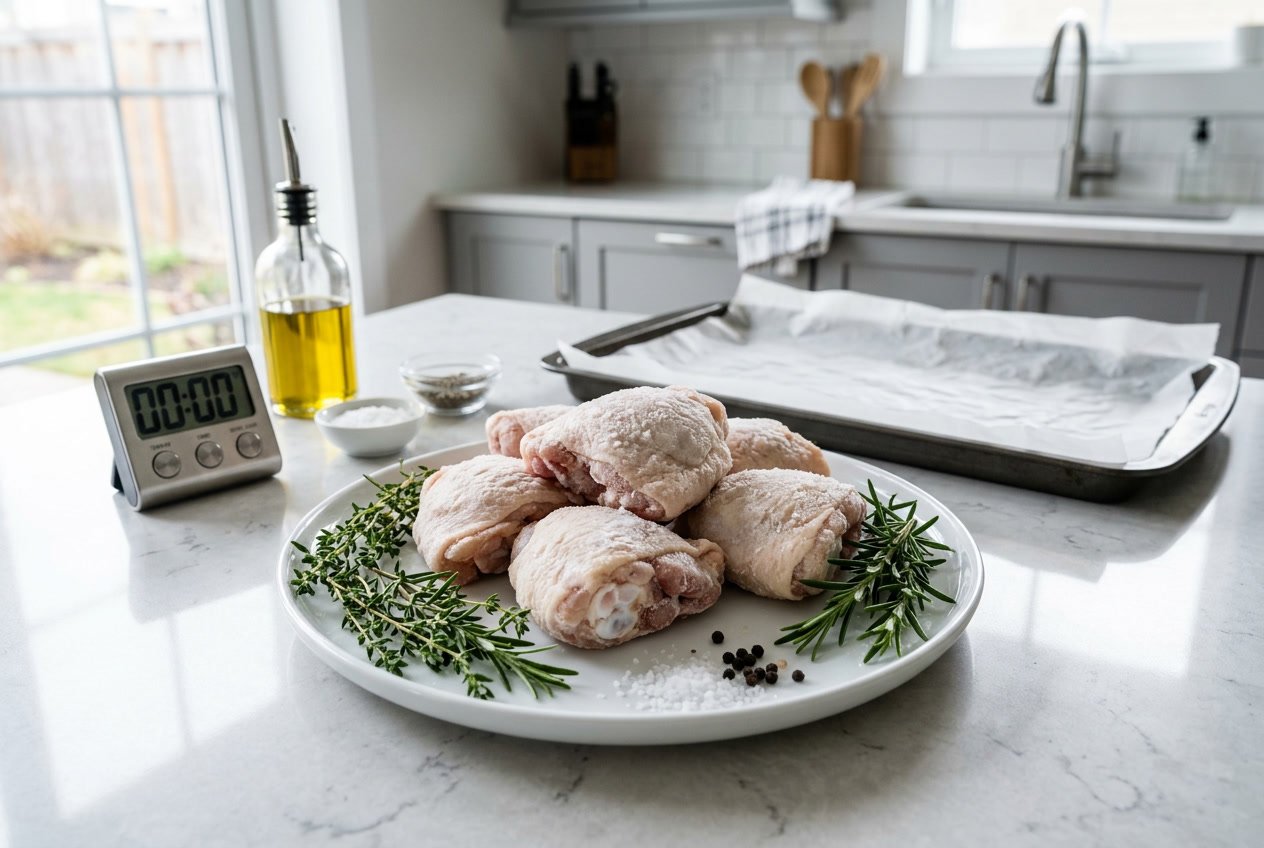
You’ll save thawing time and still get good texture, especially with bone-in, skin-on thighs. Learning a few easy steps helps you get crisp skin and even cooking.
You’ll find safety checks, ideal temperatures and timing, seasoning tips, tools to use, alternative methods, and how to store and reheat leftovers so you can turn frozen thighs into a reliable weeknight meal.
Is It Safe To Bake Chicken Thighs From Frozen?
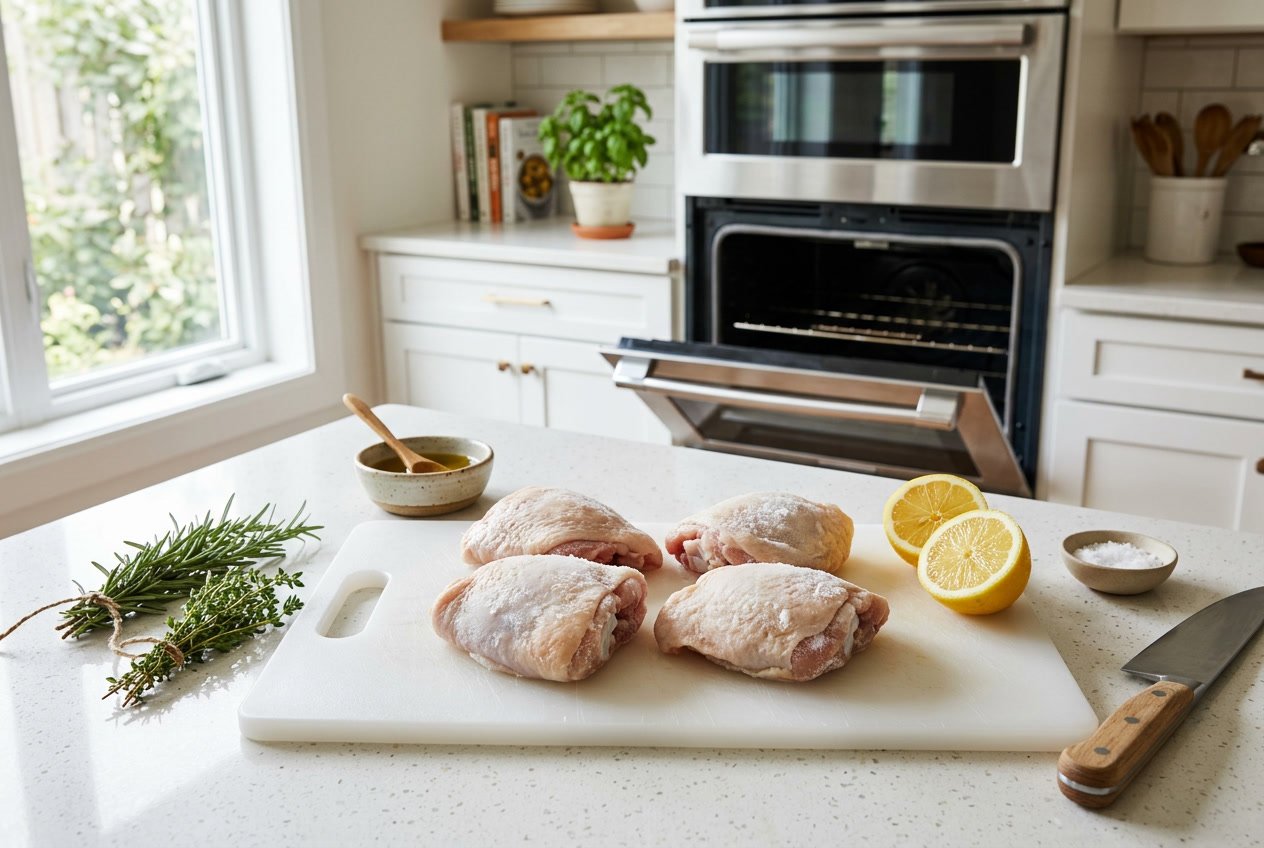
You can safely bake frozen chicken thighs if you follow temperature and time guidelines. Arrange pieces to promote even heat and use a thermometer to confirm doneness.
Pay attention to oven temperature, spacing on the pan, and resting time to avoid undercooked centers or overcooked meat.
USDA Guidelines And Food Safety
The USDA requires poultry to reach an internal temperature of 165°F (74°C) at the thickest point to be safe to eat. Use an instant-read thermometer and insert the probe into the meat near the bone, avoiding contact with bone or metal.
Cooking from frozen typically takes about 1.5 times longer than thawed meat. Bone-in, skin-on thighs often need 45–70 minutes depending on oven temperature and size.
Always preheat the oven and start checking temperature early to prevent overcooking. Cool and store leftovers within two hours to prevent bacterial growth.
Dangers Of Improper Cooking Methods
If you crowd the pan or use a deep, covered dish, steam forms and slows heat transfer, raising the risk of undercooked centers. Thin thermometers or relying on surface crispness can give false assurance; the interior may still be below 165°F.
Undercooked poultry can harbor Salmonella or Campylobacter, which cause foodborne illness. Overheating dries the meat and ruins texture.
Using broil too early can char skin while the inside stays raw. Keep thighs in a single layer, use a rimmed sheet or roasting pan, and check several pieces near the bone before serving.
Why Skipping Thawing Works
When you cook chicken from frozen, heat first melts ice crystals and then raises the meat temperature, which increases cooking time. Starting in a hot oven (375–425°F / 190–220°C) helps crisp skin while allowing the center to reach 165°F without excessive drying.
Briefly baking 5–10 minutes before seasoning helps seasonings stick without trapping steam. Elevating thighs on a rack and leaving gaps for airflow improves browning and reduces sogginess.
Rely on thermometer readings, not assumptions. When every thigh hits 165°F and rests 5–10 minutes, juices redistribute and the meat finishes safely.
Benefits Of Baking Frozen Chicken Thighs
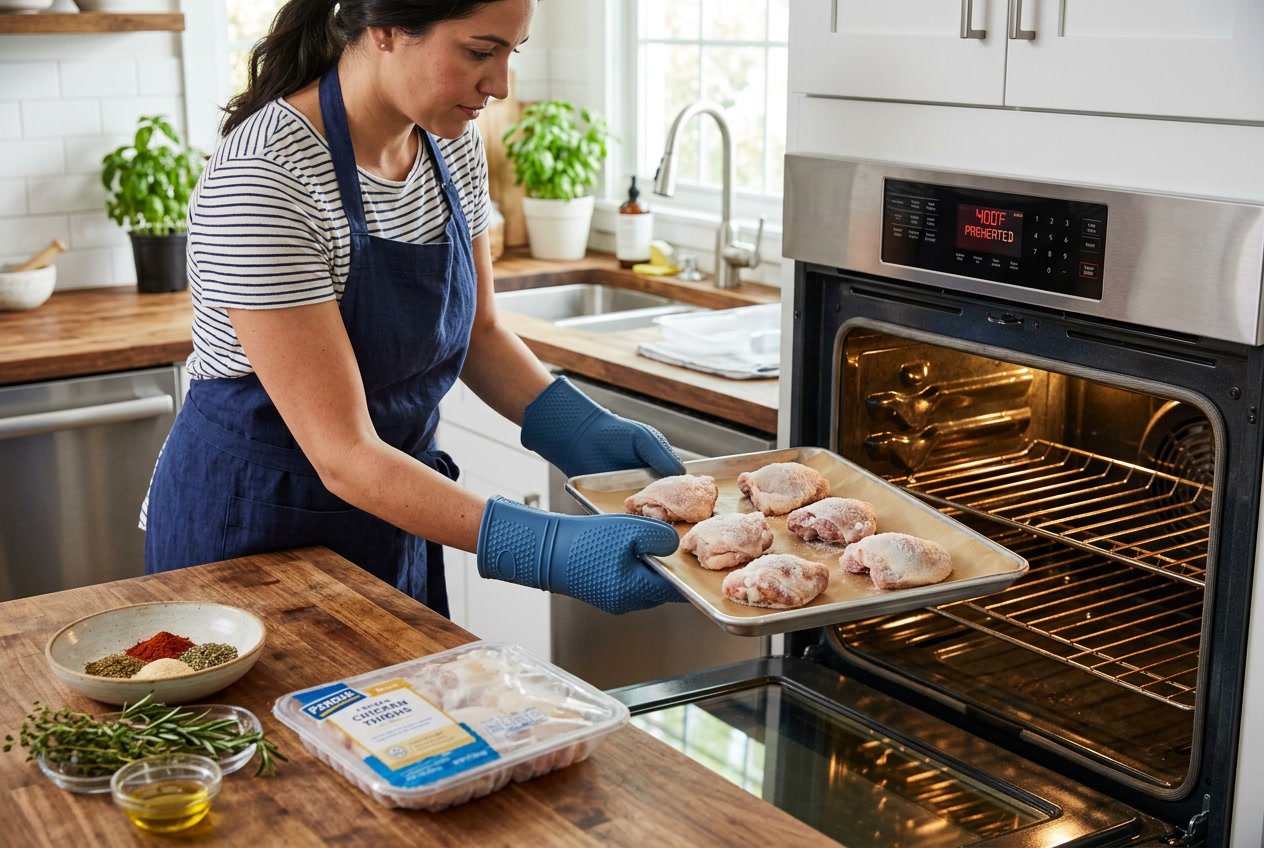
Baking frozen chicken thighs lets you cook a safe, hot meal without thawing. You can still get well-cooked meat with minimal hands-on time.
You can expect shorter prep, predictable oven timing, and good moisture when you use the right temperature and thermometer.
Time-Saving And Convenience
You save time when you bake frozen chicken thighs: no overnight thaw, no cold-water baths, and no last-minute planning. Preheat the oven—commonly 400°F (204°C)—arrange the frozen pieces in a single layer, and bake for 45–55 minutes depending on size.
This approach reduces active work to seasoning and occasional checking. It also eliminates the risk of forgetting to thaw and having to re-plan dinner.
Use a rimmed baking sheet or shallow roasting pan to catch juices and avoid extra cleanup. Remove foil partway through or finish under the broiler for 2–3 minutes if you want crisp skin.
A probe thermometer saves time by letting you monitor internal temperature without repeated oven door openings.
Moisture And Flavor Retention
Cooking chicken thighs from frozen helps preserve moisture because dark meat holds onto juices better than breast meat. Starting from frozen slows surface drying during the early cook stage, which helps the internal meat stay tender as it passes through the danger zone to 165°F (74°C).
Bone-in, skin-on thighs generally yield the best results for both flavor and succulence when you bake frozen chicken thighs. The bone conducts heat and the skin shields the meat, reducing moisture loss.
To enhance flavor without extended marinating, season before baking with salt, pepper, and spices, or season lightly at the 20–30 minute mark when the exterior softens. Rest the thighs 3–5 minutes after reaching 165°F (74°C) to let juices redistribute before serving.
Tools And Ingredients Needed
You’ll need basic oven cookware, a reliable way to check internal temperature, and simple seasonings or oils that stick to partially cooked meat. Choose equipment that gives even heat and a meat thermometer that reads near the bone.
Essential Equipment
Use an ovenproof baking dish or rimmed sheet pan large enough to leave 1–2 inches between thighs for airflow. A shallow roasting pan helps juices evaporate so skin can crisp when uncovered.
Line the pan with foil or parchment for easier cleanup and to catch runoff. A digital instant-read meat thermometer is critical; check temperature near the bone.
Aim for 165°F (74°C) internal temperature. Use tongs or a spatula to turn pieces safely when you remove the foil halfway through.
If you want extra browning, have a broiler-safe rack and the oven broiler setting ready. Keep kitchen shears, paper towels, and an oven mitt close by.
Recommended Seasonings And Oils
Start with neutral oil that tolerates high heat, like avocado or refined canola oil, to help seasonings adhere without smoking. Olive oil works at 400°F but watch closely above that.
Keep a small spice kit: kosher salt, black pepper, garlic powder, smoked paprika, and dried thyme or rosemary. For bone-in or thicker pieces, use a rub of 1 tsp salt and ½ tsp each of paprika and garlic powder per pound as a baseline.
Add a squeeze of lemon or a brush of honey in the last 10–15 minutes for brightness or glaze. If you prefer premade options, use a light barbecue rub or a store-bought poultry seasoning.
Pat partially cooked skin dry with paper towels before finishing to improve crispness.
Choosing Bone-In Vs Boneless Thighs
Bone-in thighs hold moisture better and take longer to reach safe temperature; add 10–15 minutes to cook time compared with boneless. Expect more flavorful meat near the bone, but plan to use the meat thermometer closer to the bone for an accurate reading.
Boneless chicken thighs cook faster and more evenly from frozen, making them convenient when time is limited. Frozen boneless chicken thighs will still need about 45–60 minutes at 400°F depending on thickness; check temperature in the thickest part.
If you want crispy skin, choose bone-in skin-on thighs. For quicker weeknight meals or slicing for salads and sandwiches, go boneless.
How To Bake Chicken Thighs From Frozen
You can cook frozen chicken thighs safely and get moist meat with crisp skin if you use the right oven temperature, spacing, and a thermometer. Follow precise oven settings, arrange pieces to allow air flow, season appropriately, and check internal temperature to ensure doneness.
Preparation And Oven Settings
Preheat your oven to 400°F (204°C). This temperature shortens overall cook time while promoting browning once moisture evaporates.
If your oven runs hot or cold, use an oven thermometer to confirm accuracy. Use a shallow roasting pan or rimmed baking sheet lined with foil or parchment for easier cleanup.
Lightly oil the pan surface to prevent sticking. If pieces still have ice on them, pat away loose ice with a paper towel to reduce excess steam.
Place an oven rack in the middle position for even heat. If you want extra-crisp skin, you can start at 425°F (218°C) for the first 10 minutes then lower to 400°F, but watch closely to avoid burning.
Always have a meat thermometer ready — timing varies by size.
Arranging And Seasoning The Thighs
Arrange the frozen thighs in a single layer with at least 1 inch (2.5 cm) between pieces. Crowding traps steam and produces soggy skin.
Use skin-on, bone-in thighs for best flavor and moisture; boneless thighs cook faster but follow the same spacing rule. You can sprinkle dry seasonings (salt, pepper, garlic powder, paprika) onto the frozen surface before baking; they stick better once the surface softens in the first few minutes.
Alternatively, season halfway through cooking when meat has thawed enough to absorb spices. Brush or drizzle a thin layer of oil over skin to help browning during the final uncovered bake or broil step.
If you prefer a sauce or glaze, wait until the thighs reach an internal temperature of about 150°F (66°C) before applying, then continue cooking to finish.
Baking Process And Cooking Times
Cover the pan tightly with foil and bake covered for about 30–35 minutes at 400°F (204°C). Covered baking traps heat to thaw and cook the interior without over-browning the exterior.
After the initial covered period, remove the foil, flip each thigh, and continue baking uncovered. Bake an additional 10–20 minutes uncovered, depending on thigh size.
Total cook time typically ranges 45–55 minutes for standard bone-in thighs. Use an instant-read thermometer: the safe minimum internal temperature is 165°F (74°C). Insert the probe into the thickest part without touching bone.
For crispier skin, broil for 2–3 minutes at the end, watching constantly. Let thighs rest 3–5 minutes before serving to let juices redistribute.
Adjust times if you start from very large or very small pieces.
Ensuring Proper Doneness And Food Safety
You must confirm the thickest part of each thigh reaches a safe internal temperature. Watch surface cues to avoid undercooking near the bone while preventing burnt skin.
Use reliable tools and consistent checks so every piece hits the required 165°F (74°C).
Using A Meat Thermometer Correctly
Always use an instant-read or probe thermometer and insert it into the thickest part of the thigh, avoiding contact with bone, fat, or the pan. For bone-in thighs, push the probe alongside the bone into the center of the meat where heat lags the most.
Check temperature toward the end of the recommended cook time; start probing at the lower end to avoid overcooking smaller pieces. Hold the thermometer in place until the reading stabilizes (usually a few seconds for instant-read models).
Probe several thighs on the sheet—don’t rely on one spot—especially if sizes vary. If a digital probe reads below 165°F (74°C), continue baking and recheck every 5–7 minutes.
For oven-safe probes, you can set an alarm to 165°F to prevent repeated opening of the oven door. Calibrate or test your thermometer in boiling water occasionally to ensure accuracy.
Visual And Texture Signs To Check
Clear juices and meat that pulls slightly away from the bone help confirm doneness, but never use color alone. Juices that run clear at the bone area, not just the surface, indicate the meat has cooked through.
Feel the texture: properly cooked thigh meat is firm but still springy when pressed. Overly soft or gelatinous texture suggests undercooking near the bone.
Crispy, evenly browned skin often accompanies doneness on the surface but can mask cold spots underneath, so pair this check with temperature readings.
When you cut into a thigh, the center should show no pink near the bone; a faint blush can appear in very dark meat but should not be bloody. If in doubt, return the piece to the oven and re-measure once it has rested briefly.
Best Seasoning And Flavor Tips For Baked Frozen Chicken Thighs
Use salt early, dry the surface when possible, and choose bold spices that hold up to moisture. Apply oil or a binder so seasonings stick, and plan timing: some flavors benefit from resting while others should be added later.
How To Season Frozen Chicken
You can season frozen chicken thighs before baking, but focus on surface-friendly steps. Lightly brush thawing areas with oil to help spices adhere; use coarse salts like kosher salt for even coverage.
Pat any partially thawed skin dry with paper towels to improve browning. Apply seasoning more generously than you would to fresh meat because cold, moist surfaces mute flavors.
Sprinkle a base of salt, black pepper, garlic powder, and smoked paprika. Add a final pinch of salt after baking if needed to adjust seasoning.
If time allows, season again after the outer layer thaws during early baking. This refreshes flavor without waiting for full thawing.
Recommended Spice Blends
Choose blends that complement dark meat and tolerate moisture. Mix 1 tsp kosher salt, ½ tsp black pepper, 1 tsp garlic powder, and 1 tsp smoked paprika per pound of thighs.
Use olive oil to form a paste and rub under the skin when possible. For a Mediterranean blend, combine 1 tsp oregano, ½ tsp thyme, lemon zest, and 1 tbsp olive oil.
For an Asian-style blend, mix 2 tbsp soy sauce or tamari, 1 tsp grated ginger, and 1 tsp honey. Brush this on in the last 10–15 minutes to avoid burning.
For a spicy rub, combine 1 tsp cumin, 1 tsp chili powder, ¼ tsp cayenne, and 1 tsp brown sugar. Measure spices based on the number of thighs and taste the rub before applying.
When you cook bone-in frozen chicken thighs, increase bake time and choose bolder seasonings to penetrate the thicker meat.
Tips For Marinating After Partially Cooking
You can marinate after thighs have partially cooked, but follow safety steps. Bake until the outer layer thaws and the internal temperature reaches about 120–130°F, then remove and let cool slightly before applying a marinade.
Use acidic marinades sparingly at this stage. Lemon juice or vinegar for 15–30 minutes adds brightness without breaking down texture too much.
For longer flavor, use oil-based or yogurt marinades that cling to the surface and continue to flavor during the remaining bake. Always return the partially cooked thighs to a hot oven (400°F) to finish cooking to 165°F internal temperature.
Discard any marinade that touched raw meat unless you boil it before reuse.
Alternative Cooking Methods For Frozen Chicken Thighs
You can cook frozen chicken thighs safely without thawing by using methods that provide sustained, even heat or high-pressure steam. Each method below explains timing, temperature, and key tips to get juicy meat and safe doneness.
Air Fryer Instructions
Preheat the air fryer to 375°F (190°C). Arrange frozen thighs in a single layer with space between pieces for airflow.
You may need to cook in batches. Cook for 18–25 minutes for boneless thighs and 25–30 minutes for bone-in, flipping once halfway.
Insert an instant-read thermometer into the thickest part and target 165°F (74°C). If the exterior browns too quickly, lower temperature to 350°F and add 3–6 minutes.
For crisp skin, spray or brush a thin layer of oil before cooking and increase to 400°F for the final 2–3 minutes. Season after a few minutes of cooking so spices adhere when moisture reduces.
Tips at a glance:
- Preheat air fryer 5 minutes
- Single layer, don’t overcrowd
- Flip halfway, check 165°F
Instant Pot And Pressure Cooking
Use the Instant Pot for fast, hands-off cooking and guaranteed safety. Add 1 cup of water or broth to the pot and place frozen thighs on a trivet or in a steamer basket above the liquid.
Pressure cook on High: bone-in thighs need 12–15 minutes, boneless 8–10 minutes, then allow a 5–10 minute natural pressure release. Check with a thermometer after release to confirm 165°F at the thickest part.
If the temperature is lower, reseal and pressure cook 2–3 minutes more. For browning, remove thighs after pressure cooking and broil or pan-sear 2–4 minutes per side to develop color and texture.
Season before or after cooking. Sauces work well when added during pressure cook for flavor infusion.
Stovetop Techniques
Instead of searing frozen thighs, use a covered skillet with a small amount of oil and low-to-medium heat to cook through evenly. Place thighs skin-side down if skin-on to render fat and get some crisping.
Cook covered for 25–35 minutes for boneless, 35–45 minutes for bone-in, turning every 8–10 minutes so they brown on all sides. Add ¼–½ cup of liquid (broth, water, or sauce) to the pan early to create steam and prevent the exterior from burning before the interior reaches 165°F.
Finish uncovered on medium-high heat for 3–5 minutes to tighten the skin and reduce liquid. Always verify doneness with a thermometer and rest thighs 3–5 minutes before serving.
Serving Suggestions And Side Dishes
Pair baked chicken thighs with sides that match their crisp skin and rich juices. Choose vegetables that roast quickly at 425°F and grains or salads that can be dressed while the chicken rests.
Roasted Vegetables
Roast carrots, Brussels sprouts, and red onions on a single sheet pan tossed with 1–2 tbsp oil, 1 tsp salt, and ½ tsp black pepper. Cut carrots into 1/2-inch sticks and halve Brussels sprouts so everything finishes in 20–25 minutes if you increase oven temperature at the end.
For root vegetables that need more time, par-roast them for 10–15 minutes before adding chicken or cut them smaller. Finish with a squeeze of lemon, a sprinkle of chopped parsley, or 1–2 tbsp grated Parmesan for brightness.
Tip: use high heat and space vegetables in a single layer for caramelized edges.
Grains, Pastas, And Salads
Serve chicken thighs with fluffy rice pilaf, quick-cook quinoa, or a lemon-herb couscous for easy starches that take 10–20 minutes. Cook grains in chicken broth and fold in chopped chives or toasted almonds for texture.
For pasta, toss short shapes like penne or farfalle with olive oil, roasted garlic, cherry tomatoes, and spinach. Add a splash of pasta water to emulsify.
For salads, choose a crisp Romaine Caesar or a cucumber-tomato salad dressed with olive oil, red wine vinegar, salt, and dill. These cut through the thigh’s richness and require minimal hands-on time while the chicken rests.
Storage And Reheating Leftover Baked Chicken Thighs
Store cooked chicken promptly, cool it within two hours, and keep it airtight to preserve texture and safety. Reheat only once when possible and bring the internal temperature to 165°F (74°C) before serving.
Proper Refrigeration And Freezing
Place cooled thighs in shallow, airtight containers or wrap each piece tightly in foil or plastic wrap to limit air exposure. Refrigerate at 40°F (4°C) or below and use within 3–4 days for best quality and safety.
For longer storage, freeze at 0°F (-18°C) or colder. Label packages with date and use within 2–6 months for optimal flavor.
When you freeze, separate pieces with parchment or use vacuum sealing to prevent sticking and reduce oxidation. Thawed chicken should move from freezer to fridge and thaw there for 24 hours.
If you need a faster method, use a sealed bag in cold water, changing the water every 30 minutes and cooking immediately after thawing.
Best Practices For Reheating
Set your oven to 325–350°F (160–175°C) for even reheating. Arrange thighs on a baking sheet, cover loosely with foil to retain moisture, and heat for 15–25 minutes depending on size until the center reaches 165°F (74°C).
If you want to reheat faster, use a microwave on medium power with a splash of broth and cover to trap steam. Rotate or flip pieces and check temperature to avoid cold spots.
To get crispy skin, finish under a high broil for 1–3 minutes after the internal temperature is correct. Watch closely to prevent burning.
Reheat only once. Discard leftovers left at room temperature for over 2 hours, and always use an instant-read thermometer to verify doneness instead of relying on color.


