
Can I Bake Chicken Thighs? Simple and Crispy Results at Home
You can bake chicken thighs and get them juicy and crisp with simple steps. Baking works for bone-in or boneless thighs and gives reliable results when you control temperature, timing, and seasoning.
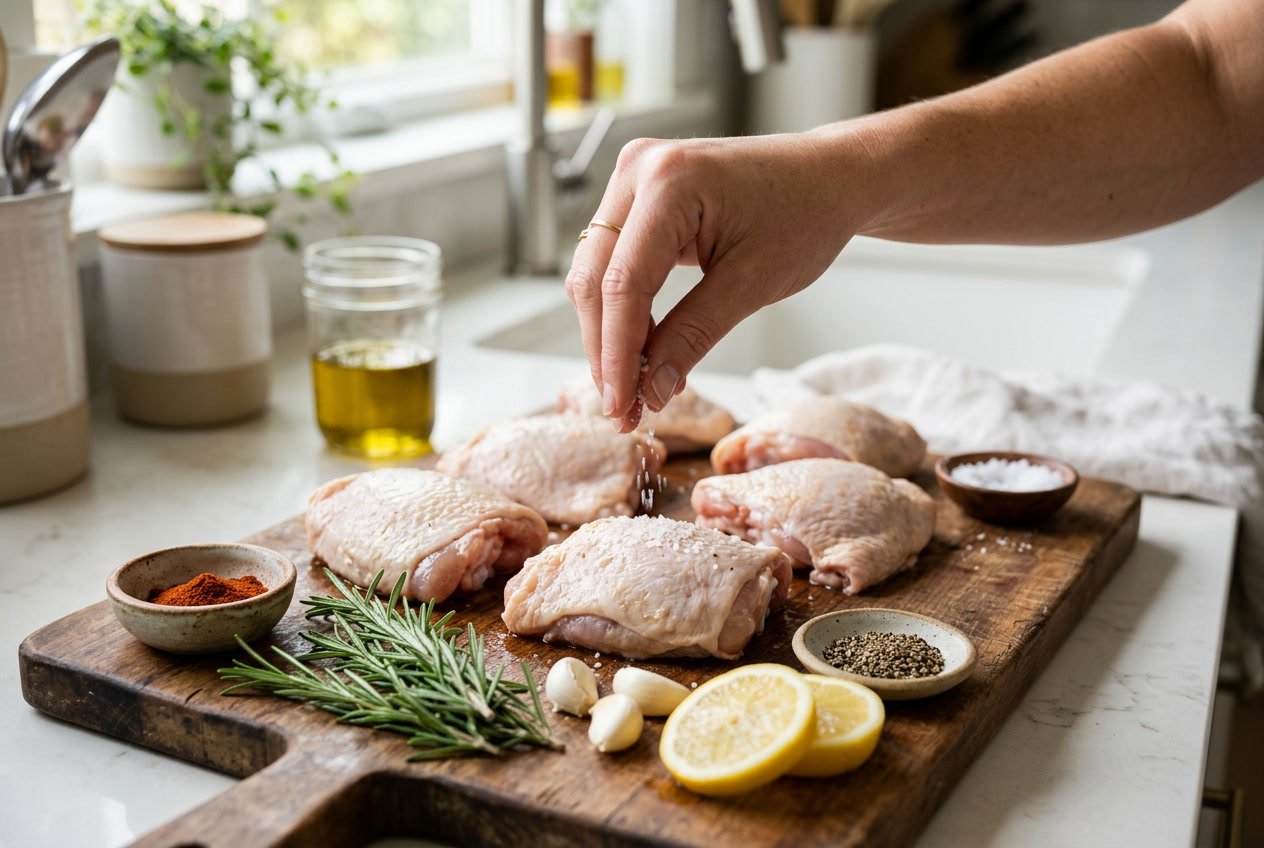
This guide explains which thigh cuts work best, which oven temps and cook times to use, and practical tips for crispy skin or extra-tender meat. Follow these steps and you’ll turn a weekday protein into a consistently satisfying meal with minimal fuss.
Can I Bake Chicken Thighs?

Baking chicken thighs gives you a reliable way to get tender meat and crispy skin with minimal hands-on time. You can control texture and doneness by choosing temperature, bone-in vs. boneless, and whether to use a rack or pan.
Why Choose Baked Chicken Thighs
Thighs are more forgiving than breasts because the higher fat content resists drying. Bake bone-in, skin-on thighs at 400–425°F (200–218°C) for browning and crisp skin, or choose 350–375°F (175–190°C) for slower, more even cooking.
Boneless, skinless thighs finish faster—typically 20–30 minutes—so monitor them closely. Pat the skin dry and season well before baking to maximize crispiness and flavor.
Use a wire rack on a sheet pan to allow air circulation and even browning. A meat thermometer should read 165°F (74°C) for safety, though many cooks pull thighs at 175–180°F (80–82°C) for peak tenderness.
Advantages Over Other Cooking Methods
Baking requires less active work than frying or pan-searing while still producing crisp skin at higher heat. It’s a good one-pan option that pairs well with vegetables roasted at the same temperature, which saves time and cleanup.
Baking scales easily for meal prep. You can cook large batches, cool, and refrigerate or freeze. Baking avoids flare-ups and gives steadier heat for bone-in pieces that need longer cooking.
Common Misconceptions
Many think higher heat always dries out meat, but with chicken thighs, high, dry heat crisps skin and seals juices if you avoid overcooking. Some believe 165°F is the only acceptable endpoint; it’s the safety minimum, but thighs often benefit from finishing slightly higher for texture.
Bone-in and boneless thighs behave differently. Bone-in cooks slower and often stays moister; boneless cooks faster and risks drying at very high temperatures. Baking frozen thighs without adjustment causes uneven cooking; thaw first or add extra time and check temperature.
Types of Chicken Thighs for Baking
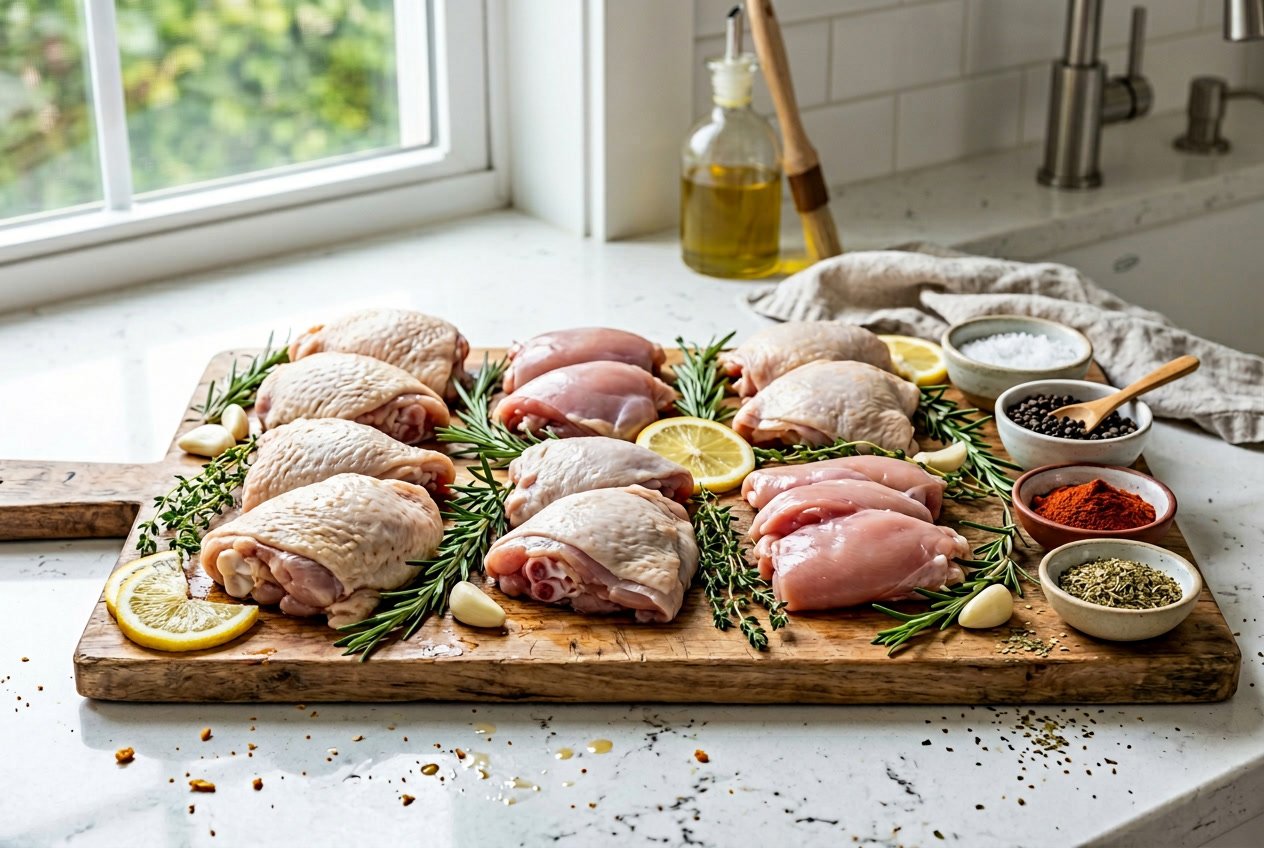
Choose the cut that matches your time, texture, and flavor goals. Bone-in thighs give richer flavor and hold up to higher heat; boneless thighs cook faster and are easier to eat; skin decisions affect crispiness and fat content.
Bone-In Chicken Thighs
Bone-in chicken thighs keep more moisture during baking and deliver a deeper, richer flavor because heat transfers through the bone into the meat. Expect slightly longer cook times—typically 25–35 minutes at 425–450°F for average-sized pieces.
Check the internal temperature at the thickest point (165°F) rather than relying on time alone. Sear the skin side briefly before baking or use a hot oven to render fat and crisp skin.
Use an elevated rack to allow air circulation and avoid soggy bottoms. Bone-in thighs also reheat well and tolerate saucing or braising steps without drying out.
Boneless Chicken Thighs
Boneless chicken thighs cook faster and more evenly because they have uniform thickness and no bone mass to slow heat penetration. Expect 15–25 minutes at 400–425°F depending on thickness; thinner pieces may finish in under 20 minutes.
Use an instant-read thermometer to prevent overcooking. Boneless thighs work well for sandwiches, salads, or quick weeknight meals.
They absorb marinades and rubs more directly, so season well and consider a short brine (15–30 minutes) for extra juiciness. For a crisp exterior, pat them very dry and use a high-heat finish or a light dusting of baking powder in the seasoning mix.
Skin-On vs Skinless Chicken Thighs
Skin-on thighs provide the best route to crispy, flavorful crust because the skin renders fat and browns under high heat. For crisp skin, pat the skin dry, season, and bake on a rack at 425–450°F for 25–30 minutes for bone-in, or 20–25 minutes for smaller pieces.
A small amount of baking powder in the seasoning can improve crispness without changing taste. Skinless thighs cut calories and reduce surface fat but lose the natural barrier that keeps meat moist during long cooking.
Bake skinless pieces at moderate to high heat and watch timing closely; they’ll dry out faster if overbaked. For added protection, use a sauce, cover loosely with foil, or finish under the broiler for a quick browning.
How to Bake Chicken Thighs
Baking chicken thighs gives you juicy meat and crisp skin with minimal hands-on time. Focus on drying the skin, using a simple spice mix, and checking temperature with an instant-read thermometer for consistent results.
Essential Ingredients and Tools
Key ingredients: bone-in, skin-on chicken thighs (about 6–8 for a 9×13 pan), kosher salt, black pepper, garlic powder, paprika, and 1–2 tablespoons olive oil. Add dried thyme or oregano for herbs.
Use garlic powder rather than raw garlic for even, roast-friendly flavor without burning. Gather a rimmed baking sheet or 9×13 baking pan, a wire rack (optional but helps crisp skin), paper towels, tongs, and an instant-read thermometer.
A rack lifts thighs for airflow; foil under the pan makes cleanup easier. Pat each thigh fully dry with paper towels before oil and seasoning to promote crisping.
Measure salt and spices (about 1 tsp salt per pound of chicken, 1 tsp garlic powder per pound, 1 tsp paprika for color). Rub oil over skin, then evenly sprinkle the spice mix, pressing it into the skin and under the edges for better flavor penetration.
Step-by-Step Preparation
Remove thighs from the fridge 15–20 minutes before cooking to take the chill off. Trim excess skin or fat if needed, then pat dry with paper towels; moisture prevents crisping.
Preheat your oven to 400–425°F (200–220°C). Mix salt, pepper, garlic powder, and paprika in a small bowl.
Coat each thigh lightly with oil, then rub the spice mix on both sides and under the skin where possible. Arrange thighs skin-side up on a rack or directly on a lined baking sheet, spacing them so air circulates.
Slide the pan into the middle of the oven. Do not overcrowd; overcrowding steams the skin and reduces crispiness.
How to Bake Chicken Thighs in the Oven
Bake uncovered for about 35–45 minutes depending on thigh size. Start checking internal temperature at 30 minutes with an instant-read thermometer inserted into the thickest part without touching bone.
Target a safe minimum of 165°F (75°C); many cooks prefer 175–185°F for very tender meat near the bone. If the skin is not crispy, broil on high for 1–3 minutes, watching closely to avoid burning.
Remove the thighs and let them rest 5–10 minutes before serving to let juices redistribute. Use leftover drippings for pan sauce or to toss roasted vegetables.
Baking Temperatures and Timing
Aim for high enough oven heat to crisp skin while cooking the meat through, and always check internal temperature with a thermometer. Cooking time varies by cut, oven temp, and whether the thighs are bone-in or boneless.
How Long to Bake Chicken Thighs
At 425°F (220°C) boneless thighs typically take about 20–30 minutes; expect about 25 minutes for average 4–6 oz pieces. Bone-in, skin-on thighs usually need 30–40 minutes at the same temperature because the bone slows heat penetration.
If you lower the oven to 350°F (175°C) for gentler roasting, add roughly 10–15 minutes for boneless and 15–25 minutes for bone-in thighs. Use an instant-read thermometer in the thickest part of the meat (avoid the bone) rather than relying only on time.
Visual cues help: juices run clear and skin is golden-brown.
Best Internal Temperature
Cook chicken thighs to a safe internal temperature of 165°F (74°C) measured in the thickest part. Insert the thermometer probe away from bone to avoid a falsely high reading for bone-in pieces.
You can remove thighs when they hit 165°F and let them rest 5–10 minutes; carryover heat may raise the internal temp a few degrees while juices redistribute. If you prefer slightly more tender results with dark meat, cook to 170–175°F, but do this with care and ensure safety.
Baking Times for Different Cuts
Use this quick reference as a starting point and adjust for your oven and thigh size:
- Boneless, skinless thighs at 425°F: 20–30 minutes
- Bone-in, skin-on thighs at 425°F: 30–40 minutes
- Boneless at 350°F: 30–40 minutes
- Bone-in at 350°F: 40–50 minutes
Arrange thighs skin-side up on a rimmed sheet pan with space between pieces for even browning. Preheat the pan or use a higher start temperature (450–500°F for the first 5–10 minutes) to help crisp skin, then reduce to 400–425°F to finish without drying.
Achieving Crispy and Juicy Baked Chicken Thighs
You want skin that crisps up and meat that stays moist. Use high heat, dry skin, and simple seasoning.
A short wet rub or dry rub, spacing on the pan, and accurate temperature checks give consistent results.
Tips for Perfect Baked Chicken Thighs
Pat each thigh very dry with paper towels; excess surface moisture prevents browning. If using a wet rub (oil + spices), apply just enough to coat so spice adheres without pooling.
Use bone-in, skin-on thighs when possible for juicier results. Arrange thighs skin-side up on a wire rack set in a rimmed baking sheet or in a single layer on a baking dish so hot air circulates and fat renders away from the skin.
Space pieces at least 1 inch apart. Preheat the oven to 400–425°F (200–220°C).
Start at the higher end for crispier skin. Check internal temp with an instant-read thermometer—target 165°F (74°C) in the thickest part away from bone.
Rest for 5–10 minutes before serving to let juices redistribute. Season simply: kosher salt, black pepper, garlic powder, and smoked paprika are reliable.
Add lemon zest or a squeeze of lemon after roasting to brighten flavor without drying the meat.
Getting Crispy Baked Chicken Skin
Dry skin is essential. Salt the skin and let it air-dry in the fridge for 30 minutes to several hours if time allows.
Salt draws moisture out and helps the skin crisp when exposed to high heat. Render the fat by roasting at 400–425°F so the skin browns without overcooking the meat.
Keep skin-side up so hot air and direct heat do the work. Use a wire rack or raised oven-safe cooling rack to let rendered fat drip away and expose skin to circulating heat.
Avoid overcrowding the pan; overlapping traps steam and yields soggy skin. If skin still resists crisping, move the pan to the highest oven rack for the final 3–5 minutes, watching closely to prevent burning.
Broiling and Other Finishing Methods
Broiling gives a fast finish if the skin didn’t crisp in the oven. Move the baked thighs to the top rack, set the broiler to high, and broil for 1–3 minutes, keeping the oven door ajar if recommended by your oven.
Watch constantly to avoid char. Pan-sear before or after baking for extra texture: start skin-side down in a hot skillet to jump-start browning, then finish in the oven; or sear briefly after baking to touch up spots that need more color.
Use a kitchen torch for precise spot-crisping without overcooking the interior. Brush with a small amount of melted butter or oil before broiling or torching to encourage even browning.
Variations and Serving Ideas
Pick a seasoning profile, cooking style, and simple sides that match your time and flavor preferences. Focus on textures—crispy skin or tender meat—and on sauces that pull the meal together.
Seasoning Options and Flavor Ideas
Start with a reliable base: kosher salt and freshly ground black pepper. Then choose one bold direction to keep flavors clear.
- Classic savory: combine garlic powder, smoked paprika, and dried thyme. Rub these under and over the skin for even flavor.
- Citrus-herb: mix lemon zest, chopped rosemary, and a little olive oil. Place lemon slices on the tray to roast with the thighs.
- Sweet-savory glaze: mix honey, soy sauce, and grated ginger. Brush this mixture on during the last 8–10 minutes of baking to avoid burning.
- Spicy rub: blend cayenne, smoked paprika, brown sugar, and onion powder. Press the rub into the thighs and let them rest for 30 minutes before baking.
Apply a light coating of oil to help the skin crisp. If you marinate overnight, reduce the salt in your final seasoning to avoid over-salting.
BBQ Chicken Thighs and Other Styles
For BBQ chicken thighs, pick a thick sauce and finish with high heat. Bake at 400°F (200°C) until almost done, then baste with sauce and broil 2–4 minutes to caramelize.
- Choose a Kansas City style sauce for sweet molasses notes or a vinegar-based sauce for tangy Carolina flavor.
- For sticky Asian BBQ, blend hoisin, soy, sesame oil, and a bit of honey. Sprinkle scallions and sesame seeds on after baking.
- Try a dry-brined method: salt the thighs 12–24 hours ahead, then add a barbecue spice rub before roasting for concentrated flavor.
- Use a preheated cast-iron pan in the oven if you want oven-roasted “grilled” marks. Sear briefly under the broiler to deepen color.
Pair BBQ thighs with coleslaw, roasted corn, or baked beans.
Air Fryer Chicken Thighs
Air fryer chicken thighs give you crisp skin quickly and use less oil than deep frying. Use bone-in, skin-on thighs for the best texture.
Pat the skin dry and lightly oil the surface. Preheat the air fryer to 380°F (193°C). Arrange thighs skin-side up with space between and cook for 18–22 minutes, depending on size. Flip if you need more even browning.
- For breaded thighs, use a three-stage coating: flour, beaten egg, and panko. Spray the panko with oil for extra crunch.
- Check the internal temperature at the thickest point and aim for 165°F (75°C). Let the thighs rest for 5 minutes.
- Reheat leftovers in the air fryer at 350°F (175°C) for 5–8 minutes to bring back crispness.
Serve air fryer thighs in salads, tacos, or quick grain bowls for a fast protein option.
Weeknight Dinner Inspiration
Plan simple, balanced plates that highlight the thighs’ robust flavor. Try one-pan approaches to reduce cleanup and save time.
- For a sheet-pan meal, arrange thighs with quartered potatoes, carrot sticks, and red onion. Toss vegetables in the same seasoning and roast at 400°F (200°C) for 35–45 minutes.
- For a rice bowl, shred baked thighs and serve over steamed jasmine rice with a cucumber-sesame salad and chili-garlic sauce.
- To make a salad topper, slice cooled thighs and place on mixed greens with avocado, cherry tomatoes, and a mustard vinaigrette.
- For sandwiches and wraps, tuck sliced thighs into a toasted roll with slaw and pickles. Wrap them in a tortilla with hummus and roasted peppers.
Prepare components ahead by washing greens, chopping vegetables, or making a sauce. With these steps done, you can assemble weeknight dinners in 15–20 minutes after the thighs finish cooking.


