
Can Chicken Thighs Look Pink When Cooked? The Science & Safety
You might notice pink in cooked chicken thighs and immediately worry it’s unsafe.
If the thickest part of the thigh reaches 165°F (74°C) on a meat thermometer, a pink hue does not automatically mean the meat is undercooked.
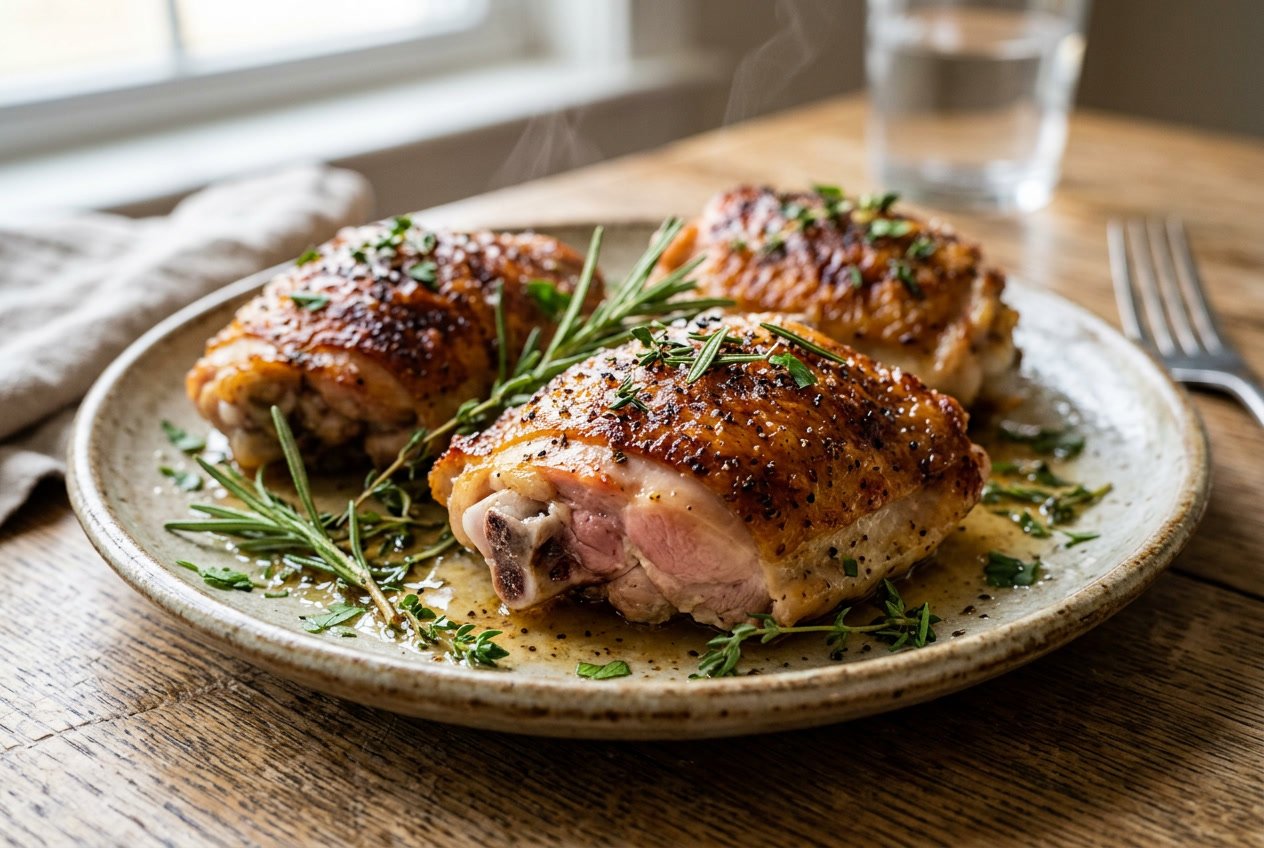
Chicken thighs can stay pink due to myoglobin, smoking, brines, age, and bone effects.
You can check doneness reliably with a thermometer and use practical safety tips to cook confidently and keep flavor.
Why Do Chicken Thighs Look Pink When Cooked?
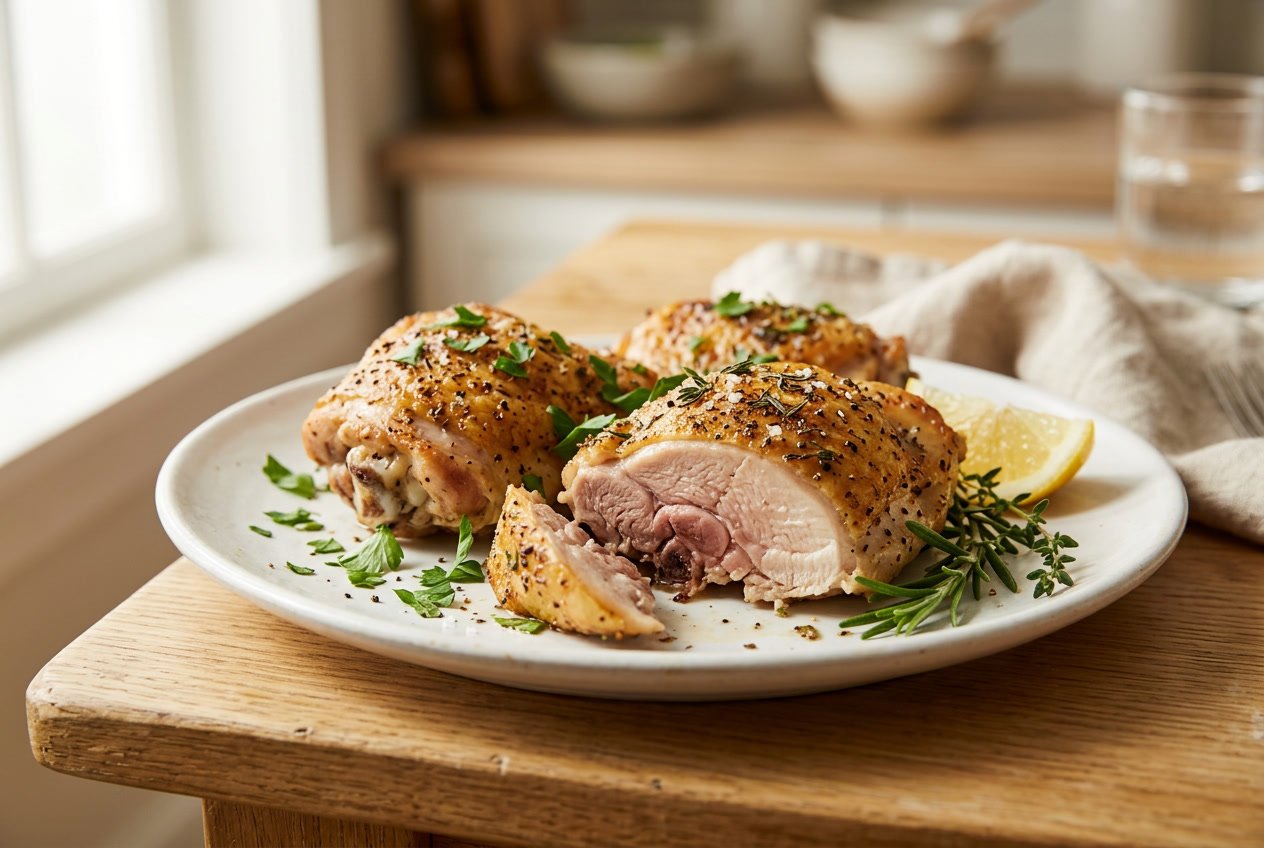
You may see pink in cooked chicken thighs even when they are safe to eat.
Several biological and cooking factors, such as muscle pigment, heat exposure, and bone-related pigments, explain that color.
Role of Myoglobin in Chicken Thighs
Myoglobin gives dark meat its color.
Chicken thighs contain more myoglobin than breast meat, so the muscle fibers naturally start darker and can retain a pink tint after cooking.
When you heat meat, myoglobin denatures and changes color from red to tan or brown.
Denaturation depends on temperature and time; shorter, high-heat exposure can leave some myoglobin partially changed, producing a pink center even when the internal temperature reaches 165°F (74°C).
Measuring temperature with a probe in the thickest part of the thigh gives you a reliable doneness check.
Visual cues alone can mislead you because myoglobin amount and distribution vary by bird age, breed, and the specific muscle.
Impact of Cooking Method on Color
Different techniques change both myoglobin behavior and surface chemistry, altering perceived color.
Grilling and smoking introduce smoke compounds and high surface heat that can set a ring of pink near the bone or under the skin.
Roasting tends to produce more uniform browning if you cook longer at moderate heat.
Brining and acidic marinades affect pigment retention.
Salt and acid can alter protein structure, sometimes intensifying pink hues.
Slow cooking or braising breaks down connective tissue and can produce very tender meat that still appears pink because of retained myoglobin and moisture.
Use a digital thermometer for accuracy and rely on temperature, not appearance, when judging safety.
Bone Marrow and Pigment Release
Bone proximity influences thigh color significantly.
When you cook bone-in thighs, marrow pigments and hemoglobin residues can leach into the surrounding meat and cause a pink or gray ring near the bone.
This is more noticeable in younger birds with more porous bones.
Roasting at high heat can force marrow pigments into adjacent tissue.
Gentle cooking may allow pigments to remain more localized.
Remove meat from the bone and check temperature at the thickest point to determine doneness without being misled by bone-tinged pinkness.
If you’re concerned, use boneless thighs or cut away near-bone sections before assessing color.
Is Pink Chicken Thigh Meat Undercooked?
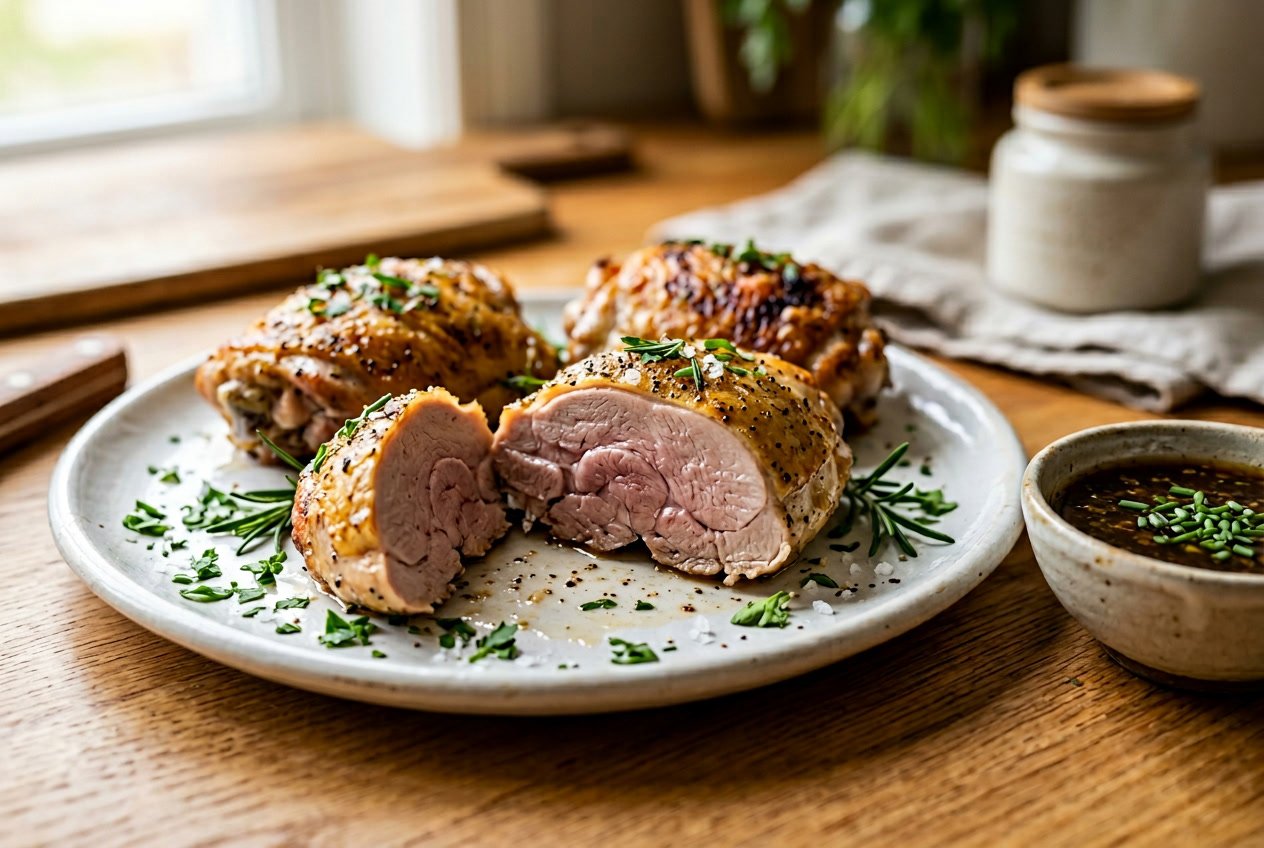
Pink meat can worry you, but color alone doesn’t determine safety.
Use a thermometer and check texture and juices to confirm doneness.
Understanding Safe Internal Temperatures
Check the thickest part of the thigh with a reliable meat thermometer, avoiding bone contact.
The USDA recommends an internal temperature of 165°F (74°C) for poultry; that temperature destroys Salmonella and Campylobacter.
Insert the probe into the deepest muscle near but not touching the bone and wait for a steady reading.
For large thighs, check two spots.
Rest the meat 3–5 minutes after cooking so the temperature evens out; carryover heat can raise the internal temp slightly.
A thermometer is far more reliable than appearance.
If the thermometer shows 165°F or higher, the thigh is safe to eat even if it remains pink near the bone.
The Myth of Color as an Indicator
Pinkness can come from myoglobin, bone marrow, smoke, or younger birds, not just undercooking.
Dark meat naturally contains more myoglobin than breast meat, and proximity to bone can cause a persistent pink hue after proper cooking.
Brining or certain marinades can change meat color.
Leftover oxygen and gases in processing sometimes produce a pink tint.
Relying on color alone can lead you to overcook thighs, making them dry and tough.
If you suspect undercooking, check temperature and texture.
If the meat is rubbery and juices are bloody, it likely needs more cooking.
Pink alone is not proof of undercooked chicken.
Visual Cues Versus Temperature
Visual checks can help but should be secondary to a thermometer.
Look for firm meat that yields slightly to pressure and clear juices when pierced; these are helpful signals but not definitive.
Use this checklist:
- Thermometer reading: 165°F (74°C) or higher — safe.
- Juices: mostly clear, not bright red — supportive but not conclusive.
- Texture: firm, not rubbery — suggests doneness.
When cooking for children, pregnant people, older adults, or immunocompromised individuals, prioritize the thermometer.
For everyday meals, combine temperature checks with texture and juice cues to make safe decisions about whether chicken thighs are done.
Factors That Affect the Color of Cooked Chicken Thighs
Several controllable and intrinsic factors influence whether your chicken thighs show pink after cooking.
Temperature, surface chemistry from smoke or cures, and the acidity of any marinade all change myoglobin behavior and pigment appearance.
Smoking, Grilling, and Oven Roasting
High-heat grilling and smoking deposit smoke compounds and create a dark ring or pinkish smoke ring beneath the surface.
That ring forms when nitrogen dioxide from smoke reacts with myoglobin, stabilizing a pink pigment even after the meat reaches a safe internal temperature.
When you grill over direct flame, the exterior browns quickly while the interior can remain moist and slightly pink near the bone due to uneven heat transfer.
Oven roasting usually gives more uniform heat, but bones and fat slow cooking at the center.
If you roast at moderate temperatures and rest the thighs, juices redistribute and the center can retain a pink tint without being undercooked.
Always check with an instant-read thermometer in the thickest part, avoiding bone contact.
Nitrate and Nitrite Exposure
Nitrates and nitrites, found in some brines, cured ingredients, or cross-contamination with cured meats, react with myoglobin to form nitrosylmyoglobin, which stays pink after cooking.
If you brine thighs with a cure-containing solution or cook them near cured sausages, you may see a persistent pink color regardless of doneness.
Read labels on commercial marinades or brines to spot sodium nitrite or celery powder (a natural nitrate source).
If you want to avoid pinking from nitrates, use plain salt-based brines or homemade mixes without curing agents.
Marination and pH Effects
Acidic marinades (vinegar, citrus, yogurt) and alkaline ingredients (baking soda) alter muscle proteins and pigment reactions.
When you marinate thighs in acid, proteins denature differently and myoglobin can remain pinker after cooking because the acid changes how heat converts the pigment.
Alkaline treatments can speed browning and reduce visible pinkness.
Marination time matters.
A short acid soak mainly adds flavor; extended acid exposure can change texture and color stability.
If color worries you, rinse briefly before cooking and rely on temperature checks rather than appearance.
How to Check if Chicken Thighs Are Properly Cooked
Use a reliable method to verify doneness, focusing on internal temperature, the color of juices, and the effect of residual heat.
These checks together reduce the chance of eating undercooked chicken and help you interpret pink meat correctly.
Using a Meat Thermometer Correctly
Insert the probe into the thickest part of the thigh, avoiding contact with bone.
Bone reads hotter and gives a false high temperature; aim the tip into muscle only.
Look for an internal temperature of 165°F (74°C) as the minimum safe reading.
If you prefer more tender, fully rendered dark meat, target 170–180°F (77–82°C); thighs tolerate higher temps without drying as quickly as breasts.
Calibrate or test your thermometer regularly in ice water (32°F / 0°C) and boiling water (212°F / 100°C) to ensure accuracy.
Digital instant-read probes work best; leave-in probes help if roasting larger pieces.
Record readings in the thickest spot and check several spots if sizes vary.
Checking for Clear Juices
Pierce the thigh near the thickest area and watch the juices that run out.
Clear juices usually indicate safe cooking, but slight pink tint in juices can still occur with fully cooked dark meat.
Avoid relying solely on juice color because myoglobin and other factors can tint juices.
Use juice checks only as a quick visual cue combined with thermometer readings.
If juices are thick, cloudy, or bloody, cook longer and recheck temperature.
Use a clean utensil to avoid cross-contamination when testing juices.
Wipe the probe between checks to prevent transferring bacteria back into the meat.
Carryover Cooking
Carryover cooking raises internal temperature after you remove the chicken from heat.
Expect another 3–10°F (2–6°C) rise depending on piece size and cooking method.
Account for carryover by pulling thighs when they are about 3–5°F (2–3°C) below your target if you need precise doneness.
Rest thighs uncovered for 5–10 minutes on a cutting board; this lets juices redistribute and finishes cooking gently.
Resting also helps you judge doneness visually and by temperature without overcooking.
If you suspect undercooked meat after resting, return it to the heat and verify temperature again.
Food Safety Tips for Cooking and Storing Chicken Thighs
Keep cooked chicken thighs safe by verifying internal temperature, avoiding cross-contamination, and cooling promptly before refrigerating or freezing.
Store raw thighs cold (≤40°F / 4°C) and use a thermometer for doneness rather than color alone.
Risks of Consuming Undercooked Chicken
Eating undercooked chicken can expose you to Salmonella and Campylobacter, which cause vomiting, diarrhea, fever, and dehydration.
These bacteria hide in raw poultry and survive unless the thickest part of the thigh reaches 165°F (74°C).
Use a probe thermometer inserted without touching bone.
Infants, pregnant people, older adults, and immunocompromised people should be especially careful.
Don’t judge doneness by pink color or juices; those can be misleading in dark meat.
If you suspect undercooking, return the piece to heat until it reaches the safe temperature.
Best Practices for Handling and Cooking
Keep raw chicken and its juices away from ready-to-eat foods.
Use separate cutting boards and wash hands for 20 seconds after touching raw meat.
Thaw frozen thighs in the refrigerator, in cold water changed every 30 minutes, or in the microwave.
Never thaw at room temperature.
Pat thighs dry and season as desired, then cook using a thermometer: 165°F (74°C) at the thickest point.
If you roast bone-in thighs, check near the bone.
After cooking, let thighs rest 3–5 minutes.
Carryover heat evens temperature and redistributes juices.
Refrigerate cooked thighs within two hours (one hour if ambient is above 90°F/32°C).
Proper Methods to Freeze Cooked Chicken Thighs
Cool cooked thighs quickly before freezing to limit bacterial growth.
Spread pieces on a tray to chill in the fridge until lukewarm, then pack.
Use airtight containers or heavy-duty freezer bags; remove as much air as possible to prevent freezer burn.
Label packages with date and use within four months for best quality.
Thawed cooked chicken can be reheated once; heat to 165°F (74°C) before eating.
Thaw in the fridge overnight or reheat from frozen in an oven or microwave.
Do not leave at room temperature to thaw.
Culinary Considerations and Serving Tips
Cooked chicken thighs can look pink for reasons beyond doneness.
You should judge safety by temperature, not color.
Focus on internal temperature, cooking method, and how your chosen seasonings or brine affect appearance and flavor.
Flavor Versus Presentation
You can prioritize flavor without compromising safety.
Dark meat in chicken thighs contains more myoglobin, which can leave a pink tint even after the internal temperature reaches 165°F (74°C).
Use a calibrated instant-read thermometer in the thickest part of the thigh, away from bone, to confirm safety.
Marinating chicken thighs enhances taste and moisture.
Acidic marinades (lemon, vinegar, yogurt) tenderize and brighten flavor, while salt-based brines improve juiciness and can deepen color.
If you use ingredients with natural nitrates (celery powder), expect a firmer texture and a rosier hue.
For plating and guests, consider finishing techniques that improve appearance.
A quick sear to crisp skin, a glaze that caramelizes, or a resting period so juices redistribute can all help.
These steps improve presentation without requiring higher internal temps that dry the meat.
Texture and Juiciness in Cooked Thighs
Cooking method and final temperature directly affect texture. Thighs become optimally juicy when you cook them to 165°F (74°C) and let them rest for 5–10 minutes.
Carryover heat evens out the temperature and keeps the meat tender. Slow, low methods like braising or sous-vide create very tender thighs but can leave a pinker color near the bone.
If you want a firmer bite, finish thighs at slightly higher temperatures (170–175°F / 77–79°C) or use high-heat roasting to crisp the skin and tighten proteins. Higher final temps reduce pinkness but can make the meat drier.
Practical tips:
- Insert a thermometer into the thickest flesh, not the bone.
- Rest thighs on a warm rack for even texture.
- Use marinades with oil and salt to help retain moisture.
- If serving guests who dislike pink tones, slice and present with a seared exterior and a sauce to shift focus from internal color.


