
Can Chicken Thighs Be Slightly Pink? Safety, Causes & Cooking Tips
You might notice a faint pink tint near the bone after cooking chicken thighs and wonder if that means they’re unsafe.
If the thickest part of the thigh reaches 165°F (74°C) on a food thermometer, a slight pink color does not automatically mean the meat is undercooked.
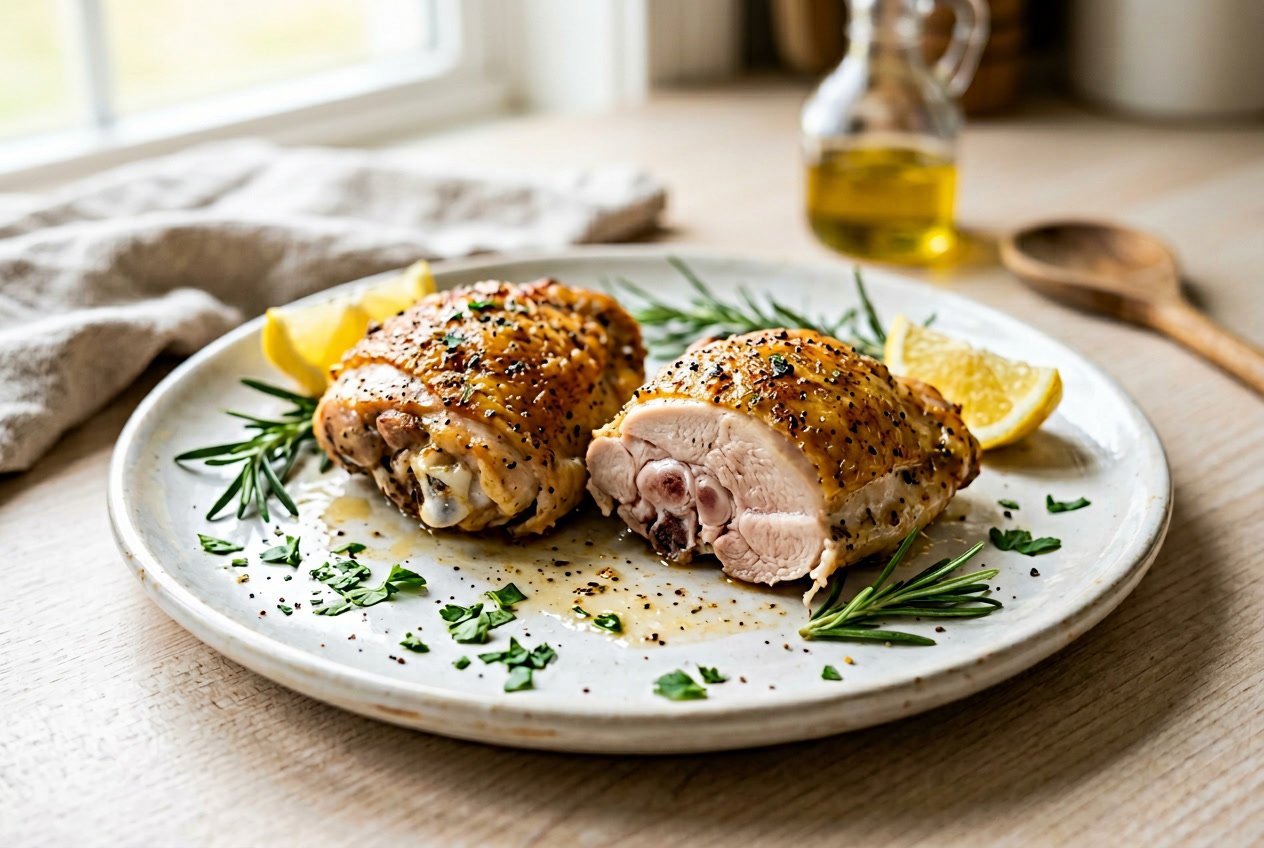
Color can mislead when judging doneness. Factors like myoglobin and bone pigments cause persistent pinkness.
You should focus on temperature-first checks and practical handling tips to keep meals juicy and safe.
Can Chicken Thighs Be Slightly Pink When Cooked?
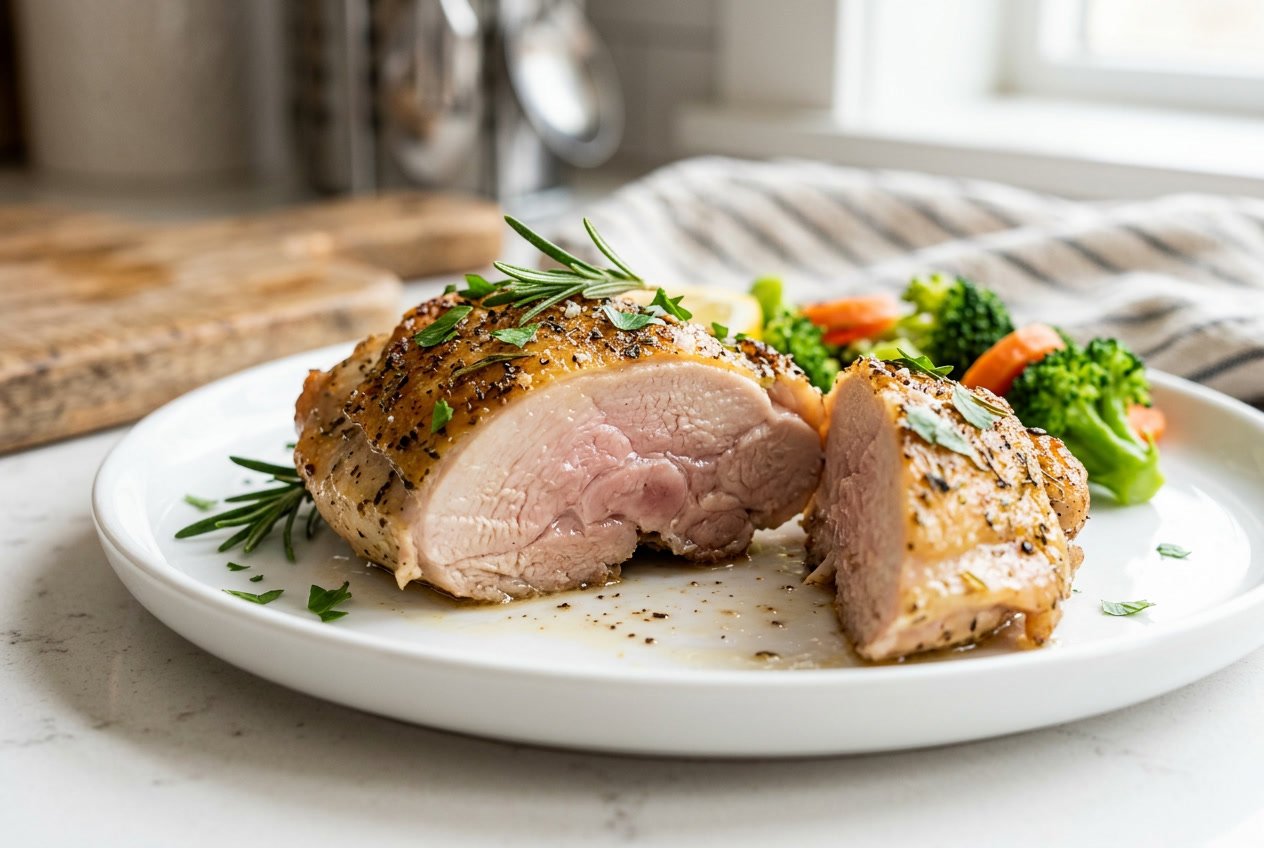
You can safely see a faint pink color in chicken thighs even when they reach a safe internal temperature.
Muscle pigments, bone effects, and cooking methods all affect color without necessarily indicating danger.
Why Pinkness Can Be Safe
Myoglobin, a muscle protein more concentrated in dark meat, often causes pink in chicken thighs.
Myoglobin can retain a pinkish hue after cooking, especially near the bone where heat penetration is slower.
If you use a probe thermometer in the thickest part of the thigh (avoiding bone) and it reads 165°F (74°C), the meat is safe regardless of slight pink color.
Other factors include younger birds, exposure to carbon monoxide in smoked or processed products, and residual bone marrow pigments.
Texture and clear juices can help as secondary checks, but they’re not as reliable as a thermometer.
Common Misconceptions About Pink Chicken
You might assume pink automatically means undercooked, but that’s not always true for thighs.
Dark meat naturally holds more pigment than breast meat, so thighs often look pink even after reaching the safe temperature.
Overcooking to eliminate pinkness can dry out the meat and reduce flavor.
Another misconception is that pink juices equal danger.
Juices can appear slightly tinted if they mix with myoglobin or marrow near the bone.
If you’re without a thermometer, check firmness and that juices run mostly clear, but using a thermometer removes doubt and prevents unnecessary overcooking.
Internal Temperature: The Gold Standard for Chicken Safety
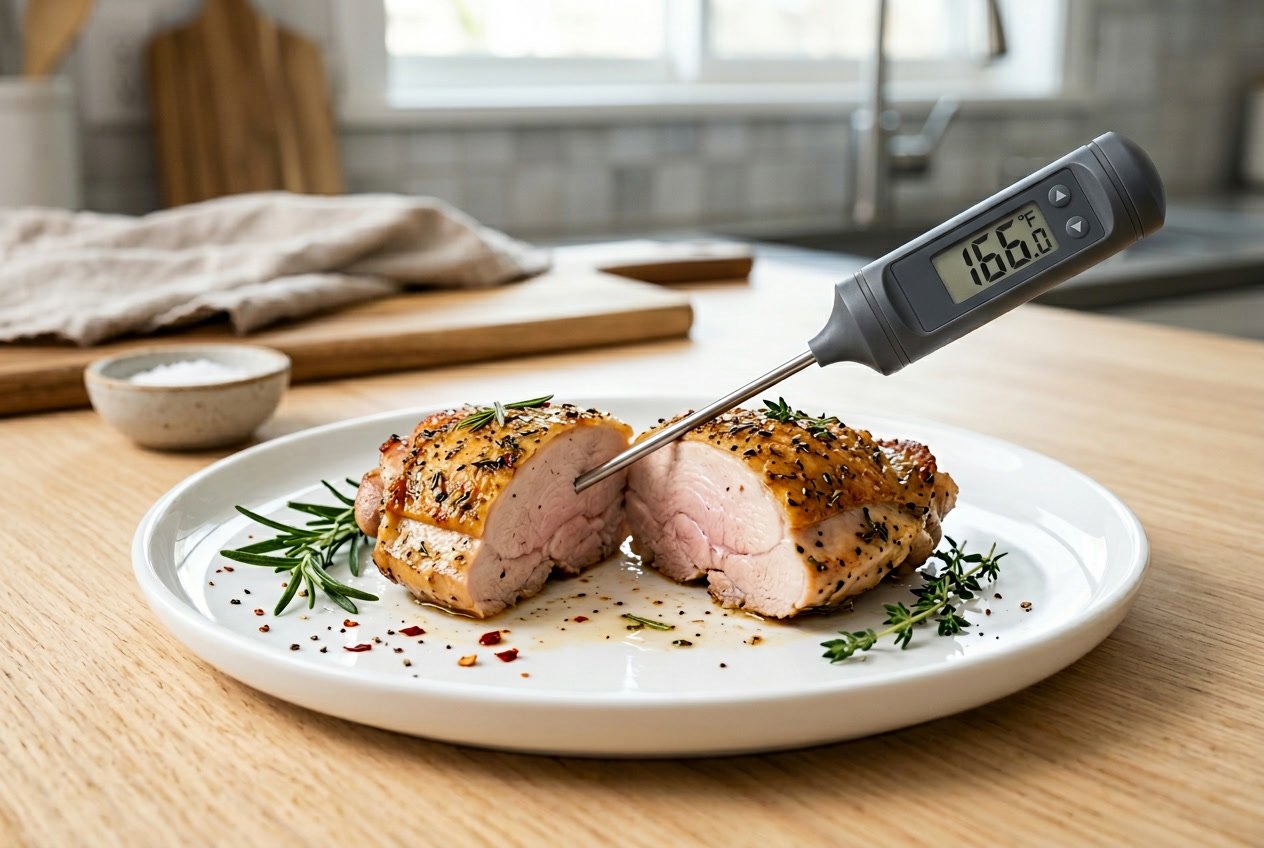
Internal temperature gives objective proof that chicken is safe and achieves the doneness you want.
Measure the thickest part of the thigh with a reliable thermometer and allow for a few degrees of carryover while the meat rests.
How to Properly Measure Internal Temperature
Use an instant-read digital meat thermometer for quick, accurate readings.
Insert the probe into the thickest part of the thigh, aiming toward the bone without touching it, since bone contact gives falsely high readings.
For bone-in thighs, approach from the side so the tip reaches the center of the muscle.
Take readings from at least two spots if pieces vary in size.
Wipe the probe clean between checks to avoid cross-contamination.
Check temperature toward the end of cook time rather than relying on color or juices.
The Importance of the 165°F (74°C) Rule
The USDA safety threshold for poultry is 165°F (74°C) measured in the thickest part.
Reaching 165°F kills Salmonella and Campylobacter quickly, so aim for that minimum in every thigh.
Dark meat can tolerate higher final temperatures for more tender, fall-apart texture, but you should still confirm it reached 165°F first.
Carryover cooking raises meat temperature by 1 to 3°F after you remove it from heat.
Let thighs rest 5 to 10 minutes under loose foil so juices redistribute and the final internal temperature stabilizes.
What Causes Chicken Thighs to Stay Pink After Cooking?
You may see a pink tint in cooked thighs even when they are safe to eat.
Several specific factors—muscle pigments, bone-related pigments, and ingredients used before cooking—explain why color can persist.
Role of Myoglobin in Meat Color
Myoglobin is the oxygen-carrying protein in muscle that gives dark meat its deeper color.
Thighs contain more myoglobin than breast meat, so they start darker and can retain a rosy hue after cooking.
Heat changes myoglobin’s structure, which usually turns meat brown or tan.
Complete denaturation depends on temperature and time at the center of the meat.
If the center briefly reaches 165°F (74°C) and rests, myoglobin may not fully shift color, leaving a slight pink band.
Trust a probe thermometer over visual cues.
Insert it into the thickest part away from bone.
If it reads 165°F or higher, the myoglobin color doesn’t indicate a safety problem.
Bone Marrow and Pigment Leakage
Bones can release hemoglobin and marrow pigments into adjacent meat during cooking.
Younger birds and those with less calcified bones show more leakage because their bone tissue is more porous.
This pigment transfer often appears as pink or reddish coloring near the bone, not as an indicator of undercooking.
The effect increases with longer roasting or when high heat causes marrow to leach out.
When checking doneness, angle the thermometer so it doesn’t touch bone.
A safe internal temperature in the meat, not bone color, proves the thighs are cooked through.
Effects of Brining and Marinating
Salt-based brines change the protein structure in meat, increasing water retention and sometimes stabilizing pink pigments.
A brined thigh can look pinker after cooking because the salt reduces myoglobin denaturation and keeps the meat more translucent.
Acidic or colored marinades—like those with soy sauce, citrus, or curing salts—can also alter surface and internal color.
Curing salts (nitrites) in particular bind to myoglobin and produce a persistent pink color even after thorough cooking.
If you want to avoid pinking, skip curing salts and shorten brine times.
Otherwise, rely on temperature checks: brined or marinated thighs must still reach 165°F in the thickest part to be safe.
Visual and Textural Clues: Should You Trust Them?
You can use juices and texture as quick checks, but they are imperfect.
Measure temperature when in doubt; these clues help you decide whether to probe further.
Juices Run Clear: What It Really Means
Clear juices often indicate the outer layers of meat reached a high enough temperature to release water and proteins.
If juices are clear from a cut near the thickest part, that’s a helpful sign—but not definitive.
Pink or slightly reddish juices near the bone can come from bone marrow or pigment, especially in younger birds, and do not always mean undercooking.
If juices still look bloody or thick and red when you cut into the center, the meat likely hasn’t reached a safe internal temperature.
Use this checklist when inspecting juices:
- Clear or pale yellow juices: likely done, but confirm with a thermometer.
- Thin pink tint near the bone: can be normal in dark meat.
- Thick red or bloody juices from the center: continue cooking.
Texture and Firmness as Doneness Indicators
Texture gives practical feedback: properly cooked thighs feel springy and slightly firm when pressed, not soft and gelatinous.
Overcooked thighs become dry and stringy; undercooked meat feels very soft and resists pulling away from the bone.
Combine tactile checks with visual cues: press the thickest part with tongs or a fork and note resistance and juice color.
For reliable doneness, insert a digital probe into the thickest part away from bone; 165°F (74°C) is the safety target.
Rely on texture only as a rough guide—temperature confirms whether the color and juices reflect safe cooking.
Food Safety Risks: Salmonella and Other Bacteria
You need to know which pathogens pose the greatest risk and how cooking kills them so you can judge safety by temperature, not color.
Focus on Salmonella and Campylobacter, the symptoms they cause, and the cooking practices that destroy them.
Dangers of Undercooked Chicken
Eating undercooked chicken can expose you to Salmonella and Campylobacter, the two bacteria most commonly linked to poultry.
Infections often cause diarrhea, abdominal cramps, fever, and vomiting within 6 to 72 hours of exposure, and severe cases may require hospitalization.
You increase risk if you eat meat that hasn’t reached a safe internal temperature, if cross-contamination occurs in your kitchen, or if you serve vulnerable people (young children, older adults, pregnant people, or immunocompromised individuals).
Handling raw thighs without washing hands or utensils can transfer bacteria to salads, countertops, or ready-to-eat foods.
Use a clean thermometer, avoid tasting meat before it reaches 165°F (74°C), and store and refrigerate cooked chicken within two hours.
These actions reduce the chance of foodborne illness more reliably than judging doneness by color.
How Pathogens Are Destroyed in Cooking
Heat kills bacteria by denaturing their proteins and disrupting cell membranes.
The key is reaching and holding the required internal temperature.
For poultry, the USDA standard is 165°F (74°C) measured at the thickest part of the thigh, away from bone.
Insert the thermometer into the deepest muscle, not touching bone or fat, and verify several spots on larger pieces.
Rest time matters: carryover heat continues to raise internal temperature for a few minutes, helping ensure pathogens are inactivated throughout the meat.
Lower temperatures held longer can also reduce bacteria, but they require precise control and are riskier for home cooks.
For everyday practice, target 165°F, avoid cross-contamination, and reheat leftovers to 165°F to prevent Salmonella or Campylobacter from surviving or regrowing.
Safe Cooking and Handling Practices for Chicken Thighs
Follow clear temperature targets and strict hygiene so your chicken thighs are safe and still juicy.
Use a reliable meat thermometer and control cross-contact, storage times, and reheating temperatures.
Preventing Cross-Contamination in the Kitchen
Always treat raw chicken as a high-risk item.
Use a dedicated cutting board and utensils for raw poultry and wash them with hot, soapy water or in the dishwasher after use.
Wash your hands for 20 seconds after handling raw chicken and again before touching other ingredients or surfaces.
Keep raw chicken and its juices away from ready-to-eat foods like salads, bread, or cooked vegetables.
Store raw thighs on the lowest refrigerator shelf in a sealed container to prevent drips.
When marinating, do so in the fridge and discard any marinade that touched raw chicken unless you boil it for at least one minute before reuse.
Use a meat thermometer in the thickest part of the thigh, avoiding bone, to confirm doneness at 165°F (74°C).
Checking multiple spots on larger thighs reduces the chance of undercooked pockets.
Proper Storage and Reheating Guidelines
Refrigerate cooked chicken thighs within 2 hours of cooking. Reduce that to 1 hour when ambient temperature exceeds 90°F (32°C).
Store chicken in shallow, airtight containers to cool quickly and limit bacterial growth. Consume refrigerated cooked chicken within 3–4 days.
Freeze chicken for longer storage at 0°F (-18°C). Label packages with the date and use within 4 months for best quality.
When reheating, heat chicken to an internal temperature of 165°F (74°C) before serving. Use an oven, stovetop, or microwave and check the temperature in the thickest part.
If you reheat chicken in a microwave, cover it and stir or rotate pieces to avoid cold spots. Do not reheat more than once. Discard leftovers that have been reheated already or stored beyond recommended times.


