
Can Chicken Thighs Be Pink When Cooked? Safety, Color & Doneness
You might notice pink in cooked chicken thighs and worry they’re unsafe. Color alone doesn’t determine doneness.
If the thickest part of the thigh reaches 165°F (74°C) or higher on an instant-read thermometer, the meat is safe to eat even if a pink hue remains.
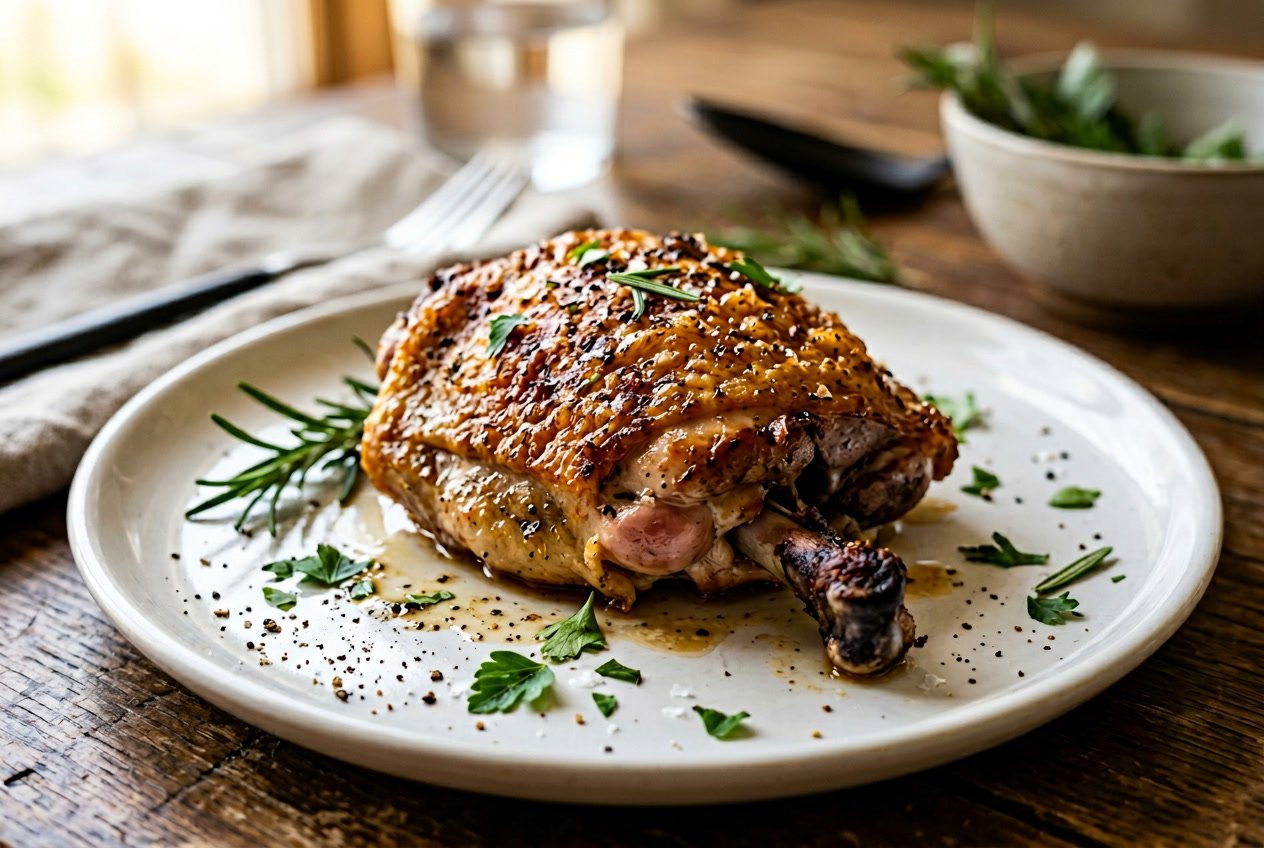
Thighs can stay pink due to myoglobin, bone marrow pigments, gas exposure, and acidity. Reliable ways to test doneness go beyond appearance.
You’ll find guidance on safe internal temperatures, food-safety risks, and practical cooking techniques that keep thighs juicy and safe.
Why Chicken Thighs Can Be Pink When Cooked
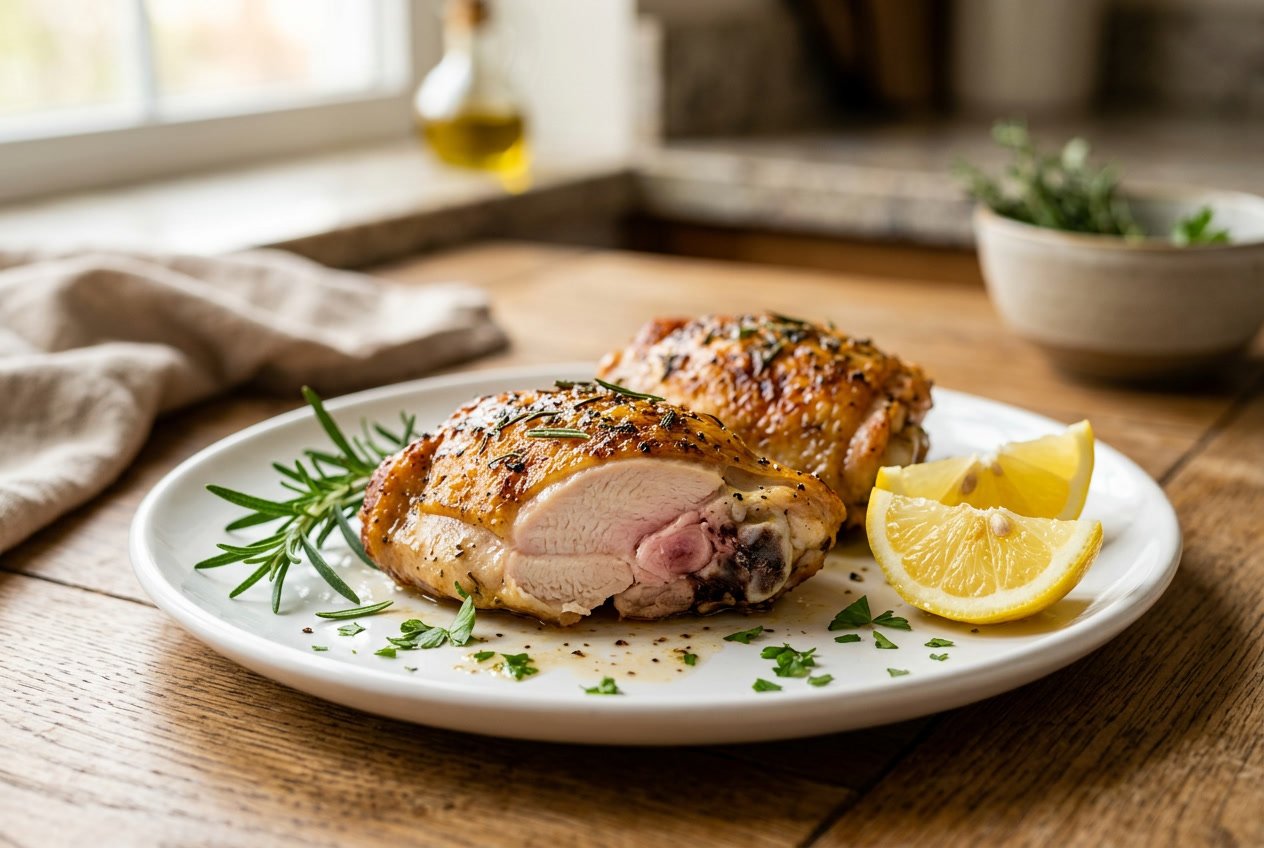
Pink in cooked thighs often appears even when they are safe to eat. The color comes from specific proteins and pigments near the bone, and cooking reactions affect dark meat differently than white meat.
The Science Behind Chicken Color
Proteins and chemical reactions, not just temperature, cause color changes in cooked chicken. Myoglobin, an iron-containing protein in muscle, alters how meat absorbs light as it heats.
Denaturation of myoglobin usually turns meat from reddish to tan or gray, but the exact temperature and pH at which this happens vary. You should measure internal temperature rather than rely on color.
The USDA recommends 165°F (74°C) for safety. Dark meat like thighs often stays juicier when cooked to higher temperatures because connective tissues and collagen need more heat to break down.
The bird’s age, diet, and whether it was brined or smoked change myoglobin behavior and can leave a pink hue.
Myoglobin and Dark Meat
Dark meat contains more myoglobin than white meat, so thighs naturally start with a darker tone. Myoglobin binds iron, which gives the muscle its red-pink color.
As you cook thighs, myoglobin’s structure changes, but sometimes it doesn’t fully change to the pale color you expect at the same temperature white meat does. You should expect some variability.
Well-cooked thigh meat can still show pink because myoglobin denaturation depends on acidity and heat exposure. Brining, acidic marinades, or slow cooking can shift the color outcome without meaning the meat is unsafe.
Use an instant-read thermometer inserted into the thickest part, avoiding bone, to confirm doneness.
Bone Marrow and Pinkness
Bones and marrow can cause pinking near the bone even after the meat reaches safe temperatures. Young chickens have more porous bones.
During cooking, marrow pigments and hemoglobin can leach into surrounding tissue and tint it pink or gray-brown. If you see pink concentrated close to the bone, check internal temperature in the adjacent meat.
If the probe reads 165°F (74°C) or higher and juices run clear, the thigh is safe to eat despite the color. Gas ovens and grills can also deposit combustion gases like nitric oxide and carbon monoxide that react with myoglobin and produce a pink hue.
Safe Internal Temperature and Doneness for Chicken Thighs
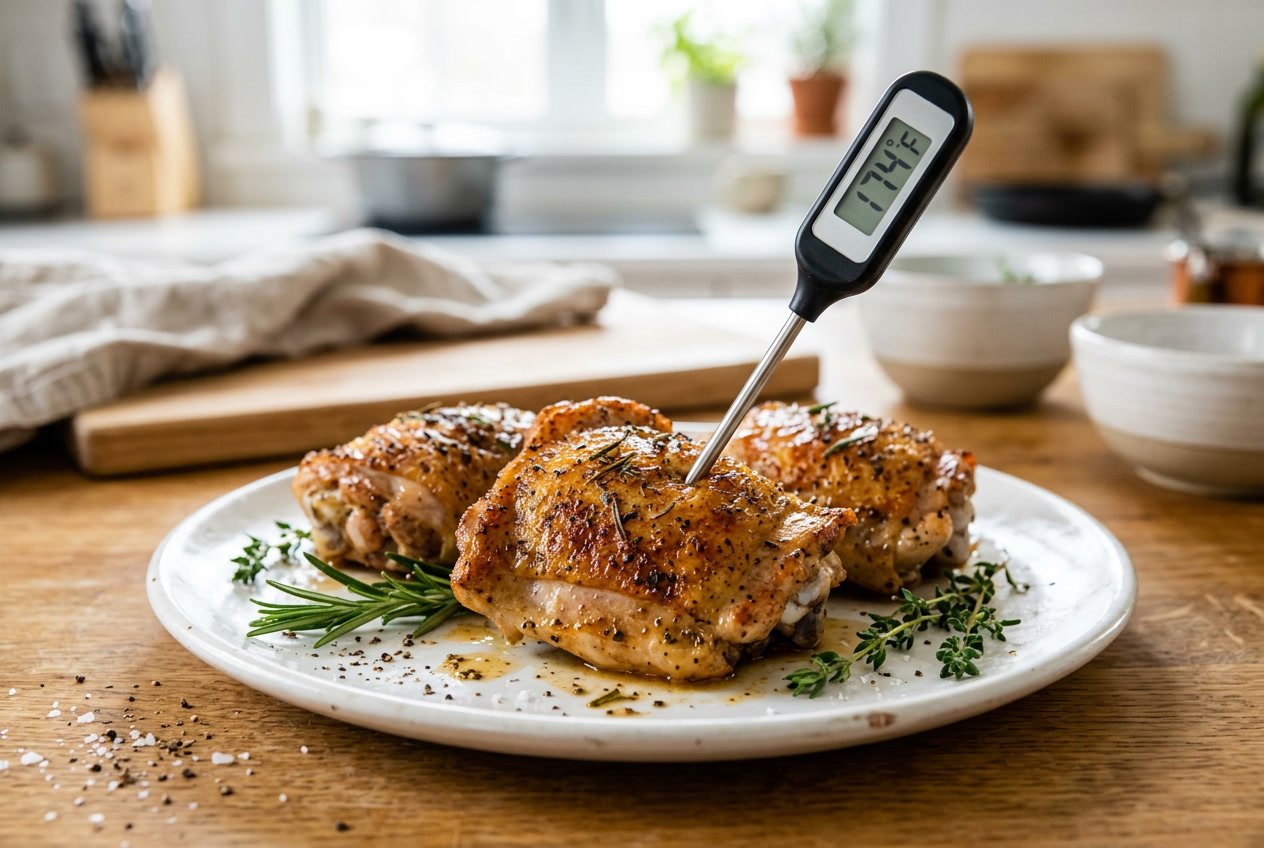
You need a clear temperature target and a reliable way to check it. Color alone can mislead you about safety and texture.
Follow precise temperature guidance and use a proper thermometer to confirm doneness without overcooking.
USDA Guidelines for Chicken
The USDA sets the safe minimum internal temperature for all poultry at 165°F (74°C) measured in the thickest part of the meat. For chicken thighs, insert the probe near the bone where the meat is thickest to get an accurate reading.
Reaching 165°F kills common pathogens like Salmonella and Campylobacter. After you remove thighs from heat, carryover cooking typically raises the temperature by 1–3°F.
Let the thighs rest 5–10 minutes. This allows juices to redistribute and brings the final internal temp up slightly.
If you reheat leftovers, bring them back to 165°F before serving.
Why Color Is Not a Reliable Indicator
Dark meat, including thighs and drumsticks, can remain slightly pink even when fully cooked to 165°F. Myoglobin and bone marrow can cause a pink or brown ring near the bone without indicating undercooking.
Visual cues such as clear juices or white meat are unreliable. Rely on temperature rather than color.
Using color as your main indicator risks unsafe meat or dry meat. Trust measured internal temperature for both safety and best texture.
How to Properly Use a Meat Thermometer
Use an instant-read digital thermometer for quick, accurate checks. Insert the probe into the thickest part of the thigh from the side, avoiding contact with bone or fat.
If the probe touches bone, move slightly until the tip sits wholly in the center of the meat. Check several pieces if sizes vary.
Aim for 165°F (74°C) at the thickest point. If the thermometer reads lower, return the thighs to heat and recheck after a few minutes.
Clean the probe with hot, soapy water between uses to prevent cross-contamination.
Food Safety Risks and Bacteria in Undercooked Chicken
Undercooked chicken can harbor bacteria that make you sick. Proper cooking and handling prevent contamination.
Keep raw juices away from ready-to-eat foods and always check internal temperature rather than color.
Salmonella and Campylobacter Concerns
Salmonella and Campylobacter are the two bacteria most commonly found in raw poultry. Salmonella can live in poultry intestines and on meat surfaces.
Campylobacter often contaminates raw chicken as well. Both survive if the chicken doesn’t reach a safe internal temperature.
Use a food thermometer to confirm a minimum internal temperature of 165°F (74°C) in the thickest part of the thigh, avoiding bone contact. That temperature reliably kills Salmonella and Campylobacter strains typically present in chicken.
Do not rely on pink color near the bone or pink juices. Those can persist even when the meat is fully cooked.
Control cross-contamination by using separate cutting boards and washing hands, utensils, and surfaces with hot, soapy water after handling raw chicken. Store raw poultry on the bottom shelf of your refrigerator and in a sealed container to prevent juices from dripping onto other foods.
Dangers of Foodborne Illness
If you eat undercooked chicken contaminated with Salmonella or Campylobacter, you risk gastrointestinal infection. Symptoms typically start 6–72 hours after exposure and commonly include diarrhea, abdominal cramps, fever, nausea, and vomiting.
Severity ranges from mild, self-limited illness to severe dehydration or bloodstream infection in people with weakened immunity. Seek medical care if you have high fever, persistent vomiting, bloody diarrhea, severe abdominal pain, or signs of dehydration.
Antibiotics may be necessary for severe infections or at-risk patients. Treatment depends on clinical evaluation and laboratory testing.
Factors That Influence Color in Cooked Chicken Thighs
Several practical reasons explain why cooked chicken thighs can retain a pink hue. How you cook them, what you soak them in, and the bird’s age or breed all play a role.
Each factor affects muscle pigments, surface reactions, or heat distribution in ways that change the final color.
Impact of Cooking Methods
The method you use changes how heat penetrates the thigh and how myoglobin and collagen react. High-heat searing or grilling creates a dark crust while the interior can stay pinker, especially near the bone where heat arrives more slowly.
Slow-roasting or braising heats the meat evenly and breaks down connective tissue, often producing uniformly brown or tan meat but sometimes concentrating pigments that appear pink. Smoking and curing introduce chemical reactions with smoke compounds and nitrites that can fix a pink color even after the meat reaches safe temperatures.
Use an instant-read thermometer in the thickest part of the thigh, avoiding bone contact, to confirm 165°F (74°C) rather than relying on color alone.
Effect of Marinades and Acidity
Marinades change surface chemistry and can influence color without affecting doneness. Acidic ingredients like lemon, vinegar, or yogurt partially denature proteins, which can alter how myoglobin reflects light and produce a pinker appearance after cooking.
Salt-based brines can cause the meat to hold moisture and look translucent, making pink hues more noticeable. Spice rubs, sugars, or smoke flavors create browning on the surface (Maillard reaction) that contrasts with any residual pink inside.
If you want less pink appearance, pat thighs dry before cooking. Avoid long acidic marinades immediately before high heat, and always verify temperature with a thermometer.
Age and Breed of Chicken
Younger birds and certain breeds naturally produce darker or more intensely colored thigh meat. Younger chickens often have lower intramuscular fat and slightly different myoglobin levels, which can make the cooked meat look pinker than meat from older birds.
Heritage or free-range breeds can also show deeper pigments because of muscle use and diet. Bone pigmentation and marrow length matter too.
Close-to-bone meat can remain pink because bone tissue and marrow change heat transfer and react with myoglobin during cooking. If you frequently notice pink near bones, try longer cooking times or higher oven temperatures while checking internal temperature to maintain safety.
Techniques to Test Chicken Thigh Doneness
Use specific sensory checks and timing to verify doneness. Rely on temperature when in doubt.
Focus on clear juices, meat texture, and the effect of resting time on final internal temperature.
Checking Juices and Texture
Poke the thickest part of the thigh with a clean knife or instant-read thermometer probe. If the juices run clear (no pink or bloody streaks), that is a good sign, but not definitive.
Clear juices usually accompany a safe internal temp. Press the meat with your finger or tongs—fully cooked thigh meat feels firm with slight spring, not soft or gelatinous.
Avoid using color alone. Thighs can remain slightly pink near bone despite reaching 165°F (74°C).
Insert a thermometer into the thickest part, avoiding bone, and wait for a steady reading. If you see pink juices or very soft texture, continue cooking and check every few minutes until juices are clear and texture firms.
For pan-seared pieces, slice into one thigh to inspect juices when in doubt.
Resting Time and Carryover Cooking
Let cooked thighs rest on a plate or cutting board for 5–10 minutes before slicing. Resting allows juices to redistribute so they won’t immediately run away when you cut.
This pause also lets carryover cooking raise the internal temperature by about 3–7°F (2–4°C). Remove thighs from heat when they are a few degrees below 165°F if you want to avoid overcooking.
Account for cooking time when planning. Bone-in thighs take longer and gain more from carryover cooking than boneless pieces.
Use resting time to tent loosely with foil. Don’t seal tightly, which traps steam and can make skin soggy.
After rest, recheck firmness and juices. Clear juices and a stable 165°F internal temp confirm doneness.
Best Practices for Cooking and Handling Chicken Thighs
Target safe internal temperatures, use reliable tools, and store cooked thighs promptly to reduce risk. Follow clear steps for different cooking methods and keep raw and cooked items separate.
Safe Cooking Temperatures for Different Methods
Use a calibrated instant-read thermometer and insert it into the thickest part of the thigh, avoiding bone. The USDA minimum safe temperature for all poultry is 165°F (74°C).
For bone-in, skin-on thighs you can aim slightly higher—175–185°F (79–85°C)—to break down connective tissue and get more tender meat. Pan-sear then finish in a 400°F oven for 20–25 minutes for average-sized bone-in thighs, or roast at 425°F for 25–35 minutes for crispy skin.
Boneless thighs typically finish faster. Plan on 18–25 minutes at 400°F depending on thickness.
When cooking from frozen, increase time and confirm 165°F in the thickest spot. Rest cooked thighs 5–10 minutes.
Carryover heat evens temperature and redistributes juices, which helps you judge doneness beyond color alone.
Preventing Cross-Contamination and Proper Storage
Keep raw chicken separate from ready-to-eat foods.
Use one cutting board for raw poultry and another for vegetables or bread. Wash and sanitize boards, knives, and hands thoroughly after contact with raw thighs.
Refrigerate cooked chicken within two hours of cooking. If the ambient temperature is above 90°F, refrigerate within one hour.
Store chicken in shallow, airtight containers to cool quickly. Keep refrigerated cooked thighs for up to 3 days at 40°F (4°C) or below. Freeze for up to 4 months for best quality.
When reheating, heat chicken to 165°F (74°C) throughout. Thaw frozen thighs in the refrigerator or under cold running water. Never thaw at room temperature to prevent bacterial growth.

