
Can Chicken Thighs Be Pink and Cooked? Safety and Color Explained
You can safely eat chicken thighs that still show a pink tint if they reach the proper internal temperature. Use a meat thermometer to confirm the thickest part of the thigh hits 165°F (74°C). Color alone won’t tell you if it’s safe.
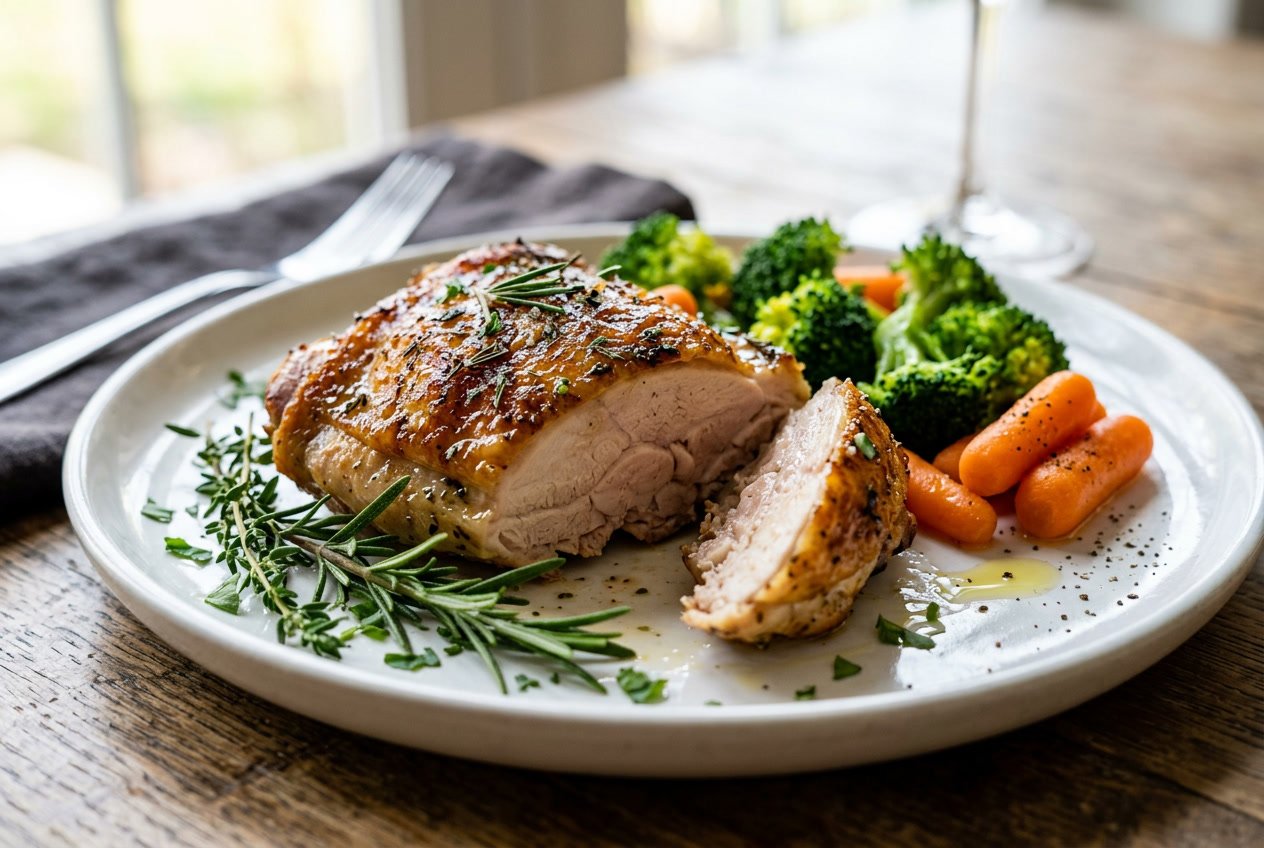
Dark meat can stay pink after cooking, depending on the method and other factors. Judge doneness by temperature, texture, and juices rather than appearance.
Why Cooked Chicken Thighs Can Be Pink
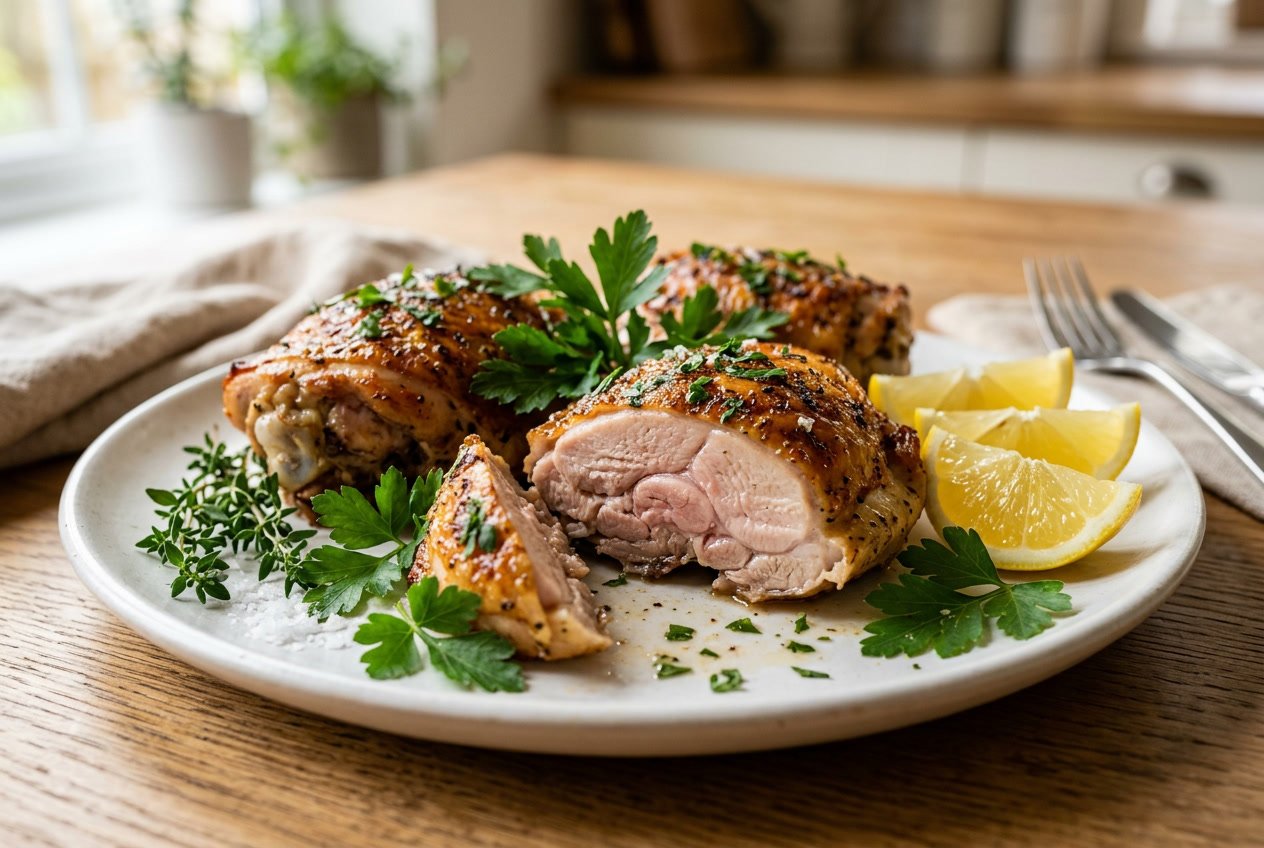
Thighs sometimes stay pink even when safe because of differences in meat type and bone proximity. Clear juices can help indicate doneness.
Understanding Myoglobin in Chicken Thighs
Myoglobin is an oxygen-binding protein concentrated in muscle fibers. Darker muscles, like those in thighs, contain more myoglobin than breast meat, giving the meat a pinkish color when heated.
Myoglobin changes color as it denatures with heat, but it does not always turn completely white at safe cooking temperatures. You can see a persistent rosy hue in the center of a thigh even after it reaches 165°F (74°C).
Brining, smoking, or roasting at lower temperatures can intensify the pink tone. Knowing about myoglobin helps you avoid overcooking and keeps thighs juicy.
Differences Between Dark Meat and White Meat
Dark meat and white meat come from different muscle types. Thigh muscles do more sustained work, so they store more myoglobin and fat, while breasts have less myoglobin and appear pale when cooked.
The higher fat content in thighs helps them stay moist during cooking. That same fat and myoglobin combination can produce a pink tint that doesn’t mean undercooked.
Texture also differs: cooked thighs remain slightly firmer and more succulent, while overcooked breast quickly dries and whitens. Use a probe thermometer set to 165°F (74°C) for both, but expect thighs to retain more color even at the correct temperature.
The Influence of Bone and Juices
Bone-in thighs often look pinkest near the bone because bone marrow and slower heat transfer affect nearby tissue color. Bones conduct heat differently, so meat next to marrow can retain pigments longer than the outer muscle.
Insert the thermometer into the thickest part of the thigh, avoiding contact with bone. If the juices run clear rather than pink or red, that supports the temperature reading.
Smoking or using acidic marinades can alter surface color independent of doneness. Trust thermometer readings and the clarity of juices over meat color.
Food Safety and Doneness
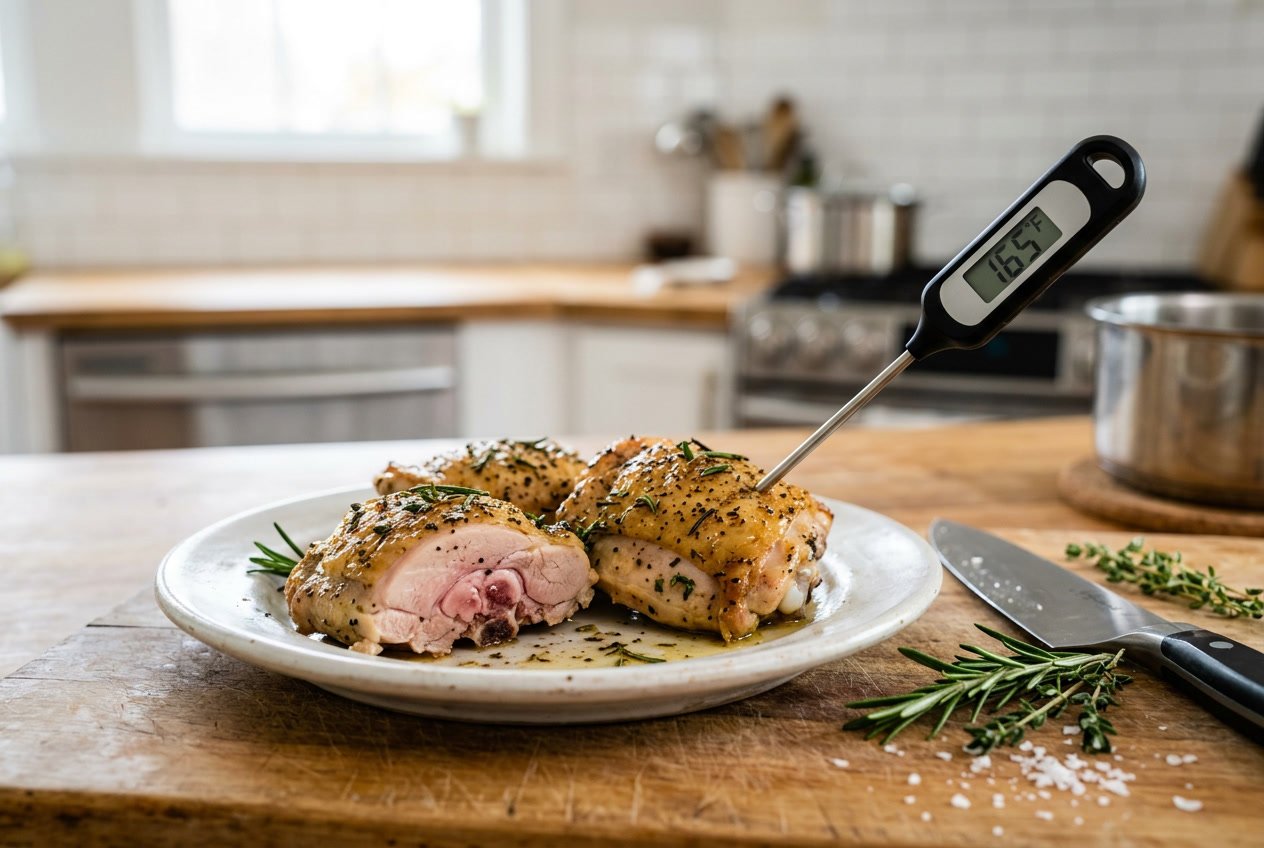
Rely on temperature, proper handling, and correct tools to judge doneness. Cook to the right internal temperature and use a meat thermometer to confirm safety.
Safe Internal Temperature for Chicken Thighs
Cook chicken thighs until the thickest part of the meat (not touching bone) reaches at least 165°F (74°C). That temperature kills common pathogens found in poultry.
Insert a digital probe into the center of the thigh, angle the tip away from bone, and wait for a steady reading. If a thigh reads below 165°F, continue cooking and recheck after a few minutes.
After removing from heat, rest the thighs for several minutes. Carryover heat can raise the internal temperature slightly and redistribute juices.
Check several pieces when cooking multiple thighs. Never rely on surface browning or firmness alone to determine doneness.
Salmonella, Campylobacter, and Foodborne Illness Risks
Salmonella and Campylobacter are the two most common bacterial risks in raw or undercooked chicken. These bacteria can cause nausea, diarrhea, fever, and more serious complications.
Undercooked chicken allows these pathogens to survive. Reaching 165°F in the thickest part of the thigh reduces their numbers to safe levels.
Cross-contamination also raises risk. Keep raw juices away from ready-to-eat foods, wash hands and surfaces after handling raw poultry, and never rinse raw chicken.
Store cooked thighs in shallow containers and refrigerate within two hours. Reheat leftovers to 165°F before eating.
Using a Meat Thermometer vs. Visual Cues
A meat thermometer gives a definitive answer; visual cues do not. Pink near the bone, smoky rings, or slightly rosy meat can occur even when the thigh has reached 165°F because of myoglobin, bone marrow pigments, or smoking processes.
Use a digital instant-read or leave-in probe thermometer and test the thickest part without touching bone. Calibrate your thermometer if possible, test multiple pieces, and allow the probe to stabilize before recording the temperature.
Visual checks—clear juices and firm texture—can help but should never replace temperature measurement. If juices run pink or a center looks translucent, keep cooking until your thermometer confirms 165°F.
Factors Affecting Chicken Thigh Color
Several controllable and natural factors change the appearance of cooked thighs. Cooking method, ingredients, and the bird’s background can all influence pinkness.
Cooking Methods and Pinkness
Different methods produce different reactions in myoglobin and surface pigments. Grilling and smoking introduce smoke compounds that bind myoglobin, often creating a persistent pink smoke ring or surface tint even when the interior reaches 165°F.
High, direct heat like searing or frying browns the exterior quickly but can leave the interior slightly pink if heat hasn’t penetrated evenly. Roasting at moderate oven temperatures encourages more uniform doneness, but meat near bones can remain pink because bone slows heat transfer.
Braising and slow-cooking at low temperatures can preserve a pinkish hue because myoglobin denatures more gradually. Use an instant-read thermometer in the thickest part, avoiding bone contact, to confirm safety.
Brining, Marinating, and pH Levels
Salt brines and many commercial marinades affect water retention and pigment stability. Brining increases moisture and can make cooked meat appear darker or slightly pinker because retained juices reflect light differently.
Marinades containing soy, vinegar, or nitrites interact with myoglobin and can fix a pink color. Acidic marinades like vinegar or citrus change protein structure and may lighten or tighten meat fibers, altering perceived color.
If you want to avoid pinkness, skip nitrite-containing products and rinse heavy marinades before cooking. Always verify internal temperature to ensure safety.
Age and Breed of Chicken
Younger birds and certain breeds show naturally darker or pinker cooked meat. Chickens raised for rapid growth often have different muscle composition and fat levels than heritage breeds.
Younger chickens typically have less fat and a slightly more pronounced pink tone after cooking. Dark meat muscles (thighs) contain more myoglobin than breast meat, so thighs will naturally retain deeper color.
Bone porosity and marrow content in younger birds can leach pigments into adjacent meat during cooking, increasing pinkness near the bone. If you cook older or pasture-raised birds, expect subtle color differences due to activity level and diet, but follow the same 165°F rule regardless of appearance.
Best Practices for Cooking Chicken Thighs Safely
Use an instant-read or probe thermometer. Manage heat so thighs cook evenly and handle and store cooked thighs to limit bacterial growth.
How to Use and Calibrate a Meat Thermometer
Use an instant-read or leave-in probe for accuracy. Insert the probe into the thickest part of the thigh without touching bone.
For bone-in thighs, aim for 175–185°F for best texture, or 165°F minimum for safety. Boneless thighs commonly finish at 165–175°F.
Calibrate your thermometer regularly. Do a simple ice-point check by placing the probe in an ice-water slurry and confirm it reads 32°F (0°C). Clean the probe with hot, soapy water between uses.
When using a probe during roasting, account for carryover cooking. Internal temp can rise 5–10°F after you remove thighs from heat. Pull thighs from the oven slightly below your target if you want a precise finish after resting.
Ensuring Even Cooking and Resting
Arrange thighs in a single layer with space between pieces so hot air or oil circulates evenly. For oven roasting, use a rack over a sheet pan to crisp skin and expose all sides to heat.
For pan-searing, use medium-high heat to brown skin, then lower heat to finish through. Check temperature in two or three thighs, especially if sizes vary.
After cooking, rest thighs 5–10 minutes on a warm plate or rack. Resting lets juices redistribute and completes carryover cooking, improving juiciness and ensuring the final internal temperature stabilizes.
If you plan to reheat, slice or flatten pieces to reheat evenly, and bring them to 165°F internal before serving.
Safe Cooking Practices and Storage
Handle raw thighs with separate utensils and cutting boards to prevent cross-contamination. Thaw frozen thighs overnight in the refrigerator or in cold water changed every 30 minutes.
Cooked thighs should go into shallow containers and refrigerate within two hours. Store cooked chicken in the fridge at 40°F (4°C) or below and use within 3–4 days. Freeze for longer storage up to four months for best quality.
When reheating from frozen, thaw in the fridge and reheat to 165°F throughout. Discard marinades that contacted raw chicken unless you boil them first.
When reheating leftovers, heat evenly to 165°F and avoid warming on low heat for long periods.
Understanding Visual and Textural Cues
You need reliable, observable signs to judge doneness when color alone misleads. Focus on juices, texture, and how the meat responds when probed or pulled.
Juices Run Clear Versus Pink
When you cut into the thickest part of a thigh, look at the juices first. Clear juices usually indicate the muscle fibers have coagulated and released water.
Use a small knife to make a shallow cut near the bone and watch the liquid color. If juices are watery and clear, the meat has likely reached safe doneness. Always verify with an internal thermometer at 165°F (74°C).
If juices are pink and the thermometer reads below 165°F, continue cooking. Smoked or brined thighs can show pink juices even at safe temperatures; in those cases, the thermometer is decisive.
Texture, Firmness, and Pull-Apart Signs
Feel and texture tell you a lot. Fully cooked chicken thighs feel noticeably firmer than raw meat, but they still yield slightly when pressed.
Test by inserting a fork into the thickest part and twisting gently. Cooked dark meat will pull apart along the grain and the muscle will separate easily.
If the meat resists or looks translucent inside, keep cooking. Combine these tactile checks with clear juices and a thermometer for the most reliable confirmation of safe doneness.
Common Misconceptions About Pink Chicken Thighs
Pink color in cooked thighs often reflects meat chemistry, cooking method, or processing—not always undercooking. Check internal temperature and other signs rather than rely on color alone.
Pink Color vs. Undercooked Meat
Pink pigment in thighs comes largely from myoglobin and sometimes residual blood near the bone. Dark meat contains more myoglobin than breast meat, so a faint pink hue can persist even after the center reaches 165°F (74°C).
Use an instant-read thermometer in the thickest part without touching bone; that temperature is the definitive check for safety. Also look for clear juices and firm but springy texture; those support the thermometer reading.
Avoid judging doneness by color alone, especially if you brined or marinated the chicken, as salt and acids can change meat color without affecting safety.
Safe Leftover and Smoked Chicken
Smoke often reacts with myoglobin in chicken and creates a pink ring. This is normal and not a food-safety issue if the internal temperature reached 165°F during cooking.
If you refrigerate leftovers below 40°F within two hours, you can safely eat them for 3–4 days. Reheat leftovers to 165°F before serving.
If cooked thighs smell sour or feel slimy, discard them. You should also throw them away if they were left at room temperature for over two hours.
When you slice smoked or leftover thighs, use a thermometer to check doneness. Do not assume pink color means the chicken is unsafe.


