
Can Chicken Thighs Be Overcooked? Expert Guide to Juicy, Tender Results
You can overcook chicken thighs, but you can also deliberately cook them beyond 165°F to make them more tender if you use low, slow methods that convert collagen into gelatin.
If you want fall-apart, juicy thighs, aim for higher internal temperatures with gentle heat. If you want firm, sliceable meat, pull them earlier around the safe minimum.
This article explains why temperature and connective tissue matter. It covers common mistakes that make thighs tough or dry, how to recognize and fix overcooked pieces, and which cooking methods help you get the texture you want.
You’ll find clear, practical guidance for the stove, oven, grill, or slow cooker to control results every time.
Can Chicken Thighs Be Overcooked?
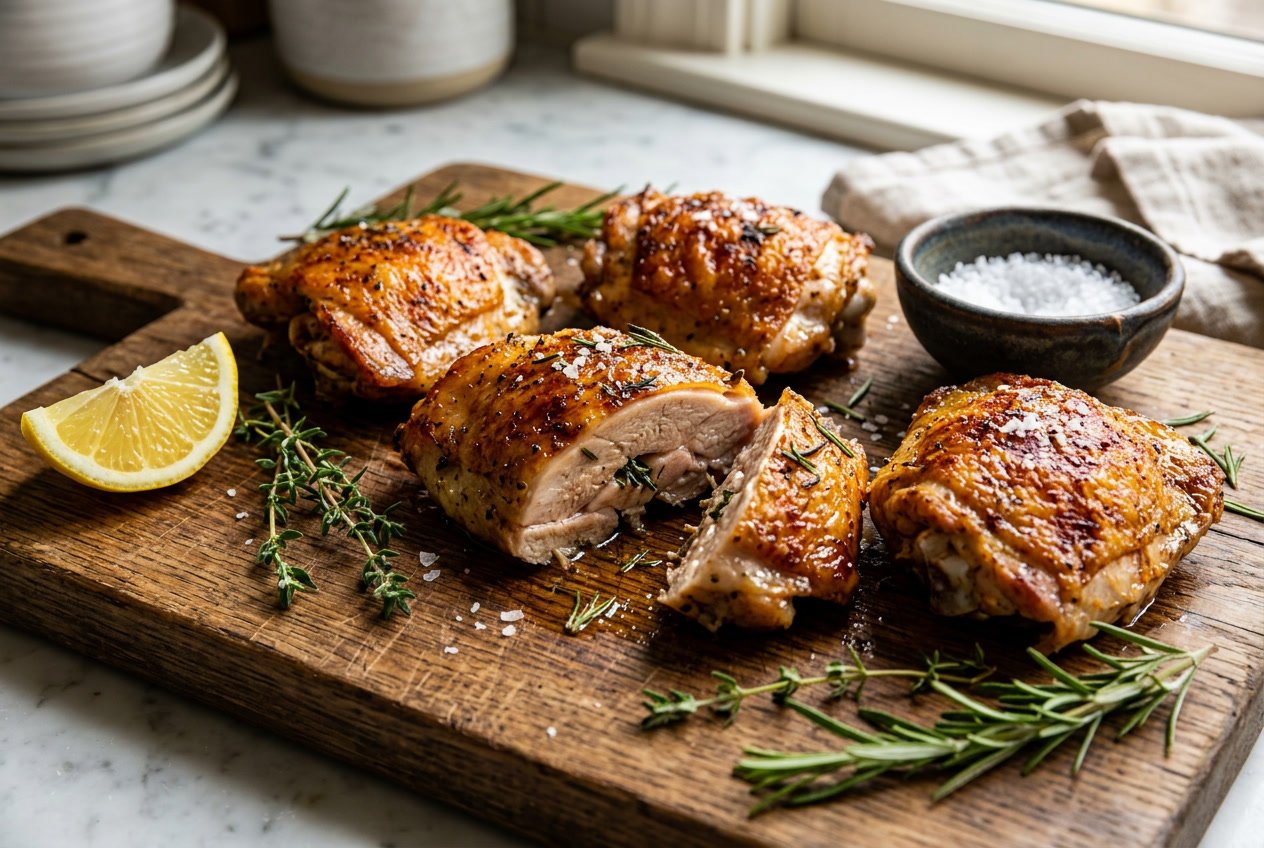
You can overcook chicken thighs, but “overcooked” can mean dry and chewy or intentionally cooked longer to break down connective tissue.
Know the visual cues, how texture changes with temperature, and how thighs differ from breasts.
What Overcooked Chicken Thighs Look Like
Overcooked chicken thighs often show two distinct appearances depending on technique.
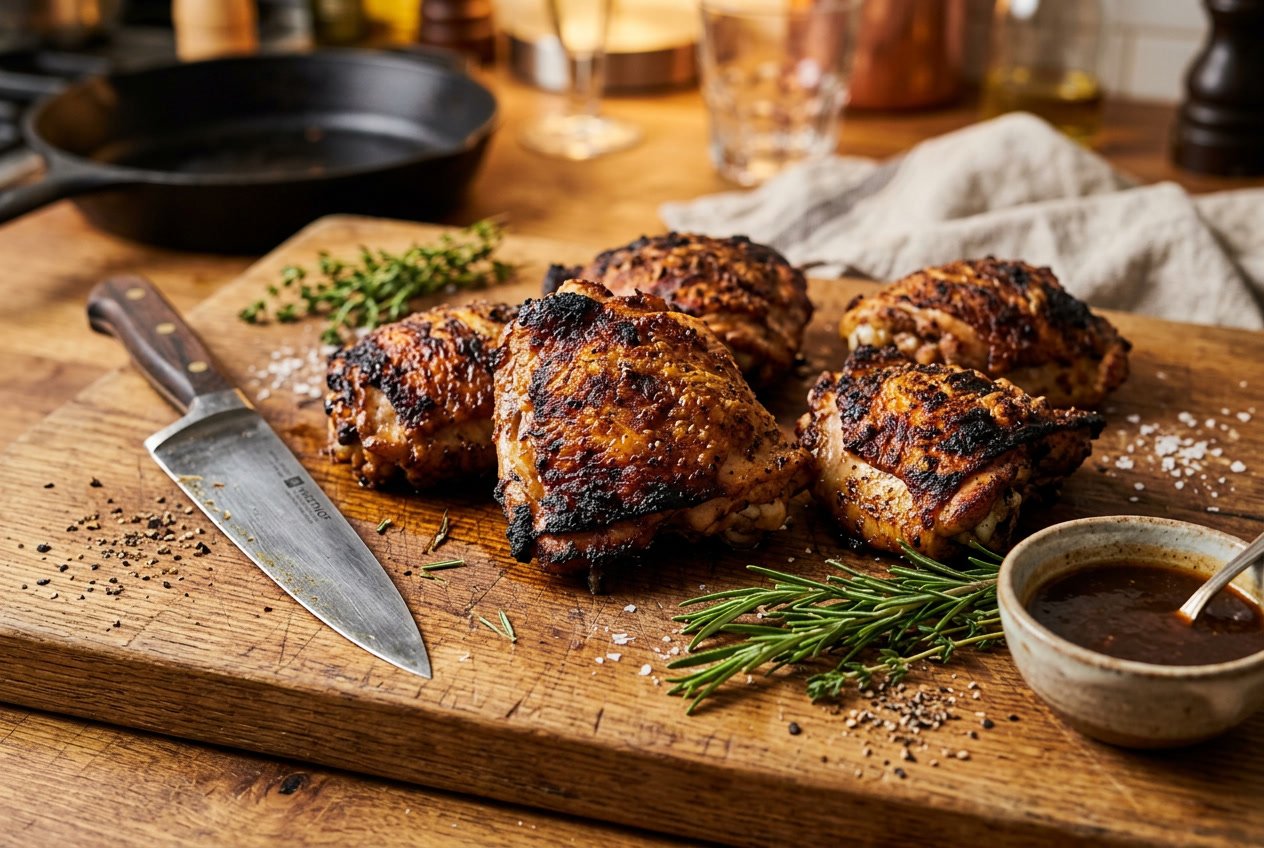
If you cook thighs quickly at high heat, the meat looks dry, stringy, and pale gray in the center with tight, shrunken fibers. The skin turns tough and leathery rather than crisp.
If you cook dark meat chicken low and slow past its ideal range without moisture, it can look dull and fibrous.
When you deliberately cook thighs longer to convert collagen to gelatin, the meat appears shredded, moist, and glossy. This is not “overcooked” in the negative sense but cooked to tenderness.
Use a thermometer and observe the meat’s pull from the bone. If juices run completely clear but the meat resists shredding and feels firm, you’ve likely overcooked it the unpleasant way.
How Overcooking Affects Texture and Flavor
Overcooking removes moisture from muscle fibers. This concentrates proteins and produces a dry, chewy texture.
This happens most often when thighs exceed recommended temperatures quickly or lose moisture during prolonged high heat.
Thighs contain more connective tissue and fat than breasts. Slow cooking at 175–195°F (79–90°C) melts collagen into gelatin, which increases juiciness and mouthfeel.
Short, high heat tends to dry the meat. Longer, gentle heat can improve tenderness and flavor by rendering fat and converting collagen.
Flavor also concentrates as moisture is lost, which can taste richer or harsher depending on technique.
Use braising, low roasting, or sous-vide to control moisture and avoid the unpleasant dryness associated with overcooking.
Differences Between Chicken Thighs and Chicken Breasts
Chicken thighs have more fat, connective tissue, and myoglobin than chicken breasts.
Those components make thighs more forgiving to higher internal temperatures and longer cook times.
Breasts dry out quickly because they lack collagen and fat. Pull breasts off heat close to 165°F (74°C) or lower for juiciness.
Thighs benefit from higher targets—often 175–195°F—if you want the collagen to break down. You can safely let thighs reach higher temperatures without the same leathery outcome typical of overcooked breasts.
Use shorter, gentler cooking for breasts. Consider low-and-slow or braising for thighs to take advantage of their connective tissue for tender, flavorful results.
The Science Behind Cooking Chicken Thighs
Thighs respond differently than breasts because of their structure. Certain temperatures change texture, and connective tissue turns into flavorful gelatin when cooked properly.
Role of Collagen and Connective Tissue
Chicken thighs contain more collagen and connective tissue than breast meat.
Collagen sits around muscle fibers and binds them together. When you heat it slowly, collagen breaks down into gelatin, which lubricates and softens the muscle, giving you tender chicken thighs.
If you cook thighs quickly at high heat, collagen doesn’t have time to melt and the meat can stay tough.
Bone-in thighs add thermal mass, slowing heat transfer and giving you more margin to convert collagen without drying the muscle.
Use moist or low-and-slow methods to encourage that conversion.
Optimal Internal Temperatures for Doneness
The USDA sets 165°F (74°C) as the minimum safe internal temperature for poultry.
For thighs, that number only guarantees safety, not peak tenderness. You often get better texture at higher internal temperatures because of progressive collagen breakdown.
Target zones:
- 165°F: safe and fully opaque, but still a bit firm.
- 175°F: more rendered fat and improved juiciness.
- 185–195°F: collagen has largely converted to gelatin; meat becomes tender and pulls from the bone.
Use an instant-read thermometer in the thickest part, avoiding the bone. Rest the thigh briefly to let residual heat even out the temperature.
Gelatinization and Tenderness Explained
Gelatinization is the transformation of collagen into gelatin under sustained heat and moisture.
Gelatin dissolves into cooking juices and coats muscle fibers, reducing friction and creating a silky mouthfeel in dark meat chicken.
The rate of gelatinization depends on both temperature and time.
Gentle heat (140–190°F over extended periods or sous-vide at controlled temps) lets collagen convert without over-drying muscle proteins.
Dry, fast heat can push muscle fibers to squeeze out moisture before gelatin forms, which makes thighs tough even if collagen is present.
Braise or slow-roast to allow gelatin formation. Finish with high heat or a quick sear if you want crisp skin while preserving tender, juicy interiors.
Common Causes of Overcooking Chicken Thighs
You often overcook chicken thighs because of timing, poor temperature checks, or using a method that drives out moisture.
Fixing one of these areas usually prevents dry, rubbery meat.
Cooking Time and Temperature Mistakes
Cooking times vary by size and whether the thighs are bone-in or boneless.
Bone-in thighs typically need longer—about 25–30 minutes at 400°F (200°C) in the oven. Boneless thighs often finish in 15–20 minutes.
If you rely on a single set time without adjusting for thickness or oven variance, you risk overcooking the thighs.
High direct heat for too long also strips moisture.
If you sear aggressively and then keep at high heat, the exterior cooks while the interior overcooks.
Use lower finishing temperatures or remove from direct heat once the surface browns.
Set a timer for check-points, not final doneness. Check earlier than you expect to avoid overshooting the safe internal target.
Inaccurate Temperature Monitoring
Guessing doneness by color or touch risks under- or overcooking.
Use a meat thermometer for accuracy. Insert it into the thickest part of the thigh without touching bone; aim for 165°F (74°C) as the minimum safe temperature.
Cheap or poorly calibrated probes give false readings. Test your thermometer in ice water (32°F/0°C) and boiling water (212°F/100°C at sea level) to confirm accuracy.
Instant-read thermometers read faster and reduce the time the meat spends losing heat during checks.
Pull the thighs at about 162–163°F if you want a juicier result, then rest them for a few minutes.
Choosing the Wrong Cooking Method
Some methods suit thighs better than others.
Slow braising and low-temperature roasting let collagen convert to gelatin, keeping meat tender.
Prolonged direct high heat—like continuous high-heat grilling or an overhot skillet—can overcook the interior while charring the outside.
Overcrowding a pan or baking tray causes steaming rather than searing, which muddies texture and encourages longer cook times.
Space pieces so air circulates and use a rimmed sheet or hot skillet to get a quick sear then finish at moderate heat.
If you use a slow cooker, avoid high settings for long periods on small pieces; they can disintegrate or dry out.
Match method to cut and size to prevent overcooking chicken thighs.
Recognizing and Salvaging Overcooked Chicken Thighs
Dry, stringy texture and a bland taste are the most common issues with overcooked chicken thighs.
You can often fix texture and flavor by adding moisture, using sauces, or changing the preparation so the meat blends into a different dish.
Signs Your Chicken Thighs Are Overcooked
Check the texture first. Overcooked thighs feel dry and fibrous when you cut or shred them.
The meat resists pulling apart and may fall into stringy strands rather than moist flakes.
Look at color and juices.
Overcooked chicken often appears pale inside and releases little to no clear juices. If the surface looks tight or wrinkled, that’s another sign.
Smell for blandness rather than off-odors—overcooking reduces aroma and flavor but does not make meat unsafe if it reached 165°F.
Use a thermometer when possible.
If internal temperature far exceeds 165°F (74°C) by a large margin, expect significant moisture loss and tougher texture.
Ways to Rescue Overcooked Thighs
Shred or chop the meat finely and incorporate it into moist dishes.
Curries, stews, casseroles, soups, enchiladas, and sauced pastas add liquid and fat that rehydrate fibers and mask dryness.
Poach briefly in stock or a flavorful sauce for 3–6 minutes to reintroduce moisture.
Don’t boil; maintain a gentle simmer to avoid further tightening the proteins. After poaching, let the meat sit in the liquid for a few minutes to absorb juices.
Use emulsions and fat-rich sauces. Mayonnaise-based dressings, pan sauces finished with butter, or olive oil and lemon mixtures improve mouthfeel and add flavor.
For sandwiches or salads, mix shredded thigh with a creamy binder (yogurt, mayo, or aioli) and herbs to restore juiciness.
If texture isn’t critical, repurpose into dishes where tenderness isn’t central: chicken salad, pot pie filling, or blended spreads.
Season aggressively—salt, acid (vinegar or lemon), and spices help compensate for lost flavor.
How to Prevent Overcooking Chicken Thighs
Control temperature, cooking time, and moisture while monitoring internal doneness.
Use gentle heat or finish with high heat for crisp skin, and rely on a probe thermometer to avoid guessing.
Best Practices for Juicy and Tender Thighs
Start with room-temperature thighs and pat them dry to help seasonings stick and skin crisp.
If using bone-in, skin-on thighs, sear skin first in a hot skillet (2–4 minutes) to render fat, then transfer to oven at 325–350°F for even cooking.
For boneless thighs, shorten oven time or use a 375°F roast to prevent excess moisture loss.
Use moist-heat methods for guaranteed tenderness: braise in stock or sauce at low simmer, or cook on indirect heat on the grill.
If you want shreddable meat, plan to reach higher internal temperatures (180–195°F) slowly so connective tissue converts to gelatin.
Rest cooked thighs 5–10 minutes under tented foil to redistribute juices before serving.
Importance of Using a Meat Thermometer
Insert the probe into the thickest part of the thigh, avoiding bone, to get accurate readings.
Aim for 165°F for safety, but for more tender dark meat you may target 175–190°F depending on texture desired.
Record the temperature and method so you can reproduce results.
Choose an instant-read or leave-in probe.
Instant-read thermometers let you check doneness without overcooking. Leave-in probes with alarms prevent oversized overshoot.
Calibrate periodically by testing in boiling water (should read ~212°F at sea level) to ensure accuracy.
Cooking Methods for Perfect Chicken Thighs
You’ll learn precise temperature targets, timing strategies, and texture goals for each method.
Focus on skin crispness, internal doneness, and when to push thighs beyond 165°F for tenderness.
Grilling and Roasting Techniques
Grill or roast bone-in thighs at high direct heat to crisp skin, then move to indirect heat or lower oven temps to finish cooking.
Aim for an initial sear: 400–450°F in the oven or 425–500°F on the grill grates for 10–15 minutes to render fat and build color.
Finish to a safe internal temperature of 165°F (74°C) in the thickest part, but consider continuing to 175–185°F for bone-in dark meat to break down connective tissue and increase tenderness.
Use an instant-read thermometer and test near the bone.
Rest for 5–10 minutes after cooking to let juices redistribute.
For even crispier skin, lift thighs off the pan or grate and rest uncovered so steam doesn’t soften the crust.
Braising and Slow Cooking
Braising and slow cooking help collagen in dark meat turn into gelatin. This process produces tender thighs even when the internal temperature goes above 165°F.
Brown thighs first in a heavy pan to add color and flavor. Next, add liquid such as stock, wine, or aromatics so it comes halfway up the pieces.
Cook at 300–325°F in the oven or for 3–4 hours on low in a slow cooker. Check for a probe-tender texture; the meat should yield easily and shred with little resistance.
Avoid using tiny cuts or thin pieces because they can dry out if braised too long. If the sauce finishes thin, skim the fat and reduce it briefly on the stovetop.
Shred the meat or serve it whole with the pan sauce to add moisture to any drier exterior.
Tips for Pan-Searing and Baking
Pat thighs dry and season well before searing to promote browning and prevent steaming.
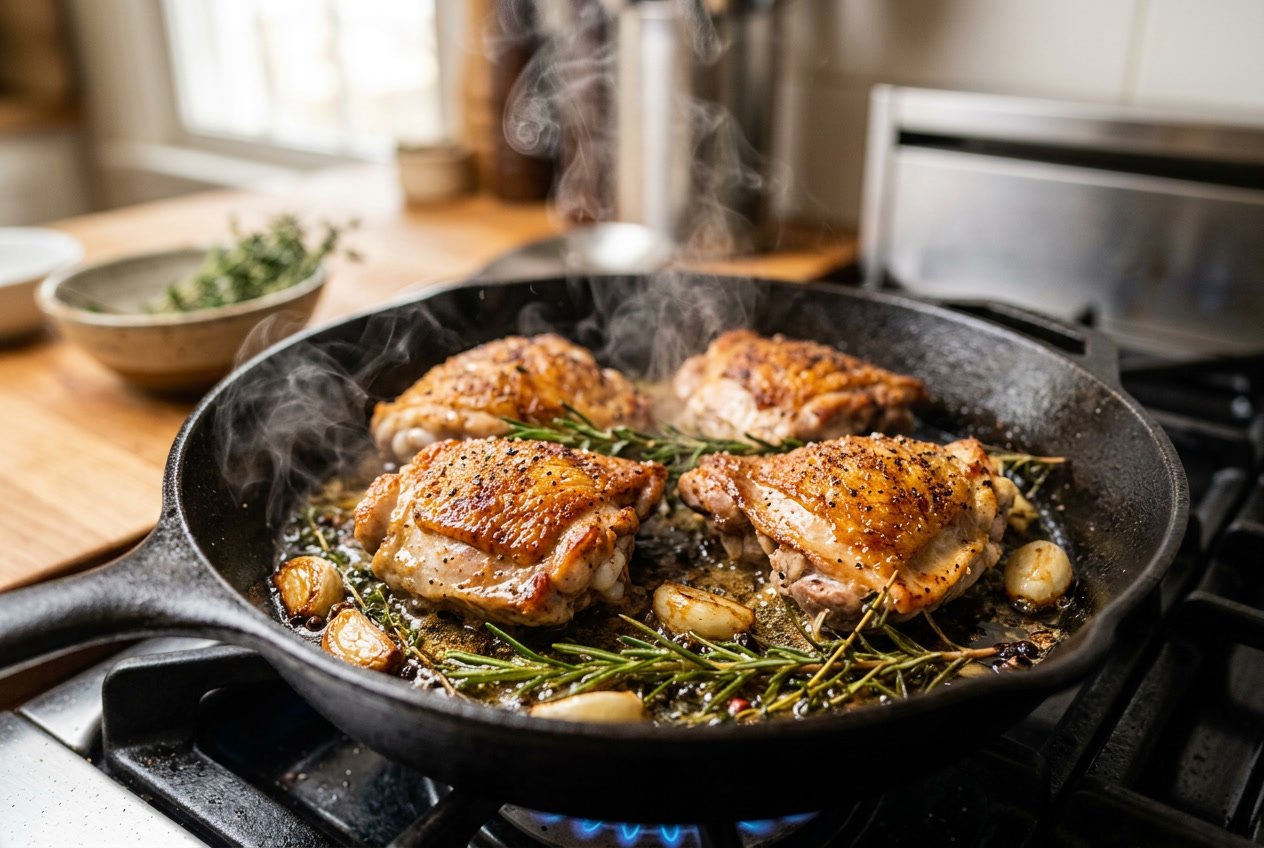
Use a heavy skillet, preferably cast iron, and heat it over medium-high with a tablespoon of oil. Sear the thighs skin-side down without moving them for 6–8 minutes until they become deeply browned.
Flip the thighs and finish cooking them in the skillet or move them to a 375°F oven.
Boneless, skinless thighs usually cook in 12–18 minutes. Bone-in thighs need 20–30 minutes.
Check doneness with an instant-read thermometer at the thickest point.
Avoid pressing the meat while cooking, as this forces out juices and can cause overcooking.
If the texture feels firm but the thermometer shows a safe temperature, let the chicken rest longer. Carryover heat will help even out doneness and keep the meat moist.


