
Can Chicken Thighs Be Cooked From Frozen? Safe & Simple Methods
You can cook chicken thighs from frozen safely and get a tasty meal if you follow the right methods and reach the proper internal temperature.
If you cook frozen thighs using an oven, pressure cooker, stovetop with a lid, or air fryer and confirm they reach 165°F (75°C), you’ll avoid food-safety risks and still get juicy results.
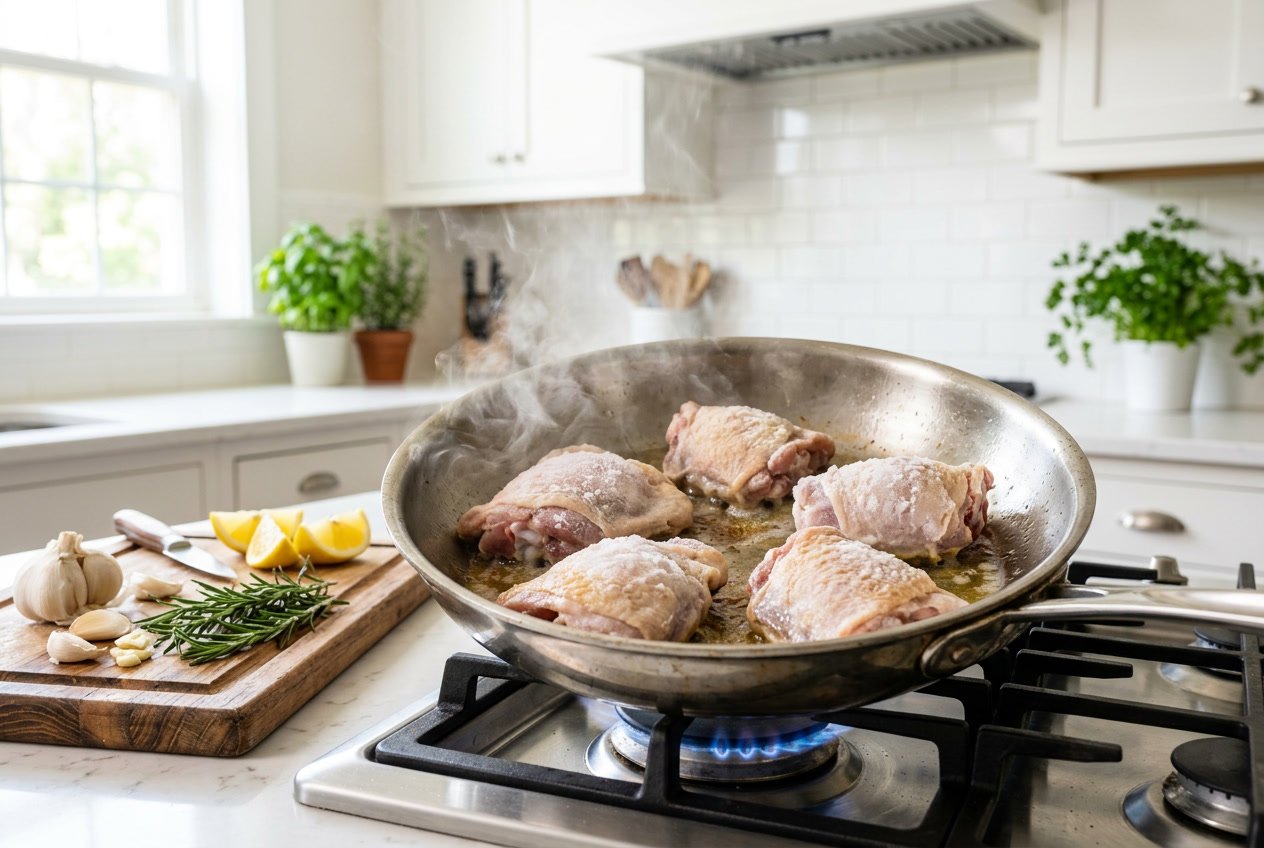
This post explains which cooking methods work best, how much extra time to expect, simple seasoning and flavor tips, when thawing matters, and how to store or refreeze leftovers.
You’ll get practical steps that let you turn a bag of frozen thighs into a reliable weeknight dinner without guesswork.
Can Chicken Thighs Be Cooked From Frozen?
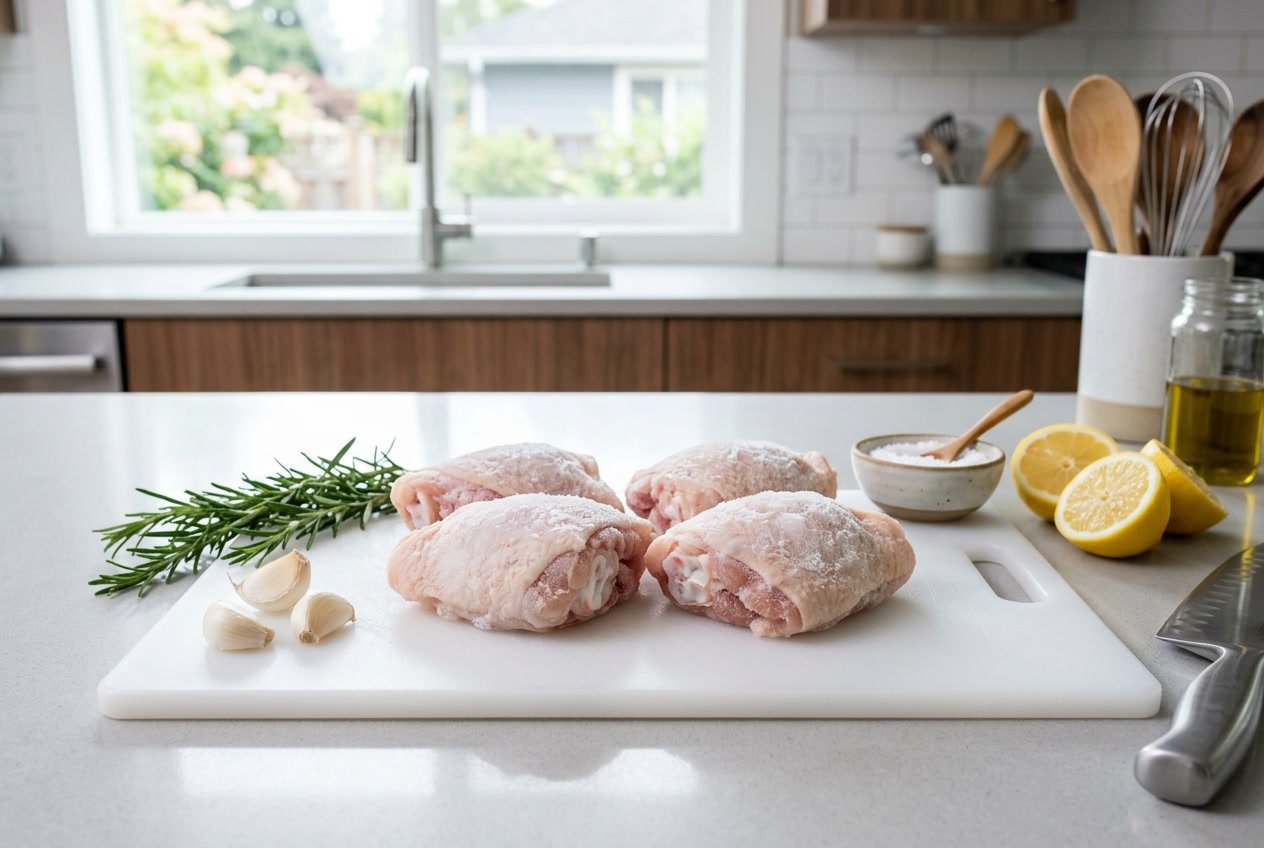
You can cook chicken thighs straight from the freezer, but you must adjust time and technique to reach a safe internal temperature and avoid uneven cooking.
Use a thermometer, avoid high heat frying from frozen, and plan for roughly 50% longer cook times than for thawed thighs.
USDA and Food Safety Guidelines
The USDA allows you to cook poultry from frozen as long as the entire piece reaches 165°F (74°C) in the thickest part.
Measure temperature with a calibrated meat thermometer and check multiple spots on larger pieces to confirm doneness.
Handle frozen chicken the same way you handle thawed chicken: wash hands, clean surfaces, and avoid cross-contamination.
Cook chicken either fully frozen or fully thawed to reduce the risk of uneven cooking.
Avoid deep frying frozen thighs because cold ice can cause oil to splatter violently.
Safer methods include oven baking, braising, or pressure cooking, which provide gentler, more even heat.
How Cooking from Frozen Affects Texture and Flavor
Cooking chicken thighs from frozen increases total cook time and can affect moisture and texture if you use high direct heat.
The exterior can overbrown while the interior struggles to reach temperature, leaving the meat dry in places or slightly rubbery if overcooked.
Choose moist heat methods like braising, slow roasting covered, or using an Instant Pot to preserve juiciness and allow even heat penetration.
If you plan to oven bake or grill, arrange pieces in a single layer and use a lower temperature (about 325–375°F) to reduce surface drying.
Seasoning and marinades work differently on frozen chicken because surface ice prevents immediate absorption.
Pat dry any frost and apply oil, salt, and spices during cooking or partway through once surface moisture has evaporated.
Best Cooking Methods for Frozen Chicken Thighs
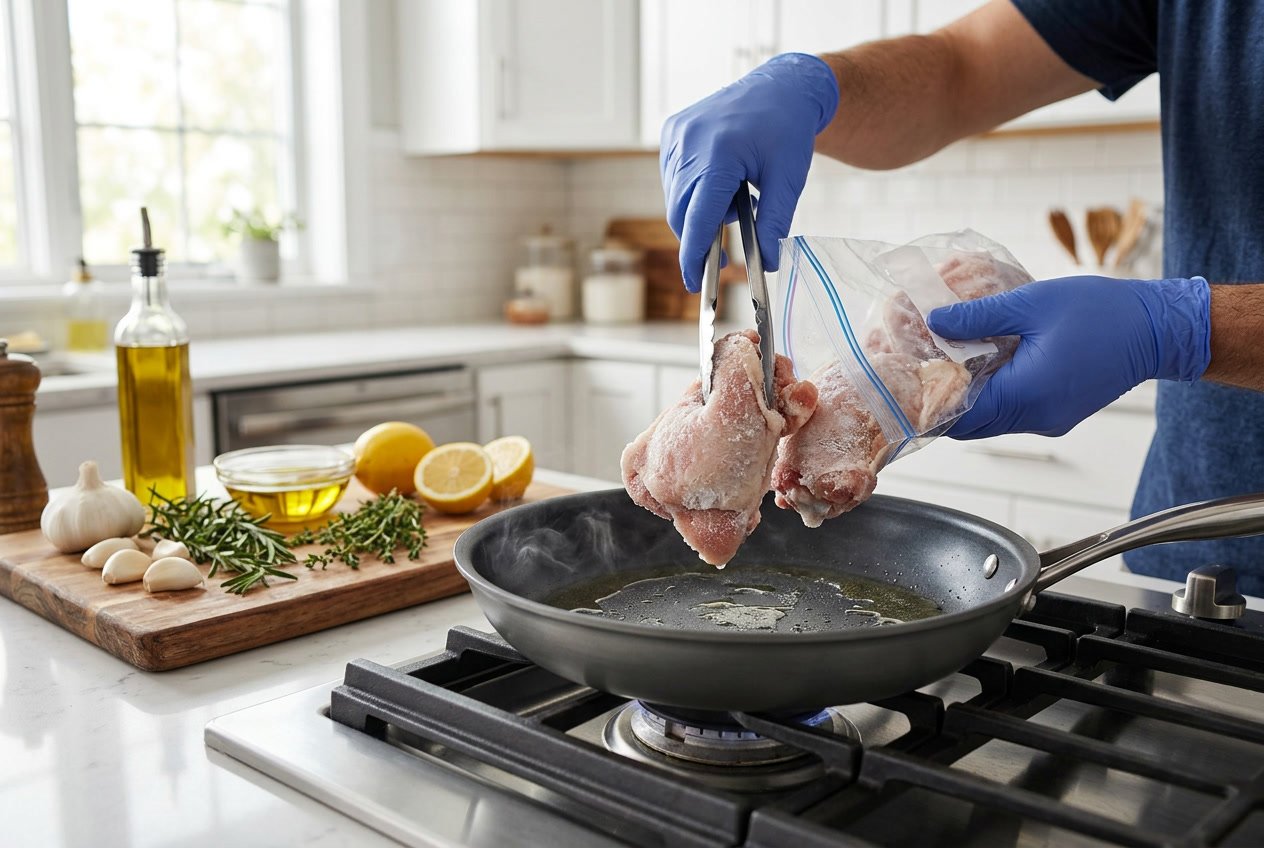
You can safely and reliably cook frozen chicken thighs using an oven, an Instant Pot or pressure cooker, or a grill.
Each method requires adjusted cook times and a way to confirm the thigh’s internal temperature reaches 165°F (75°C).
Baking Frozen Chicken Thighs in the Oven
Preheat the oven to 375°F (190°C) for bone-in thighs or 400°F (205°C) for skin-on pieces you want crisp.
Arrange frozen thighs on a baking sheet or in a baking dish with space between pieces for even heat circulation.
Pat a little oil over the skin if using skin-on thighs to improve browning; season lightly at the start and add stronger herbs or sauces once the exterior softens.
Plan for about 45–60 minutes depending on size and whether thighs are boneless or bone-in.
Use an instant-read thermometer in the thickest part—165°F (75°C) is the safe minimum.
If you want crisper skin, finish under the broiler for 2–4 minutes, watching closely to avoid burning.
Cooking Frozen Chicken Thighs in the Instant Pot or Pressure Cooker
Place frozen thighs in the Instant Pot in a single layer if possible; add 1 cup of liquid (broth, water, or sauce) to create steam.
Seal and cook on high pressure: 12–15 minutes for bone-in, 8–10 minutes for boneless, followed by a 5–10 minute natural release.
Searing after pressure cooking is optional: remove thighs and quickly brown in a hot skillet if you want a crust.
Always check temperature at the thickest point.
Use the Instant Pot for saucy preparations where crisp skin isn’t necessary.
Grilling Frozen Chicken Thighs
Grilling frozen chicken thighs works but needs indirect heat to avoid burning the outside before the center cooks.
Preheat one zone of the grill to medium-high and leave another zone at medium-low for indirect cooking.
Place the frozen thighs on the cooler side first to thaw and cook through more gently.
After 10–15 minutes, move them to the hotter zone to develop char and color, turning often.
Expect 30–45 minutes total depending on thickness and bone presence.
Use a meat thermometer to confirm 165°F (75°C).
Grill with a drip tray or foil under the thighs if they release a lot of moisture.
Timing and Temperatures for Cooking Frozen Chicken Thighs
Frozen chicken thighs must reach an internal temperature of 165°F (74°C) and usually take roughly 40–60 minutes in an oven depending on temperature and whether they’re bone-in.
Use a digital meat thermometer to confirm doneness and adjust times for appliance, thigh size, and whether skin or bone is present.
How Long to Cook Frozen Chicken Thighs in Different Appliances
Oven: Preheat to 400°F (200°C). Expect about 40–55 minutes for bone-in thighs and 35–45 minutes for boneless, skinless thighs.
Arrange thighs in a single layer on a rimmed sheet pan; spacing improves air circulation and even cooking.
Air fryer: Set to 375–380°F (190–193°C). Cook boneless thighs about 20–30 minutes, flipping halfway.
Bone-in will need longer—plan 30–40 minutes and check early to avoid over-browning.
Instant Pot or pressure cooker: Use the poultry setting or high pressure for 12–18 minutes with a quick release; add 1 cup liquid.
This speeds cooking but won’t crisp skin—finish under a broiler if you want crispness.
Grill: Use indirect medium-high heat (375–400°F). Bone-in thighs take 30–40 minutes; boneless 20–30 minutes.
Close the lid and turn occasionally to prevent flare-ups.
Adjust times upward for very large thighs and when cooking from a thick frozen block.
Always rely on internal temperature rather than time alone.
How to Check Chicken Thighs for Doneness
Use a digital meat thermometer inserted into the thickest part, avoiding bone.
You must read at least 165°F (74°C) for safe consumption; some prefer pulling bone-in thighs to 170–175°F for more tender meat.
Visual cues help but are secondary.
Juices should run clear, not pink; meat near the bone should not be red.
If skin is present and you want it crisp, finish under a broiler for 2–4 minutes after the thermometer reads safe temperature.
Allow thighs to rest 3–5 minutes before cutting.
Resting equalizes juices and raises the internal temperature slightly; factor this into final timing.
If temperature is below target, return to the oven or appliance and continue cooking, checking every 5–7 minutes.
Seasoning and Flavor Tips for Frozen Chicken Thighs
You can still get bold, well-balanced flavor from frozen thighs by focusing on timing, salt, and methods that help spices adhere.
Choose seasonings that tolerate short contact time and plan for texture: pat dry when possible and finish with high heat for crisping.
When and How to Season Frozen Chicken Thighs
You can season frozen thighs at two practical times: immediately before cooking, or after partial thaw (cold water or microwave) when surfaces soften.
If cooking straight from frozen, sprinkle coarse salt, black pepper, garlic powder, and smoked paprika directly on the exterior.
These dry seasonings flavor the crust even with limited penetration.
Pat the thigh surface with a towel when you’ve partially thawed it to remove ice glaze.
Lightly brush with oil to help spices stick and promote browning.
Use about 1 teaspoon kosher salt per pound as a baseline, then adjust other spices to taste.
For skin-on thighs, season under the skin when you can slip your fingers beneath it after thawing a bit.
Marinating Techniques for Cooking from Frozen
Marinating from fully frozen is inefficient because frozen flesh resists flavor absorption.
Instead, thaw in cold water or the microwave just until pliable, then apply a quick marinade or a longer one if you can refrigerate for several hours.
Acidic components (lemon, vinegar, yogurt) work well but keep acid under 15% of the mix to avoid toughening the surface.
For short marination (30–90 minutes), use oil, garlic, soy sauce, and a touch of honey or mustard to build immediate surface flavor.
For overnight flavor, combine 1/4 cup oil, 2 tablespoons acid, 1 tablespoon salt, and herbs or spices; refrigerate thighs in a sealed bag.
If you must cook fully frozen without thawing, baste with a flavorful pan sauce mid-cook to add depth.
Thawing Chicken Thighs: Safe Methods and Considerations
Plan thawing to keep chicken thighs at safe temperatures and avoid partial warm spots.
Choose a method that fits your schedule: slow and safe in the refrigerator, faster with cold water, or quickest by microwave followed by immediate cooking.
Refrigerator Thawing
Thaw chicken thighs in their original packaging or in a leak-proof container on the bottom shelf of the refrigerator.
Allow about 24 hours per pound; a typical 1–2 pound package often needs 24 hours, while larger or bone-in pieces can need up to 36 hours.
Keep the fridge at 40°F (4°C) or below.
Once thawed, cook the thighs within 1–2 days, or refreeze them if you haven’t left them above 40°F.
Use a tray to catch drips and prevent cross-contamination with other foods.
Cold Water Thawing
Seal thighs in a waterproof plastic bag and submerge in cold tap water, changing the water every 30 minutes.
Expect 1–2 hours for small packages; larger bone-in pieces may take longer.
Keep the chicken submerged and fully sealed to prevent waterlogging and bacterial contamination.
Cook the thighs immediately after thawing; do not refrigerate again unless you cook them first.
Avoid warm or hot water.
Microwave Thawing and Immediate Cooking
Use your microwave’s defrost setting based on weight; rotate and flip the thighs every few minutes to reduce hot spots.
Expect partial cooking during defrosting, especially at thinner edges.
Once microwaved, cook the chicken immediately.
For best results, transfer to the oven, stovetop, or pressure cooker and verify an internal temperature of 165°F (75°C).
This method is the fastest but requires attentiveness and prompt cooking to be safe.
Storage, Leftovers, and Refreezing Cooked Chicken Thighs
You can safely freeze both raw and cooked chicken thighs to extend shelf life.
Timing, packaging, and thawing method determine safety and quality.
Follow clear practices for freezing, refreezing, and refrigerated storage to minimize bacterial risk and preserve texture.
How to Freeze Cooked and Raw Chicken Thighs
For raw chicken thighs, portion them into meal-sized packs before freezing.
Lay pieces flat on a tray to flash-freeze for 1–2 hours, then transfer to freezer bags or vacuum-seal.
Remove as much air as possible and label with the date.
Raw thighs keep best for about 4 months for optimal quality.
For cooked chicken thighs, cool to room temperature no longer than two hours after cooking.
Portion into single-meal containers or sandwich bags, press out air, and freeze flat for efficient stacking.
Cooked thighs generally keep well for 3–4 months.
If thighs are in sauce or stew, divide into serving containers to avoid thawing more than you need.
Refreezing Guidelines After Cooking
If you thawed raw chicken in the refrigerator and cooked it, you may refreeze the cooked thighs safely.
Cooling and repackaging promptly reduces bacterial growth.
Label refrozen packages with the original date and note that quality may drop after multiple freezes.
Avoid refreezing chicken that was thawed using the microwave or in a sink of warm water unless you cooked it first.
Do not refreeze cooked thighs that sat above 40°F (4°C) for more than two hours.
Each freeze and thaw cycle increases moisture loss and toughness, so expect some texture degradation after refreezing cooked chicken thighs.
Best Practices for Storing Cooked Chicken Thighs
Place cooked chicken thighs in airtight containers and refrigerate them within two hours of cooking.
Use the chicken within 3–4 days for safety and best taste.
Keep the fridge at or below 40°F (4°C). Store the thighs on a middle shelf away from raw foods.
When you freeze leftovers, cool portions quickly by spreading the meat on a shallow pan.
Pack the cooled meat into freezer-safe bags or vacuum-sealed pouches. Remove excess air, squeeze the bags flat, and write the date on them.
To reheat, thaw the chicken in the fridge overnight. You can also heat it from frozen in a simmering stew or oven until the internal temperature reaches 165°F (74°C).


