
Can Chicken Thighs Be Boiled? Complete Guide to Boiling Chicken Thighs
You can boil chicken thighs. When you do it right, they come out tender, juicy, and ready for soups, salads, tacos, or shredding.
Boil boneless thighs about 10–20 minutes and bone-in thighs about 15–25 minutes, or until the internal temperature reaches 165°F (74°C).
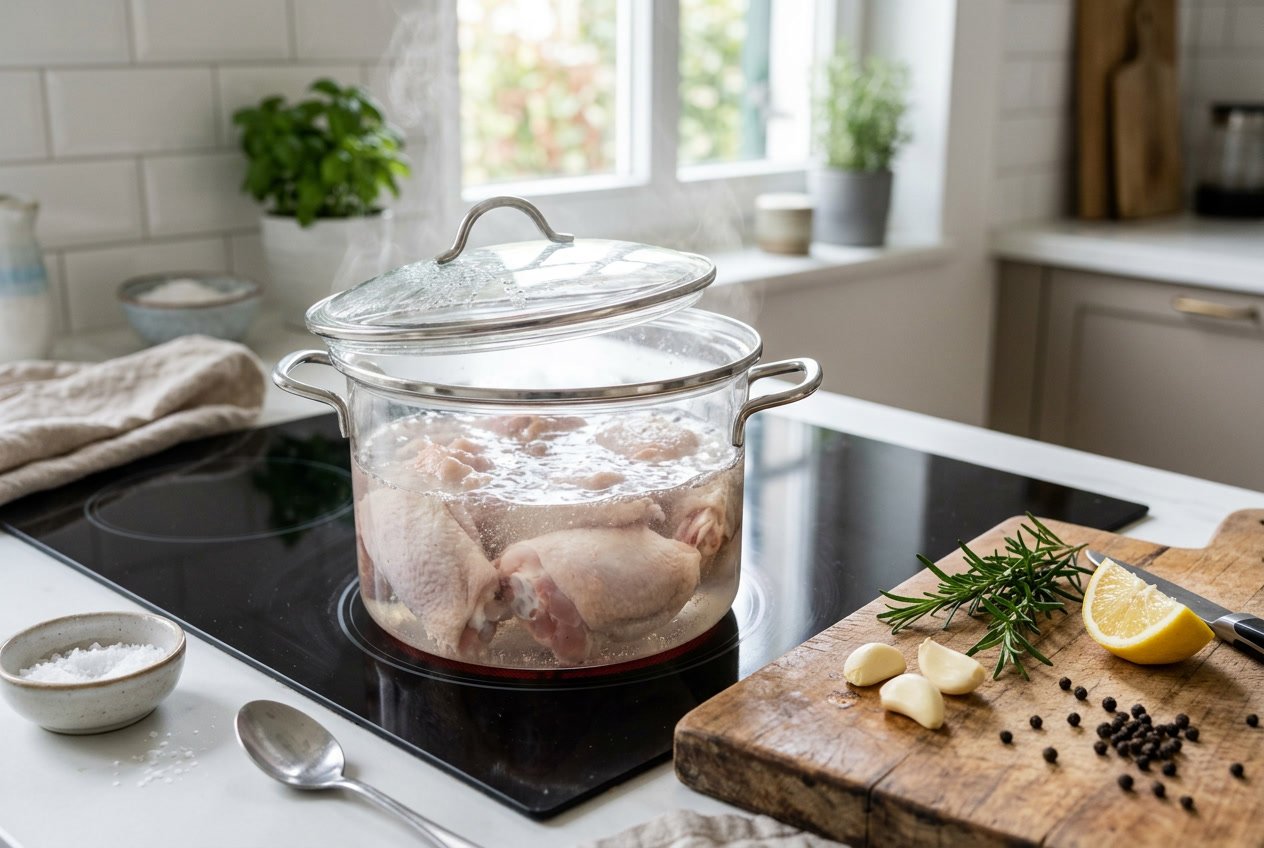
This guide shows how long to boil different types of thighs, how to avoid dryness, simple seasoning tricks, and smart uses for the cooked meat. Learn timing, technique, and quick tips for using boiled thighs in everyday recipes.
Can Chicken Thighs Be Boiled?
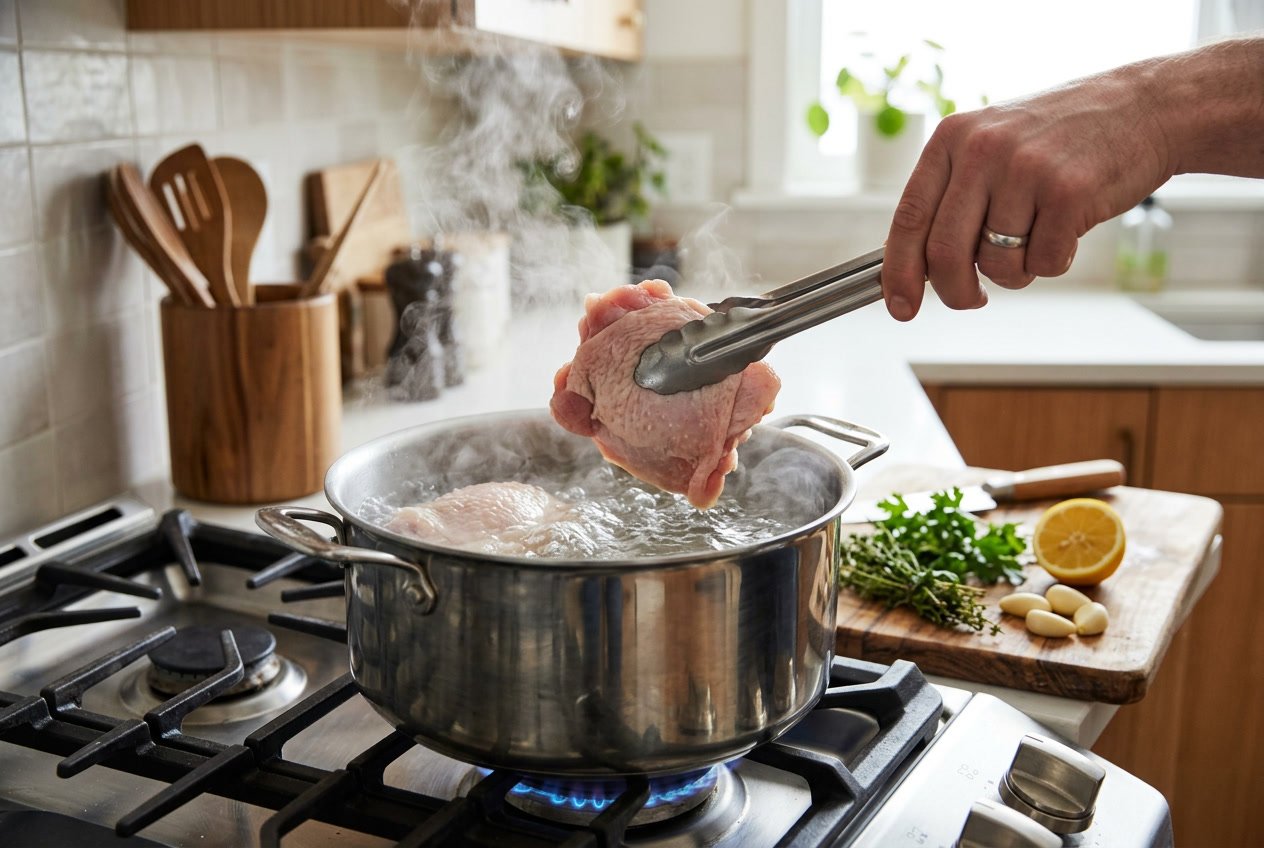
You can boil chicken thighs safely and get tender meat for salads, soups, tacos, or shredded preparations. Boiling works for both bone-in and boneless thighs, fresh or frozen, as long as you control time and temperature.
Overview of Boiling Chicken Thighs
Simmer chicken thighs in water or broth until the internal temperature reaches 165°F (74°C). Boneless thighs typically cook 18–25 minutes from cold liquid.
Bone-in thighs usually take 25–40 minutes depending on size and whether they were frozen. Start in cold water, bring to a gentle boil, then reduce to a simmer to keep the meat tender.
Season the poaching liquid with salt, peppercorns, garlic, onion, and bay leaves for more flavor. Keep thighs fully submerged and skim any foam for a clearer broth.
Use a meat thermometer at the thickest point near the bone to check for doneness.
Benefits of Boiling Chicken Thighs
Boiling gives you moist, shred-ready meat with minimal hands-on time. Bone-in thighs add gelatin to the cooking liquid, producing a rich broth.
Boneless thighs cook faster and are easier to shred or dice for salads and tacos. Boiling also reduces added fat compared with frying and lets you control sodium and aromatics.
If you want crispy skin, finish boiled thighs under a broiler or in a hot pan for a few minutes. Store leftovers in the fridge for up to three days or freeze for longer.
Common Myths and Misconceptions
Some believe boiled chicken is bland and rubbery. Proper seasoning of the liquid and gentle simmering prevent this.
Overcooking, not boiling itself, causes dryness. Monitor time and temperature to avoid this.
You can boil frozen thighs safely, but add about 15–20 minutes to the cooking time and check temperature to ensure even cooking.
Boiled skin becomes soft. Remove and sear the skin if you want it crisp after boiling.
How Long to Boil Chicken Thighs
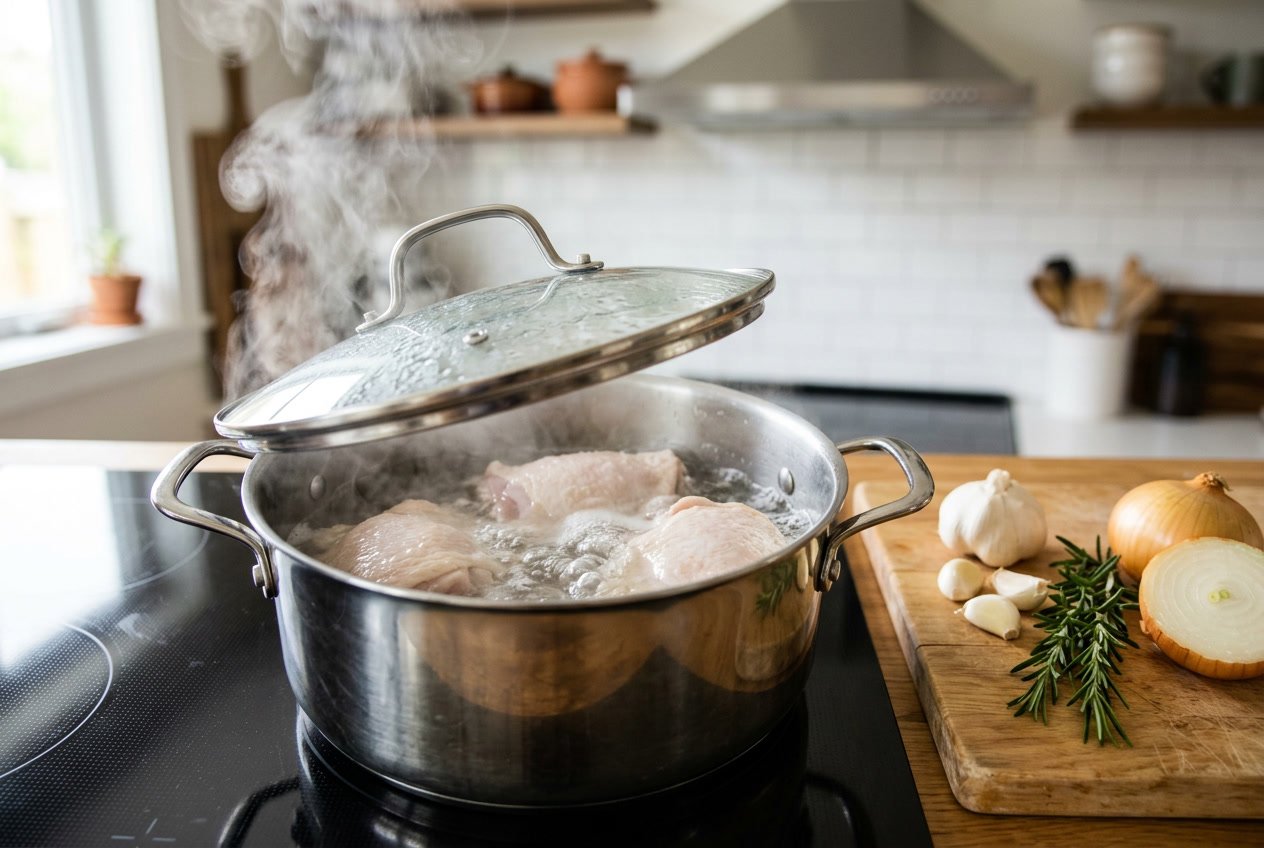
Boiling time depends on whether the thighs have bones, whether they are frozen, and their size. Use a thermometer and aim for an internal temperature of 165°F (74°C).
Boiling Times for Bone-In Chicken Thighs
Bone-in thighs take longer because heat must penetrate the bone. For average bone-in thighs (about 6–8 ounces each), simmer gently for 20–30 minutes after the water reaches a simmer.
Larger or very thick pieces may need toward the upper end of that range. Keep the pot at a low simmer to avoid toughening the meat.
Check doneness with an instant-read thermometer inserted into the thickest part without touching bone. It should read 165°F (74°C).
If you want shreddable meat for soups or tacos, simmer 35–40 minutes to break down connective tissue, then rest the meat 5 minutes before handling.
Boiling Times for Boneless Chicken Thighs
Boneless thighs cook faster because no bone slows heat transfer. For typical boneless, skinless thighs (4–6 ounces), simmer 10–15 minutes from the time the liquid simmers.
Thinner pieces or cut-up thighs may be done closer to 8–10 minutes. Maintain a gentle simmer and avoid rapid boiling to keep the meat juicy.
Use an instant-read thermometer in the center; 165°F (74°C) is the safety target. If you plan to shred, cook to the lower end of the window and rest 3–5 minutes.
If you need fully falling-apart texture, add a few extra minutes while monitoring temperature.
Adjusting Boiling Time for Frozen Chicken Thighs
Boil frozen chicken thighs with extra time. For frozen boneless thighs, simmer about 15–25 minutes after the liquid simmers.
For frozen bone-in thighs, allow roughly 45–50 minutes, checking temperature early and often. Start from cold water with frozen pieces for more even cooking.
Skim any foam that forms. Always verify the center reaches 165°F (74°C).
If one piece reaches target before others, remove it to prevent overcooking while the rest finish.
How to Boil Chicken Thighs Properly
Boiling chicken thighs gives you tender meat and a usable broth when you control prep, temperature, and timing. Follow clear steps for boneless or bone-in, skin-on or skinless thighs to avoid overcooking and to capture flavor.
Preparing Chicken Thighs for Boiling
Trim excess fat and loose skin from the thighs to reduce scum in the cooking liquid and make skimming easier. If using bone-in, rinse briefly and pat dry.
For frozen thighs, thaw fully in the refrigerator or under cold running water to ensure even cooking. Season the thighs before or during cooking.
Rub a light dry seasoning on boneless, skin-on thighs if you plan to sear later. Add aromatics like onion, garlic, bay leaf, peppercorns, and celery to the pot to flavor both meat and broth.
If you want a clearer broth, start with cold water and place the thighs in a single layer so proteins heat evenly. For a richer broth and more gelatin, use bone-in, skin-on thighs.
Use at least 2–3 cups of liquid per pound of chicken to keep pieces submerged.
Step-by-Step Boiling Instructions
Place thighs in a large pot and add cold water or low-sodium chicken broth to cover by 1 inch. Bring the pot to a gentle simmer over medium heat.
Once the surface breaks into a simmer, skim foam and impurities with a fine mesh skimmer. Reduce heat to maintain a steady simmer.
Cover partially with a lid to control evaporation while allowing steam to escape. Boneless thighs usually need about 10–15 minutes; bone-in thighs typically need 15–25 minutes depending on size.
Remove thighs with tongs to a plate and let rest 3–5 minutes before slicing or shredding. Reserve and strain the cooking liquid for soup or sauces.
Simmering vs. Boiling
A vigorous boil agitates the meat, squeezing out juices and creating tougher texture. Simmering keeps collagen and juices intact, producing tender chicken and a clearer, more flavorful broth.
Aim for a gentle simmer with small, steady bubbles and surface movement. Use medium–low heat after reaching target temperature.
Adjust the heat as needed to maintain the simmer. For bone-in, skin-on thighs, simmering for a longer time (20–30 minutes) extracts gelatin and yields a richer mouthfeel.
For boneless thighs, shorter simmering preserves tenderness and prevents stringy texture.
How to Check for Doneness
Use an instant-read thermometer for accuracy. Insert the probe into the thickest part without touching bone; the safe internal temperature is 165°F (74°C).
If you don’t have a thermometer, cut into the thickest part. Juices should run clear and meat should be opaque with no pink near the bone.
For shredded chicken, ensure the fibers pull apart easily. Allow thighs to rest 3–5 minutes after removing from the liquid to help retain juices.
If you plan to sear or broil after boiling, briefly reheat the pieces until just warmed to avoid additional drying.
Choosing Between Bone-In, Boneless, Fresh, or Frozen Thighs
Pick the cut and state that match your meal plan and time. Bone-in thighs give richer broth and hold up to longer cooking.
Boneless cook faster and are easier to shred or slice.
Bone-In vs. Boneless Chicken Thighs
Bone-in chicken thighs take longer to reach safe internal temperature but add more flavor to the cooking liquid. Plan on about 15–20 minutes of simmer time for fresh bone-in thighs.
If you want shreddable meat and gelatinous broth, cook closer to 40–60 minutes to fully break down collagen. Boneless thighs usually finish in 10–12 minutes when fresh and simmered gently.
They cook more evenly and are simpler to slice for salads, tacos, or stir-fries. If you need crispy skin after boiling, remove skin and finish under a broiler or in a hot pan.
Choose bone-in when you want richer stock or longer, slow-cooked recipes. Choose boneless when you want speed, uniform pieces, or easier portioning.
Fresh vs. Frozen Chicken Thighs
Fresh thighs heat through faster and give a more predictable cooking time. Fresh boneless thighs often reach 165°F in about 10–12 minutes; fresh bone-in thighs take about 15–20 minutes.
Always check with a meat thermometer in the thickest part away from bone. Frozen thighs require extra time and slightly different handling.
Frozen boneless thighs generally need 12–17 minutes; frozen bone-in thighs often need 22–26 minutes or more depending on size.
You can boil from frozen safely, but expect longer simmering and occasional stirring to avoid uneven cooking. If you can, thaw in the refrigerator overnight for best texture and shorter cooking.
If cooking from frozen, increase the time and confirm doneness by temperature.
Seasoning and Flavoring Boiled Chicken Thighs
Season the cooking liquid and finish the meat after cooking to get the most flavor from boiled chicken thighs. Use specific herbs, spices, and fats to build layers of taste that hold up when you shred or slice the meat.
Best Seasonings to Use
Start with salt; use 1 to 1.5 teaspoons kosher salt per quart of liquid to season the thighs while they cook. Add black pepper and garlic powder for base savory notes.
For a smoky or warm profile, include 1 teaspoon smoked paprika or ½ teaspoon ground cumin per pound of thighs. If you want herbaceous brightness, tuck in fresh thyme sprigs or rosemary stems.
For Asian-inspired flavors, add 1 tablespoon soy sauce and 1 inch of smashed ginger. If you plan to finish the thighs by searing or shredding into tacos, rub the skin or meat lightly with your dry seasoning mix before boiling.
Enhancing Broth Flavor with Aromatics
Treat the poaching liquid as a broth-building step. Aromatic additions influence both the meat and the leftover liquid.
Add one halved onion, 3–4 smashed garlic cloves, and 2 bay leaves for classic depth. Include whole peppercorns and a peeled carrot or celery stalk to round out sweetness and body.
Citrus changes the profile quickly. Add a few lemon or lime wedges for brightness, or one strip of orange peel for warmth.
If you want a richer broth, use low-sodium chicken stock instead of water and add tomato paste for umami. Strain the liquid after cooking and reserve it for soups, sauces, or to reheat the thighs gently.
Tips for Flavorful Boiled Thighs
Simmer gently to keep thighs tender and allow aromatics to infuse evenly. Check internal temperature at the thickest point.
Remove thighs promptly and rest them 5 minutes before slicing or shredding to let juices redistribute. Finish with fat and acid: brush with melted butter or olive oil and squeeze fresh lemon juice or splash vinegar to brighten the final dish.
If you plan to brown the thighs, pat them dry and sear skin-side down in a hot skillet for 2–3 minutes to add color. Store leftover boiled chicken thighs in an airtight container with a bit of the reserved broth to keep them moist for up to 4 days.
How to Use Boiled Chicken Thighs
Boiled chicken thighs give you tender meat and a flavorful broth you can reuse. Use them as shredded or sliced protein for salads, sandwiches, soups, or store them safely for later use.
Shredding and Slicing for Other Dishes
Let thighs cool for 5 to 10 minutes so juices redistribute. Pull fibers apart with two forks, or use a stand mixer on low for 20 to 30 seconds for larger batches.
Shredded meat works well in tacos, enchiladas, and pasta because it soaks up sauces. Chill thighs until firm for cleaner cuts if you want sliced chicken.
Slice across the grain to keep pieces tender. Use slices on grain bowls, green salads, or atop baked potatoes for a neat presentation and consistent texture.
Season after shredding or slicing. Toss with a little reserved broth, salt, pepper, and a squeeze of lemon for quick flavor.
If you plan to use the chicken in a sauced dish, season lightly so the final sauce controls the taste.
Storing and Reheating Boiled Chicken Thighs
Remove chicken from broth and spread on a tray for 20 to 30 minutes to cool rapidly. Refrigerate in airtight containers within two hours and use within 3 to 4 days.
Freeze portions in zip bags or vacuum-sealed packs for up to 4 months. Label with the date.
Reheat gently to avoid drying. Warm chicken on the stovetop in 1/4 to 1/2 cup reserved broth over low heat until just heated through.
For microwave reheating, cover with a damp paper towel and heat in 30-second bursts, stirring or flipping between bursts. Thawed frozen chicken reheats the same way; cook only once after thawing.
Add frozen pieces directly to simmering liquid for soups or casseroles to maintain moisture. Always reheat to at least 165°F (74°C) internally.
Creative Recipe Ideas
Boil thighs and use them as a shortcut in these dishes. Shred the meat into buffalo chicken sandwiches with hot sauce and Greek yogurt.
Chop and stir the chicken into fried rice with peas and scallions. Slice and toss it with roasted vegetables and a mustard vinaigrette for a quick grain bowl.
Use the broth to make soup by adding vegetables, noodles, and chopped thigh pieces. Finish with herbs like parsley or cilantro.
Make chicken salad by mixing diced boiled thigh, mayo, celery, apple, and walnuts. Serve this in sandwiches or lettuce cups.
Simmer shredded chicken with jarred marinara and add grated Parmesan for an easy pasta sauce. Mix shredded chicken with cream cheese, green chiles, and cheddar, then bake for a warm dip that works for appetizers.


