
Can Chicken Thighs Be Air Fried? The Complete Guide
Yes, you can air fry chicken thighs and get juicy meat with crispy skin using much less oil than traditional frying.
Air frying bone-in, skin-on thighs at the right temperature and time gives you reliable crispness and safe internal doneness without a greasy mess.
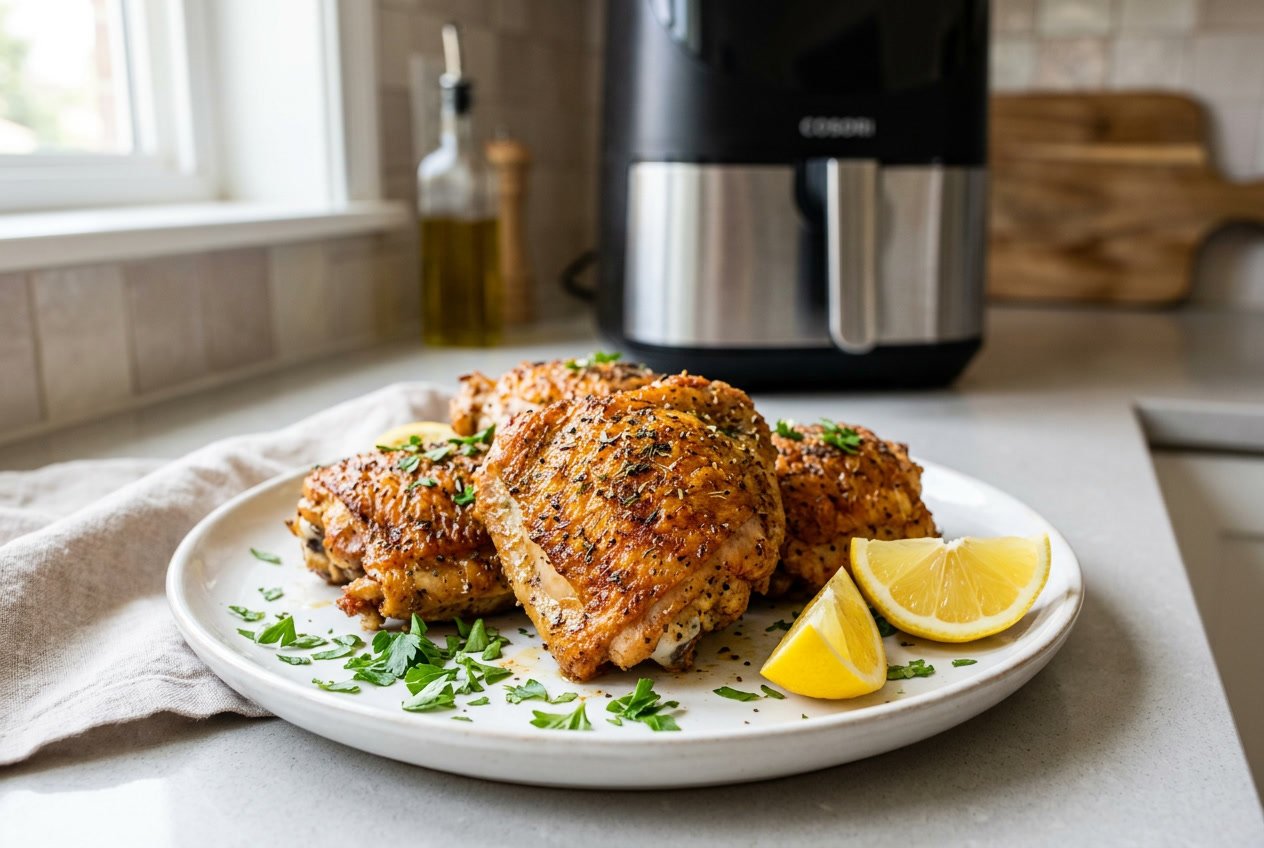
You’ll learn which thighs work best and how to season or marinate for maximum flavor.
Get the exact steps to prepare and cook them, plus timing and temperature targets to hit 165°F (75°C) safely.
Follow simple best practices for consistent results and tips for storing and reheating so your leftovers stay moist and tasty.
Can Chicken Thighs Be Air Fried?
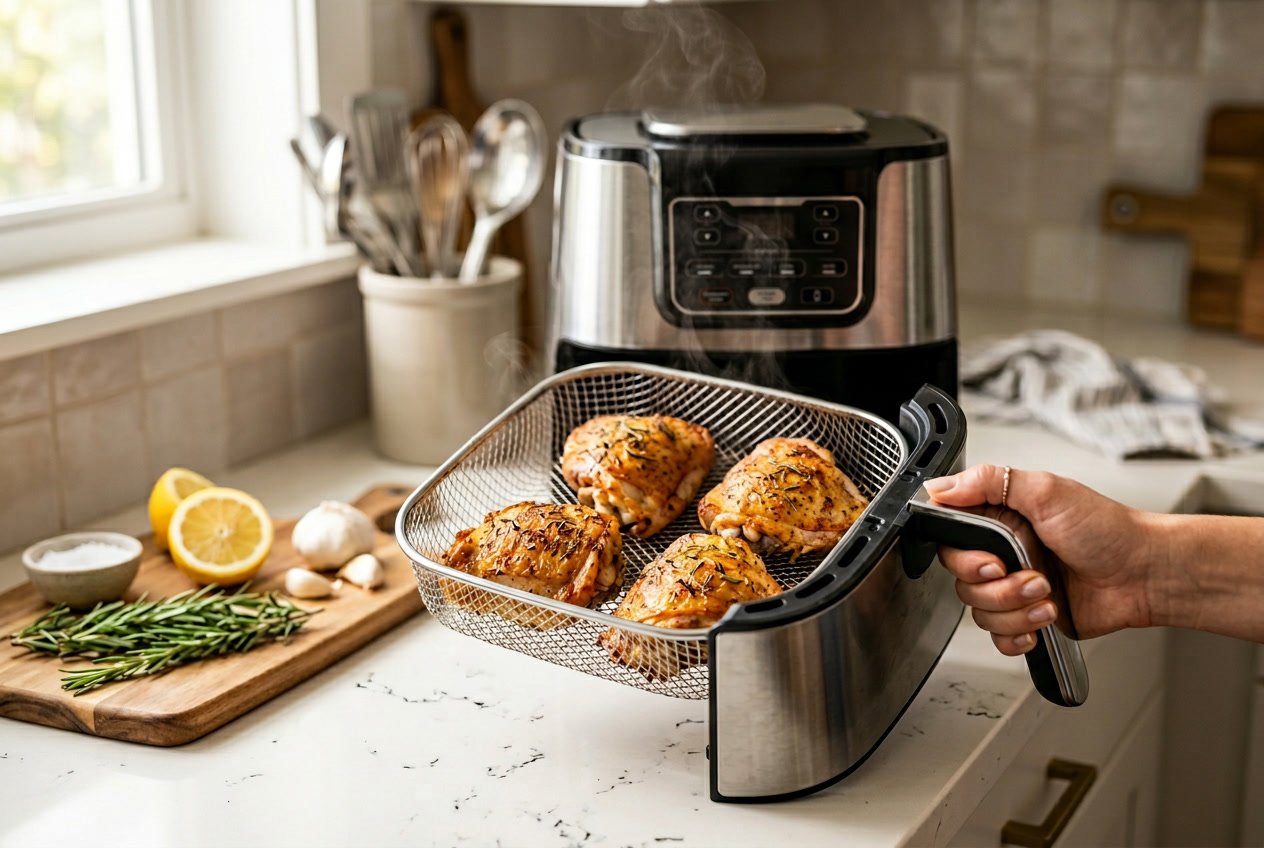
You can achieve juicy, fully cooked chicken thighs with crispy skin using an air fryer.
Use proper temperature, spacing, and a light coating of oil or a breadcrumb rub to get consistent results.
Benefits of Air Frying Chicken Thighs
Air frying uses less oil while still giving you crisp skin and a browned exterior.
Brush or spray with high‑smoke‑point oil (canola, vegetable, or avocado) and set the air fryer to 375–400°F.
Bone‑in, skin‑on thighs usually take about 25–30 minutes, and boneless thighs take less time.
Cleanup becomes easier because the basket collects drips and you only need to wash it.
The circulating hot air cooks more evenly than a pan if you avoid overcrowding the basket.
Arrange thighs in a single layer with space between pieces.
Check doneness with a meat thermometer showing 165°F at the thickest part.
Comparing Air Frying to Other Cooking Methods
Air frying cuts fat and splatter compared to deep frying, but you won’t get the exact mouthfeel of submersion frying.
You get a lighter, crisp skin and faster cleanup.
An air fryer reaches higher localized air velocity than oven roasting, which crisps skin faster and often shortens cook time by 5–15 minutes.
Versus pan‑searing, the air fryer reduces the need for added oil and gives more even browning on multiple pieces at once.
Monitor internal temperature and adjust time based on thigh size, bone‑in vs boneless, and whether pieces are frozen or thawed.
Choosing Chicken Thighs for Air Frying
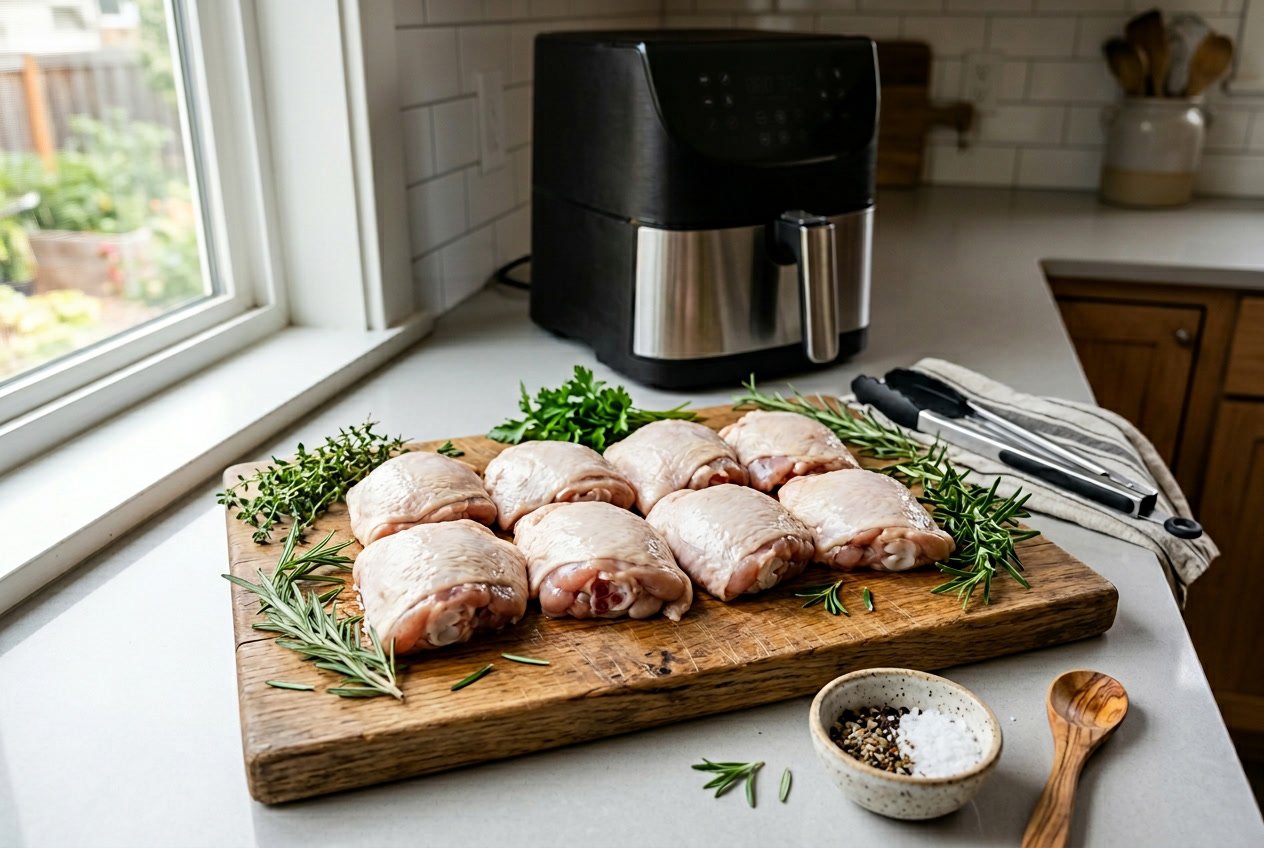
Pick pieces that match the texture and timing you want.
Keep an eye on skin and bone for flavor and moisture.
Decide whether you need faster cook times or extra juiciness.
Select thighs that feel fresh, evenly sized, and free of excess liquid.
Bone-In vs. Boneless Chicken Thighs
Bone-in chicken thighs hold moisture and tolerate longer cook times without drying out.
The bone conducts heat internally for a more even cook, but expect 5–10 minutes extra cook time versus boneless pieces.
Boneless chicken thighs cook faster and more uniformly in a single layer.
They’re easier to cut and serve, and they crisp well if you keep some thin fat or use a light oil spray.
If you choose boneless, aim for similar-size pieces so thinner ones don’t overcook while thicker pieces reach 165°F (74°C).
Flip bone-in pieces halfway through to expose all sides to hot air.
For boneless thighs, monitor closely in the last 5 minutes to avoid dryness.
Use a probe thermometer for both types to guarantee safe doneness.
Skin-On vs. Skinless Chicken Thighs
Skin-on chicken thighs give you the easiest path to crispy, browned exterior because the skin renders fat and crisps under air circulation.
Keep the skin dry and apply a light oil or seasoning rub for the best texture without excess oil.
Skinless thighs cook a bit faster and absorb marinades more directly, which helps flavor penetrate the meat.
They won’t get the same crisp shell, so rely on high heat and brief finishing time to develop a thin crust, or add a breadcrumb or panko coating to mimic crispiness.
If you want maximum juiciness plus crispy skin, choose bone-in, skin-on thighs.
If you prefer leaner results and quicker prep, pick boneless, skinless thighs and shorten cooking time accordingly.
Selecting Quality Chicken Thighs
Look for thighs that feel firm, moist but not wet, and have a consistent color without gray spots.
Fresh chicken should smell neutral; discard any package with sour or chemical odors.
Check packaging dates and buy pieces close in weight to ensure even cooking in the air fryer.
For skin-on thighs, choose skin that’s intact and not loose.
For boneless thighs, aim for even thickness or butterfly/thin the thicker parts for uniform results.
Consider labeled attributes if they matter to you, such as pasture-raised, organic, or antibiotic-free.
Store properly on arrival: refrigerate within two hours or freeze if you won’t cook within 1–2 days.
How to Prepare Chicken Thighs for the Air Fryer
Start by choosing bone-in, skin-on thighs for the best balance of moisture and crispiness.
Use a simple seasoning plan, a short marinade if desired, and make sure the skin is dry before cooking.
Essential Ingredients and Seasonings
Keep ingredients minimal and purposeful: olive oil, salt, black pepper, paprika, and garlic powder form a reliable base.
Use about 1 tablespoon olive oil per pound of chicken to help seasonings adhere and to promote browning without excess oil.
For salt, aim for roughly ¾ to 1 teaspoon per pound; adjust to taste.
Freshly ground black pepper complements the salt and adds subtle heat.
Paprika gives color and a mild smokiness—use 1 teaspoon per pound.
Garlic powder adds savory depth; ½ to 1 teaspoon works well.
You can add optional herbs like rosemary or thyme or a squeeze of lemon for brightness.
If you prefer a saucy finish, reserve sticky sauces (BBQ, honey mustard) to brush on in the last 3–5 minutes to keep skin crisp.
Marinating and Seasoning Techniques
For a quick flavor boost, toss thighs in the olive oil and dry spices and let rest 20–30 minutes at room temperature.
For deeper flavor, marinate up to 4 hours in the fridge using olive oil, a splash of lemon juice or soy sauce, garlic powder, paprika, and salt.
Avoid long acidic marinades (over 6 hours) on skin-on thighs; they can change texture.
Pat dry after marinating if excess liquid appears, as wet surfaces prevent crisping.
Apply rubs directly to skin and under the skin when possible to season meat.
If using a wet marinade, shake off excess before air frying and re-season lightly to compensate.
Patting Dry and Prepping for Crispiness
Dry skin is the most important step for crisp results.
Use paper towels to pat both sides thoroughly and press gently to remove surface moisture.
After drying, lightly coat skin with olive oil or spray to encourage even browning.
Arrange thighs skin-side up in a single layer with at least ½ inch between pieces for air circulation.
If pieces vary in size, group similar sizes together or start larger pieces earlier.
Flip once midway through cooking to brown both sides, but keep final minutes skin-side up to maintain crispiness.
Step-by-Step: How to Air Fry Chicken Thighs
Set the temperature, arrange thighs so air circulates, and flip once for even browning.
Follow precise temps, timing, and placement to get juicy meat and crispy skin.
Preheating the Air Fryer
Preheat the air fryer to 380–400°F (193–204°C).
This temperature range crisps skin without overcooking the interior.
If your model has a preheat function, run it for 3–5 minutes.
For models without one, set the temperature and let it run empty for 3 minutes before adding chicken.
Use an instant-read thermometer to confirm the basket area reaches target temp if you want extra accuracy.
Preheating shortens total cook time and helps the skin begin to render and brown on contact.
Using the Air Fryer Basket
Use the basket that came with your unit for the best air flow.
Avoid foil across the base unless you leave gaps for air to pass.
Lightly spray the basket or brush the thighs with a teaspoon of high-smoke-point oil (avocado, canola) to improve browning.
Do not overcrowd—the thighs need space for hot air to circulate.
If cooking bone-in, skin-on thighs, place them skin-side up so fat renders down and skin crisps.
For boneless thighs, you can still use skin-side up for best texture.
Arranging and Flipping Chicken Thighs
Arrange thighs in a single layer with at least 1 inch (2–3 cm) between pieces.
Crowding traps steam and yields soggy skin.
Cook times: boneless thighs 18–22 minutes; bone-in thighs 22–26 minutes at 380–400°F.
Flip once halfway through (use tongs) to promote even browning on both sides.
Check doneness with an instant-read thermometer; target internal temperature is 165°F (74°C) in the thickest part.
Let thighs rest 3–5 minutes before serving to redistribute juices and maintain juiciness.
How Long to Cook Chicken Thighs in the Air Fryer
Aim for a balance of time and temperature so the skin crisps while the meat stays juicy.
Use an instant-read thermometer to confirm the internal temperature reaches 165°F (74°C) and that juices run clear.
Timing for Bone-In Thighs
Cook bone-in thighs at 375°F (190°C) for 22–25 minutes.
Arrange thighs skin-side up in a single layer and avoid overcrowding so hot air circulates evenly.
Flip once about halfway through to promote even browning.
If your thighs are larger (over 6 oz each) add 2–4 minutes and recheck the internal temperature near the bone.
If you prefer extra-crispy skin, finish at 400°F (204°C) for the last 2–3 minutes, watching closely to avoid burning.
Let thighs rest 5 minutes before serving so juices redistribute and stay in the meat.
Timing for Boneless Thighs
Boneless thighs at 375°F (190°C) take roughly 15–18 minutes, depending on thickness.
Lay them flat in the basket with small gaps for airflow to ensure even cooking.
Flip once halfway through the cook time for uniform color and texture.
Thicker pieces may need up to 20 minutes; thinner cutlets may finish in 12–14 minutes.
Always verify doneness with a thermometer; pull the thighs at 165°F (74°C).
Rest for 3–5 minutes so the juices run clear and the meat retains moisture.
Timing for Skinless Thighs
Skinless thighs cook faster and risk drying, so set your air fryer to 365–375°F (185–190°C).
Expect 12–16 minutes depending on piece size, flipping halfway for even cooking.
To keep meat juicy, lightly brush with oil and avoid overcooking; remove at 165°F (74°C).
If you see clear juices when you cut into the thickest part, the thighs are safe and properly cooked.
For frozen skinless thighs, add about 5–8 minutes and check temperature frequently.
Short rests of 3–5 minutes after cooking help the meat reabsorb juices for a moister bite.
Best Practices for Perfect Air Fryer Chicken Thighs
Follow specific steps to get evenly browned, juicy thighs with crisp skin and reliable food safety.
Focus on temperature, spacing, light oil, and a final rest to preserve juices and texture.
Tips for Extra Crispy Results
Use bone-in, skin-on thighs when possible; the skin crisps better and the bone helps retain moisture.
Pat the skin dry with paper towels before seasoning to remove surface moisture that prevents browning.
Lightly coat the skin with a high-smoke-point oil (canola, avocado, or vegetable) using a brush or spray.
Too much oil causes sogginess; one thin layer is enough.
Arrange thighs skin-side up in a single layer with at least 1/2 inch between pieces for proper air circulation.
Cook in batches if needed.
Set the air fryer to 375–400°F (190–200°C).
Start at the higher end for a crisp exterior then drop to 375°F if the skin browns too fast.
Flip once around the halfway mark for even color unless your model circulates exceptionally well.
If you want a seasoned crust, dredge in a light flour-cornstarch mix or apply a dry rub before oiling.
For sauced recipes (BBQ, buffalo), brush sauce on in the last 3–5 minutes to avoid burn and retain crispiness.
Checking Doneness and Food Safety
Check internal temperature instead of relying on color. Insert an instant-read thermometer into the thickest part without touching bone and aim for 165°F (74°C).
Remove bone-in thighs from heat at 165°F, as carryover heat will stabilize the temperature. Rest thighs 5–8 minutes on a rack or plate after cooking.
Resting lets juices redistribute and improves texture. Keep cooked chicken separate from raw items during prep and use clean utensils to prevent cross-contamination.
If you cook from frozen, increase cook time and check temperature in multiple spots. Adjust the temperature to 350–375°F for frozen pieces to promote even cooking.
When using an air fryer recipe for chicken thighs, follow the timing and temperature notes in that specific recipe. Models and thigh sizes vary.
Storing and Reheating Air-Fried Chicken Thighs
Store cooked air fryer chicken thighs promptly and keep their texture by minimizing moisture and air exposure. Chill within two hours and use airtight containers.
Reheat to a safe internal temperature for best results.
Short-Term Storage Tips
Place cooled chicken thighs in a shallow airtight container or wrap tightly in foil or plastic wrap to limit air contact. Refrigerate at 40°F (4°C) or below and use within 3–4 days.
For crisper skin, separate pieces with parchment between layers and avoid stacking heavily. If you plan to eat within a day, keep thighs on a paper towel-lined plate in the fridge to wick excess grease and prevent sogginess.
Label containers with the cook date. When transporting or packing for a meal later, keep the chicken chilled with an insulated cooler and ice packs to stay under 40°F (4°C) until reheating.
Freezing and Reheating for Best Taste
For longer storage, freeze cooled thighs in a single layer on a baking sheet for 1–2 hours. Then transfer them to a freezer bag and remove as much air as possible.
Frozen air fryer chicken stays at best quality for 2–6 months.
Thaw the chicken in the refrigerator overnight for even reheating. Reheat refrigerated or thawed thighs in an air fryer preheated to 375°F (190°C) for about 8–15 minutes, depending on size.
Flip the thighs halfway and check the thickest part. Use a meat thermometer and ensure the temperature reaches 165°F (74°C).
If reheating from fully frozen, add 5–10 minutes to the time. Cover loosely with foil for the first portion of cook time to lower the risk of burning.
Lightly spray or brush with oil to revive crispness without making the skin greasy.


