
Can Chicken Thighs Be a Little Pink? The Safe Cooking Guide
You might spot a faint pink tint in chicken thighs and wonder whether that means they’re unsafe.
If the thickest part of the thigh reaches 165°F (74°C) on a food thermometer, a little pink color alone does not mean the meat is unsafe.
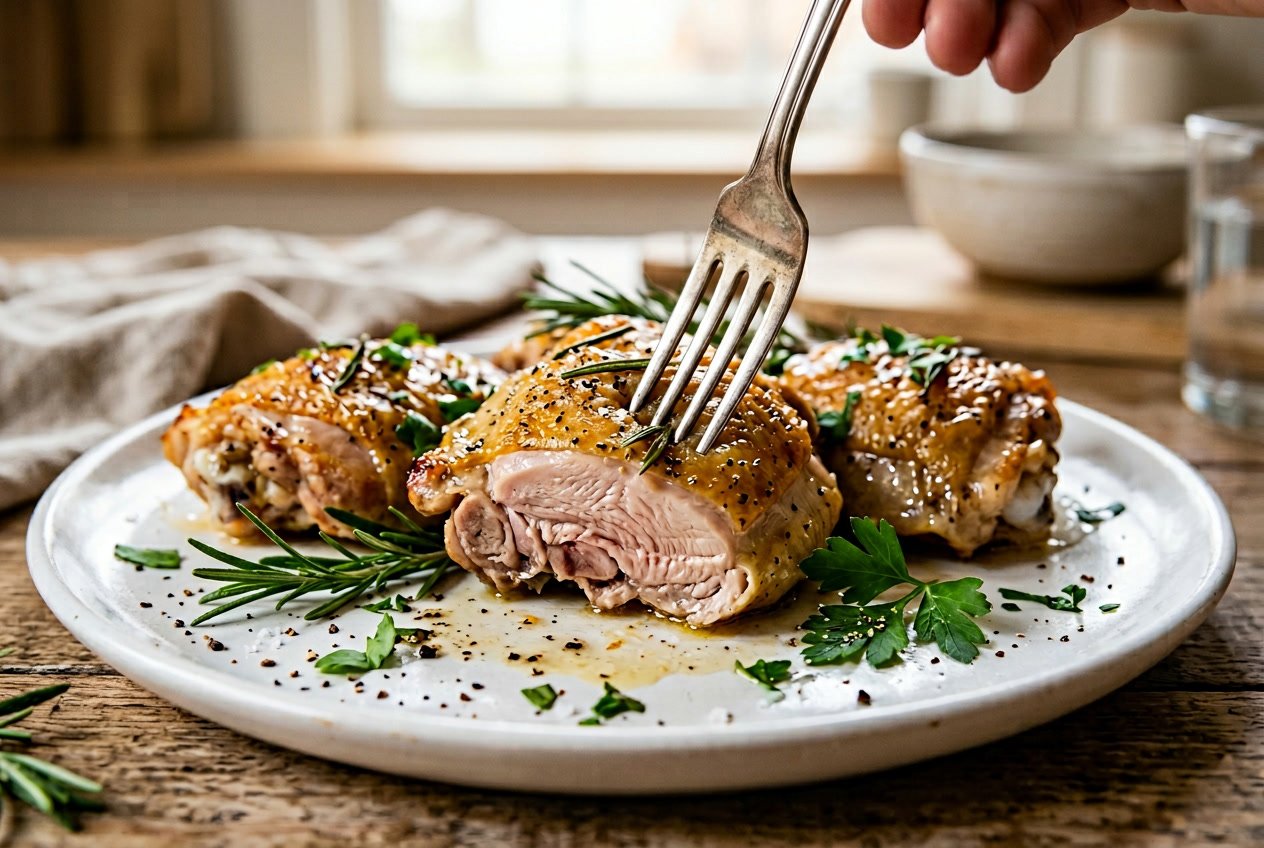
Chicken thighs can stay pink even when fully cooked. Use temperature and texture to check doneness, not color alone.
Why Chicken Thighs Can Be a Little Pink
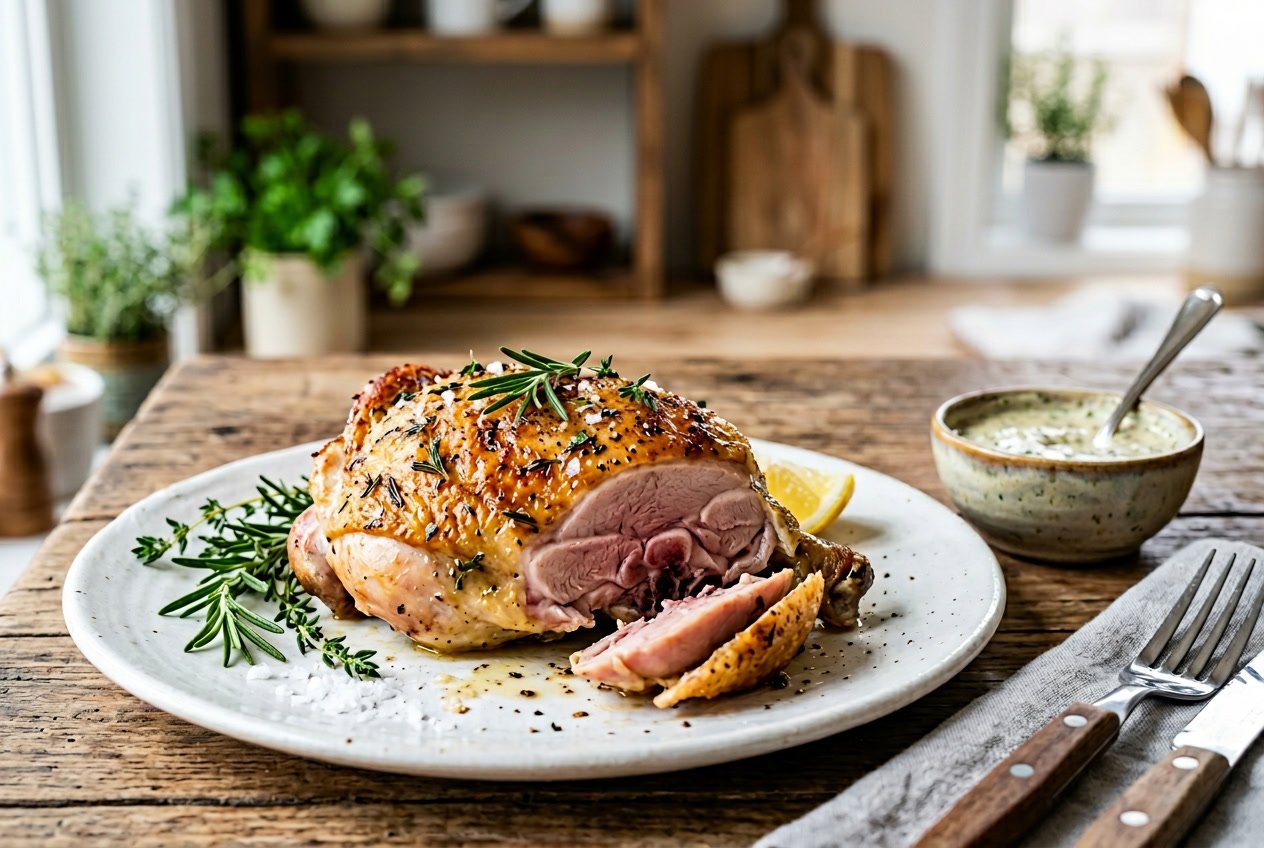
You may see a faint pink tint in cooked chicken thighs for reasons that aren’t related to safety.
Heat changes proteins, bone proximity affects color, and dark meat naturally holds more pigment than breast meat.
The Role of Myoglobin in Meat Color
Myoglobin stores oxygen in muscle and contains iron, which gives meat its color.
When you heat chicken, myoglobin changes chemically; it can turn from purplish-red to pink or brown depending on temperature and time.
Dark muscles in thighs contain more myoglobin than breast meat.
Your thighs will often stay slightly pink even after they reach safe temperatures.
A thermometer reading of 165°F (74°C) in the thickest part, away from bone, confirms safety regardless of color.
Influence of Chicken Thighs’ Dark Meat
Thigh muscles work more and have higher myoglobin and iron content, making them “dark meat.”
This makes them moister and more forgiving to cook, but also more likely to retain a pink hue.
Roasting or smoking at high heat can produce a pink ring from chemical reactions.
Braising or slow-cooking usually yields uniformly brown meat.
Rely on internal temperature and clear juices rather than color alone to judge doneness.
Bone Marrow and Pinkness Near the Bone
Bone marrow and tiny blood vessels near the bone can leach pigment during cooking, producing a pink or reddish area close to the bone.
This is common with bone-in thighs and doesn’t automatically mean undercooked meat.
Check temperature where the meat is thickest and not touching the bone.
If the meat reaches 165°F (74°C) and juices run clear, pink near the bone is a cosmetic issue tied to marrow and iron, not a safety failure.
Food Safety and Safe Cooking Temperatures
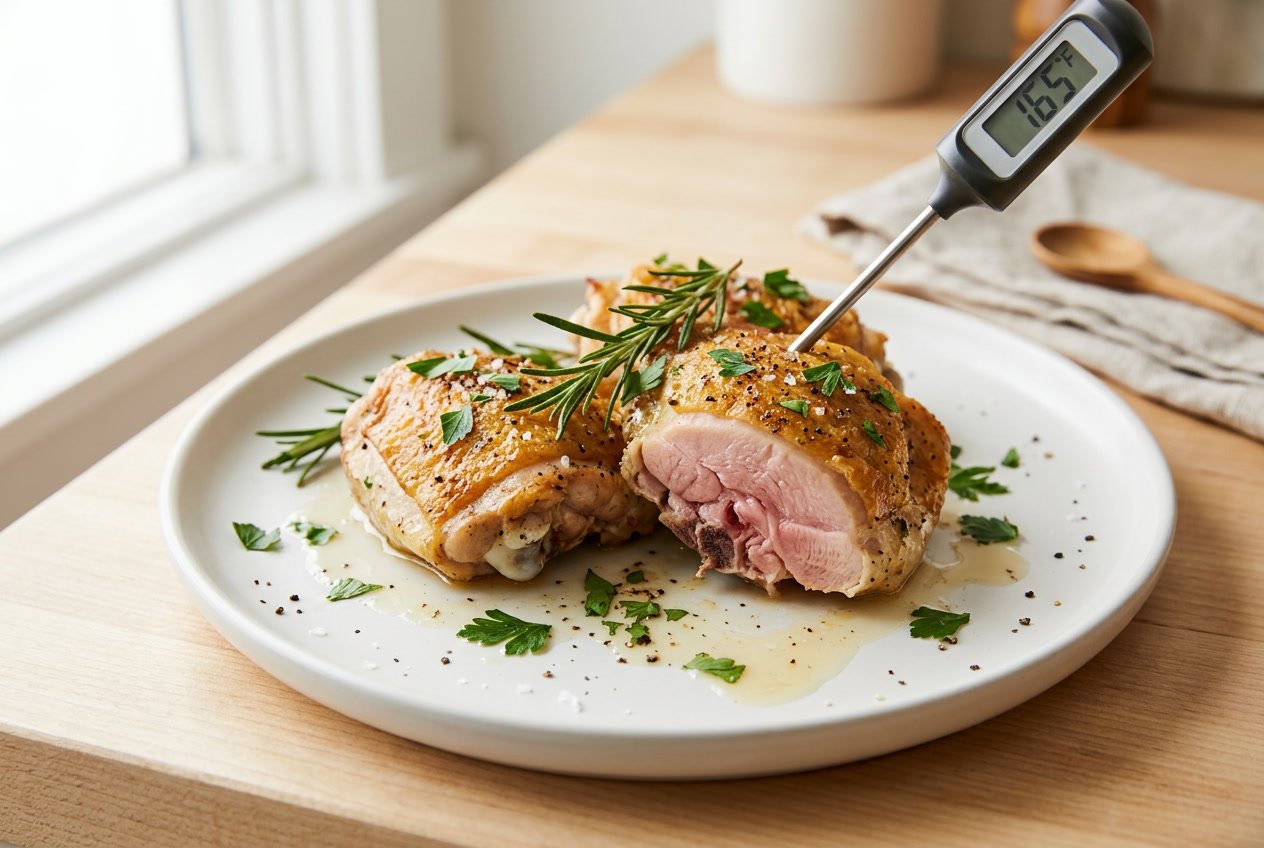
Cook chicken thighs to a reliable internal temperature and check with a thermometer.
Know which pathogens you’re protecting against and how to measure doneness accurately.
Minimum Safe Internal Temperature for Chicken Thighs
Cook chicken thighs until the thickest part reaches at least 165°F (74°C) measured with a food thermometer.
That temperature is the USDA’s safe minimum for all poultry and ensures harmful bacteria are reduced to safe levels.
Professional cooks often aim for 170–175°F (77–79°C) for dark meat to break down connective tissue and improve tenderness.
Insert the probe into the thickest part of the thigh, avoiding bone, for the most accurate reading.
Allow hot meat to rest for a few minutes; carryover heat can raise the internal temperature slightly.
Importance of a Meat Thermometer
A meat thermometer gives you the only consistently accurate way to confirm doneness.
Visual cues like color or clear juices are unreliable, especially for thighs that can remain pink despite safe temperatures.
Use an instant-read thermometer for quick checks and a leave-in probe for roasting.
Calibrate your thermometer periodically and insert it into the thickest, bone-free area.
If you cook multiple pieces, test several thighs because heat can distribute unevenly across a pan or oven.
Risks of Undercooked Chicken
Eating undercooked chicken increases your risk of foodborne illness.
Symptoms from infections range from mild gastrointestinal upset to severe dehydration and systemic complications, particularly in young children, older adults, pregnant people, and those with weakened immune systems.
Undercooked thighs may still harbor bacteria even if the exterior looks done.
Improper cooking, uneven heating, and inadequate resting time all raise the chance that bacteria survive.
Always verify internal temperature rather than relying on texture or color.
Foodborne Pathogens in Poultry
Raw poultry often contains Salmonella and Campylobacter.
Both can cause diarrhea, fever, and abdominal cramps; severe cases may require medical treatment.
Cooking to the safe minimum internal temperature of 165°F (74°C) kills these organisms when measured correctly.
Prevent cross-contamination by washing hands, sanitizing surfaces, and using separate cutting boards for raw poultry.
Refrigerate or freeze raw thighs promptly to slow bacterial growth before cooking.
Understanding Pinkness: When Pink Chicken Thighs Are Safe
You can see pink in cooked chicken thighs and still be safe to eat if you check the meat correctly and follow safe handling.
Focus on measured internal temperature, where the pink appears, and whether juices actually indicate doneness.
Visual Cues Versus Internal Temperature
Color alone does not confirm safety.
Insert a digital thermometer into the thickest part of the thigh, avoiding bone, and look for 165°F (74°C).
That single reading determines safety more reliably than whether the meat looks pink.
Fully cooked thighs may feel firm and release clear juices, but sometimes juices show a faint pink tint.
If the thermometer reads 165°F, you can trust the result even when slight pink remains near the bone.
Check multiple spots on large pieces.
Bones and dense areas heat slower, so test near the bone and at the thickest muscle to be certain.
Why Juices May Stay Pink
Myoglobin and residual blood near the bone can tint juices pink after cooking.
Myoglobin is more concentrated in dark meat like thighs, so heat may not completely alter its color even at safe temperatures.
Smoking, brines, and marinades with salts or nitrates can also affect juice color.
These treatments change muscle chemistry and can preserve a pink hue despite the meat reaching safe internal temperatures.
Don’t rely on juice color alone.
If juices appear pink but your thermometer reads 165°F in the thickest part, the meat is safe.
If you see sliminess, off-odors, or a thermometer below 165°F, discard or cook longer.
Color Myths and Facts
Pink does not always mean undercooked.
Pink can come from bone marrow, myoglobin, or processing, not only undercooking.
Use temperature, not color, as your guide.
Juices often run clear when meat is overcooked; a faint pink tint can persist even when safe.
Clear juices are a helpful sign but not definitive.
Practical checks to use together:
- Measure internal temp: target 165°F (74°C).
- Test near bone and thickest flesh.
- Inspect texture and smell: meat should be firm, not slimy, and odor-free.
These checks give you the most reliable assessment for pink chicken thighs and safe cooking.
Practical Tips for Checking Chicken Thigh Doneness
Use a reliable internal temperature, watch the color and texture of the meat, and account for carryover cooking when you remove thighs from heat.
Small adjustments to probe placement, resting time, and cooking time improve safety and juiciness.
How to Use a Meat Thermometer Correctly
Insert the probe into the thickest part of the thigh, avoiding bone, fat, and gristle.
Aim for a stable reading of 165°F (74°C) as the minimum safe temperature; if you prefer shreddable thighs, finish toward 175–185°F (79–85°C).
Use a digital instant-read thermometer for quick checks and a leave-in probe for oven roasts.
Calibrate or check your thermometer periodically by testing ice water (32°F/0°C) and boiling water (212°F/100°C at sea level).
If the reading jumps or wobbles, wait a few seconds with the probe in place until it stabilizes.
Record cook times and final temps for your preferred method so you repeat successful results.
Checking Texture and Juices
Press the thickest part with your finger or a fork; properly cooked thigh meat feels firm but still yields slightly.
Avoid relying on color alone—dark meat may retain a pinkish tint near bone even at safe temperatures.
Pierce the meat and observe juices: clear or faintly tan juices indicate doneness; pink or red juices mean more time.
Cut into the center only when necessary; excessive cutting drains moisture and increases cooking time.
Combine tactile checks with temperature readings to confirm doneness.
Carryover Cooking Effects
Remove thighs from heat when they are 3–5°F (1–3°C) below your target internal temperature to allow carryover cooking to finish the process.
Thighs with bone retain heat longer, so expect a slightly larger post-rest rise than boneless pieces.
Rest meat for 5–10 minutes on a warm plate, tented loosely with foil.
Resting redistributes juices and raises internal temperature by those few degrees, reducing the chance of undercooked centers while preserving moisture.
Adjust total cooking time in future batches based on how much the temperature rose during rest.
Other Factors That Affect Chicken Thigh Color
Several non-safety factors can change the color of cooked thighs, including salt or acid in a soak, the way you cook them, and the bird’s diet or muscle chemistry.
These items can make fully cooked thighs look pinker or browner without affecting safety when the internal temperature reaches 165°F (74°C).
Impact of Brining and Marinating
Brining or marinating changes meat chemistry and surface color.
Salt in a wet brine increases water retention and can cause myoglobin to bind differently, sometimes giving the meat a pink hue near the surface after cooking.
If you use a cure-containing marinade (with nitrites or celery powder), expect a persistent pink color similar to cured meats.
Acidic marinades (vinegar, citrus) denature proteins and can alter texture and color; they may make the surface appear more opaque or slightly pink.
Marinade colorants (paprika, beet juice, soy sauce) also tint the meat.
To control appearance, rinse light brines briefly, pat thighs dry before cooking, and note whether your recipe includes curing agents.
Cooking Methods and Equipment
Different cooking methods produce different colors even with the same internal temperature.
High dry heat (roasting, grilling) promotes browning on the exterior but can leave bone-adjacent meat pink because heat conducts slower near bones.
Low-and-slow methods (braising, sous-vide) cook evenly and can preserve a pinker color due to less surface browning and retained juices.
Equipment matters: cast iron and stainless pans give strong sears; thin-sheet pans heat faster and can overcook edges.
If you braise, the liquid and steam reduce surface browning and can leave thigh meat pinker while still fully cooked.
Use a probe thermometer in the thickest part, avoiding bone, to verify doneness regardless of color.
pH and Chicken Feed Variations
Meat pH and bird diet affect myoglobin stability and final color.
Higher postmortem pH (less acidic) makes muscle hold water and myoglobin, often producing a darker or pinker appearance after cooking.
Stress before slaughter can lower pH and change color and texture; calmer handling helps predictable results.
Feed components—iron-rich supplements or certain grains—can subtly alter myoglobin content and hue.
Heritage breeds or younger birds also show different color profiles because of muscle composition.
You can’t see pH or feed on packaging, so rely on temperature and texture (firm, juices clear) rather than color alone to judge safety.
Safe Storage and Handling of Cooked Chicken Thighs
Store cooked chicken promptly and keep chilled at or below 40°F (4°C).
Reheat to 165°F (74°C) and avoid leaving leftovers at room temperature for more than 2 hours.
Proper Storage After Cooking
Cool cooked thighs quickly.
Divide large portions into shallow, airtight containers or wrap tightly in foil or plastic within two hours of cooking to limit time in the danger zone (40–140°F / 4–60°C).
Label containers with the date cooked.
Store on a middle or lower shelf to prevent drips on other foods.
Use cooked chicken within 3–4 days in the refrigerator.
For longer storage, freeze at 0°F (-18°C) or lower.
Wrap each portion in freezer-safe paper or seal in vacuum or heavy-duty freezer bags to reduce freezer burn.
Frozen cooked thighs keep quality for about 4–6 months.
Safe Reheating Practices
Reheat only the portion you will eat.
Bring the internal temperature to 165°F (74°C). Check with a food thermometer in the thickest part near the bone.
Use an oven, stovetop, or microwave. Cover food to promote even heating and retain moisture.
If reheating from frozen, thaw overnight in the fridge. You can also reheat directly at a higher oven temperature until the food reaches 165°F.
Do not reheat more than once.
Throw away leftovers that have sat out over 2 hours or show off smells, sliminess, or visible spoilage.


