
Can Cats Have Chicken Thighs? Essential Feeding Guidelines
You can give your cat plain, fully cooked, boneless chicken thigh in small amounts as an occasional treat. Remove the skin, trim excess fat, and avoid any seasoning or bones.
Cooked, unseasoned, boneless chicken thigh is safe for most cats in moderation; do not feed skin, bones, or seasoned meat.
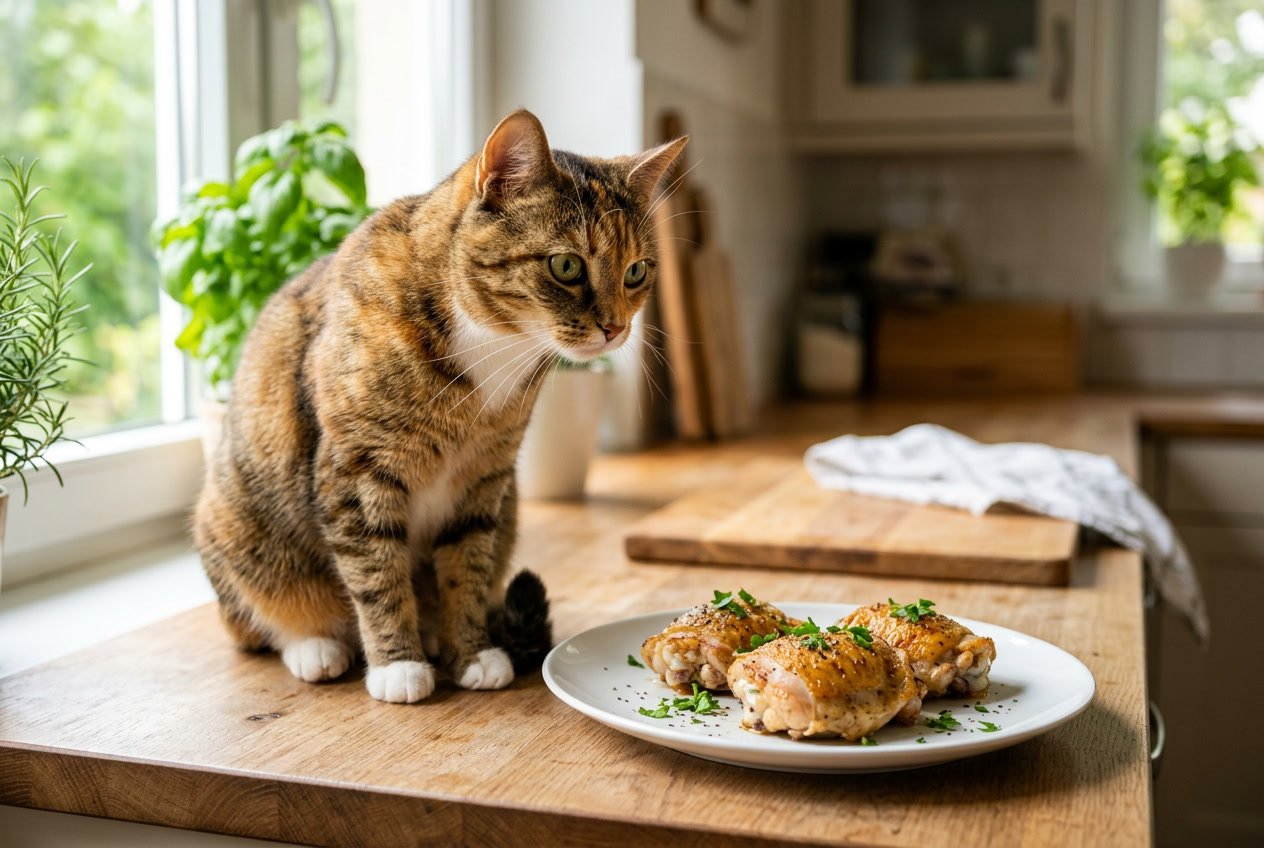
If you want to use chicken thighs as a treat or meal topper, learn safe preparation methods and portion guidance. Be aware of hazards like high fat content, bones, and toxic seasonings.
You should also know when raw chicken poses risks and when to seek a vet’s advice for your cat’s health.
Can Cats Have Chicken Thighs?
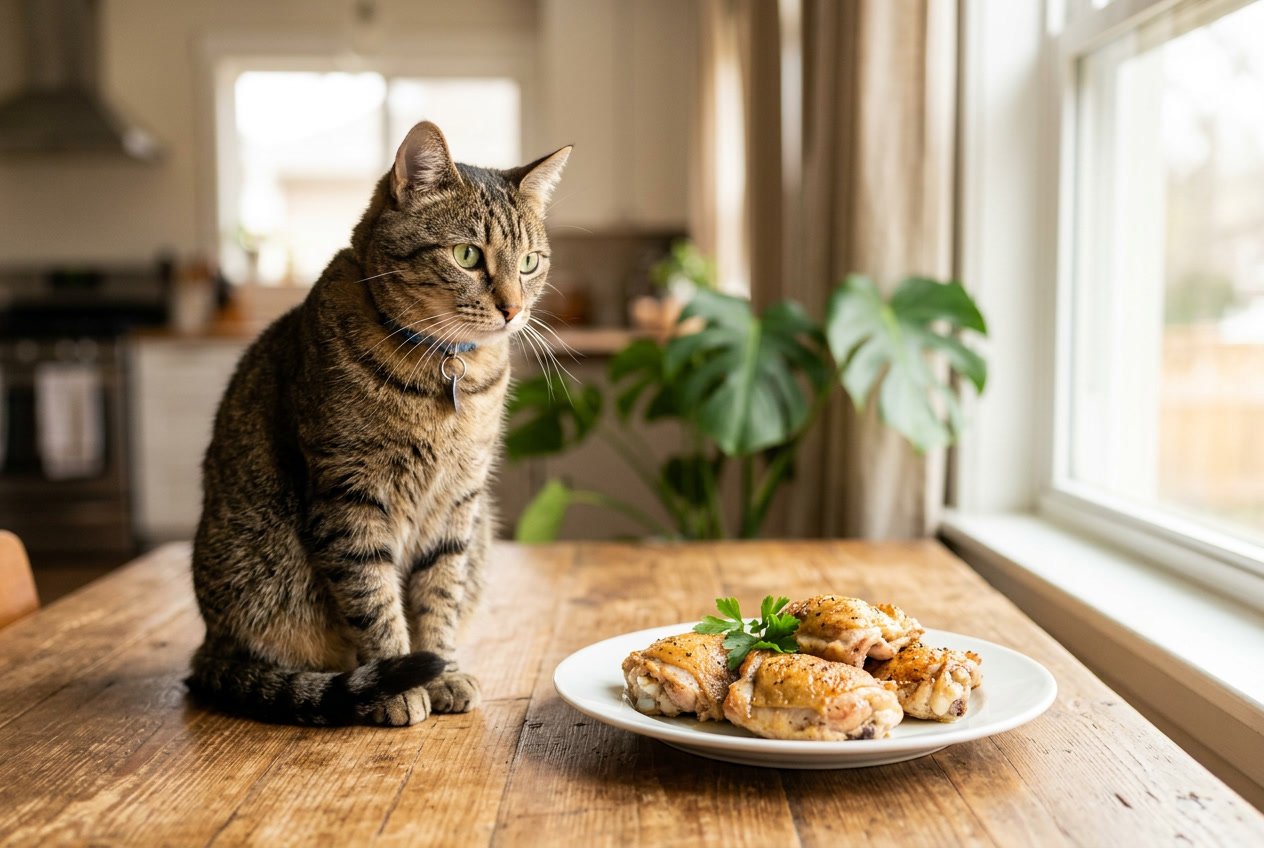
Plain, cooked chicken thighs provide protein and calories. Control portions, remove skin and bones, and avoid seasonings.
Pay attention to fat content and watch for digestive or allergy reactions after first feedings.
Nutritional Profile of Chicken Thighs
Chicken thighs are dark meat with higher fat and calorie content than chicken breast. A 3-ounce cooked, skinless chicken thigh delivers about 160–200 calories, 18–22 g protein, and 8–12 g fat, plus small amounts of iron, phosphorus, niacin, and B vitamins.
Protein supports muscle maintenance and taurine needs for cats. Iron and B vitamins aid energy and metabolism.
The higher fat makes thighs energy-dense, which can help underweight cats but may be risky for inactive or overweight animals. Choose skinless, fully cooked meat and trim visible fat.
Avoid sauces, oils, garlic, or onion, since those ingredients can harm cats.
Benefits of Chicken Thighs for Cats
Chicken thighs supply high-quality animal protein that fits a cat’s obligate carnivore needs. The meat contains essential amino acids, including taurine precursors, which support heart and eye health.
The fat in thighs provides concentrated calories useful for kittens or underweight cats. Thighs also offer micronutrients like iron and niacin that contribute to red blood cell function and metabolic processes.
Use chicken thigh as an occasional topper or treat—no more than a few tablespoons for an adult cat—to boost palatability and add variety without replacing balanced cat food.
Risks Associated With Chicken Thighs
High fat content can cause gastrointestinal upset and pancreatitis if you feed thighs frequently or in large portions. Even a single fatty meal can trigger vomiting or diarrhea in sensitive cats.
Cooked chicken bones splinter and can obstruct or perforate the throat or intestines, so remove all bones before serving. Seasonings, marinades, and added oils often contain garlic, onion, salt, or other toxins—avoid them.
Allergic reactions to chicken occur in some cats. Watch for chronic itching, vomiting, or diarrhea after regular exposure.
If your cat is overweight, diabetic, or has a history of pancreatitis, consult your veterinarian before offering chicken thighs.
Best Practices for Feeding Chicken Thighs to Cats
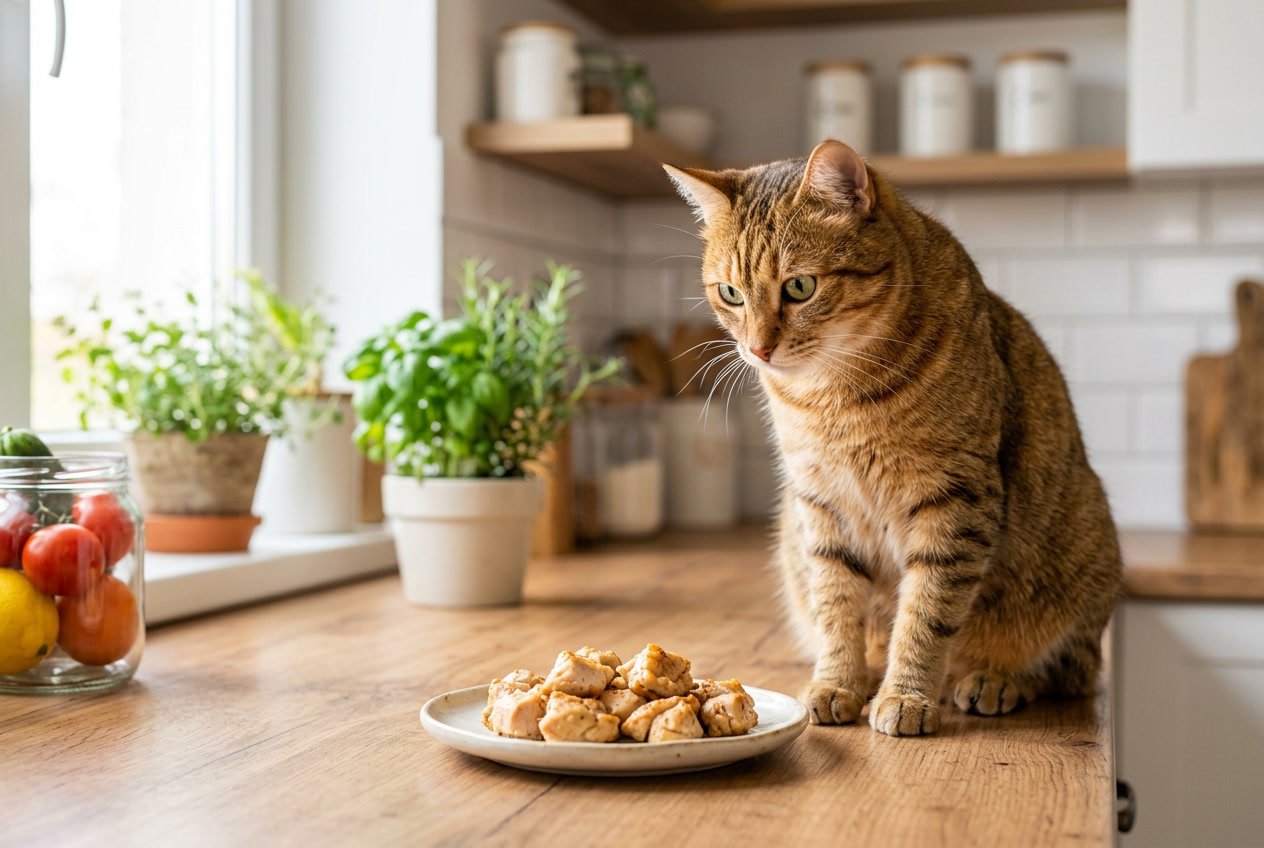
Cook and serve chicken thighs safely. Remove skin and bones, and limit portions to avoid excess fat.
Monitor your cat for digestive upset or allergic reactions after the first few servings.
Preparation and Cooking Guidelines
Cook chicken thighs until the internal temperature reaches 165°F (74°C) to eliminate bacteria. Use plain water or oven-bake without oil, butter, salt, garlic, onion, or other seasonings.
Remove skin and all bones before serving. Skin adds excess fat; bones can splinter and cause choking or internal injury.
Cut the meat into small, bite-sized pieces appropriate for your cat’s size.
Avoid raw chicken unless you follow strict hygiene and a vet-approved raw diet plan. Store cooked chicken in the refrigerator for up to 3 days or freeze portions for longer storage.
Thaw in the fridge and reheat to lukewarm before serving.
Portion Size and Frequency
Offer chicken thighs as an occasional treat or meal topper, not as the sole diet. For most adult cats, limit added cooked chicken thigh to about 1–2 tablespoons (10–30 g) per serving, a few times per week depending on calorie needs.
Adjust portions by your cat’s weight and activity. Overweight or pancreatitis-prone cats should get much smaller amounts or avoid thighs due to higher fat content.
If you use thighs to replace a meal, balance nutrition with a complete commercial diet or vet-recommended supplements.
Watch for vomiting, diarrhea, increased thirst, or weight change after feeding chicken thighs. If any of these occur, stop feeding thighs and consult your veterinarian.
Safe Preparation Methods
Prepare chicken thighs to minimize risk: remove bones and skin, avoid seasonings, and use cooking methods that kill bacteria without adding toxic ingredients.
Feed small, bite-sized pieces and monitor your cat for digestive upset after the first offering.
Removing Bones, Skin, and Seasoning
Remove all bones before serving. Cooked chicken bones can splinter and cause choking, perforation, or obstruction; never give your cat whole or partially chewed thigh bones.
Use boneless thighs or debone after cooking and check carefully for tiny fragments.
Trim and discard the skin. Thigh skin is high in fat and can trigger pancreatitis or weight gain if given regularly.
Cut the meat into small cubes or shreds suited to your cat’s size to reduce choking risk.
Avoid any seasonings, marinades, sauces, onions, garlic, salt, and added oils. Even small amounts of onion or garlic can damage red blood cells.
Plain, unseasoned chicken minimizes toxicity and digestive upset.
Appropriate Cooking Techniques
Cook the thigh thoroughly to an internal temperature of 165°F (74°C) to kill Salmonella and Campylobacter.
Use methods that don’t add fat or harmful ingredients: baking, boiling, poaching, or grilling plain are good choices.
Boiling or poaching keeps meat moist and makes it easy to shred. Bake skinless thighs on a tray at moderate heat until done, then cool before cutting.
Avoid frying or cooking with butter, oils, or sauces as added fats and flavors can harm your cat.
Cool the meat to lukewarm and serve only small portions as an occasional treat.
Store leftovers in the refrigerator up to 3 days or freeze for longer. Always reheat thoroughly before serving again.
Common Hazards With Chicken Thighs
Chicken thighs can pose two main risks: bone-related injuries and high fat content that can upset digestion or cause pancreatitis.
Handle, prepare, and portion the meat carefully to keep your cat safe.
Dangers of Chicken Bones
Cooked chicken bones splinter easily and create sharp fragments. Those fragments can cut your cat’s mouth, throat, stomach, or intestines, or cause an obstruction requiring emergency surgery.
Even small bones can lodge in the esophagus or become wedged in the intestinal tract.
If your cat shows gagging, drooling, vomiting, abdominal pain, or sudden lethargy after eating bones, seek veterinary care immediately.
Always offer only boneless meat. If you must remove bones yourself, inspect the piece carefully and shred the meat into small, manageable bites.
Never let your cat chew on cooked bones or discarded bone fragments.
Fat Content and Digestive Concerns
Chicken thighs contain more fat than breast meat. That higher fat level can trigger vomiting, diarrhea, or, in susceptible cats, acute pancreatitis—a painful inflammation of the pancreas.
Trim skin and visible fat and serve very small portions as an occasional treat. If your cat has a history of pancreatitis, obesity, or gallbladder issues, avoid thighs and choose lean, boneless chicken breast instead.
Introduce thigh meat slowly and watch for signs of intolerance: loose stools, decreased appetite, or abdominal sensitivity. Consult your veterinarian about safe portion sizes and whether chicken thighs fit your cat’s medical profile.
Raw Chicken and Your Cat
Raw chicken can seem natural but carries specific risks you should consider before offering it. Know the biggest hazards: nutritional gaps, parasite exposure, and bacterial infection.
Health Risks of Feeding Raw Chicken
Feeding raw chicken can leave your cat without essential nutrients unless you properly balance the diet. Raw muscle meat lacks adequate calcium, taurine, vitamin E, and certain B vitamins; prolonged feeding can cause bone, heart, and neurological problems.
Kittens, pregnant cats, and seniors face greater danger from an unbalanced raw plan because their nutritional needs are higher.
Raw bone fragments pose mechanical risks. Raw bones can cause tooth fractures, mouth injuries, or intestinal obstruction if swallowed whole.
If you consider raw, consult a veterinary nutritionist to design a complete, species-appropriate recipe and monitor bloodwork regularly.
Bacterial Contamination Concerns
Raw chicken commonly carries Salmonella and Campylobacter, which can sicken your cat and spread to people in the home.
Symptoms in cats include vomiting, diarrhea, fever, and lethargy. Immunocompromised humans—young children, elderly, pregnant people—are at higher risk from household contamination.
Cross-contamination happens during thawing, preparation, and from bowls or surfaces. Use separate utensils, disinfect counters, and wash hands and dishes with hot, soapy water to reduce risk.
Even if your cat tolerates raw chicken, they can shed pathogens intermittently. Consider routine fecal testing and avoid raw feeding if anyone in the household is immunocompromised.
When to Consult a Veterinarian
If your cat shows unusual signs after eating chicken thighs, or if you’re unsure about portion size, preparation, or health risks, seek professional guidance promptly.
A veterinarian can help identify allergic reactions, advise on safe introduction steps, and tell you when an in-person exam is necessary.
Detecting Allergies or Sensitivities
Watch for vomiting, diarrhea, persistent scratching, facial swelling, hives, or sudden lethargy within hours to a few days after feeding chicken thigh.
Note timing, quantity, and whether the meat had skin or seasoning. Keep a food log with dates, serving size, and symptoms to share with your vet.
Some reactions mimic other conditions, so your vet may recommend bloodwork, fecal tests, or an elimination diet.
If your cat has a history of food reactions, chronic gastrointestinal signs, or immune-mediated disease, contact your veterinarian before offering any new meat.
Introducing New Foods Safely
Start with 1–2 teaspoons of plain, fully cooked, boneless, skinless chicken for an adult cat and smaller amounts for kittens.
Offer the new food once and watch for 24–72 hours for changes in stool, appetite, or behavior. Introduce one new protein at a time and avoid combining treats with diet changes.
If you plan to add cooked chicken regularly, discuss appropriate portion limits and whether your cat’s commercial diet already meets taurine and other essentials.
Your vet can recommend supplements or a balanced home-cooked recipe if you want more than occasional treats.
Accessing Online Veterinary Advice
Choose reputable telemedicine services that let you upload photos or videos and access medical records when you talk to a vet online. For non-urgent questions like portion guidance or safe preparation methods, telehealth can resolve concerns quickly.
Ask for a follow-up plan and clear red-flag signs such as persistent vomiting, difficulty breathing, or bloody stool that require in-person care. If the online vet cannot assess severity from images or history, they should advise you to visit a clinic immediately.
Keep your cat’s vaccination and medical history ready when you use online consults.


