
Are Chicken Thighs White Meat? Everything You Need to Know
You might have wondered whether chicken thighs count as white meat when you choose a cut for dinner or a recipe. They’re darker, richer, and more forgiving in the pan than breasts, and that difference comes from how the muscles work and the pigments they contain.
Chicken thighs are dark meat, not white meat.
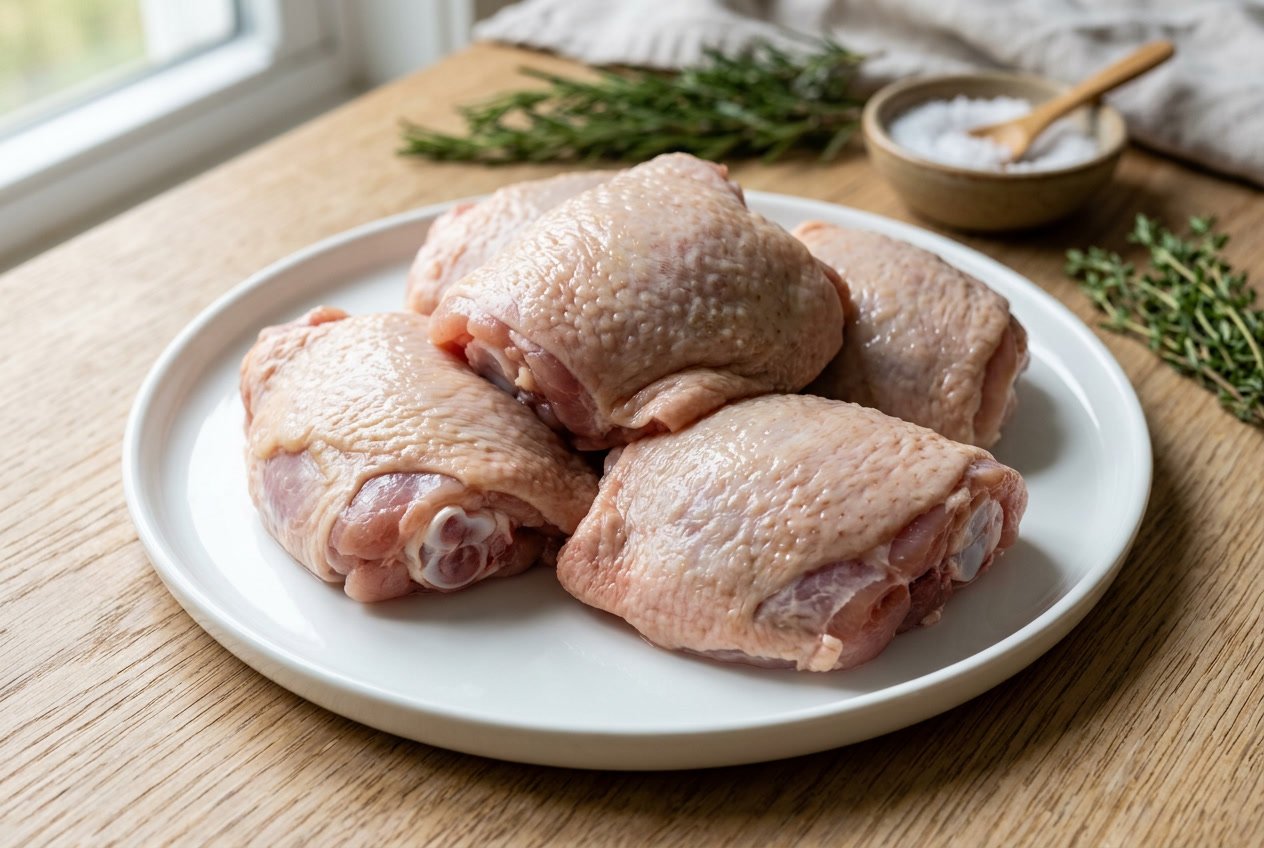
Knowing this helps you pick the right recipes and cooking methods for your meals. It also helps you understand the nutritional trade-offs between cuts.
Are Chicken Thighs White Meat or Dark Meat?
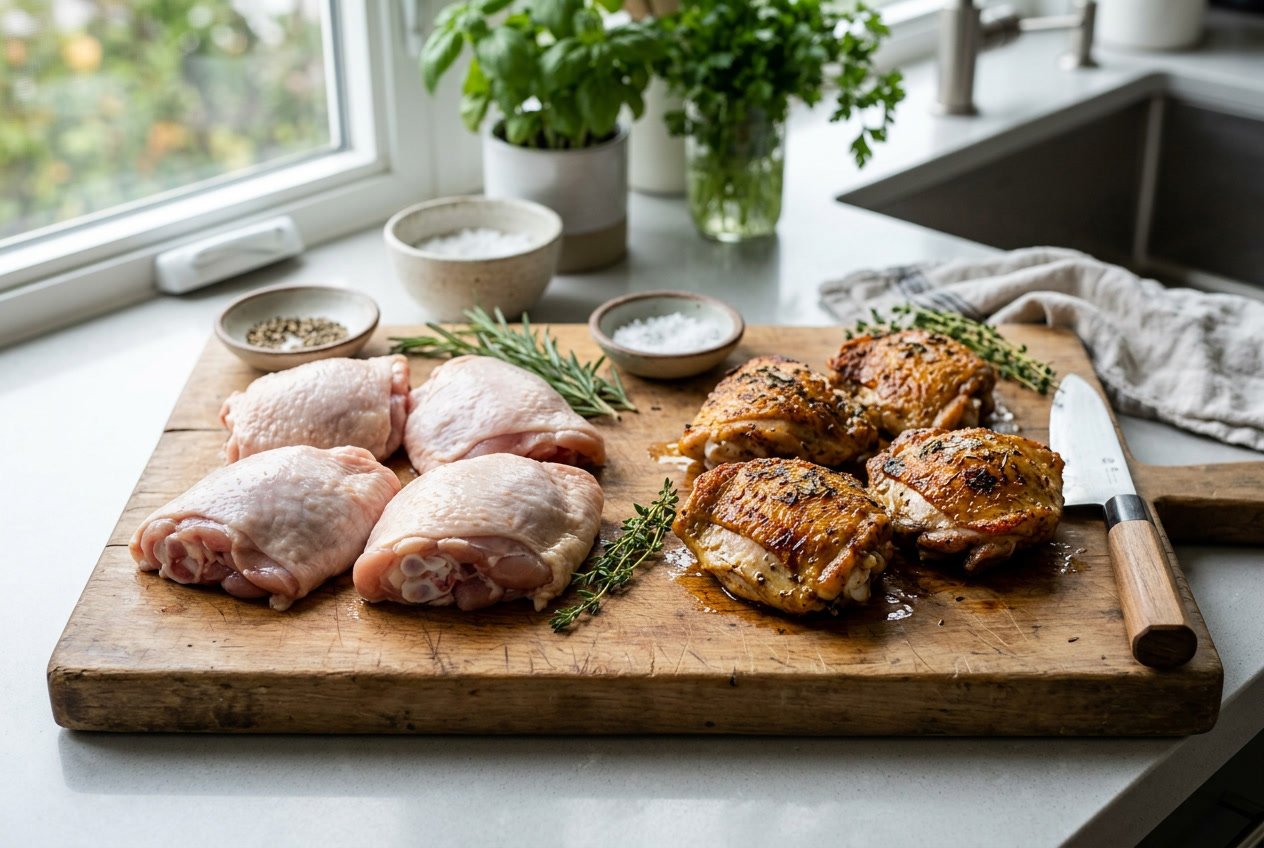
Chicken thighs are dark meat. They contain higher levels of myoglobin and more slow-twitch muscle fibers than breast meat.
This affects their color, flavor, and cooking behavior.
What Defines White Meat and Dark Meat
White meat comes mainly from muscles used for short bursts of activity. These muscles contain fewer mitochondria and less myoglobin.
That lower myoglobin content gives breast and wing meat a pale color and a milder flavor.
Dark meat appears in muscles used continuously for movement and weight support. These muscles have more myoglobin and a larger share of slow-twitch fibers.
The increased fat and connective tissue in dark meat add to its richer taste and juicier texture when cooked.
Why Chicken Thighs Are Classified as Dark Meat
Thighs are part of the bird’s leg and bear most of its weight during standing and walking. Because of that constant use, thigh muscles develop more myoglobin to transport oxygen for sustained activity.
Thighs have slow-twitch fibers, higher intramuscular fat, and more connective tissue than breast meat. You’ll notice thighs stay moist at higher or longer cooking times and hold flavor better in braises, grills, and roasts.
Comparison with Chicken Breast
Chicken breast consists mainly of fast-twitch fibers used for short flights. It contains less myoglobin and appears white after cooking.
Breasts are leaner and cook faster, which raises the risk of drying out if overcooked.
Thighs tolerate longer cooking and high-heat searing without drying because of their fat and collagen. If you want juiciness and a bolder flavor, choose thighs; for lower fat and a milder profile, choose breast.
The Science Behind Chicken Meat Color
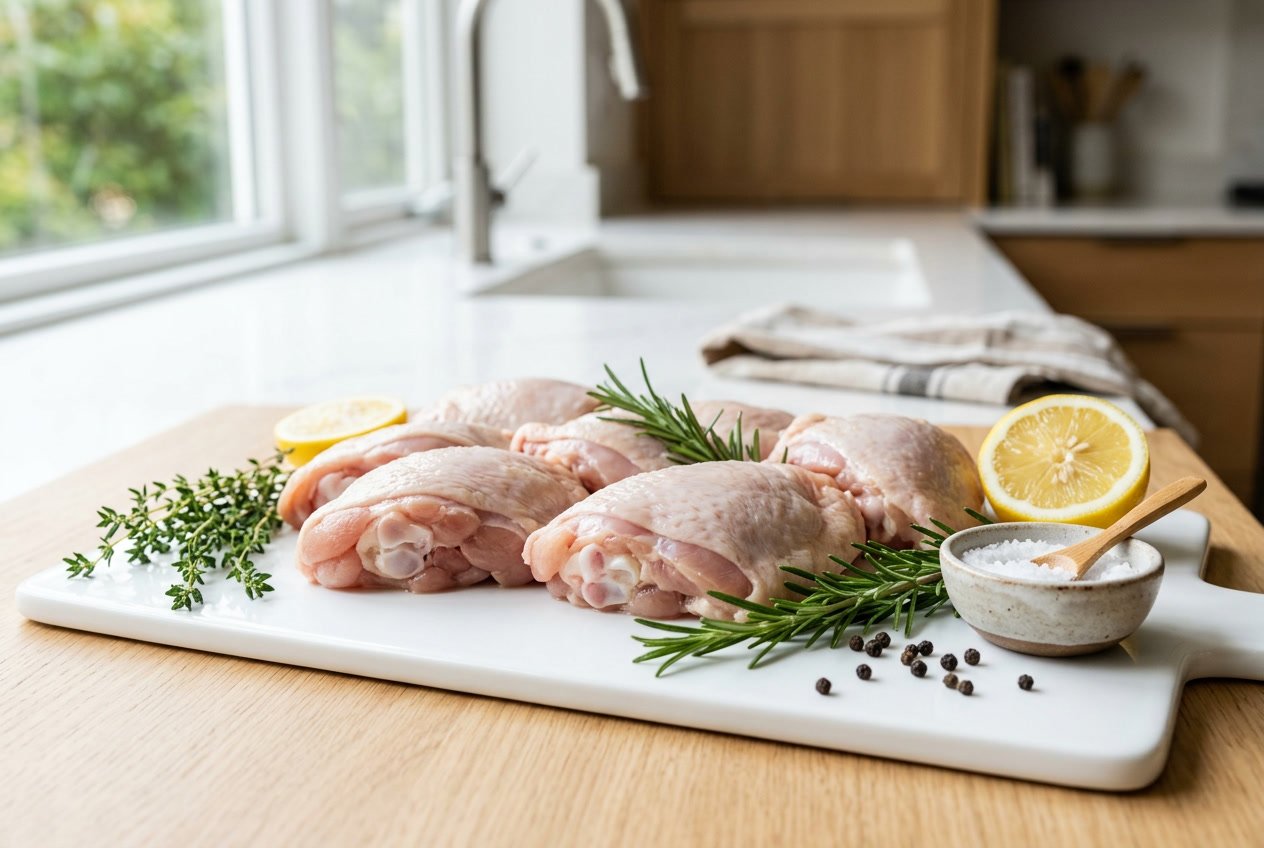
Chicken meat color comes from differences in muscle proteins, fiber types, and how the bird uses those muscles. These factors affect myoglobin concentration and the amount of connective tissue.
They also influence how the meat behaves when cooked.
Role of Myoglobin in Muscle Tissue
Myoglobin is an oxygen-binding protein inside muscle cells that gives meat its color. Muscles with higher myoglobin appear darker because the protein stores more oxygen for sustained activity.
When you cook meat, myoglobin denatures and changes color, but the initial myoglobin level determines whether a cut is classified as dark or white.
Myoglobin also influences flavor and nutrient content. Darker cuts tend to contain slightly more iron and heme-related compounds, which can alter taste.
Slow-Twitch vs. Fast-Twitch Muscle Fibers
Slow-twitch fibers rely on aerobic metabolism and contain more myoglobin and mitochondria. These fibers support sustained activities like standing and walking, so they dominate in chicken legs and thighs.
Fast-twitch fibers use anaerobic metabolism and have less myoglobin. They power short bursts of activity, and breast muscles in chickens are mostly fast-twitch, which explains their lighter color.
Fiber composition also affects texture. Slow-twitch fibers have more connective tissue between fibers, which converts to gelatin during long, moist cooking.
That gelatin adds succulence and a tender mouthfeel to dark meat.
Impact of Chicken Activity Levels on Meat Type
How much a bird moves changes muscle use and therefore meat properties. Free-range or older birds that use their legs more develop more myoglobin in leg muscles, deepening color and intensifying flavor.
Breast muscles remain lighter because chickens rarely fly long distances. Those muscles work in short bursts and retain more fast-twitch fibers.
Muscles that work harder accumulate more connective tissue, which benefits braises and slow cooking because collagen breaks down into gelatin. That gelatin enhances juiciness and mouthfeel in thighs and drumsticks.
Nutritional Differences Between White and Dark Meat
White meat and dark meat differ mainly in fat, calories, and some micronutrients. Breast meat is leaner with fewer calories, while thighs and legs supply more fat, iron, and certain B vitamins.
Fat Content and Calories
Dark meat (thighs, legs) contains more total fat than white meat (breast, wings).
A 3-oz cooked skinless chicken breast typically provides about 2–3 g fat and around 130–140 kcal.
A 3-oz cooked skinless thigh provides about 6–7 g fat and around 150–170 kcal.
Saturated fat is higher in dark meat, though most of the fat is unsaturated.
If you keep the skin on, calories and fat roughly double; skin adds most of the saturated fat.
Choose skinless thighs for a compromise: more flavor and moisture with only a moderate calorie increase.
Protein and Micronutrient Profile
Both white and dark meat supply high-quality, lean protein.
Per ounce, breast gives slightly more protein by weight (breast about 9 g per 3 oz cooked vs. thigh about 7–8 g), making breast more protein-dense per calorie.
Dark meat tends to have higher concentrations of vitamin B12 and niacin, plus other B vitamins.
If you need protein for muscle maintenance, either cut works. If you track protein per calorie, breast is the leaner choice.
If you want additional B vitamins without supplements, choose thigh or leg occasionally.
Iron and Zinc Levels
Dark meat contains noticeably more iron and zinc than white meat.
That difference comes from higher myoglobin in leg and thigh muscles, which increases heme iron content and contributes to the darker color.
If you have marginal iron needs or want more dietary zinc for immune function, dark meat can help.
A serving of thigh provides a meaningful boost in iron and zinc compared with the same-size breast serving.
Chicken Cuts: White Meat vs. Dark Meat
White meat tends to be leaner and milder in flavor, while dark meat contains more fat and myoglobin, giving it richer taste and juicier texture.
Cuts vary by muscle use. Some are single large muscles, others are groups of muscles with fat between them.
What Parts of Chicken Are White Meat
White meat comes primarily from the breast and the wing portions.
The breast is one large, single muscle (often sold as boneless chicken breast or skinless chicken breast) that contains less myoglobin, so it stays pale after cooking.
Wings are generally classified as white meat despite containing more connective tissue than the breast. They are often sold whole or split into drumette and flat pieces and work well for roasting, grilling, smoking, or frying.
Tenderloins are small strips of white meat that lie beneath the breast and are popular for quick-cooking methods and breaded preparations.
Because white meat has less fat, you should avoid overcooking to prevent dryness. Use moist-heat methods or sauces when preparing boneless or skinless chicken breast to retain juiciness.
What Parts of Chicken Are Dark Meat
Dark meat comes from muscles that work continuously, so they contain more myoglobin and intramuscular fat.
The primary dark cuts are thighs and drumsticks, either bone-in or boneless chicken thighs.
These cuts tolerate longer cooking times and dry-heat methods like roasting, grilling, and pan-frying without drying out.
You’ll also find dark meat in parts of a whole chicken near the legs and in the back where muscles are used more.
Dark meat’s higher fat content yields stronger flavor and greater tenderness, making it a better choice for braises, stews, and dishes where you want juicy texture and bold taste.
Where Chicken Thighs Fit Among Other Cuts
Chicken thighs are classified as dark meat and sit between breasts and drumsticks in terms of size and versatility.
You can buy them bone-in or boneless, skin-on or skinless.
Boneless chicken thighs are convenient for stir-fries and kebabs, while skin-on thighs crisp well in the oven or skillet.
Compared with boneless chicken breast, thighs contain more fat and collagen, so they remain moist with high-heat cooking and slow braising.
Compared with drumsticks, thighs offer larger flat muscle surfaces that are easier to slice or debone for recipes.
If you work with a whole chicken, thighs are located on the bird’s lower body adjacent to the drumsticks and contribute to richer stock when roasted or simmered with the chicken back.
Choose thighs when you want forgiving cooking and more pronounced flavor.
Culinary Qualities of Chicken Thighs
Chicken thighs deliver richer flavor, higher fat, and greater moisture retention than breast meat.
They stand up well to high-heat searing, long braises, and bold seasonings without drying out.
Flavor and Texture Profile
Thighs have a pronounced, savory taste because the muscle contains more fat and myoglobin than breast meat.
That fat carries and amplifies spices, marinades, and sauces, so a simple rub often yields deep flavor.
Texture is denser and slightly more fibrous than white meat, which gives you a satisfying chew when cooked properly.
Slow cooking breaks down connective tissue and collagen, turning the thigh tender without losing flavor.
For quick methods, high heat and a short cook time preserve juiciness while developing a brown crust.
Moisture Retention and Tenderness
Thighs retain moisture better than breasts due to higher intramuscular fat and connective tissue.
That makes them forgiving if you slightly overcook them; they stay succulent instead of drying out.
To maximize tenderness, use a meat thermometer and aim for 165–175°F (74–79°C) depending on method.
Use the lower end for quick cooking, and the higher for braising where collagen converts to gelatin.
Brining or a short marinade also improves moisture retention and seasoning penetration.
Rest the cooked thighs for 5–10 minutes to let juices redistribute before cutting.
Bone-In vs. Boneless, Skin-On vs. Skinless Thighs
Bone-in thighs add flavor and conduct heat differently. The bone slows cooking near the joint, reducing overcooking risk and enhancing juiciness.
Choose bone-in for braises, roasts, or when you want deeper flavor.
Boneless thighs cook faster and are easier to portion for stir-fries, skewers, or weeknight sautés.
Skin-on thighs provide crisp texture when roasted or pan-seared. The rendered fat bastes the meat and boosts moisture retention.
Skinless thighs have less external fat and reduce cook time, but they benefit more from marinades or braising to stay tender.
Quick reference:
- Bone-in, skin-on: best for braising, roasting, maximum flavor.
- Boneless, skin-on: good for pan-searing with crispy skin.
- Boneless, skinless: ideal for quick sautés, curries, or when low surface fat is desired.
Best Cooking Methods for Chicken Thighs
Chicken thighs respond well to high dry heat, long gentle cooking, and quick hot oil.
Use a thermometer, control moisture, and choose the method that fits whether you want crispy skin, shreddable meat, or a fast weeknight dinner.
Grilling and Roasting
Grill bone-in thighs over a two-zone fire. Sear skin-side down on direct high heat for 5–6 minutes, then move to indirect heat and cook covered until the thickest part reads 175°F.
That higher target lets collagen convert to gelatin, giving you juicy meat without rubbery connective tissue.
For oven roasting, set the oven to 400–425°F. Arrange skin-side up on a wire rack over a rimmed sheet pan so fat drips away and air circulates.
Bone-in thighs usually need 35–45 minutes; boneless take 20–30 minutes. Don’t crowd pieces; leave 1–1.5 inches between thighs.
Braising and Stewing
Braising uses low liquid and long time to turn thighs into tender, shreddable meat.
Brown skin-side first to render fat and build flavor, then add flavorful liquid (stock, wine, or tomatoes) to come one-third to halfway up the thighs.
Simmer gently on the stovetop or in a covered oven at 300–325°F for 45–90 minutes depending on size and bone-in status.
Stewing fully submerges cut-up thighs and cooks at a low simmer until the meat falls from the bone.
Both methods benefit from longer cook times to break down collagen. Aim for final internal temperatures toward 185°F for the softest texture.
Finish by adjusting seasoning and reducing cooking liquid to concentrate flavor.
Frying and Pan-Frying
For crisp skin and quick results, pat thighs completely dry and season well. Use a heavy skillet and start with the skin side down in a cold pan over medium heat so the fat renders slowly; this prevents exterior burn with unrendered fat underneath.
Let the thighs cook undisturbed for 7–10 minutes until the skin releases and browns. Flip them and finish cooking in the pan or transfer to a 400°F oven for even cooking.
Heat oil to 350–375°F for deep-frying and achieve a uniformly crisp crust. Use a thermometer and fry in batches to keep the oil temperature steady.
For boneless thighs, pan-fry 5–7 minutes per side over medium-high until the center reaches 165°F. Rest briefly before serving to let juices redistribute.
Food Safety and Cook Time
Use an instant-read meat thermometer to check doneness. The USDA minimum safe internal temperature is 165°F, but bone-in thighs taste better when cooked to 175–185°F to break down collagen and improve texture.
Insert the probe into the thickest part, avoiding the bone. Keep raw thighs separate from ready-to-eat foods and sanitize surfaces and utensils.
Refrigerate cooked thighs within two hours in an airtight container for up to four days. You can freeze them properly wrapped for up to three months.
When reheating, bring the internal temperature back to 165°F.
How Chicken Thighs Compare in Popular Dishes
Chicken thighs deliver richer flavor, more forgiving texture, and better value in many recipes. Their higher fat and connective tissue change cooking time and technique compared with breasts.
They often improve sauces, braises, and stocks.
Cuisine-Specific Uses
Thighs excel in high-heat grilling and slow braises. On the grill, bone-in thighs cook slower than breasts but resist drying.
You get crisp skin and juicy meat, making them ideal for grilled chicken. For quick weeknight meals, boneless skinless thighs sear well and tolerate a range of marinades—soy, citrus, or spice rubs—without becoming chalky.
In dishes that require long simmering such as curries, stews, and many Asian and Latin preparations, thighs hold up better than breasts. Their fat keeps meat tender when reheated, so leftovers stay moist.
If you want leaner results, trim visible fat or remove skin after cooking.
Traditional Recipes Featuring Thighs
Thighs appear in classic comfort and regional dishes for good reasons. In coq au vin and braised French recipes, thigh meat releases gelatin that enriches the sauce; use bone-in thighs for extra depth.
Roasted garlic chicken recipes benefit from thighs’ higher fat content, which carries the garlic and herb flavors and produces a crisp, brown skin.
You’ll find thighs in many traditional preparations that also use offal and richer parts. These dishes seek bold flavor rather than leanness.
If a recipe specifies breast for texture, you can usually swap in thighs but expect a deeper flavor and slightly different mouthfeel.
Broth, Stock, and Comfort Foods
Use thighs and their bones to make robust chicken stock and homemade chicken broth. Thigh bones and skin yield more collagen than breasts, producing a fuller mouthfeel and a richer, slightly gelatinous stock when cooled.
That quality improves soups, ramen, and comfort foods where body matters. Simmer gently and skim fat as needed for clear chicken broth.
Roast thigh bones first if you want to deepen flavor for nourishing bone broth. Thigh-based stocks pair especially well with dishes that need an umami backbone, such as stews and braises.
Serve grilled chicken with a pan sauce for extra depth. You can also use leftover roasted thighs to make quick broth for weeknight soups.


