
Are Chicken Thighs Protein? Nutrition Facts, Comparisons & Health
Chicken thighs give you a lot of protein—typically about 20–30 grams per 4-ounce cooked serving depending on whether the thigh is skinless, boneless, or cooked with added fats.
If your goal is to hit protein targets while keeping meals flavorful and affordable, chicken thighs serve as a strong, reliable source of high-quality protein.
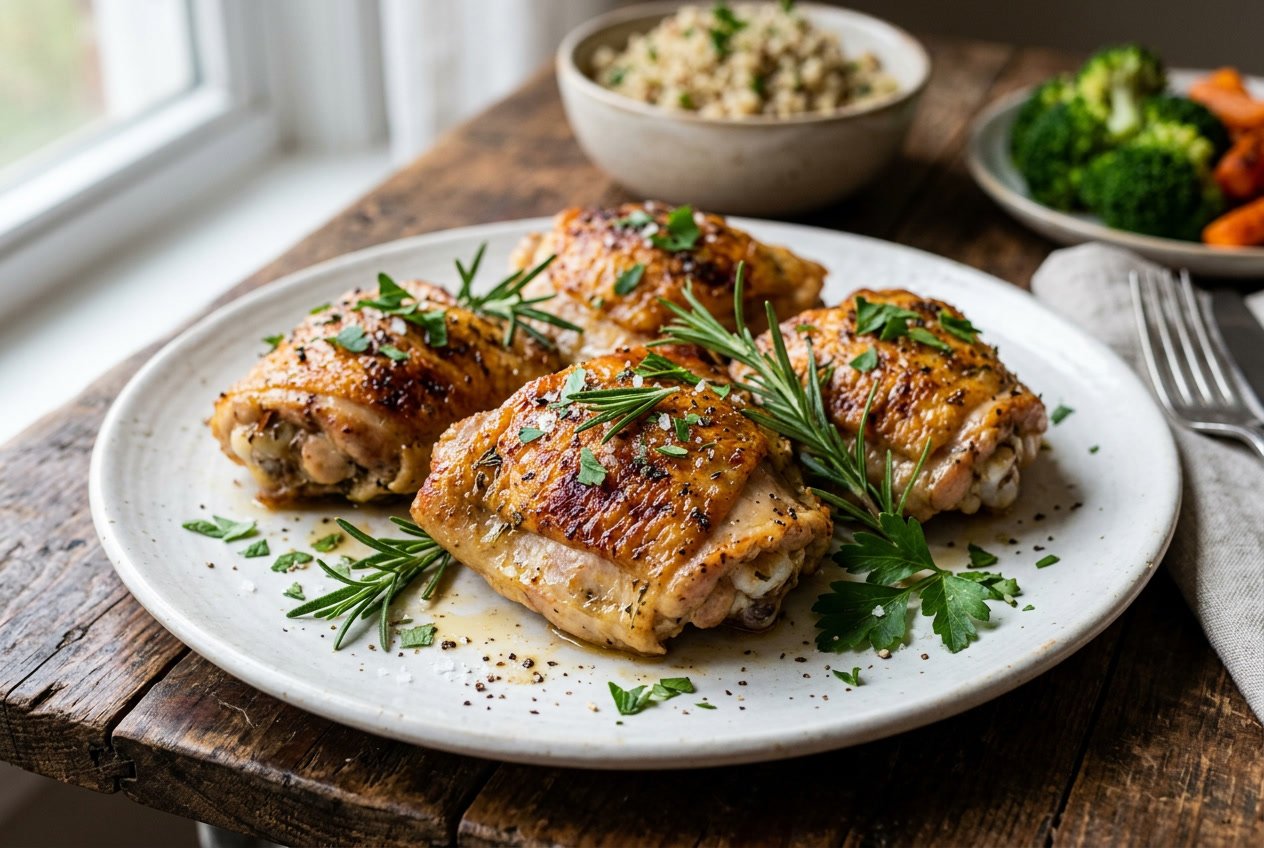
Cooking methods, skin-on versus skinless choices, and portion size change the protein and calorie numbers.
You’ll find out how thighs compare to breasts and other cuts, plus learn about protein amounts, amino acid quality, broader nutrition facts, and practical cooking tips.
How Much Protein Is In Chicken Thighs?
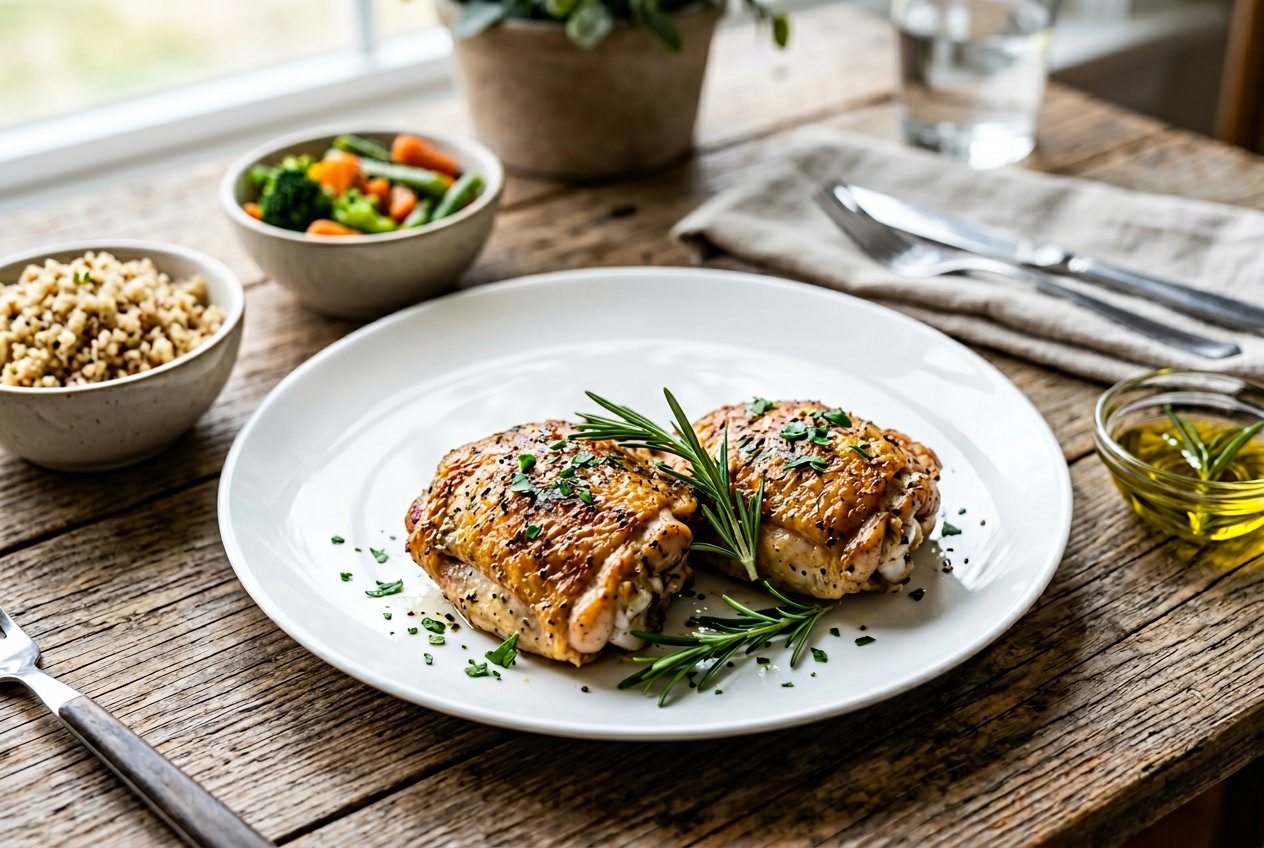
Chicken thighs supply a substantial amount of high-quality protein, varying by portion, skin, and cooking method.
Expect roughly mid-20s grams of protein per 100 g cooked, and plan portions around that when tracking daily intake.
Protein Content Per 100 Grams
Cooked, boneless, skinless chicken thigh provides about 25–27 grams of protein per 100 grams.
Grilling or roasting concentrates protein by weight compared with raw measurements.
Use USDA-style estimates when tracking and assume about 26 g protein per 100 g cooked for meal planning.
That figure reflects the edible meat only; bones and skin change the measured yield and protein per piece.
Protein Amount Per Thigh
A typical boneless, skinless chicken thigh (about 75–90 g cooked) contains roughly 19–24 grams of protein.
If the thigh is bone-in, weight and edible meat shrink, so protein per whole piece drops to about 15–20 grams depending on bone size.
Weigh the cooked meat or use package net weight for raw boneless pieces when counting macros.
Portion control matters: two small thighs usually equal one large breast in protein.
Protein In Skinless Vs. Skin-On Thighs
Skinless chicken thigh and skin-on thigh contain nearly the same protein in the meat itself.
The difference lies in total calories and fat: skin-on adds fat and weight but not meaningful extra protein.
If you eat a skin-on thigh without removing the skin, calculate protein based on the meat portion only or use nutrition labels that specify “meat and skin.”
For leaner protein per calorie, choose skinless chicken thigh.
For flavor and satiety with slightly higher calories, pick skin-on.
Chicken Thigh Protein Quality And Amino Acid Profile
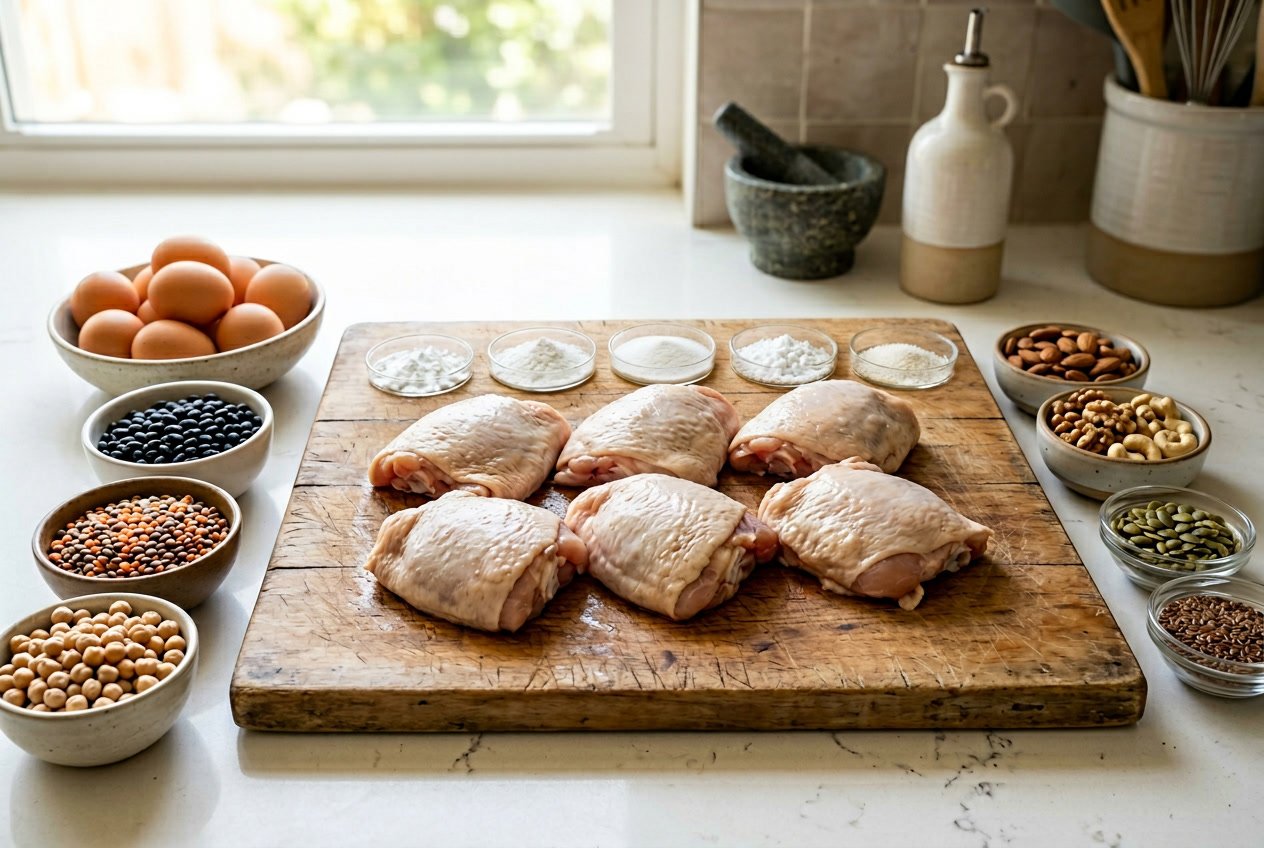
Chicken thighs offer a dense, high-quality source of muscle-building amino acids, along with more fat and iron than breast meat.
You get a complete set of essential amino acids and a protein that supports repair and growth.
Complete Protein Source
Chicken thigh protein contains all nine essential amino acids your body cannot synthesize, making it a complete protein for supporting muscle protein synthesis.
Per 100 g cooked, thighs supply roughly 26–28 g of protein, including substantial amounts of leucine, isoleucine, and valine, the branched-chain amino acids (BCAAs) most linked to stimulating muscle repair.
You also obtain methionine and lysine in amounts that complement typical plant-based foods, so thighs pair well with grains or legumes if you’re mixing protein sources.
The presence of heme iron and B vitamins in thigh meat supports energy metabolism needed during recovery and training.
Digestibility And Bioavailability
Chicken thigh protein is highly digestible; cooking denatures proteins and improves enzymatic access without destroying essential amino acids.
Poultry ranks near the top among animal proteins for biological value and digestibility scores, so your body can use most of the amino acids you eat for tissue synthesis.
Fat content in thighs slightly slows gastric emptying, which can moderate amino acid absorption rates but does not reduce total bioavailability.
If you track precise timing for post-workout feeding, pair a cooked thigh portion (around 100–150 g) with a fast-digesting carb to accelerate amino acid delivery to muscles.
Chicken Thigh Nutrition Facts Beyond Protein
Chicken thighs provide concentrated calories, a notable amount of fat (with both saturated and unsaturated types), and several key vitamins and minerals like iron, zinc, selenium, phosphorus, and B vitamins.
These elements affect energy intake, satiety, and micronutrient status.
How you buy and cook thighs changes their impact on your diet.
Calories In Chicken Thighs
A cooked, skinless chicken thigh typically provides about 200–220 calories per 100 grams.
Skin-on versions often range higher due to added fat.
One medium cooked thigh (about 84 g cooked) supplies roughly 170–180 calories; two thighs double that quickly.
If you remove the skin, you cut about 30–40 kcal per 100 g and lower total fat by several grams.
Grilling or baking keeps calories close to the raw-measured value, while frying increases energy density because oil is absorbed.
Use portion control and simple swaps (skinless, dry-heat cooking) when you need to reduce calories without losing protein.
Fat Content In Chicken Thighs
Chicken thighs contain roughly 8–11 g of total fat per 100 g cooked, depending on skin and whether bone is present.
Saturated fat typically sits around 2.5–3 g per 100 g; the remainder is monounsaturated and polyunsaturated fats.
Skin-on thighs add the largest fat increase; removing skin lowers total and saturated fat substantially.
A cooked skinless thigh provides about 6–7 g fat and ~26 g protein per 100 g, while a skin-on thigh shifts toward ~10 g fat for the same protein.
Pan-frying or deep-frying increases total and added fats, whereas grilling, broiling, or baking limits added fat and preserves the thigh’s native fats.
Micronutrient Profile
Per 100 g cooked, chicken thighs supply meaningful amounts of iron (~1.0–1.5 mg), zinc (~2 mg), and selenium (~20–30 mcg), plus B vitamins like niacin (B3) and B6.
These nutrients support oxygen transport, immune function, thyroid antioxidant systems, and energy metabolism.
Typical values you can expect:
- Iron: ~1.0–1.5 mg per 100 g
- Zinc: ~1.5–2.5 mg per 100 g
- Selenium: ~20–30 mcg per 100 g
- Niacin (B3): ~6 mg per 100 g
- Vitamin B6: ~0.3–0.5 mg per 100 g
Choose skinless, roasted or grilled thighs to preserve micronutrients while minimizing extra fat.
Bone-in thighs may retain slightly different mineral levels and more moisture, which can affect cook yields but not drastically change micronutrient density.
Comparing Chicken Thighs To Other Chicken Cuts
Chicken thighs provide substantial protein and more fat and calories than leaner cuts.
You’ll trade some protein-per-100g for richer flavor and higher energy density when choosing thighs over breast.
Drumsticks and wings sit between those extremes.
Chicken Thighs Versus Chicken Breast
A skinless chicken breast delivers the most protein by weight—about 30–32 g per 100 g when cooked.
Skinless chicken thighs typically provide roughly 24–26 g of protein per 100 g cooked, so you get slightly less protein for the same weight but more fat and calories.
A skinless chicken breast gives you more protein per calorie if you want muscle maintenance with calorie control.
If you need extra calories or prefer juicier meat, thighs add about 4–8 g more fat per 100 g and modestly more calories, which helps if you’re bulking or following a moderate-carb or low-carb plan.
Key nutrition snapshot (approximate, cooked, skinless):
- Chicken breast: ~32 g protein, lower fat, ~165 kcal per 100 g.
- Chicken thigh: ~25 g protein, higher fat, ~195 kcal per 100 g.
Drumsticks And Wings: Protein And Fat Content
Drumsticks and wings fall between breast and thigh in protein density but often carry more fat when eaten with skin.
A skinless drumstick gives about 23–24 g protein per 100 g cooked.
A wing (meat portion) provides roughly 24 g per 100 g, but typical preparation often includes skin and frying, increasing calories and fat.
If you remove skin and grill or roast, drumsticks and wings offer similar protein to thighs with slightly fewer calories than wings prepared with skin or batter.
Frying or leaving the skin on can add 50–100+ extra calories per piece, which matters when tracking intake.
Practical tips:
- Eat skinless cuts to maximize protein-to-calorie ratio.
- Choose thighs or skin-on pieces when you need extra energy or prefer flavor.
- For strict calorie control, prioritize skinless breast as your primary protein source.
Is Eating Chicken Thighs Healthy?
Chicken thighs deliver concentrated protein plus several micronutrients.
Their health impact depends largely on whether you remove the skin and how you cook them.
They provide more iron, zinc, and flavor than breast meat, but also contain more fat and calories when eaten with skin.
Benefits Of Chicken Thighs
Chicken thighs give you about 26–32 g of protein per 4-ounce (cooked) portion, which supports muscle repair and satiety.
You also get higher amounts of iron and zinc compared with the same portion of breast, which helps with energy, immunity, and nutrient absorption.
If you choose skinless thighs, total fat drops substantially—often to around 6–8 g per 4-ounce serving—making them closer to lean-protein choices while keeping juicy texture and richer flavor.
Monounsaturated fats present in dark meat can be part of a balanced diet when consumed in moderation.
Choose cooking methods that limit added oil and heavy sauces.
Baking, braising, or grilling reduces added calories compared with deep-frying.
For athletes or higher-calorie needs, thighs offer an affordable, nutrient-dense option.
Potential Drawbacks To Consider
Chicken thighs with skin raise calories and saturated fat: a 4-ounce skin-on serving can nearly double fat and add roughly 70–80 extra calories compared with skinless.
Processed chicken products and heavy sauces often add sodium and refined ingredients, so watch packaged marinades and pre-made dishes.
Overcooking or charring can produce unwanted compounds; use moderate heat and avoid prolonged charring.
If you follow a strict very-low-fat plan, breasts will be leaner ounce for ounce.
Balancing portion size, removing skin when desired, and using low-fat cooking techniques keeps chicken thigh nutrition aligned with healthy eating.
Cooking Methods And Their Effects On Protein In Chicken Thighs
Cooking changes weight and moisture, so the protein concentration per gram rises as water cooks away.
How you cook also affects added fats and calories, but protein loss is typically small if you avoid extreme temperatures or prolonged cooking.
Best Ways To Preserve Protein
Cook to the safe internal temperature of 165°F (74°C) and remove from heat promptly to avoid overcooking.
Overcooking mainly dries the meat and concentrates protein per weight, but very long exposures can slightly degrade some proteins and reduce juiciness.
Use gentle, high-moisture methods such as braising, stewing, or sous-vide to retain moisture and keep most protein intact.
If you grill or roast, let the thigh rest 5–10 minutes; resting redistributes juices so you lose less weight when slicing.
Avoid deep-frying if you care about nutrient-dense servings, because breading and oil add calories that dilute the protein-per-calorie value.
If you weigh portions for tracking, weigh cooked meat and use cooked-entry nutrition data.
That prevents errors from the typical 20–30% weight loss that occurs during cooking.
Skinless Or Skin-On For Health
Choosing skinless chicken thigh removes most surface fat and lowers calories by roughly 50–70 kcal per thigh compared to skin-on, depending on size.
Skinless thighs still supply the same grams of intrinsic muscle protein as skin-on. The difference lies in added fat and calories, not protein amount.
If you want higher protein density per calorie, trim skin and visible fat before cooking.
If you prefer flavor and plan to remove skin after roasting, remember that some fat renders into the meat. This increases calories slightly but leaves protein largely unchanged.
For baking or grilling, cook skin-on thighs on a rack to allow fat to drip away while protecting moisture.
For the lowest fat intake, sear skinless thighs in a nonstick pan or use an air fryer with minimal oil.


