
Are Chicken Thighs or Breasts Healthier? Nutrition, Pros, and Cons
The healthier choice depends on your goals. Choose chicken breast if you want lower calories and less fat. Pick chicken thigh if you prefer more iron, zinc, and a richer flavor.
If you aim to reduce fat and boost protein per calorie, chicken breast is usually the better option. If you prioritize taste, certain micronutrients, or satiety, chicken thigh can be a better pick for you.

This article compares calories, protein, fat, and key vitamins and minerals. You will also get practical guidance on how cooking methods and preparation change nutrition and which techniques keep either cut healthier and more flavorful.
Nutritional Comparison of Chicken Thighs and Breasts

The main differences between thighs and breasts are calories, fat, and protein density. Thighs offer more total fat and some additional minerals, while breasts provide more protein per calorie.
Choose skinless cuts to compare pure meat values.
Calories and Macronutrients
Per 100 grams of cooked, skinless meat, chicken breast provides about 165 kcal. Chicken thigh is around 179 kcal.
That gap grows if you leave the skin on. Skin adds roughly 25–30% more calories to either cut.
Breast is leaner, with roughly 3–4 g total fat and about 31 g protein per 100 g. Thigh contains about 8 g total fat and about 25 g protein per 100 g.
Carbohydrates are negligible in both cuts. Choosing skinless chicken breasts lowers daily energy and saturated fat intake without reducing essential amino acids.
Protein Content Differences
You get more protein per calorie from skinless chicken breast. A 100 g cooked portion of breast yields about 31 g protein, while thigh offers roughly 25 g.
Both cuts supply complete proteins with all nine essential amino acids.
If your goal is maximizing grams of protein while minimizing calories, skinless breast is typically the better choice. If you prioritize satiety or are less calorie-restricted, thighs still provide substantial protein and may keep you full longer due to their higher fat content.
Consider portion size. A larger thigh portion can equal a breast in absolute protein if you need more calories.
Fat Composition and Types
Chicken thighs contain more total fat and more saturated fat than breasts when both are skinless. Expect roughly 8 g total fat in a 100 g cooked thigh versus about 3–4 g in a breast.
Most of the fat in both cuts is unsaturated, including monounsaturated and polyunsaturated fats. The higher fat in thighs contributes flavor and tenderness.
Keeping the skin increases both total and saturated fats substantially. Remove the skin and prefer skinless breasts to limit saturated fat. If you prioritize taste and cooking forgiveness, skinless thighs offer more fat for juiciness while still being a reasonable choice.
Micronutrients and Vitamins in Each Cut
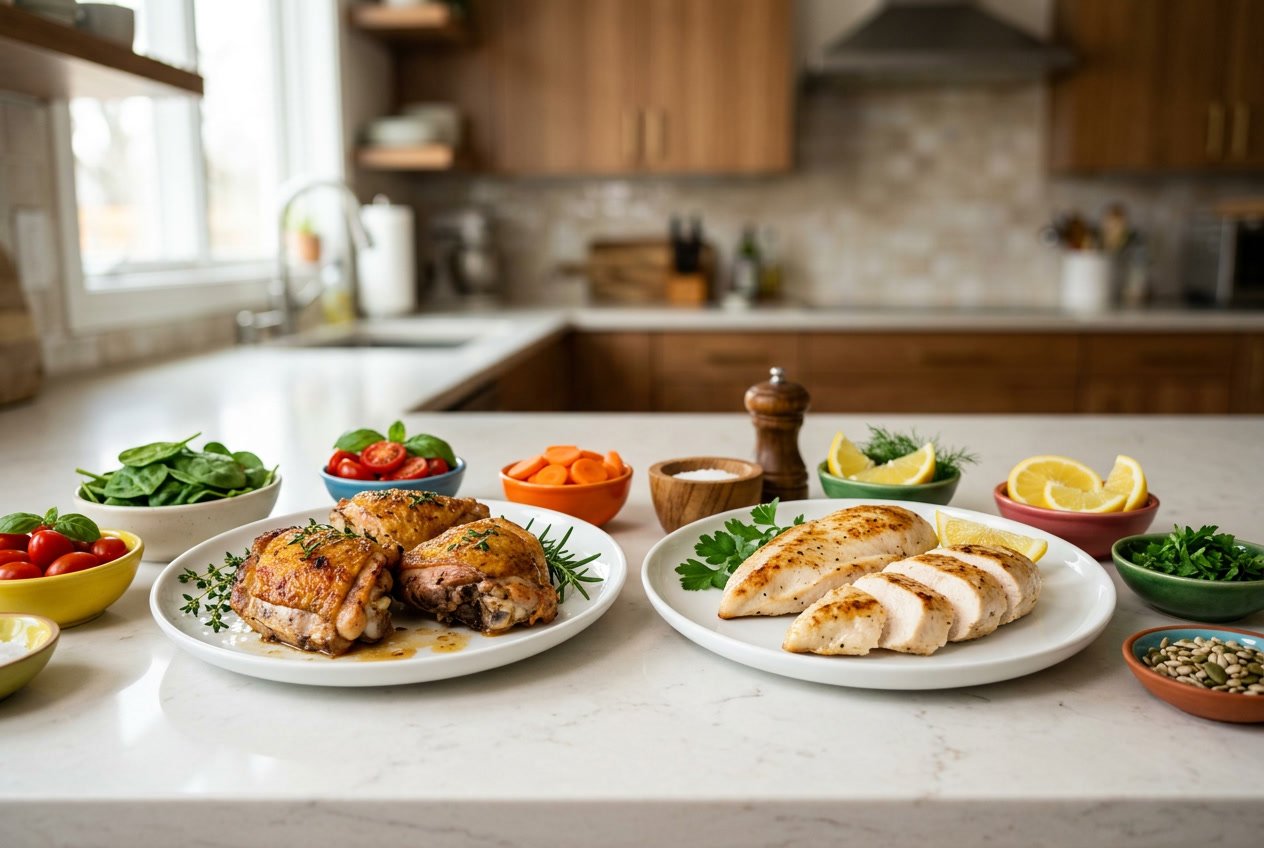
Chicken thighs and breasts both supply important vitamins and minerals, but their profiles differ. Thighs (dark meat) offer higher iron, zinc, and some B vitamins, while breasts (white meat) provide more niacin, phosphorus, and choline per 100 g.
These differences can influence your choice based on nutrient needs, flavor preference, or cooking method.
Vitamin and Mineral Highlights
Chicken breast gives you more protein per gram and tends to be higher in niacin (vitamin B3) and phosphorus. Niacin supports energy metabolism and cellular repair. A 100 g serving of breast commonly supplies around 9–10 mg of niacin and roughly 200–220 mg of phosphorus.
Chicken thighs provide greater amounts of several micronutrients tied to red-meat–like qualities. Per 100 g, thighs typically contain higher amounts of vitamin B12, iron, and zinc compared with breast.
If you track specific targets, such as iron or B12 for anemia risk, choose thighs more often. If you prioritize a higher niacin or phosphorus intake with lower fat, favor breasts.
Myoglobin and Iron Content
Myoglobin gives dark meat its color and increases iron concentration. Thighs contain more myoglobin because they are leg muscles used for sustained activity.
That translates into roughly double the iron content in 100 g of thigh versus breast in many nutrient databases. Your body absorbs heme iron from chicken more efficiently than nonheme plant iron.
Thighs make a practical choice when you need to raise or maintain iron status. Cooking and adding vitamin C–rich foods can further support iron absorption in mixed meals.
If you have a condition that requires limiting iron, such as hemochromatosis, breasts provide lower iron per serving and may suit your meal planning better.
Zinc and B Vitamins
Zinc and several B vitamins differ between cuts in ways that affect immune health and metabolism. Thighs generally contain more zinc and vitamin B12. For example, 100 g of thigh often provides over 1 mg of zinc and a higher microgram amount of B12 than an equivalent breast portion.
Breasts tend to contain higher levels of vitamin B6 and choline, nutrients linked to neurotransmitter synthesis and liver function. Typical values show breast with more choline and higher B6 than thigh.
Pick thighs to boost zinc and B12, or choose breasts for more choline and B6 while keeping saturated fat lower.
Benefits of Chicken Breasts
Chicken breasts offer low-calorie, high-protein meals that fit many dietary goals. You get a lean cut that adapts to quick cooking and a variety of seasonings without adding much fat.
Weight Management Advantages
If you’re tracking calories, skinless chicken breasts are one of the most efficient choices. A 3-ounce (85 g) serving of boneless, skinless chicken breast typically contains about 120–140 calories and roughly 25–27 grams of protein.
Higher protein per calorie helps you feel full longer, which reduces snacking and supports portion control. That satiety effect pairs well with resistance training or cardio if your goal is fat loss or body recomposition.
Cook skinless breasts with dry-heat methods such as grilling, broiling, or sautéing with minimal oil to preserve the low-calorie advantage. Marinate or season them to increase flavor without adding many calories.
Lean Protein Source
You rely on chicken breast when you need a concentrated source of complete amino acids. It supplies all essential amino acids important for muscle repair and maintenance.
A typical serving delivers more protein and less fat than an equivalent portion of thigh meat, making it useful for athletes and people aiming to increase lean mass.
Because it’s low in saturated fat, chicken breast supports heart-healthy protein choices when prepared without added fats. You can use it across meals such as salads, stir-fries, sandwiches, and meal-prep bowls.
Micronutrient Density
While chicken breast is primarily prized for protein, it also contributes important minerals. You’ll get phosphorus and potassium in meaningful amounts per serving, nutrients that support bone health and cellular function.
It contains modest B vitamins like niacin and B6, which help with energy metabolism and red blood cell production.
Compared with darker cuts, skinless chicken breasts contain less iron and zinc. Consider pairing them with iron- or zinc-rich sides such as leafy greens, legumes, or fortified grains if you rely on poultry as a main protein.
Benefits of Chicken Thighs
Chicken thighs offer richer taste, more iron and zinc per serving, and fats that lengthen fullness after meals. You get juicier texture and nutrients that can support energy and immune function.
Flavor and Texture Advantages
Thighs stay moist during cooking because the darker meat contains more intramuscular fat than breast. That fat helps prevent dryness when roasting, grilling, or braising.
If you choose skinless chicken thighs, you still keep much of the natural juiciness while cutting surface fat. Thighs also have a deeper, more savory flavor from myoglobin.
Higher Iron and Zinc Content
Per 100 g, thighs commonly contain more iron and zinc than breasts. Those minerals support oxygen transport and immune responses.
Eating thighs can help you meet micronutrient needs, especially if you don’t regularly consume red meat or fortified foods.
Choosing skinless chicken thighs reduces added fat while preserving the higher mineral density. Pairing thighs with vitamin C–rich sides, like peppers or citrus, improves non-heme iron absorption.
Satiety and Fullness
The higher fat content in thighs slows gastric emptying, which helps you feel full longer after a meal. If you struggle with post-meal snacking, swapping some breast meals for skinless chicken thighs can increase satiety.
Fats in thighs also boost the palatability of dishes, making meals more satisfying and potentially reducing the urge to add calorie-dense condiments.
Potential Downsides of Chicken Breasts and Thighs
Both cuts provide high-quality protein, but each has trade-offs to consider. Differences include saturated fat, how filling a meal feels, and how fats affect absorption of certain vitamins.
Saturated Fat and Heart Health
Chicken thighs contain more total and saturated fat than chicken breasts, especially when cooked with the skin. Eating thighs frequently in large portions can increase your intake of saturated fat enough to affect LDL cholesterol over time.
That increases your cardiovascular risk if you also consume other saturated-fat sources. Choose skinless thighs or trim visible fat to reduce saturated fat while keeping flavor.
If you already have high LDL or a family history of heart disease, favor skinless breast or monitor weekly thigh portions to help control saturated fat.
Satiety and Meal Satisfaction
Chicken breasts are leaner and lower in calories per ounce, which can make meals feel lighter and digest faster. You might feel hungry sooner after a breast-based meal if you don’t include fats, fiber, or complex carbs.
Thighs’ higher fat content slows gastric emptying and often increases perceived fullness. Pair breasts with a source of healthy fat and vegetables to improve satisfaction.
Nutrient Absorption Factors
Fats in chicken thighs help you absorb fat-soluble vitamins (A, D, E, K) from the rest of the meal. Eating very lean breast without added fats may reduce absorption of these nutrients when they’re present in vegetables or dressings.
Breasts deliver fewer fat-soluble nutrients but are richer per-calorie in some B vitamins and are lower in calories overall. If you rely heavily on breasts, intentionally adding a modest healthy fat at meals ensures better absorption of fat-soluble vitamins.
Cooking Methods and Preparation Tips
Choose cooking methods that control added fat and preserve protein and moisture. Pay attention to skin, cooking technique, and seasonings to manage calories, saturated fat, and sodium.
Skin-On vs Skinless Options
Keeping the skin adds flavor and stops meat from drying during high-heat cooking, especially for chicken breasts which can overcook quickly. However, skin-on chicken thighs and skin-on chicken breasts contain roughly 25–30% more calories and fat than skinless versions.
Remove the skin to lower saturated fat and total calories. If you prefer juicier meat without the skin, brine or marinate skinless chicken breasts for 30–60 minutes to reduce dryness.
For skinless chicken thighs, you get more inherent fat and flavor, so you can often skip added oils. If you crisp skin, roast on a rack so excess fat drips away.
Healthier Cooking Techniques
Choose dry-heat methods that let fat drain away. Roasting on a rack, grilling, or broiling work well for both cuts.
Sear breasts quickly on high heat, then finish them in the oven to avoid overcooking. Aim for 165°F (74°C).
Cook thighs with longer, lower-heat methods like braising or slow roasting. These methods help render fat and keep the meat tender.
Thighs do well at internal temps around 175–185°F, which allows more collagen to break down.
Avoid deep-frying and heavy breading to limit calories. Poaching and steaming offer the lowest-fat options and preserve protein for skinless chicken breasts and thighs.
Use nonstick pans or spray a small amount of olive oil on the surface to reduce added fat when sautéing.
Impact of Additives and Seasoning
Pre-seasoned or brined commercial chicken often contains extra sodium and sometimes sugar or phosphates that increase water retention.
Check labels on packaged chicken. Choose “no added solution” or rinse briefly and pat dry when safe and practical.
High-sodium marinades and sauces can turn a lean chicken breast into a high-salt meal.
Season with herbs, citrus, garlic, and spices to add flavor without calories.
Use low-sodium soy sauce, yogurt-based marinades, or vinegar-based dressings to tenderize without excess fat.
If you use oil, measure it. One tablespoon of oil adds about 120 calories, so brush or spray lightly rather than pouring.


