
Are Chicken Thighs or Breasts Better? Detailed Comparison & Guide
You want a clear answer fast: pick the cut that fits your goal.
If you want fewer calories and more protein per ounce, choose chicken breast. If you want richer flavor, more iron and zinc, and longer-lasting fullness, choose chicken thigh.

This post covers key differences in nutrition, taste and texture, cooking methods, health trade-offs, and cost.
You’ll also find practical tips for cooking each piece so your choice feels deliberate.
Key Differences Between Chicken Thighs and Chicken Breasts
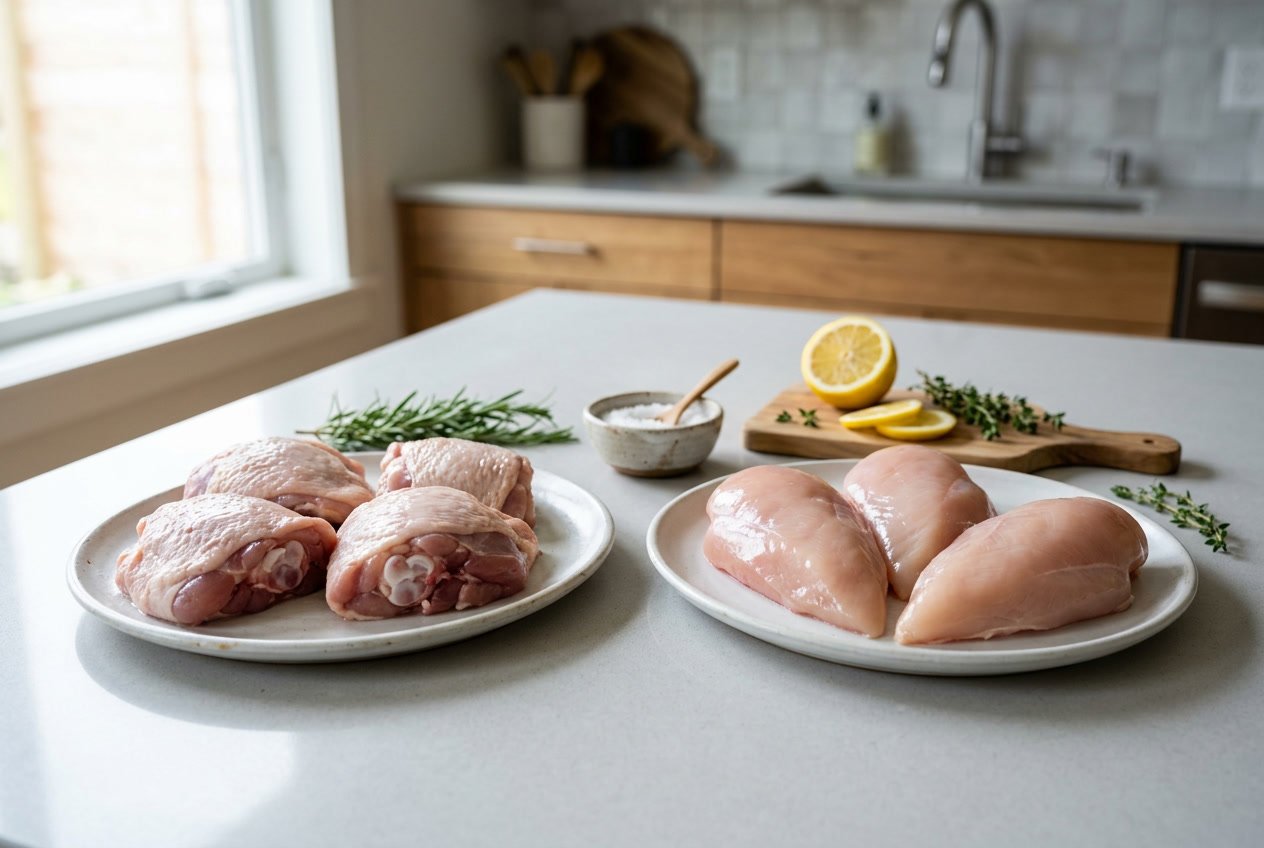
Thighs and breasts come from different parts of the bird and contain different muscle fibers.
These differences affect flavor, texture, nutrition, cooking methods, and fat content.
Cut Location and Muscle Type
Chicken breasts come from the chest. Thighs come from the upper leg near the knee joint.
The breast muscles work less and have mostly fast-twitch fibers, which store less fat and fewer blood vessels. This makes breast meat leaner and prone to drying out if overcooked.
Thigh muscles handle more movement and weight. They contain more slow-twitch fibers, which have higher fat stores and connective tissue. Thighs stay juicier when roasted, braised, or grilled and tolerate longer cook times.
White Meat vs. Dark Meat
Chicken breasts are white meat. Thighs are dark meat.
White meat has a paler color because it contains less myoglobin and fewer capillaries. Breasts offer a milder flavor and higher protein per ounce, making them popular for lean-protein diets and quick-cooking.
Dark meat contains more myoglobin, giving thighs a deeper color and richer taste. The extra myoglobin and fat boost flavor and raise the calorie count slightly.
Marbling and Myoglobin Content
Thighs show more marbling than breasts. This intramuscular fat adds flavor and tenderness during cooking.
Myoglobin, the iron-containing protein, colors muscle and affects taste. Thighs have more myoglobin, which explains their darker color and stronger flavor.
Higher myoglobin helps thighs tolerate slow cooking and high-heat searing without drying out.
Nutritional Comparison
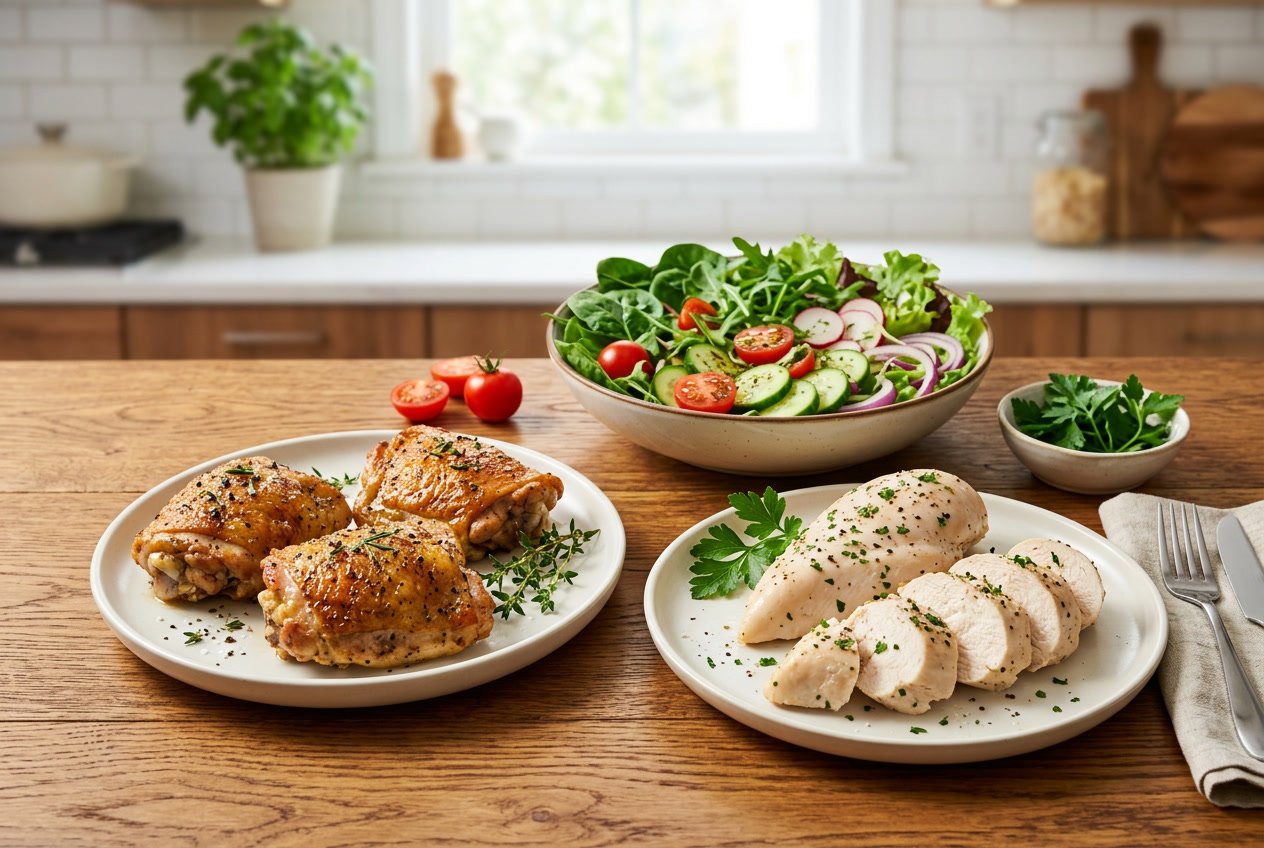
Chicken breasts and thighs differ in calories, fat, and some micronutrients.
Choose skinless chicken breast for the leanest protein. Choose skinless chicken thighs for more fat, iron, and richer flavor.
Calories and Macronutrient Content
Skinless chicken breast contains fewer calories and less fat than skinless chicken thighs.
Per 100 g cooked, breast provides about 120–165 kcal, 23–26 g protein, and 2–4 g total fat.
Skinless chicken thighs provide about 160–210 kcal per 100 g, with 18–22 g protein and 8–12 g total fat. The extra fat in thighs raises calories and adds more saturated and monounsaturated fat.
Breasts offer a higher protein-to-calorie ratio, helpful for weight loss or muscle-building with minimal fat. Thighs keep meat juicier and may reduce the need for added oils.
Vitamins and Minerals
Thighs contain more iron and zinc than breasts. This comes from the muscle chemistry in thighs.
Breasts supply similar phosphorus and potassium but less iron and zinc.
If you need more iron or zinc, add skinless chicken thighs to your meals. For most micronutrients, the differences are modest, so eating both cuts helps cover a broader nutrient range.
Lean Protein and Health Implications
If you want lean protein, choose skinless chicken breast. It offers more protein per calorie and less saturated fat, fitting many heart-healthy and calorie-controlled diets.
Skinless chicken thighs still provide high-quality protein and may be better if you want more satiety or have trouble keeping lean cuts moist.
Balance your choice with cooking method and portion size. Grilling, baking, or poaching skinless cuts keeps added fats low.
Taste, Texture, and Culinary Uses
Fat and muscle structure influence flavor and texture. Each cut responds differently to cooking and fits certain recipes better.
Flavor Profile: Juiciness and Richness
Thighs deliver a richer, more savory taste because they contain more intramuscular fat and connective tissue. That fat melts during grilling or frying, coating the meat and boosting flavor.
Breasts taste milder and absorb marinades and spices easily. When baked or grilled with seasonings, the flavor comes mostly from the marinade or rub.
Choose thighs for pronounced flavor without added fats.
Pick breasts as a neutral base for bold sauces or salads.
Tenderness and Cooking Outcome
Thighs stay tender over a wider temperature range due to higher fat and collagen. Slow cooking, braising, or low grill heat turns collagen into gelatin, making the meat moist and easy to shred.
Breasts cook faster and can dry out quickly. Use brining, poaching, or foil to keep them juicy.
Aim for 165°F (74°C) for breasts and 175–180°F (79–82°C) for thighs to ensure safe and tender results.
Popular Dishes and Cooking Versatility
Thighs work well in dishes needing sustained heat or bold flavor: fried chicken, braised stews, curries, and slow-roasted recipes.
They also perform well on the grill and in recipes where juiciness matters.
Breasts suit quick dishes: stir-fries, chicken sandwiches, salads, and baked entrees with controlled added fat.
For fried chicken, either cut works, but thighs give more margin for error. Breasts need careful timing to avoid dryness.
Substitute thighs for breasts in recipes that benefit from richer texture. If using breasts instead of thighs, add oil, brine, or shorten cook times to avoid dryness.
Health Considerations and Dietary Goals
Choose between lean protein options based on calories, fat, and how meals make you feel.
Think about how skinless chicken breast and thighs fit your calorie target, nutrient needs, and eating habits.
Weight Loss and Muscle Gain
If you want to lose weight while keeping muscle, skinless chicken breast provides the most protein per calorie.
A 100 g portion of boneless, skinless breast has about 22–23 g protein and 100–110 kcal.
For muscle gain, focus on total daily protein and enough calories. Skinless chicken thighs provide more calories and fat per serving, which helps if you need more energy.
Use breasts for lean, post-workout meals. Use thighs when you need extra calories or longer-lasting energy.
If tracking macros, prefer breast for tighter calorie control. Include thighs on higher-calorie days.
Cholesterol and Heart Health
If you need to manage LDL cholesterol or follow heart-healthy guidelines, eat skinless chicken breast more often.
Breast meat has lower total and saturated fat than thighs.
Bake, grill, or poach without added saturated fats to keep breast meat lean. When cooking thighs, remove visible fat and avoid frying in butter or lard.
Favor skinless chicken breast for meals aiming for lower saturated fat. Include skinless thighs occasionally, prepared with heart-healthy methods.
Satiety and Meal Satisfaction
Thighs deliver more fat and a richer mouthfeel, which can help you feel fuller between meals.
If lean protein meals leave you hungry, swap some skinless chicken breast servings for skinless thighs.
Combine skinless chicken breast with healthy fats or fiber-rich sides to boost satisfaction while keeping calories controlled.
Use thighs for more filling, lower-prep dinners that still supply high-quality protein.
For long workdays, choose skinless thighs in a grain bowl with vegetables.
For a calorie-restricted plan, use skinless breast with legumes or a drizzle of olive oil.
Price and Accessibility
You can often control cost by choosing cut, pack size, and where you shop.
Availability depends on region, retailer type, and whether you want organic or specialty options.
Cost Comparison
Chicken thighs usually cost less per pound than boneless, skinless chicken breasts.
Bone-in, skin-on thighs offer the biggest savings. Boneless thighs can approach breast prices during demand spikes.
Compare price per edible pound, factoring in bone and fat. Breasts yield about 80–85% usable meat, thighs about 65–75% depending on bone-in or boneless.
Bulk buying or shopping at warehouse clubs often lowers per-pound cost for both cuts.
Sales, coupons, and seasonal promotions can change which cut is cheaper, so check unit prices.
Availability in Stores
Most grocery stores stock both chicken breasts and thighs year-round.
Breasts are common in deli and meal-prep sections due to high demand for lean protein.
Thighs appear more in value packs, family packs, and frozen bulk bags, especially in stores aimed at budget shoppers.
For organic or specialty poultry, expect limited stock and higher prices for both cuts at regular supermarkets.
Farmers’ markets and butcher shops may offer more bone-in thighs and whole breasts, but availability varies by season and region.
Best Cooking Methods for Each Cut
Choose cooking methods that keep meat moist and develop flavor.
Thighs tolerate longer, higher-heat cooking and benefit from rendered fat.
Breasts need gentler, quicker heat or added moisture.
Focus on internal temperature, resting time, and whether the cut is bone-in or skin-on.
How to Cook Chicken Thighs
Thighs handle high heat and long cook times because of their higher fat and connective tissue.
For crispy skin and juicy meat, sear skin-side down in a hot pan until the fat renders, then finish in a 350°F oven for bone-in thighs until the internal temperature reaches 175–185°F.
For baked chicken thighs, arrange skin-side up on a rimmed sheet, pat dry, and roast at 425°F for 25–35 minutes for crisp skin and tender meat.
For braised or stewed dishes, brown thighs first, then simmer in liquid at low heat to break down connective tissue.
Grilled chicken thighs take marinades and bold seasonings well. Cook over medium-high heat and monitor flare-ups.
For fried chicken, use bone-in, skin-on thighs or well-brined pieces. Maintain oil temperature (325–350°F) and finish in the oven if pieces are thick.
How to Cook Chicken Breasts
Chicken breasts are lean and cook quickly. Avoid overcooking to prevent dryness.
To pan-sear chicken breasts, flatten them to an even thickness. Sear over medium-high heat, then finish briefly in a 350°F oven.
Pull the chicken at 160–165°F and let it rest for 5–7 minutes. Carryover heat will finish the cooking.
For baked chicken breasts, brine or marinate them first to add moisture. Roast at 375°F for 20–30 minutes depending on thickness.
Use an instant-read thermometer to check for 160–165°F. When grilling boneless breasts, sear quickly over high heat and finish over indirect heat to avoid charring.
For fried chicken breasts (cutlets), pound them thin. Dredge and fry at 350°F for a short time so the coating crisps and the meat stays juicy.
Poaching and sous-vide methods cook chicken gently to a precise temperature. These methods give predictable, tender results.
Healthy Preparation Tips
Trim visible fat from breasts to lower calories. Keep skin on thighs for flavor, then remove it before eating to reduce fat intake.
Use dry rubs, citrus, herbs, and vinegar-based marinades to add flavor without extra calories. Avoid heavy creams or sugary sauces.
Choose cooking methods that minimize added fat. Bake, grill, roast, or poach instead of deep-frying.
For a fried texture with less oil, oven-bake breaded pieces at 425°F on a wire rack. You can also use an air fryer at 375 to 400°F, flipping once for even browning.
Cook to safe internal temperatures: 165°F for breasts and 175 to 185°F for thighs if you want more tender meat. Let the meat rest for 3 to 7 minutes to redistribute juices before slicing.


