
Are Chicken Thighs Low Carb? Keto Benefits, Recipes & Nutrition
You can eat chicken thighs on a low-carb or keto plan without worrying about hidden sugars. Plain, unbreaded chicken thighs contain virtually zero net carbs, so they fit easily into low-carb meals while giving you rich flavor and satisfying protein.

You can adjust carb counts by changing the skin, marinades, and cooking methods. Choose preparations that keep carbs minimal, such as skin-on or skinless choices, low-carb cooking techniques, and keto-friendly sides.
Are Chicken Thighs Low Carb?
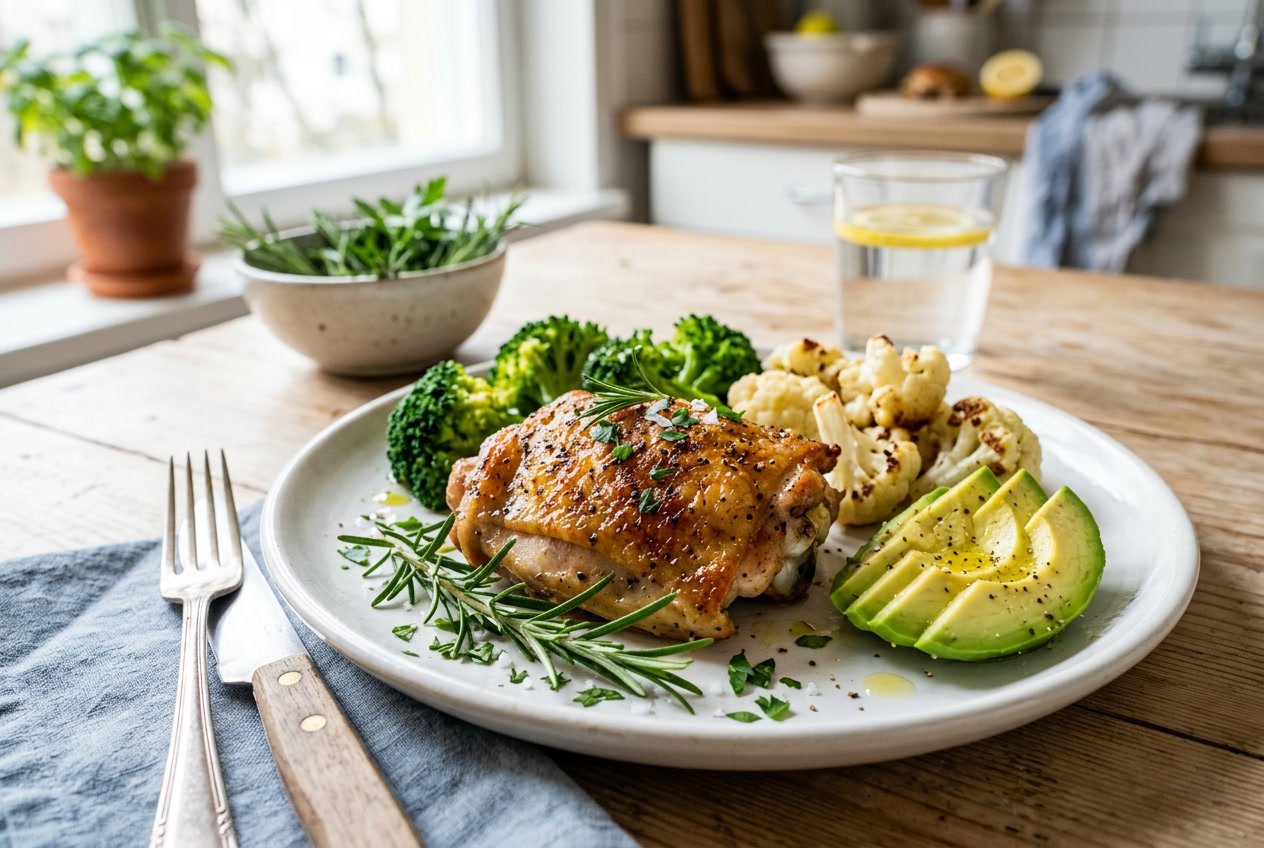
Chicken thighs contain virtually no carbohydrates in their natural form. Carb counts stay near zero unless you add breading, sugary sauces, or high-carb ingredients.
Differences in cut and preparation affect calories and fat more than carbs.
Net Carb Content of Chicken Thighs
Skinless, boneless chicken thighs have 0 g net carbs per 100 g serving. A small cooked, skinless thigh (about 85–100 g) also provides roughly 0 g carbs while delivering 22–26 g protein and 8–12 g fat depending on trimming.
Skin-on chicken thighs still have 0 g carbs from the meat and skin. The skin increases calories and fat but not carbohydrate grams.
Track added items. Marinades, sauces, or breading can add 5–20+ g carbs per serving.
Bone-in thighs change weight and portion size but not intrinsic carb content. Weigh edible meat only or use nutrition data labeled “yield after cooking, bone removed” for accuracy.
Comparison to Other Chicken Cuts
Chicken thighs and breasts are both essentially carb-free as whole cuts. Breasts are leaner: higher protein per gram and lower fat. Thighs provide more fat and calories, which may be desirable on keto.
Bone-in vs. boneless matters for cooking yield and portioning. A bone-in thigh weighs more raw but contains the same zero-carb meat. Adjust serving sizes when tracking macros.
Skin-on vs. skinless affects fat and calories, not carbs. Choose skin-on thighs for higher fat or remove skin for lower calories.
Impact of Preparation on Carb Levels
Grilling, baking, roasting, and pan-searing with oil or butter keep carbs at zero. Avoid breading, flour coatings, or commercial batters, which add 10–30 g carbs per serving.
Watch sauces and marinades. Store-bought barbecue, teriyaki, and many glazes include sugars that can add 5–20 g carbs per portion.
Use olive oil, lemon, vinegar, herbs, or sugar-free sauces instead. Substitute low-carb coatings like almond flour, crushed pork rinds, or Parmesan for a crunchy crust with minimal carbs.
Chicken Thighs and the Keto Diet

Chicken thighs provide high fat and moderate protein with virtually no carbs when unbreaded. They fit keto goals when you control portions and avoid sugary marinades or breading.
Keto Macros and Chicken Thigh Compatibility
Track macros: a typical 100 g of skinless, boneless chicken thigh has 26 g protein, 10–14 g fat, and 0 g carbs. Skin-on increases fat by about 8–10 g per 100 g and raises calories.
Aim for a daily macro split that keeps carbs under 20–50 g, with fats supplying most of your calories. A single skin-on thigh can supply a substantial portion of your fat target, so count it against your daily totals.
Use an app or food scale to log servings. That helps you include thighs in keto chicken thigh recipes without overshooting protein or fat limits.
Avoid hidden carbs from sauces, glazes, or breading.
Role of Fat Content for Keto
Fat in chicken thighs supplies the dietary energy you need on keto. Favor skin-on thighs when you need extra fat to reach your daily calorie composition.
If you’re close to your fat limit, choose skinless thighs or pair thighs with higher-protein, lower-fat sides.
Thighs contain both monounsaturated and saturated fats. Cooking method affects fat intake: pan-searing in added butter or oil increases total fat, while grilling lets some fat render away.
Track added fats like olive oil, avocado oil, or butter as part of your keto macros.
Choosing Keto-Friendly Chicken Thighs
Pick plain, unbreaded thighs and inspect labels for marinades or added sugars. Frozen pre-marinated or “teriyaki” options often contain hidden carbs.
Prefer skin-on if you need extra fat. Choose skinless if you want to limit calories.
Boneless thighs cook faster and suit many keto chicken thigh recipes like creamy garlic or Tuscan-style dishes.
For meal prep, roast or air-fry thighs and portion by weight. Pair them with low-carb sides such as cauliflower mash, sautéed spinach, or roasted broccoli.
Skin-On vs. Skinless Chicken Thighs
Skin-on chicken thighs add flavor and fat. Skinless thighs cut calories and saturated fat while retaining most protein.
Your choice affects calories, cooking behavior, and how moist the cooked meat stays.
Fat and Protein Differences
Skin-on chicken thighs contain more fat than skinless thighs. Per 100 g raw, skin-on can have roughly 16 g total fat versus about 4 g for boneless, skinless cuts.
That extra fat raises calories by about 80–100 kcal per 100 g and increases saturated fat by a few grams.
Protein content shifts slightly the other way. Removing the skin concentrates lean tissue, so skinless thighs often show higher protein per 100 g (around 20 g) compared with skin-on (about 16–17 g) when measured raw.
If you track macros, count skin separately. Remove skin before weighing or log “skin-on” entries when you roast with skin left on.
Best Options for Low-Carb Diets
Both skin-on and skinless chicken thighs are very low in carbs (typically 0–1 g per serving). Choose based on your fat targets and satiety needs.
If you want to minimize calories and saturated fat, pick boneless, skinless chicken thighs and grill or bake them without added oil. If you follow a high-fat low-carb plan, skin-on chicken thighs give extra calories and keep the meat juicy.
Cooking method matters. Roasting skin-on yields juicy chicken thighs because the skin protects moisture. Remove skin after cooking to reduce consumed fat while preserving some juiciness.
For precise tracking, weigh raw vs. cooked and log the correct entry (skin-on or skinless) in your app.
Best Ways to Cook Chicken Thighs for a Low-Carb Diet
Use higher-fat cooking methods and crisp the skin for texture. Rely on salt, acid, and herbs for flavor instead of sugary sauces.
Choose bone-in, skin-on thighs when you want juiciness and render the fat for added keto-friendly calories.
Baked Chicken Thighs for Keto
Baking delivers consistent heat that renders fat and crisps skin without added carbs. Pat thighs dry, season with salt, pepper, garlic powder, and smoked paprika, and place skin-side up on a wire rack set over a sheet pan to let fat drip away.
Roast at 425°F (220°C) for 25–35 minutes for bone-in thighs, or 20–25 minutes for boneless, until skin is golden and internal temperature reaches 165°F (74°C).
For extra crispiness, finish under the broiler 1–2 minutes while watching closely.
Use a simple pan sauce made from browned drippings, a splash of chicken stock, and lemon juice if you want more flavor. Avoid store-bought glazes and honey-based marinades to keep carbs low.
Grilling and Air Fryer Techniques
Grilling adds smoke and char that pair well with herb rubs and low-carb sauces like chimichurri or sugar-free BBQ. Preheat the grill to medium-high and cook skin-side down first to render fat, then flip and finish over indirect heat until the thigh hits 165°F (74°C).
Air fryers produce crispy baked-style skin in less time and with less oil. Arrange skin-side up in a single layer, set to 380–400°F (193–204°C), and cook 12–20 minutes depending on size, flipping once for even color.
Both methods let you skip breading. Brush with olive oil or melted butter before cooking to help herbs and spices adhere and to promote browning.
Skillet and Pan-Fried Methods
A cast-iron skillet gives the best sear for pan-fried thighs and helps render fat quickly. Heat the pan over medium-high, add a tablespoon of oil, and sear skin-side down until deep brown and crisp, about 6–8 minutes.
Flip and reduce heat to medium, adding a knob of butter, crushed garlic, and fresh thyme for basting. Finish in the oven at 375°F (190°C) for 10–15 minutes if the thighs are thick or bone-in.
Skip flour dredges and use spice rubs or mustard-based marinades. Spoon pan juices over the meat for a simple, flavorful sauce without added sugars.
Keto Chicken Thigh Recipes and Flavor Variations
Chicken thighs give you a high-fat, low-carb base that adapts to many sauces, stuffings, and global spice blends. You can make crispy baked thighs, skillet-seared garlic butter versions, or slow-cooked creamy dishes while keeping carbs minimal.
Popular Sauces and Seasonings
Use bold, low-carb sauces to add flavor without adding sugar. Try garlic butter (butter, garlic, lemon, parsley) spooned over skin-on thighs after a high-heat sear.
For a tangy option, make a lemon-herb pan sauce with lemon juice, chicken stock, and thyme. Thicken with a touch of cream instead of flour.
For more savory depth, a garlic parmesan coating mixes grated Parmesan and almond flour for crisping. If you want an almost barbecue profile, combine smoked paprika, cumin, garlic powder, and a keto-friendly sweetener to make a dry rub.
Always check store sauces for hidden sugars and prefer whole ingredients.
Stuffed and Bacon-Wrapped Options
Stuffing and wrapping add fat and texture while keeping carbs low. For stuffed thighs, fill boneless thighs with a mixture of cream cheese, chopped spinach, and shredded mozzarella. Secure with toothpicks and sear, then bake until internal temp hits 165°F (74°C).
Bacon-wrapped chicken thighs increase fat and crispness. Wrap skin-on or boneless thighs with a half-strip of bacon, secure with a toothpick, and bake at 400°F (200°C) until bacon is crisp.
Try adding a thin smear of Dijon or a pinch of smoked paprika under the bacon for extra flavor. These techniques work well for meal prep and reheat without losing texture.
Creamy and Cheesy Creations
Cream-based sauces pair naturally with chicken thighs and stay keto-friendly when you use heavy cream, cream cheese, or mascarpone. A classic is Creamy Tuscan Chicken: sun-dried tomatoes, spinach, garlic, and heavy cream create a rich pan sauce that clings to seared thighs.
Use less sun-dried tomato or rinse them to reduce added sugars.
For stovetop comfort, melt cream cheese with shredded cheddar and a splash of chicken stock to make a cheddar ranch–style sauce for “crack chicken” thighs. Brown thighs first, then simmer them in the creamy sauce so they finish tender and saucy.
Keep portions of high-fat dairy consistent with your macros.
International and Spicy Variations
Explore global profiles while staying low-carb. Make coconut curry chicken thighs with coconut milk, curry paste (check for sugar), ginger, and lime. Simmer until the curry reduces and coats the thighs.
Use cauliflower rice as a side to keep the meal ketogenic.
For Middle Eastern or Mediterranean notes, marinate thighs in yogurt-thyme-lemon blends (use full-fat Greek yogurt sparingly) or a dry shawarma rub of coriander, cumin, turmeric, and garlic.
If you want heat, toss thighs in a bang bang–style sauce made from mayo, Sriracha (small amount), and lime. Adjust for spice and carbs.
These variations let you rotate flavors without changing the low-carb framework.
Keto-Friendly Sides to Pair with Chicken Thighs
Choose sides that keep carbs low while adding fat, fiber, and texture. Focus on cauliflower-based dishes and simple roasted or sautéed vegetables that complement the richness of chicken thighs.
Cauliflower Rice and Vegetable Sides
Cauliflower rice contains about 3g net carbs per cup when cooked. Sauté it in butter or olive oil, add minced garlic, and finish with lemon zest or chopped herbs for brightness.
Add chopped spinach or shredded cabbage to increase fiber and color without adding many carbs. Roasted non-starchy vegetables work well as sides.
Toss Brussels sprouts, asparagus, or broccoli florets in olive oil, salt, and pepper. Roast them at 425°F for 12–20 minutes until caramelized.
For a creamier option, steam cauliflower, then puree it with cream cheese and butter. Season with garlic powder and chives.
Meal Prep and Serving Suggestions
For weekly meal prep, roast a sheet pan of seasoned chicken thighs. Roast a separate pan of cauliflower rice and mixed vegetables.
Place 4–6 oz chicken thighs, 1 cup cauliflower rice, and 1/2–1 cup roasted vegetables in meal containers. These portions reheat cleanly in a microwave or skillet.
If you want variety, batch-cook plain cauliflower rice. Dress it differently each night such as cilantro-lime one day or garlic-parmesan the next.
Try a curry-spiced version for a keto dinner with an Indian profile. Add high-fat finishing touches like an olive oil drizzle, sliced avocado, or a tablespoon of herb butter to increase satiety while staying keto-friendly.


