
Are Chicken Thighs Good for Weight Loss? Nutrition, Tips & Facts
You can include chicken thighs in a weight-loss plan and still meet your goals.
When you choose skinless thighs, control portions, and use low-fat cooking methods, their protein and nutrients help you feel full and maintain muscle without derailing weight loss.

This post explains nutrient differences between thighs and other proteins.
You’ll find practical portion and cooking tips, and ways to build balanced meals that keep calories in check while staying satisfying.
Are Chicken Thighs Good for Weight Loss?
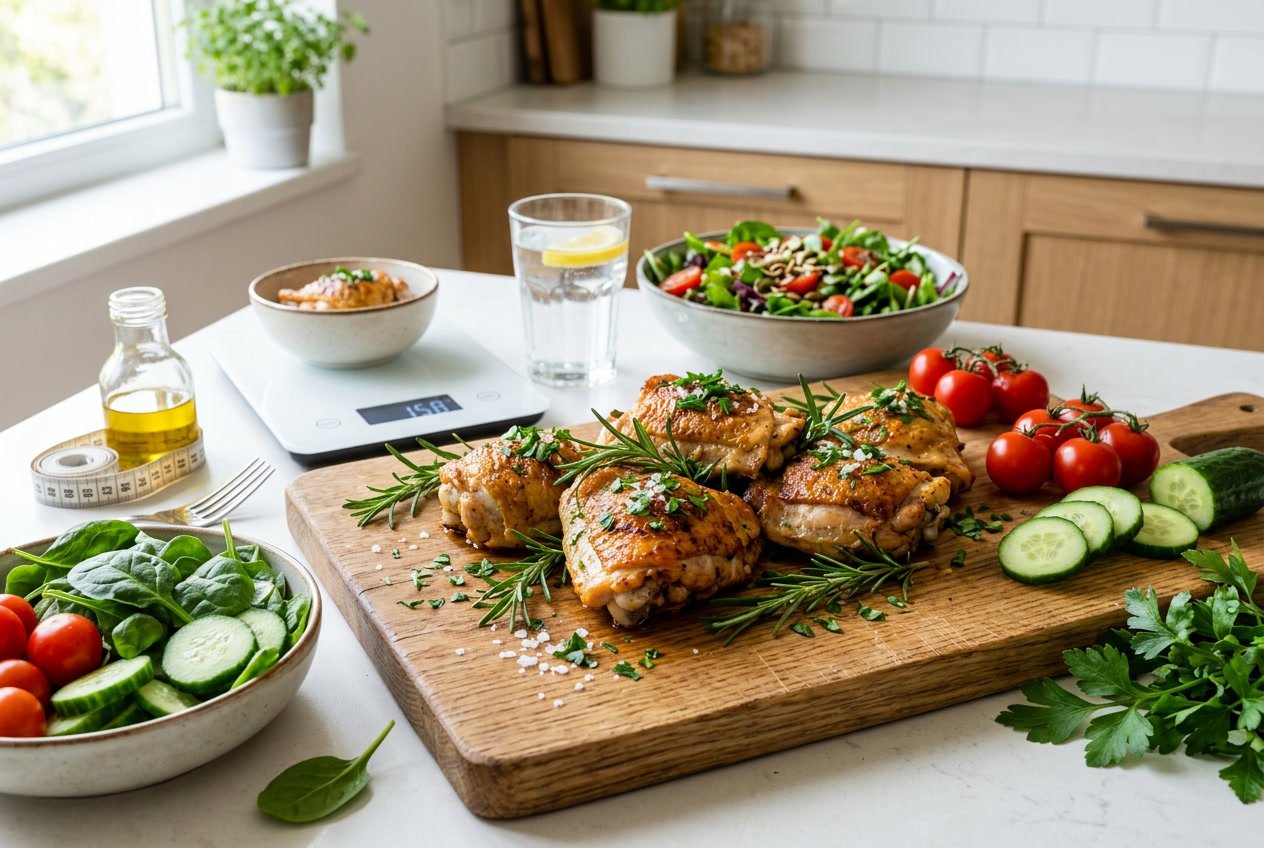
Chicken thighs give you a concentrated source of protein, key vitamins, and minerals, and they’re flexible to cook.
You can include them in a calorie-controlled plan if you monitor portions and use low-fat cooking methods.
Chicken Thighs for Weight Loss: Pros and Cons
Chicken thighs supply about 20–26 grams of protein per 3-ounce cooked serving, which helps preserve muscle and increase satiety so you feel fuller between meals.
They also contain B vitamins (niacin, B6) and selenium that support metabolism and recovery.
Thighs contain more fat and calories than chicken breasts—roughly 140–170 kcal and 10–14 g fat per 3-ounce serving when skinless.
That extra fat can push daily calories higher if you don’t adjust portions or cooking oil.
Choose boneless, skinless thighs, grill or bake them instead of frying, trim visible fat, and aim for a palm-sized (3–4 oz) cooked portion.
Pair with nonstarchy vegetables and whole grains to keep the meal balanced.
Chicken Thighs vs. Chicken Breast for Weight Loss
Chicken breast is leaner: a 3-ounce cooked breast typically has 25–30 g protein and 3–4 g fat, so it gives more protein per calorie.
If your goal is strict calorie cutting, breast makes it easier to hit protein targets with fewer calories.
Thighs offer richer flavor and slightly higher fat-soluble nutrients, which can improve meal satisfaction and adherence to a diet.
If you prefer thighs, compensate by reducing added fats, controlling portion size, or alternating with breast across the week.
Use this simple comparison when planning meals:
- Protein: both high, similar grams per serving.
- Calories/fat: thighs are higher than breasts.
- Practical choice: breasts for calorie efficiency; thighs for flavor and satiety.
Nutritional Profile of Chicken Thighs

Chicken thighs provide a concentrated source of protein and modest fat, plus several vitamins and minerals that support metabolism and muscle maintenance.
Expect roughly 200–240 calories per 100 g cooked, with nutrients that matter for satiety and nutritional balance.
Macronutrients: Protein, Fat, and Calories
A 100-gram cooked, skinless chicken thigh typically supplies about 24 g protein and roughly 209 calories.
That protein is complete, so it helps preserve lean muscle while you lose weight and increases fullness after meals.
Fat content runs around 10–12 g per 100 g for skinless thighs, higher if the skin is left on.
Much of the fat is monounsaturated, but skin adds saturated fat and increases calories to roughly 239 kcal per 100 g.
If you’re tracking calories, remove the skin and use grilling, baking, or poaching to keep added fat low.
Quick reference:
- Protein: ~24 g / 100 g (cooked, skinless)
- Calories: ~209 kcal / 100 g (skinless)
- Total fat: ~11 g / 100 g (skinless); higher with skin
Key Vitamins and Minerals in Chicken Thighs
Chicken thighs are a practical source of B vitamins that support energy metabolism.
You’ll find niacin (B3), vitamin B6, and vitamin B12 in meaningful amounts, which help convert food to usable energy and maintain nervous system function.
Minerals include iron, zinc, phosphorus, and selenium.
Iron contributes to oxygen transport; zinc supports immune function and wound repair; selenium acts as an antioxidant and supports thyroid health.
Vitamin B12 makes thighs useful if you need animal-source B12 for red blood cell production and neurological health.
If you need to prioritize specific micronutrients, pair thighs with vitamin C–rich vegetables to optimize absorption.
Role of Chicken Thighs in a Weight Loss Diet
Chicken thighs supply concentrated protein and moderate fat in a compact portion.
They help you meet daily protein targets while fitting into a calorie-controlled plan.
You get cooking flexibility and nutrient density that supports muscle maintenance and appetite control.
Protein for Weight Loss and Muscle Maintenance
Chicken thighs deliver about 20–26 grams of protein per 3-ounce cooked serving when you choose boneless, skinless cuts.
You need adequate protein to preserve lean mass during weight loss; aim for roughly 0.6–1.0 grams per pound of body weight depending on activity level.
Including chicken thighs in meals helps you hit a high-protein diet target without relying solely on breast meat.
This lets you vary flavors and meal patterns while still supporting muscle repair after resistance training.
Tips:
- Prefer boneless, skinless thighs to reduce extra fat and calories.
- Pair a thigh (3–4 oz) with vegetables and a whole grain for a balanced, calorie-controlled plate.
- Track total daily protein to ensure chicken fits your personal target for muscle maintenance.
Satiety and Caloric Density
The combination of protein and moderate fat in chicken thighs increases satiety compared with carbohydrate-only meals.
Protein slows gastric emptying and raises post-meal fullness; a typical thigh-containing meal can keep you satisfied for 3–5 hours depending on portion size and fiber content of the meal.
Skinless thighs contain fewer calories per ounce than skin-on versions.
Removing the skin and using low-fat cooking methods like grilling, baking, or braising with broth cuts calories while preserving taste.
Strategies to control calories:
- Remove skin before or after cooking to lower fat.
- Use measured portions (3–4 oz cooked) and log them if you track calories.
- Combine thighs with high-fiber vegetables and a modest serving of whole grains to prolong satiety without excess energy.
Portion Control and Moderation
Keep servings sensible and pay attention to cooking method and plate balance.
Control calories by measuring portions and pairing chicken thighs with high-fiber vegetables or whole grains.
Recommended Portion Sizes for Chicken Thighs
Aim for about 3–4 ounces (85–113 g) of cooked chicken thigh per meal—roughly one medium boneless, skinless thigh.
That portion provides about 20–26 g protein while keeping calories and fat moderate when skin is removed.
If thighs are skin-on or cooked with added fat, reduce the portion to 2–3 ounces or remove the skin before eating.
Use a food scale, visual cues (deck-of-cards size), or measuring cups to avoid underestimating portions.
Track calories briefly when you start to tune portions to your daily target.
Balance the plate by pairing the thigh with at least 1–2 cups of nonstarchy vegetables and a ½ cup of whole grains or starchy vegetable to improve satiety and nutrient density.
Adjust portion sizes upward only if your daily calorie needs and activity level justify it.
How Often Can You Eat Chicken Thighs?
You can include chicken thighs several times per week if you vary preparation and control portions.
Eating boneless, skinless thighs 3–5 times weekly fits many weight-loss plans when total daily calories stay in your target range.
Avoid daily consumption of large, skin-on, fried thighs because that increases saturated fat and calorie load.
If you want thighs every day, choose skinless cuts, grill or bake them, and rotate other proteins (fish, legumes, lean beef) to maintain nutrient variety.
Monitor your overall intake; if chicken thighs consistently push you over your calorie or saturated-fat goals, reduce frequency.
Use meal planning to ensure moderation and keep portion sizes aligned with your weight-loss targets.
Healthy Cooking Methods for Chicken Thighs
Use cooking methods that cut added calories and retain moisture.
Focus on techniques that let you use minimal oil, keep thighs juicy, and favor healthy fats when needed.
Grilling and Baking
Grilling and baking let you cook chicken thighs with little added fat while preserving flavor.
For grilling, preheat to medium-high and grill bone-in or skinless thighs 5–8 minutes per side until internal temperature reaches 165°F (74°C).
Let them rest 5 minutes to lock in juices.
When baking, arrange skinless chicken thighs on a rimmed sheet or in a baking dish and roast at 400°F (200°C) for 20–30 minutes depending on size.
Use a light brush of olive oil or a squeeze of lemon to prevent drying.
Season with herbs, garlic, and spices instead of salt to add flavor without sodium.
Tips:
- Use a meat thermometer for accuracy.
- For extra crispness without excess fat, broil skin briefly at the end.
- Pair thighs with whole grains and roasted vegetables for balanced portions.
Steaming and Other Healthy Cooking Techniques
Steaming and poaching preserve moisture and require no added oils, making them ideal for skinless chicken thighs.
Steam thighs over simmering water for 12–18 minutes, checking temperature for doneness.
Poach in low-sodium broth or water with aromatics to infuse flavor while keeping calories low.
You can also use sous-vide and slow-cooking.
Sous-vide at 140–150°F (60–65°C) yields reliably tender, juicy thighs; finish with a quick sear for texture.
Slow-cookers produce fall-apart chicken with minimal fat and let you control added sodium and sauces.
Healthy fat guidance:
- Use small amounts of olive or canola oil when needed for flavor.
- Rinse or drain excess cooking liquid when appropriate to reduce calories.
Why You Should Avoid Frying
Frying adds significant calories and saturated fat compared with grilling, baking, steaming, or poaching.
Pan-frying or deep-frying requires large amounts of oil that soak into the skin and meat, increasing energy density of the meal.
High-heat frying can form oxidation products in oils and raises overall fat intake, which undermines weight-loss goals.
If you want crisp texture, air-fry or oven-broil instead; both deliver a crunchy exterior using little oil.
Choose skinless chicken thighs or remove skin after cooking to cut additional fat without sacrificing protein.
Balanced Meals Featuring Chicken Thighs
Chicken thighs deliver concentrated protein and flavor.
Pair them with fiber-rich vegetables and whole grains to control calories, boost fullness, and support muscle maintenance during weight loss.
Pairing Chicken Thighs with Vegetables and Whole Grains
Pair bone-in or boneless chicken thighs with nonstarchy vegetables like broccoli and asparagus to increase fiber and micronutrients without many calories.
Roast or grill thighs and serve with 1–2 cups of steamed broccoli or roasted asparagus to add volume and satiety.
Choose whole grains such as 1/2 cup cooked brown rice, farro, or quinoa to provide sustained energy and add fiber that slows digestion.
For lower-carb goals, swap the grain for a larger vegetable portion or cauliflower rice.
Use simple seasoning (lemon, garlic, herbs) and cooking methods that allow fat to drain—grilling, baking on a rack, or broiling—to limit added calories.
Aim for a plate composition of about one-quarter protein (3–4 oz cooked thigh), one-quarter whole grain, and half vegetables for a balanced meal that supports weight loss.
Ideas for Balanced Weight Loss Meals
Meal idea 1: Grilled skinless chicken thigh (3 oz) over 1/2 cup cooked quinoa with a side of roasted broccoli and lemon-dill yogurt drizzle.
Meal idea 2: Baked chicken thigh (remove skin after cooking) with 1 cup steamed asparagus and a mixed green salad dressed in 1 tsp olive oil and vinegar.
For a low-carb option, make a stir-fry of sliced chicken thighs, broccoli florets, bell peppers, and a light soy-ginger sauce served over cauliflower rice.
For a balanced comfort bowl, slow-cook thighs with tomatoes and beans, then serve over farro; the beans add fiber and the farro supplies whole-grain carbohydrates.
Chicken Thighs Compared to Other Protein Sources
Chicken thighs provide concentrated protein with more calories and fat than very lean proteins, while still delivering iron and zinc.
You can use portion size and cooking method to match thighs to your calorie or satiety goals.
Chicken Thighs vs. Fish and Lean Meats
Fish and very lean meats such as skinless chicken breast and turkey breast usually supply comparable protein with lower total fat and fewer calories per ounce.
A 3-oz cooked chicken thigh (skinless) typically gives about 20–25 g protein and 140–160 kcal.
A 3-oz serving of white fish or chicken breast often provides 25–30 g protein at about 100–120 kcal.
Choose fish when you want omega-3s, such as salmon or mackerel, and a cardio-protective fat profile.
Opt for lean meats when you need to minimize calories for a strict deficit.
If you prefer flavor and satiety, chicken thighs deliver more mouthfeel and keep you fuller longer because of their higher fat content.
Trim skin, grill, or bake to lower added calories while retaining protein.
Plant-Based Protein Alternatives
Beans, tofu, tempeh, and lentils offer lower saturated fat and added fiber. This fiber helps with fullness and blood-sugar control.
A cup of cooked beans provides about 12–15 g protein and 10–15 g fiber. Firm tofu gives about 15–20 g protein per 6 oz serving and contains minimal saturated fat.
You need larger portions or combinations such as beans with grains or tofu with vegetables to match the amino-acid profile and protein density of chicken thighs. This increases food volume for the same calories and can help you eat less.
If you follow a vegetarian or mixed diet, use beans and tofu as staples. Pair them with vegetables and healthy fats to meet micronutrient needs and support weight-loss goals.


