
Are Chicken Thighs Good for Dogs? Complete Guide for Pet Owners
You can feed your dog boneless, skinless chicken thighs as an occasional, tasty protein when they’re fully cooked, unseasoned, and portioned to your dog’s size and health needs.
Boneless, skinless, thoroughly cooked chicken thighs provide high-quality protein and useful calories, but they should complement a balanced diet rather than replace it.

You’ll learn which benefits make thighs a good match for some dogs, what risks to watch for (like bones, excess fat, and seasoning), and straightforward preparation tips to keep meals safe and healthy.
This will help you decide when thighs fit your dog’s diet and when to choose leaner or alternative proteins instead.
Are Chicken Thighs Good for Dogs?

Chicken thighs can provide high-quality animal protein, fats, and certain micronutrients that support muscle, skin, and joint health when prepared correctly.
You must remove bones, skin, and seasonings, and feed portions that match your dog’s size and caloric needs.
Can Dogs Eat Chicken Thigh
Yes, dogs can eat chicken thighs, but preparation matters.
Always remove cooked bones because they splinter and can puncture the digestive tract.
If you feed raw thighs, take hygiene precautions to reduce bacterial risk and consult your vet first.
Avoid skin and added seasonings.
Chicken skin is high in fat and can trigger pancreatitis or diarrhea in sensitive dogs.
Plain, unseasoned, fully cooked or properly handled raw thigh meat minimizes those risks.
Start with a small amount if your dog hasn’t had chicken before to watch for allergy signs like itching, vomiting, or loose stool.
Portioning matters: a general guideline is roughly one thigh per 20 pounds of body weight as an occasional treat, not a daily whole-meal replacement unless you balance calories and nutrients across the diet.
Nutritional Value of Chicken Thighs
Chicken thighs deliver concentrated protein and moderate fat.
A cooked, skinless thigh contains about 20–25 g of protein and 8–12 g of fat (values vary by size), supplying essential amino acids for muscle repair and immune function.
Thighs also contain B vitamins (niacin, B6), phosphorus, and small amounts of iron and zinc.
The fat content helps absorb fat-soluble vitamins and supports coat condition, but it raises caloric density.
Dogs prone to weight gain or pancreatitis should get leaner cuts or smaller portions.
Cooked cartilage or connective tissue in thighs provides trace amounts of glucosamine and chondroitin, which can support joint health over time when included as part of a balanced diet.
Chicken Thigh vs. Chicken Breast
Chicken thighs are fattier and more flavorful than breasts.
Thighs supply more calories and fat-soluble nutrients per ounce, which can benefit active or underweight dogs and support skin and coat health.
Breasts are leaner, with higher protein-to-fat ratio, better for weight control or dogs with pancreatitis risk.
Choose based on your dog’s needs: use breast meat for low-fat therapeutic diets or calorie-restricted plans.
Use thigh meat for palatability, extra calories, or when you want some connective tissue benefits.
In all cases, serve plain, boneless, and appropriately portioned to maintain balanced nutrition and avoid digestive upset.
Benefits of Feeding Chicken Thighs to Dogs
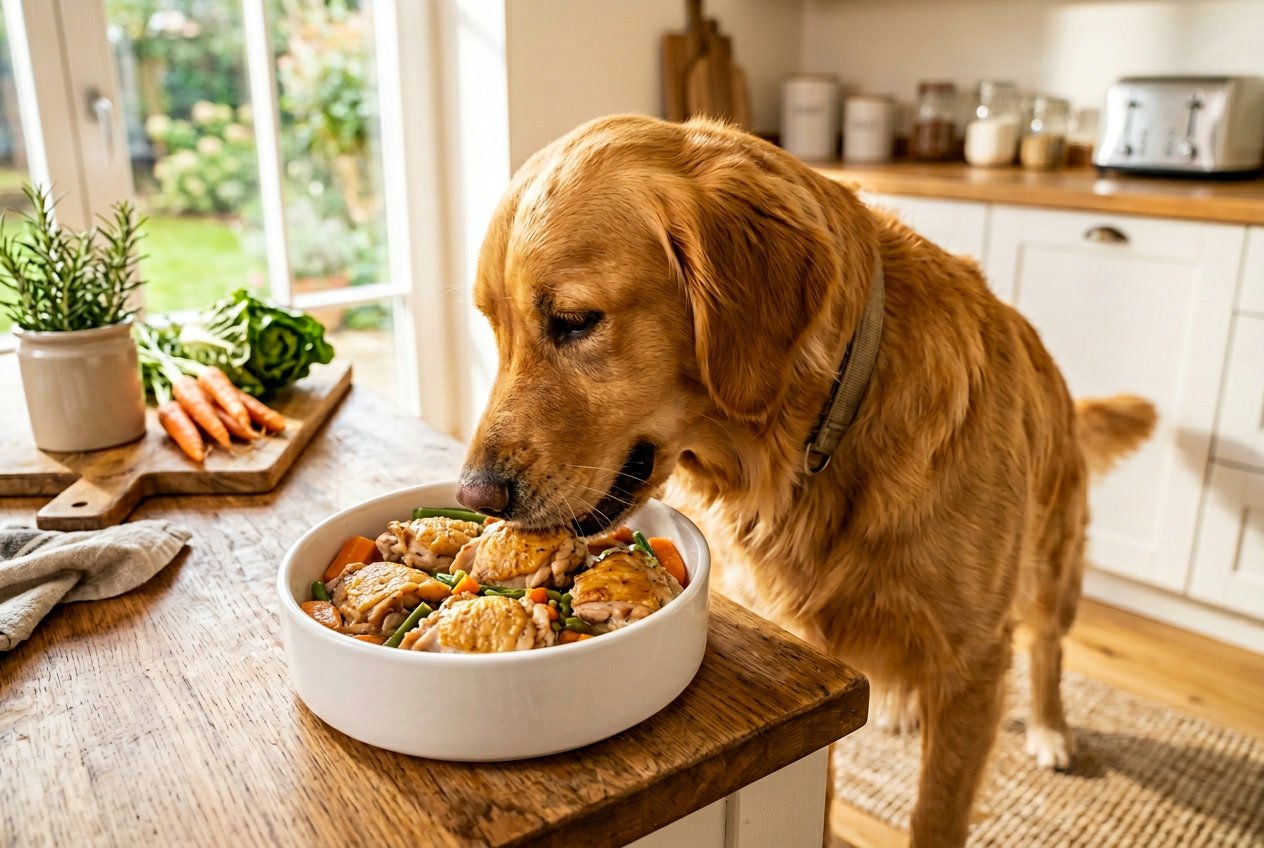
Chicken thighs deliver concentrated nutrients that support your dog’s daily needs: a solid protein source, key amino acids, fats that help skin and coat, and calories for active or growing dogs.
Proper preparation (boneless, skinless, cooked, unseasoned) keeps these benefits accessible while reducing common risks.
High-Quality Protein for Dogs
Chicken thighs provide dense animal protein that supplies the building blocks your dog needs for tissue repair and immune function.
A typical 3-ounce cooked, boneless chicken thigh gives roughly 20–25 grams of protein, making it an efficient way to boost protein intake compared with many plant-based options.
You can use thighs to top kibble, mix into home-cooked meals, or serve as training treats when you need a nutrient-rich reward.
Make sure portions fit your dog’s calorie needs; thighs have more fat than breast meat, so adjust serving size to avoid excess calories and weight gain.
Essential Amino Acids
The protein in chicken thighs contains all essential amino acids your dog cannot synthesize on its own.
Key amino acids like lysine, methionine, and tryptophan support growth, enzyme production, and neurotransmitter balance.
Feeding plain, cooked thigh meat helps maintain an amino-acid profile comparable to commercial meats used in dog foods.
Rotate protein sources over time to reduce sensitization and ensure a broader amino-acid intake, especially if your dog has dietary sensitivities or is on a long-term homemade diet.
Support for Skin and Coat Health
Chicken thighs supply fat and micronutrients that contribute to skin barrier function and a glossy coat when fed in appropriate amounts.
The higher fat content compared with breast meat includes fatty acids and fat-soluble vitamins that help retain moisture and reduce flaking.
If your dog has dry skin, controlled additions of cooked, skinless thigh meat can improve coat sheen within weeks when combined with a balanced diet.
Avoid excess skin or fried preparations; too much saturated fat can trigger pancreatitis in susceptible dogs.
Muscle Development and Energy
Thigh meat gives concentrated calories and protein useful for muscle maintenance, repair after exercise, and growth in puppies when portioned correctly.
Active dogs and working breeds often benefit from the extra calories thighs provide versus leaner cuts.
Use thighs strategically: increase portions on high-activity days or during growth, and reduce on sedentary days.
Always balance with complete commercial diets or a veterinarian-designed meal plan to ensure vitamins, minerals, and calorie targets stay within healthy ranges.
Risks of Feeding Chicken Thighs to Dogs
Feeding chicken thighs can introduce physical, metabolic, allergic, and microbiological risks.
Know the specific hazards so you can prepare thighs safely or choose alternative proteins when needed.
Bone Hazards and Choking Risks
Cooked chicken bones can splinter easily and cause choking, mouth injuries, or intestinal perforation.
Remove any bone fragments completely before offering the meat.
Small dogs and aggressive chewers face higher danger because they may swallow large pieces whole.
Watch for signs of obstruction—gagging, drooling, vomiting, constipation, or abdominal pain—and seek veterinary care immediately.
Never give cooked bone-in thighs as treats.
If you want to provide raw meaty bones, discuss safe options with your veterinarian first because raw bones carry other risks.
Fat Content and Pancreatitis
Chicken thighs contain more fat than breast meat, and excess fat can trigger pancreatitis in susceptible dogs.
Dogs with previous pancreatitis, obesity, or a history of high-fat meals should avoid thigh skin and large portions of thigh meat.
Even healthy dogs can develop diarrhea, vomiting, or abdominal discomfort after a fatty meal.
Limit thighs to 10–20% of daily calories and remove skin to reduce fat load.
If your dog shows abdominal tenderness, repeated vomiting, lethargy, or loss of appetite after eating thighs, contact your veterinarian promptly for assessment.
Allergies and Sensitivities
Poultry is a common protein allergen for some dogs.
If your dog develops chronic itching, recurrent ear infections, or gastrointestinal upset after eating chicken thighs, consider an elimination trial under veterinary guidance.
Sensitivity can also appear as intermittent soft stools, flatulence, or skin hotspots that worsen over days to weeks.
Rotate proteins and monitor responses; a novel protein like fish or lamb may help identify intolerance.
Work with your vet before switching diets, especially for puppies, seniors, or dogs on prescription foods to ensure nutritional balance while testing for allergies.
Bacterial Contamination and Food Safety
Raw or undercooked chicken thighs can carry Salmonella, Campylobacter, and other pathogens that can infect both dogs and people.
Always cook thighs to an internal temperature of 165°F (74°C) when feeding cooked meat.
Practice kitchen hygiene: wash hands, sanitize surfaces, and keep raw chicken separate from other foods.
If you feed raw thighs, store and handle them under strict refrigeration and consult your veterinarian about risks for your household.
If your dog develops fever, severe diarrhea, or weakness after eating chicken, seek veterinary care and mention potential exposure to contaminated poultry.
Best Practices for Preparing Chicken Thighs
Cook chicken thighs fully, remove all bones and most skin, and serve controlled portions based on your dog’s weight and health.
Keep preparation simple: plain, unseasoned, and handled with food-safety care to avoid bacterial risk and pancreatitis.
How to Cook Chicken Thighs for Dogs
Boil or bake plain chicken thighs until internal temperature reaches 165°F (74°C).
For boiling: cover thighs with water, bring to a simmer, and cook 12–20 minutes depending on size.
For baking: place thighs skinless in a 350°F (175°C) oven for 25–35 minutes.
Let meat cool before handling.
After cooking, remove every bone and trim away most skin and visible fat.
Shred or dice the meat into small pieces appropriate for your dog’s size to reduce choking risk.
Use clean utensils and a separate cutting board to prevent cross-contamination with human foods.
Safe Portion Sizes
Use weight-based portions to avoid excess calories.
A common guideline is roughly 1 ounce of cooked chicken per pound of body weight as a meal component, not the entire diet.
For example, a 20‑lb dog can get about 20 ounces of cooked chicken split across meals, but that should be adjusted based on your dog’s daily calorie needs and existing food.
If feeding chicken thighs as a treat or topper, limit portions to 10–20% of daily calories.
Monitor body condition and stool after introducing chicken for the first time.
Work with your veterinarian to convert raw portion guidelines into a balanced long-term feeding plan if you plan to feed chicken regularly.
Avoiding Seasonings and Additives
Do not add salt, garlic, onion, chives, or spice blends; these can cause toxicity or gastrointestinal upset.
Avoid marinades, sauces, oils, and butter, as these increase fat content and raise pancreatitis risk.
Plain water, or minimal unsalted broth, is the only safe cooking liquid.
Do not give cooked bones; they can splinter and cause obstruction or perforation.
If you consider raw feeding, follow strict hygiene, source high-quality meat, and consult your vet about safe handling and microbial risks.
When Chicken Thighs Are Not Recommended
Chicken thighs can provide protein and fat, but they aren’t appropriate for every dog.
Below are clear situations where you should avoid or limit chicken thighs and what to do instead.
Dogs with Chicken Allergies
If your dog shows repeated itching, chronic ear infections, or gastrointestinal upset after eating chicken, you may be dealing with a chicken protein allergy.
Allergic dogs often react to the muscle proteins in common meats, so chicken thighs, like other chicken cuts, can trigger symptoms.
What to do:
- Stop feeding any chicken products, including commercial foods listing “chicken” or “chicken meal.”
- Work with your veterinarian to confirm the allergy via an elimination diet or testing.
- Replace chicken thighs with novel proteins (e.g., duck, venison, rabbit) recommended by your vet.
- Reintroduce proteins only under veterinary guidance to avoid prolonged reactions.
Overweight or Inactive Dogs
Chicken thighs are higher in fat than chicken breast; the skin adds more calories and saturated fat.
If your dog is overweight or largely sedentary, frequent chicken thighs can push daily calories past a healthy range and slow weight-loss efforts.
Practical steps:
- Choose skinless thighs or leaner cuts like breast, and measure portions against your dog’s caloric needs.
- Aim to limit fat to about 10–15% of daily calories unless a vet prescribes otherwise.
- Use a food scale and follow a veterinary weight-loss plan that includes portion control and increased activity.
- Treats made from lean protein or vegetables help avoid excess calories from fatty thigh meat.
Dogs with Pancreatitis or Digestive Issues
Dogs with a history of pancreatitis or chronic GI problems tolerate high-fat foods poorly.
Chicken thighs, especially with skin or fried/prepared with oil, can precipitate a pancreatitis flare or cause vomiting and diarrhea.
Safe alternatives and precautions:
- Avoid chicken thighs entirely if your vet has diagnosed pancreatitis or recurrent lipase elevations.
- Offer low-fat, easily digestible proteins: boiled chicken breast (no skin), white fish, or prescription gastrointestinal diets.
- If you suspect raw chicken thighs caused symptoms, seek veterinary care promptly; pancreatitis can be emergency-level severe.
- When transitioning diets, introduce any new protein slowly and monitor stool consistency and appetite.
Alternatives and Variety in Canine Diets
You can safely include both dark and white poultry meat in your dog’s meals if you follow portion and preparation guidelines.
Choosing different protein sources helps meet amino acid needs, manage fat intake, and reduce allergy risk.
Comparing Chicken Breast and Thighs
Chicken breast and thighs both supply complete protein for dogs. They differ in fat and calories.
Breast is leaner and lower in calories. It makes a better choice for weight management or dogs with pancreatitis risk.
You may also choose breast when you must tightly control daily fat intake. Thighs contain more fat and slightly more iron and zinc.
Active or working dogs that need extra calories can benefit from thighs. Feed thighs skinless and boneless to avoid excess calories and the hazards of cooked bones.
Always cook poultry plain with no onions, garlic, or excessive salt. Follow the 10% rule for treats and supplemental foods.
Other Protein Sources for Dogs
Rotate proteins to reduce the chance of food sensitivities and provide a broader nutrient profile.
Good alternatives to chicken include turkey, lean beef, lamb, and fish like salmon or cod. Each offers different fatty acid and micronutrient balances.
For example, fish supplies omega-3s useful for skin and joint health. Red meats often provide more iron.
If your dog has a chicken allergy or intolerance, switch to novel proteins such as rabbit or venison under veterinary guidance.
When you change proteins, transition gradually over several days. Monitor stool consistency and skin condition during this time.
Make sure the overall diet stays complete and balanced through a formulated commercial diet or a veterinarian-approved recipe.


