
Are Chicken Thighs Dark Meat? Nutrition, Flavor, and Cooking Guide
Chicken thighs are dark meat because their muscles contain more myoglobin and fat than the breast. This gives them a deeper color, richer flavor, and greater juiciness.
Chicken thighs are dark meat. They come from muscles used for walking and standing, so they contain higher myoglobin and fat that produce darker color and more savory taste.
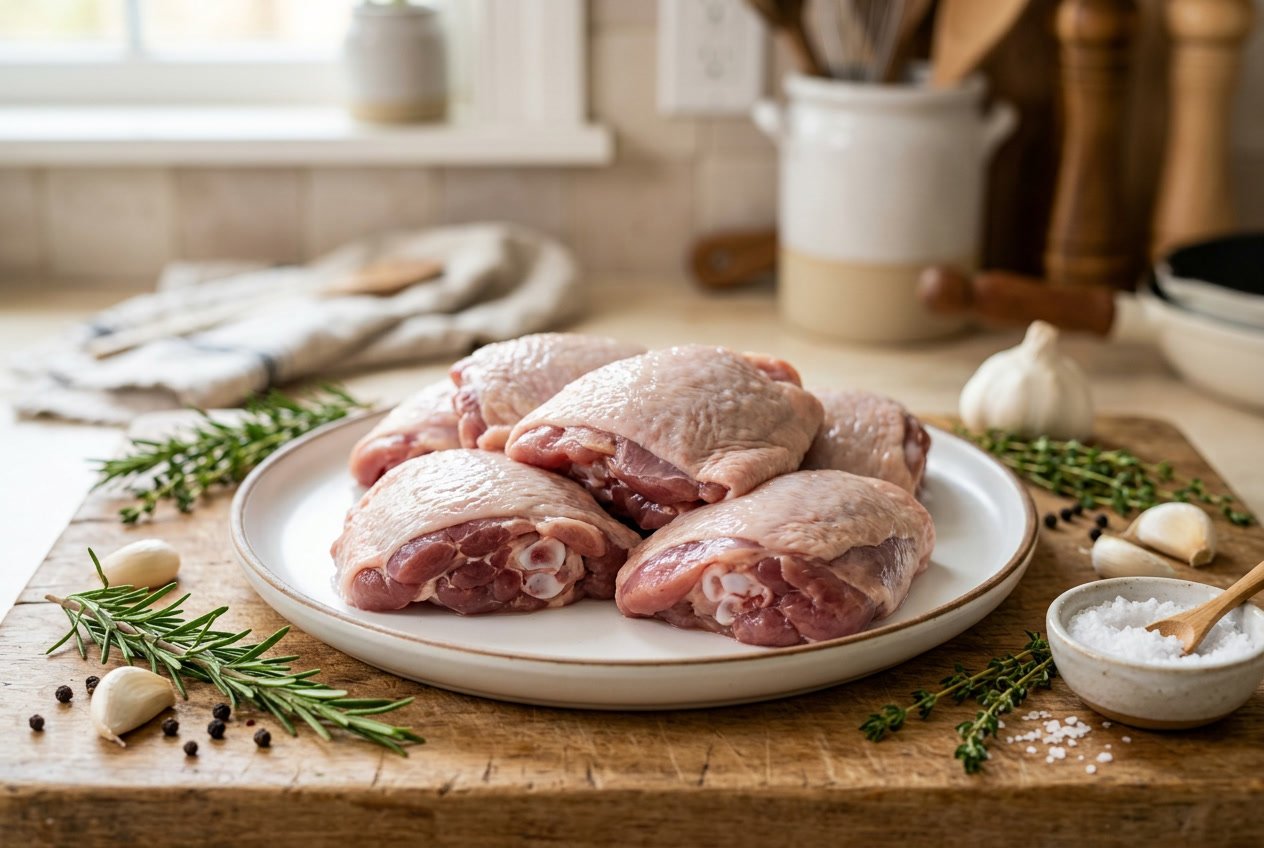
Chicken thighs offer a richer flavor and juicier texture than breast meat. They are versatile for grilling, braising, or roasting because they retain moisture during long cooking.
Are Chicken Thighs Dark Meat?

Chicken thighs are a dark-meat cut with higher fat and flavor than the breast. They come from the bird’s upper leg.
Thighs stay moist during cooking, making them suitable for a variety of methods.
Chicken Thighs vs. Other Chicken Cuts
Thighs are part of the leg and qualify as dark meat because they contain more myoglobin and slow-twitch muscle fibers than the breast. They have higher fat and connective tissue, which results in juicier, more flavorful meat and longer safe cooking windows.
Thighs sit between drumsticks and wings in darkness and tenderness. Drumsticks are equally dark but can be chewier near the bone. Wings are lighter than thighs but still darker than the breast in some areas.
Boneless, skinless thighs are leaner than skin-on cuts but remain darker than any breast cut. Use thighs for depth of flavor or when recipes need slow cooking or high-heat searing.
Location of Dark Meat on a Chicken
Dark meat is concentrated in the legs: thighs and drumsticks form the primary dark-meat sections. The thigh is the upper leg attached to the body, and the drumstick is the lower leg.
Both have higher myoglobin because these muscles support standing and walking. Breast meat and tenders are white meat, designed for short bursts of flight and made mostly of fast-twitch fibers with less myoglobin.
Leg quarters combine thigh and drumstick and are sold as a dark-meat package. The darkest meat appears around the legs, while the lightest is at the breast and wings.
What Makes Chicken Thighs Dark Meat?

Chicken thighs are darker because their muscles contain more oxygen-storing pigment and are built for sustained activity. These differences affect color, flavor, and cooking behavior.
Muscle Fibers: Slow-Twitch vs. Fast-Twitch
Thigh muscles have more slow-twitch fibers, also called red muscle fibers. These fibers contract repeatedly and resist fatigue, relying on aerobic metabolism.
This metabolic style requires more mitochondria and oxygen, which changes the muscle’s biochemistry and texture. Breast meat contains more fast-twitch fibers for short, powerful bursts of movement.
Fast-twitch fibers use anaerobic metabolism and contain less myoglobin, so they look paler and cook drier. Thighs stay juicier and tolerate longer cooking because slow-twitch fibers have more fat and connective tissue that break down over time.
The Role of Myoglobin in Meat Color
Myoglobin is a protein that stores and delivers oxygen inside muscle cells. Thigh muscle contains higher myoglobin concentrations than breast muscle, giving dark chicken meat its reddish-brown hue.
Myoglobin binds oxygen and iron, and its chemical state affects color changes during cooking and storage. Higher myoglobin also means increased iron and slightly different flavor notes.
Thighs darken less dramatically when cooked compared to breast meat, which turns pale quickly. Myoglobin-rich tissues bind water more effectively at typical cooking temperatures, helping thighs retain moisture.
Function and Activity Level of Chicken Thigh Muscles
Thighs support walking, standing, scratching, and bearing the bird’s weight. Constant, low-intensity use forces the muscles to adapt for endurance, increasing myoglobin and capillary density.
These demands explain why thigh meat is dark meat. Steady muscle use stores more intramuscular fat and connective tissue to fuel activity.
That fat both darkens the meat and acts as an internal basting agent during cooking. Thighs offer a richer flavor profile and meat that tolerates slower, longer cooking without drying out.
Nutrition and Health Profile of Dark Meat Thighs
Chicken thighs deliver more calories and fat than breasts, but they also provide higher amounts of iron, zinc, and certain B vitamins. You’ll trade some lean protein for richer flavor and micronutrients that support energy, immunity, and oxygen transport.
Fat Content and Calorie Differences
A 100 g cooked, skinless chicken thigh contains about 200–210 kcal and 10–11 g of total fat. The same amount of cooked, skinless breast has around 165 kcal and 3–4 g fat.
This difference reflects more intramuscular fat in thighs, which increases calorie density and mouthfeel. Skin-on thighs have even higher calories and fat: about 230 kcal and 15 g fat per 100 g.
Choosing skinless thighs lowers saturated fat and total calories while keeping much of the iron and zinc. For portion control, a single skinless thigh (85–100 g) fits well in a 400–600 kcal meal with vegetables and whole grains.
Minerals: Iron and Zinc in Dark Meat
Dark meat thighs provide more iron and zinc per serving than white meat. A 100 g cooked, skinless thigh supplies about 1.0–1.5 mg iron and 1.5–2.0 mg zinc.
Breast meat has roughly 0.6–0.8 mg iron and 0.6–0.8 mg zinc per 100 g. Iron supports oxygen transport and helps prevent anemia, while zinc influences immune function and wound healing.
If you’re prone to low iron, substituting thighs for some meals increases dietary iron. Pairing thighs with vitamin C–rich foods improves non-heme iron absorption.
Vitamin B6 and Niacin Content
Chicken thighs contain appreciable amounts of vitamin B6 and niacin, both important for energy metabolism. Per 100 g cooked, thighs often provide about 0.4–0.6 mg vitamin B6 and 6–8 mg niacin.
Vitamin B6 helps amino acid metabolism and neurotransmitter synthesis. Niacin supports NAD+/NADH pathways central to energy.
These B vitamins remain present whether the thigh is skinless or skin-on. Thighs help maintain B6 and niacin intake alongside iron and zinc.
Saturated vs. Unsaturated Fat in Thighs
Most fat in chicken thighs is a mix of monounsaturated and polyunsaturated fats. Saturated fat makes up a smaller portion.
A 100 g cooked, skinless thigh has 2–3 g saturated fat and 4–6 g monounsaturated fat. Skin-on thighs have more saturated and unsaturated fat.
Trimming the skin or choosing skinless thighs reduces saturated fat intake. Roasting or grilling limits added fats, while deep-frying increases saturated and trans fat.
Flavor and Texture Differences
Dark meat has more fat and myoglobin, giving it stronger flavor and greater moisture retention. White meat is leaner, milder, and cooks faster, which affects how you season and time your dishes.
Why Thighs Are Juicier and More Tender
Thighs contain higher intramuscular fat and more connective tissue than breast meat. That fat melts during cooking and keeps the muscle fibers lubricated, so the meat stays moist even when exposed to high heat.
Thigh muscles have more slow-twitch fibers that hold water and break down collagen into gelatin during longer cooks. That gelatin gives thighs a tender, silky mouthfeel.
If you want reliably juicy results, use thighs for high-heat searing, braises, or slow roasting. Rest them briefly after cooking to let juices redistribute.
Richness and Taste of Dark Chicken Meat
Dark meat delivers a deeper, savory flavor profile because of higher fat and myoglobin. Expect notes of umami and a fuller mouthfeel.
This richness stands up well to bolder spices, marinades, and sauces. White meat tastes milder and cleaner, making it better for delicate or subtle flavors.
For pairing, use acidic ingredients, robust herbs, and spicy glazes with thighs. Lighter dressings and quick sauces suit breasts.
Cooking Time and Overcooking Tolerance
Thighs tolerate longer cook times without drying because of fat and connective tissue. You can braise or slow-roast thighs and still get moist, tender results.
Breasts require shorter, more precise cooking to avoid toughness. Quick methods like grilling, pan-searing, or poaching work best for breasts.
When substituting thighs for breasts, increase cooking time modestly and check doneness near the bone. When substituting breasts for thighs, lower heat and shorten cooking time to prevent dryness.
Best Cooking Methods for Chicken Thighs
Chicken thighs perform well with moist, dry, and high-heat methods. Braising or roasting produces tender, forgiving meat, while frying or grilling gives crisp skin and deep flavor.
Braising and Roasting Techniques
Braising uses low, steady heat in a flavorful liquid, breaking down connective tissue and yielding tender thigh meat. Sear skin-on, bone-in thighs first to develop browning, then add stock, wine, or other liquids.
Cook at 300–325°F (150–165°C) until the internal temperature reaches 175–185°F and collagen softens. Roasting works when you want concentrated flavor and crispy skin.
Start hot (425°F/220°C) to render fat and crisp skin, then lower temperature to finish through without drying. Use an oven-safe skillet or sheet pan and roast skin-side up on a rack for air circulation.
Rest thighs 5–10 minutes before serving to redistribute juices.
Frying and Grilling Thighs
Frying gives intense crispness and a moist interior. For boneless pieces, pound to even thickness if desired; for bone-in, control oil temperature (325–350°F) and finish at the higher end for crispness.
Brine and a seasoned flour dredge improve moisture and crust. Grilling highlights char and smoky flavor.
Use medium-high direct heat for boneless pieces and two-zone cooking for bone-in thighs. Marinate with yogurt and spices or use a tamarind or soy glaze for sticky, caramelized skin.
Let thighs rest briefly off the heat before slicing.
Traditional Dishes and Recipe Ideas
Choose thighs for recipes that require long cooking or bold seasoning. For chicken adobo, braise thighs in soy, vinegar, garlic, and bay leaves until glossy and tender.
Coq au vin benefits from seared thighs braised in red wine with mushrooms and bacon. For faster meals, bake Vietnamese-style marinated thighs on a sheet pan with rice and vegetables.
Use boneless thighs cut small for tikka masala: marinate in yogurt and spices, grill or broil, then simmer in spiced tomato cream sauce. For fried sandwiches, brine, double-dredge, and fry to 165–175°F internally.
Choosing and Preparing Chicken Thighs
Choose thighs that match your cooking plan. Bone-in thighs add flavor and stay moist in long cooks.
Boneless thighs speed up prep and browning. Skin-on pieces give crisp texture and protect meat, while skinless cuts reduce fat and shorten cook time.
Bone-In vs. Boneless Thighs
Bone-in thighs contain the femur and connective tissue. These parts release gelatin during braising or roasting, improving mouthfeel and helping sauces thicken.
Choose bone-in thighs for stews, oven-roasts, or slow-cooker recipes. Boneless chicken thighs save time and cook faster.
They are easier to slice for sandwiches or skewers. Boneless thighs also brown more evenly in a hot pan, but they lose some of the flavor that bones provide.
If you want convenience and richness, buy bone-in, skin-off thighs or remove the bones at home after cooking. For quick weeknight meals, use boneless thighs and watch the internal temperature to avoid overcooking.
With Skin vs. Skinless
Skin-on thighs render fat and crisp up, giving a caramelized exterior and juicier meat. Use high heat or start skin-side down in a skillet to get a crisp crust, and finish in the oven if needed.
Skinless chicken thighs reduce surface fat and shorten cook time. They work well for marinades, stir-fries, and dishes where you want leaner protein without losing tenderness.
Monitor skinless thighs to prevent drying since they lack a protective layer. For crisp skin but less fat, remove the skin after cooking to retain juices and lower surface fat.
For broiling or grilling, skin-on thighs give better char and flavor. For steaming or quick sautés, choose skinless.
Selection Tips for Quality and Freshness
Look for thighs with a clean, pink-red color and firm texture. Avoid pieces with grayish tones, strong sour smells, or excessive liquid in the package.
For bone-in cuts, check that joints and bone surfaces look intact and not discolored. Check labels for “fresh” or “frozen” and look at the sell-by date.
If you buy frozen, thaw in the refrigerator overnight. Never defrost at room temperature.
For skin-on options, inspect the skin for even color and no tears. Choose products with USDA inspection or an equivalent for basic safety standards.
If you want higher welfare or better flavor, select labeled options like pasture-raised or air-chilled. Store raw thighs on the bottom shelf of the fridge and use within 1–2 days.
Freeze at 0°F (-18°C) for longer storage.


